Why Louisiana Homes Demand More From Their HVAC Systems
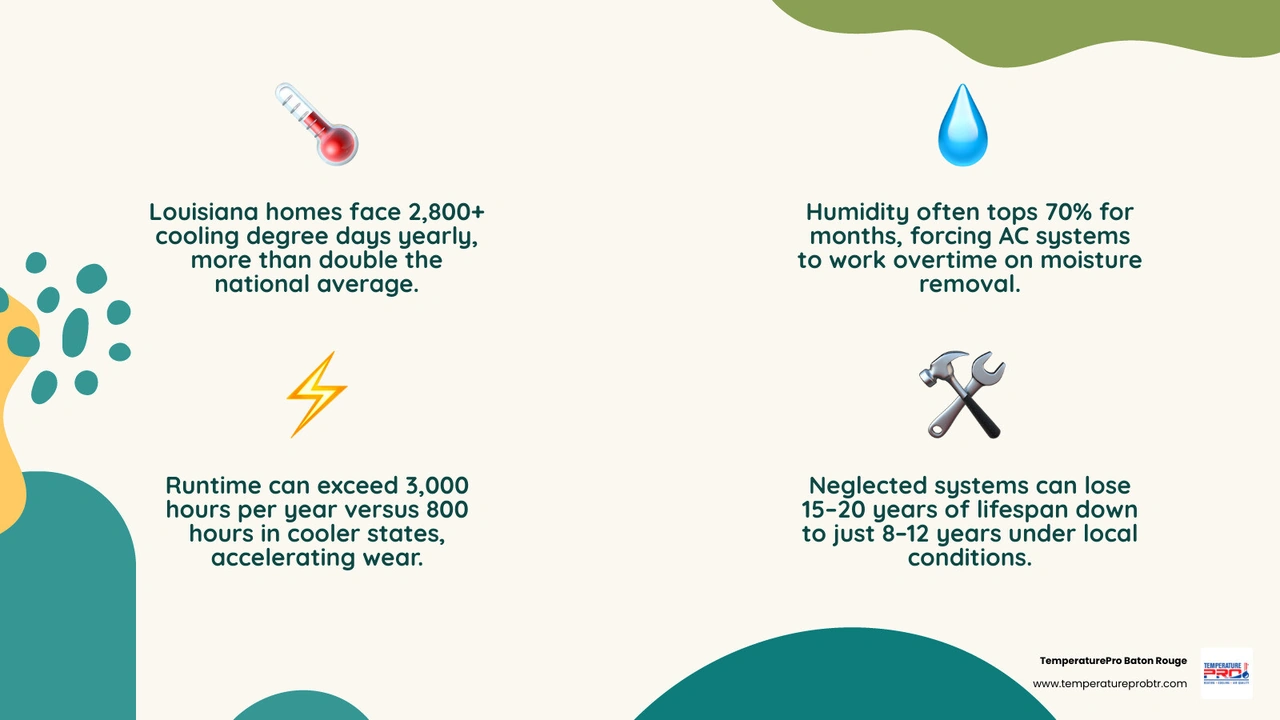
The best Louisiana HVAC tips for homeowners start with one hard truth: your system works harder here than almost anywhere else in the country. Louisiana sits in ASHRAE Climate Zone 2A — a hot, humid subtropical zone where the cooling season stretches from April through October, outdoor humidity regularly tops 70%, and your air conditioner may log over 3,000 hours of runtime in a single year. Compare that to roughly 800 hours in a cooler state, and it's easy to see why neglected systems here wear out faster and cost more to run.
Here are the most important HVAC tips every Louisiana homeowner should know:
1. Change or inspect air filters every 30 days during peak cooling season (more often if you have pets)
2. Flush the condensate drain line monthly with white vinegar to prevent algae clogs
3. Keep at least 2 feet of clearance around your outdoor condenser unit
4. Schedule professional tune-ups twice a year — once in spring before the heat hits, once in fall
5. Never restart your system after flooding without a licensed inspection first
6. Set your thermostat to 78°F when away to reduce energy use without straining the system
7. Use ceiling fans counterclockwise in summer for a wind-chill effect that takes pressure off your AC
8. Seal duct leaks — ductwork can lose up to 30% of cooled air if left unchecked
9. Watch for warning signs like musty odors, short cycling, weak airflow, or rising energy bills
10. Ask about utility rebates and the federal 25C tax credit when upgrading to high-efficiency equipment
Skipping regular maintenance in Louisiana doesn't just risk a breakdown — it can shorten your system's lifespan from 15–20 years down to 8–12 years and drive energy bills up by 15–30%. Whether you're in Baton Rouge, Prairieville, Gonzales, or Denham Springs, staying ahead of maintenance is the smartest move you can make as a homeowner.
Louisiana HVAC Tips for Homeowners: Why Louisiana Homes Need a Different Maintenance Plan
Louisiana homes do not follow the same HVAC rhythm as cooler parts of the country. Our systems deal with long cooling seasons, heavy moisture in the air, surprise cold snaps, and storm threats that can hit equipment hard. That means homeowners in Baton Rouge, Central, Zachary, Walker, St. Gabriel, French Settlement, Prairieville, Gonzales, and nearby areas need a maintenance plan built for local conditions, not a generic national checklist.
Louisiana also sees roughly 2,800 annual cooling degree days, which is more than double the national average. In plain English: your AC runs a lot, and it ages accordingly. If you want a deeper dive into the science behind that wear and tear, read How Louisiana Climate Affects Your HVAC System.
In Louisiana, air conditioning is not just about lowering temperature. It also has to pull moisture out of the air. That moisture load is called latent load, and it is a big reason systems here struggle when they are oversized, dirty, or poorly maintained.
When humidity stays high:
• Rooms can feel cool but still clammy
• Mold and mildew risks go up
• Condensate production increases
• Drain lines clog faster
• Evaporator coils get stressed
• Short cycling becomes more likely
For most homes, the goal is to keep indoor relative humidity around 45% to 55%. If humidity stays too high, comfort drops fast, even if the thermostat says everything is fine.
Why neglected systems use more energy and wear out faster
A dirty, neglected system has to push harder to do the same job. Filters clog, airflow drops, coils get coated with grime, and the unit stays on longer trying to keep up. Research consistently shows that homeowners who skip regular maintenance can see energy use rise by 15% to 30%, while a well-maintained system can cut consumption by up to 15%.
Maintenance also affects lifespan. In our climate, a cared-for system may last 15 to 20 years, while a neglected one may be worn out in 8 to 12 years. That is a huge difference, especially in a region where cooling is not optional.
The most common Louisiana HVAC problems homeowners can prevent early
A lot of our service calls start with issues homeowners could have spotted sooner. Common preventable problems include:
• Musty odors from moisture buildup or biological growth
• Algae and sludge clogging the condensate drain line
• Frozen coils caused by airflow restriction
• Weak airflow from dirty filters or blocked vents
• Uneven temperatures from leaking ducts
• Outdoor units packed with leaves, grass, or storm debris
Catching those problems early is one of the most useful Louisiana HVAC tips for homeowners because small issues rarely stay small for long in a hot-humid climate.
Safe DIY Louisiana HVAC Tips for Homeowners That Make the Biggest Difference

Homeowner maintenance absolutely helps. In fact, many of the best DIY tasks take only 15 to 30 minutes and can make a noticeable difference in comfort and efficiency. The key is doing the right jobs and avoiding the dangerous ones. For a broader local checklist, see the Ultimate AC Maintenance Guide Louisiana.
Louisiana HVAC tips for homeowners before touching the system
Before doing any HVAC maintenance, safety comes first:
• Turn the thermostat off
• Shut off power at the breaker or disconnect
• Wait for moving parts to fully stop
• Wear gloves and a dust mask
• Use eye protection if you are cleaning dusty areas
• Stop immediately if you smell gas, see burned wires, or notice water near electrical components
DIY maintenance should feel routine, not risky. If something looks damaged, scorched, corroded, or flooded, it is time to call us.
DIY tasks Louisiana homeowners can safely do in 15 to 30 minutes
These are the most useful homeowner-safe tasks:
• Replace or inspect the air filter
• Vacuum return grilles and wipe supply registers
• Make sure furniture, rugs, and curtains are not blocking vents
• Flush the condensate drain line with white vinegar
• Check the condensate pan for standing water
• Replace thermostat batteries if your model uses them
• Confirm the thermostat is reading and responding correctly
• Visually inspect accessible ductwork for loose connections, gaps, or moisture
• Clear leaves and debris from around the outdoor unit
• Gently rinse outdoor coils with a garden hose
One important reminder: never use a pressure washer on condenser coils. Those fins bend easily, and once they do, airflow suffers.
What never to DIY on an HVAC system
Some HVAC work should always be handled by a licensed professional in Louisiana. Leave these tasks alone:
• Refrigerant charging or leak repair
• Capacitor replacement
• Electrical rewiring or voltage testing
• Compressor work
• Sealed system repairs
• Heat exchanger inspection
• Gas burner adjustments or gas line work
• Deep internal furnace repairs
If it involves refrigerant, fuel, live electrical components, or specialized diagnostics, it is not a DIY job.
How often to change filters and clean drain lines during peak cooling season
During Louisiana cooling season, monthly attention is the rule, not the exception.
For filters:
• Check every 30 days during peak cooling months
• Check every 3 weeks if you have pets, multiple occupants, allergies, or renovation dust
• Replace sooner if the filter looks gray, fuzzy, or clogged
For drain lines:
• Flush every 30 days during heavy AC use
• Use white vinegar to help slow algae and sludge buildup
• Watch for slow drainage, musty smells, or water near the indoor unit
If you want a Louisiana-specific filter guide, visit How Often Should You Change Your AC Filter in Louisiana.
Seasonal Louisiana HVAC Tips for Homeowners: Spring, Summer, Fall, and Winter
Louisiana maintenance works best when you think seasonally. Here is the simple version: prepare before the load, monitor during the load, and inspect after storms.
• Spring — Main Focus: Pre-cooling prep — Key Homeowner Tasks: Change filter, flush drain, test thermostat, clean vents, clear outdoor unit
• Summer — Main Focus: Efficiency and moisture control — Key Homeowner Tasks: Monthly filter checks, drain flushing, humidity watch, airflow monitoring
• Fall — Main Focus: Heating readiness — Key Homeowner Tasks: Test heat mode, replace filter, check alarms, inspect weather sealing
• Winter — Main Focus: Cold snap prep and safety — Key Homeowner Tasks: Monitor heating performance, keep filter clean, watch for odd smells or flame issues
Spring prep before the Louisiana heat arrives
Spring is the most important prep season in our area because it sets your system up for six to seven months of hard use.
Your spring checklist should include:
• Replace or inspect the air filter
• Flush the condensate drain line
• Gently rinse debris from the outdoor coil
• Test the thermostat in cooling mode
• Clean vents and return grilles
• Check attic access areas for obvious insulation gaps
• Schedule a professional pre-season inspection
That last one matters. Spring tune-ups help catch worn capacitors, dirty coils, low airflow, and drainage issues before the first brutal heat wave arrives.
Summer habits that protect efficiency during nonstop AC use
Summer is mostly about staying consistent. Good habits beat emergency repairs.
During summer:
• Check filters monthly
• Flush the drain line every 30 days
• Keep ceiling fans rotating counterclockwise
• Keep vents open and unobstructed
• Track indoor humidity and comfort
• Watch your utility bill for unexplained spikes
• Pay attention to weak airflow or long run times
If a room always feels hotter than the rest of the house, do not just blame Louisiana. You could have a duct leak, blocked register, or airflow imbalance.
Fall and winter steps for mild weather and sudden cold snaps
Even though winters are milder here, heating equipment still needs attention. Louisiana cold snaps can arrive quickly, and the worst time to discover a problem is the first freezing night.
In fall and winter:
• Replace the air filter
• Test heat mode before cold weather
• If you have a gas furnace, watch for a steady blue flame
• Replace smoke and carbon monoxide alarm batteries as needed
• Review thermostat schedules
• Seal air leaks around doors and windows
• Make sure outdoor units stay clear of leaves and yard debris
Heat pumps also benefit from a heating-mode test before winter. They may not run long in our area, but they still need to be ready.
Post-storm and post-outage checks homeowners should do first
After a strong storm or outage, do a visual inspection before flipping anything back on.
Check for:
• Debris packed into the outdoor unit
• Bent panels or exposed wiring
• Signs the unit shifted off its pad
• Standing water around indoor or outdoor equipment
• Damaged insulation near refrigerant lines
• Tripped breakers that will not reset normally
Take photos if you see damage. If the system had any floodwater exposure, do not restart it. Flood-damaged equipment needs professional inspection first.
Protecting Your Outdoor Unit From Debris, Flooding, and Hurricane Season
Your outdoor condenser lives a rough life in Louisiana. It deals with grass clippings, pollen, leaves, thunderstorms, high winds, and in some areas, flood risk. A little protection goes a long way.
Everyday outdoor condenser care that improves airflow
For everyday care:
• Keep at least 2 feet of open space around the unit
• Trim back shrubs and weeds
• Remove leaves, pine straw, and grass clippings
• Make sure the unit sits level on its pad
• Rinse coils gently with a garden hose when dirty
• Never lean tools, lumber, or décor against the cabinet
Restricted airflow makes the system run hotter and less efficiently. It is one of the easiest problems to prevent.
Hurricane season preparation for Louisiana homeowners
Hurricane season runs from June through November, so preparation should happen before the first serious threat.
Helpful steps include:
• Clear the area around the condenser
• Trim branches that could fall onto the unit
• Bring in loose patio items that could become projectiles
• Photograph the system and record model and serial information
• Ask about surge protection
• Make sure the unit is properly secured and stable
If your home is in a flood-prone area, elevated placement and proper anchoring are especially important. Storm prep may not be glamorous, but neither is replacing equipment after a preventable hit.
What to do after flooding or hurricane damage
If floodwater touched the equipment, do not turn it on. That includes even shallow water exposure. Flooding can damage motors, controls, insulation, and electrical components, and saltwater can accelerate corrosion.
After a hurricane or flood:
• Leave the system off
• Document visible damage with photos
• Remove loose debris only if it is safe
• Do not open sealed electrical compartments
• Arrange for a licensed inspection before restart
This is one of the biggest safety rules in the entire guide. A flooded HVAC system is not a "let's just see if it still works" situation.
Energy-Saving Improvements, Rebates, and Signs You Need Professional HVAC Service
Maintenance helps, but upgrades and smart habits can lower energy use even more. In a state where cooling dominates much of the year, efficiency improvements can have a real impact.
For more ideas on improving longevity, read How to Extend the Life of Your AC in Louisiana.
Louisiana HVAC tips for homeowners to lower utility use without sacrificing comfort
Start with the basics:
• Use a smart thermostat or programmable schedule
• Set the thermostat to 78°F when away
• Run ceiling fans counterclockwise in summer
• Keep return vents clear
• Seal obvious air leaks around doors and windows
• Make sure attic insulation is in good shape
• Avoid closing too many supply vents
• Keep indoor humidity under control
Duct leakage can waste up to 30% of cooled air, so airflow and sealing matter a lot. A smart thermostat also helps by reducing unnecessary runtime when no one is home.
Efficiency upgrades Louisiana homeowners should consider in 2026
If your equipment is aging or struggling with humidity, the best upgrades in 2026 often include:
• High-efficiency systems that meet current SEER2 standards
• ENERGY STAR-qualified equipment where appropriate
• Variable-speed systems for better humidity control
• Whole-home dehumidifiers
• Duct sealing improvements
• Heat pumps designed for hot-humid climates
For Louisiana homeowners, variable-speed equipment and dehumidification can be especially useful because comfort here is about moisture removal as much as temperature. If you are comparing system types, these guides can help:
• Heat Pump Advantages Over Traditional HVAC
• Central AC vs Heat Pump for Louisiana Homes
Rebates and tax credits Louisiana homeowners should ask about
In 2026, homeowners should ask about:
• Utility rebate programs through providers such as SWEPCO or Cleco where applicable
• The federal 25C tax credit for qualifying high-efficiency equipment
• Whether rebates and tax credits can be combined on eligible upgrades
• Current utility program status before purchase or installation
Program details can change, and eligibility depends on the equipment selected, so it is always smart to ask before making a decision.
Signs your HVAC system needs licensed professional service now
Call for professional service if you notice any of these:
• Warm air coming from vents in cooling mode
• Short cycling
• Frozen indoor or outdoor coils
• Water leaks around the unit
• Musty or burning smells
• Loud buzzing, banging, or grinding
• Weak airflow
• Sudden energy bill increases
• Rooms that never seem to cool evenly
If your system is older and repair questions are piling up, these resources may help:
• When to Repair vs Replace Your HVAC System
• Average Lifespan of an AC System in the South
Frequently Asked Questions about Louisiana HVAC Tips for Homeowners
Can I skip HVAC maintenance if my system still seems to be cooling fine?
We would not recommend it. Many systems still cool while hidden problems are developing in the background. A dirty coil, clogged drain line, or failing component may not stop cooling immediately, but it can waste energy, raise humidity, and lead to a surprise breakdown when demand is highest.
Why does my AC drain line clog so often in Louisiana?
Because Louisiana gives algae exactly what it wants: warmth, moisture, and time. During long cooling seasons, the drain line stays wet for months. That creates ideal conditions for sludge and biological buildup. Monthly flushing during peak season helps reduce clogs.
Is a maintenance plan worth it for Louisiana homeowners?
For many homeowners, yes. In our climate, twice-yearly service makes sense because the system does so much work. A maintenance plan can help with seasonal readiness, documentation for warranty support, and catching small problems before they turn into major disruptions. If you want to learn more, read Is an HVAC Maintenance Plan Worth It.
Conclusion
The best Louisiana HVAC tips for homeowners are really about consistency. Change filters on schedule, keep drain lines clear, protect your outdoor unit, prepare for storms, and do not ignore warning signs. In Baton Rouge and the surrounding communities we serve, small maintenance habits can mean better comfort, lower energy use, and a longer-lasting system.
At TemperaturePro Baton Rouge, we are proud to be a family and veteran-owned team that treats every customer like family. If you want dependable help with seasonal tune-ups, repairs, indoor air quality, or a long-term maintenance plan, we are here for you. You can also learn more about Benefits of Choosing a Family and Veteran Owned HVAC Company or get More info about HVAC services.