Replacing Your AC Capacitor vs. Waiting for a Complete Compressor Failure in Late Summer
Replacing Your AC Capacitor vs. Waiting for a Complete Compressor Failure in Late Summer
A bulging capacitor won't stop your AC immediately, but ignoring it forces the compressor to work overtime. Understand the risks of delaying this minor fix during peak August heat.
Myth: If Your Air Conditioner is Still Blowing Cold, It Doesn't Need Fixing
When it comes to your home's comfort, understanding the massive difference between Replacing Your AC Capacitor vs. Waiting for a Complete Compressor Failure in Late Summer is the most important lesson our team at TemperaturePro Baton Rouge can share. A widespread misconception among homeowners is that as long as cool air flows from the vents, the air conditioning system is perfectly healthy. You might assume that mechanical failures happen suddenly, without warning, leaving you sweating in the middle of a brutal August afternoon. However, our technicians consistently see that the most severe breakdowns usually begin as small, silent electrical struggles. When we discover a weakened component during a routine check, you face a critical decision that directly impacts your long-term comfort and your wallet.
The scenario plays out frequently for us during the hottest months of the year. Your system is technically still cooling your home, but a routine maintenance visit reveals a glaring red flag inside the outdoor unit. The dilemma is obvious: why spend money to fix a machine that hasn't officially stopped working? The answer lies in how air conditioners actually operate under extreme stress. Ignoring a failing electrical component doesn't make the problem disappear; it simply shifts the burden onto the most critical and expensive part of your entire system.
To avoid catastrophic breakdowns when you need cooling the most, you need a team that understands the mechanical realities of your equipment. For comprehensive air conditioning services that prioritize long-term reliability over quick fixes, proactive maintenance is your best defense.
What an Out-of-Tolerance Microfarad Rating Actually Means
To understand why a seemingly functional air conditioner might be on the brink of disaster, you first need to understand the role of the run capacitor. Think of the capacitor as a powerful, specialized battery that delivers a continuous, stabilized electrical jolt to the compressor and fan motors. The compressor requires a massive amount of torque to start up and keep the refrigerant flowing. The run capacitor stores energy and releases it to smooth out the electrical demand, ensuring the compressor doesn't have to work too hard to maintain momentum.
When our technicians inspect your outdoor unit, they look for physical signs of wear. A healthy capacitor is a sleek, flat-topped metal cylinder. A failing one often exhibits a distinct physical symptom: it begins to bulge or swell at the top. This bulging happens because the internal dielectric fluid is overheating, expanding, and creating internal pressure due to excessive electrical resistance or age.
However, visual inspections are only part of the diagnostic process. Technicians rely on empirical data, using a multimeter to measure the component's electrical capacity. They are looking for an out-of-tolerance microfarad rating on a bulging capacitor. Every capacitor is rated for a specific microfarad (µF) output, usually with a strict tolerance range of plus or minus five to six percent. If a capacitor is rated for 40 µF but tests at 32 µF, it is severely out of tolerance.
The most dangerous part of this degradation is that an out-of-tolerance part can still temporarily function. Your air conditioner will still turn on. The fan will still spin. The air will still feel cold. But behind the scenes, that weak capacitor is failing to deliver the necessary electrical support, forcing the heavy-duty mechanical components to pick up the slack.
The Relentless Strain of Late-Summer Weather on Electrical Components
The mechanical risk of a weak capacitor does not exist in a vacuum; it is heavily influenced by the environment. When dealing with the August extreme heat and humidity in Baton Rouge, our team sees firsthand how your cooling system is subjected to a relentless endurance test. During the peak of late summer, temperatures consistently soar, and the heavy moisture in the air makes the heat index even more oppressive.
Under these brutal conditions, a residential cooling system operates almost continuously. There is simply no operational downtime. In milder weather, an air conditioner might run for fifteen minutes and then rest for thirty, giving the internal electrical components time to dissipate heat. In late summer, the duty cycles stretch on for hours. The outdoor unit sits in the baking sun, while internally, the electrical current generates its own intense thermal energy.
This relentless thermal stress accelerates the degradation of any failing part. A capacitor that might have survived a few more months in a mild spring climate will rapidly boil its internal fluids during a late-summer heatwave. Because the system has zero opportunity to cool off, the electrical resistance inside the bulging capacitor increases exponentially day by day. The environmental stress directly dictates the urgency of the repair; what is a minor warning sign in April becomes an immediate, system-threatening emergency in August.
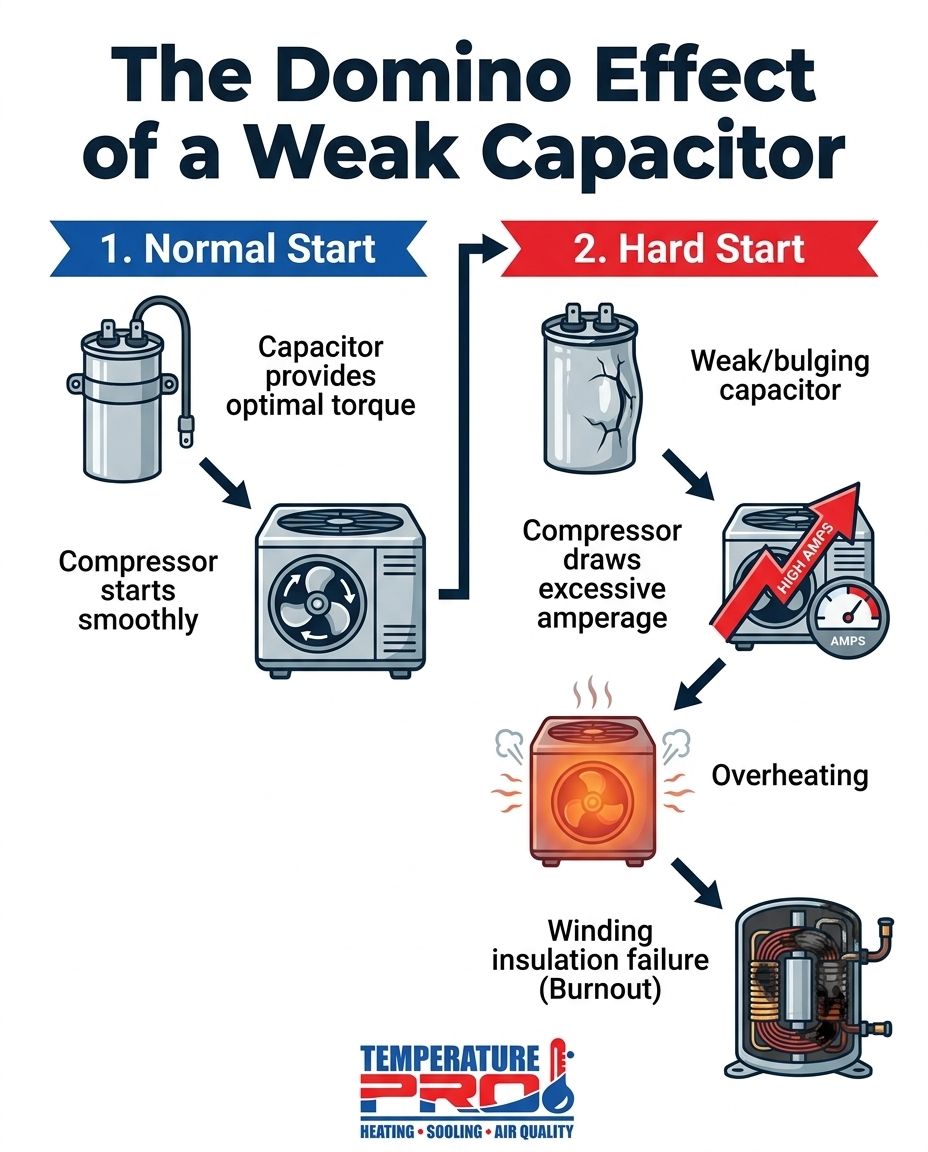
The Domino Effect: How a Weak Capacitor Forces a Hard Start
The relationship between the run capacitor and the compressor is a delicate balance of electrical supply and mechanical demand. When the capacitor loses its ability to store and deliver the correct microfarad output, a destructive domino effect begins inside your outdoor unit. This process is entirely invisible to the homeowner until the very last moment.
The Problem: When the thermostat calls for cooling, the compressor needs a massive surge of power to overcome the pressure of the refrigerant lines and begin pumping. A healthy capacitor provides this torque instantly. A weak capacitor fails to deliver the necessary jolt.
The Cause: Because the compressor is underpowered, it struggles to turn over. This phenomenon is known as a "hard start." To compensate for the lack of support from the capacitor, the compressor begins drawing excessive amperage directly from your home's electrical panel. It pulls this massive, unstable current for much longer than a normal startup cycle requires. This excessive electrical draw generates intense, rapid overheating deep within the compressor's motor.
The Solution (and Consequence): The compressor is the heart of your AC system, containing tightly wound copper coils coated in a thin layer of protective insulation. As the weak capacitor forces the compressor to hard start dozens of times a day, the intense heat begins to melt and degrade that insulation. Eventually, the bare copper wires touch, causing a short circuit to the metal casing. This catastrophic event is known as compressor burnout. The only solution at this stage is a complete compressor replacement or replacing the entire outdoor unit.
The Domino Effect of a Weak Capacitor
Comparing the Options: Proactive Part Replacement vs. Total System Failure
When a technician presents you with an out-of-tolerance microfarad reading, you are standing at a crossroads. The choice is rarely about whether you want to spend money, but rather how much disruption and damage you are willing to risk. Making an informed decision requires looking at the realities of both paths.
• Scope of Repair — Proactive Capacitor Replacement: Swift, targeted fix of a single, highly accessible electrical component. — Waiting for Complete Compressor Failure: Massive, system-wide breakdown requiring extensive labor, refrigerant recovery, and major component replacement.
• System Stress — Proactive Capacitor Replacement: Immediately restores proper electrical balance, protecting the compressor. — Waiting for Complete Compressor Failure: Subjects the compressor to relentless hard starts, melting internal insulation.
• Comfort Impact — Proactive Capacitor Replacement: Zero downtime. Cooling continues uninterrupted through the late-summer heat. — Waiting for Complete Compressor Failure: Sudden, total loss of cooling during peak temperatures, often resulting in days of severe discomfort.
• Secondary Damage — Proactive Capacitor Replacement: Prevents collateral damage to contactors and fan motors. — Waiting for Complete Compressor Failure: Burnout often contaminates the refrigerant lines with acid, threatening the new compressor if not cleaned perfectly.
The Proactive Path
Choosing to replace a failing capacitor before it dies completely is the ultimate form of protective maintenance. The diagnostic and replacement process is incredibly quick, often completed in the same brief visit where the issue was discovered. By restoring the proper microfarad output, you instantly relieve the electrical strain on the compressor. This swift action protects the lifespan of the most expensive part of your AC, ensuring reliable, efficient cooling right through the end of the grueling summer season and into the fall.
The Risk of Waiting
Choosing to wait carries a remarkably high probability of system death during peak heat. Because extreme temperatures force the unit to run constantly, a weak capacitor is guaranteed to fail—it is only a matter of when. When the compressor finally burns out, you face extended downtime waiting for major replacement parts to arrive, leaving your family sweltering. In many cases, especially with aging equipment, a dead compressor means the entire outdoor unit requires replacement. Because major unexpected repairs can be overwhelming, many homeowners find themselves needing to explore HVAC financing options just to restore basic comfort to their homes.
Honest Diagnostics Over High-Pressure Sales
Navigating HVAC repairs can sometimes feel overwhelming, especially when you are told a running system needs a repair. This is where the integrity of your service provider matters most. A recommendation to replace a functioning component should never be based on a visual hunch or a desire to upsell. It must always be backed by empirical data, such as a clear multimeter reading showing the exact microfarad deficit.
Working with our veteran-owned team at TemperaturePro Baton Rouge means you are getting the same level of discipline, accountability, and objective truth that military service demands. We believe in evidence-based diagnostics, contrasting sharply with the fear-based sales tactics used by some contractors who try to pressure homeowners into unnecessary full-system replacements.
A true professional takes the time to explain the mechanical reality to the homeowner. For example, one local homeowner reached out to us for a second opinion during the fall after receiving a massive, high-pressure estimate for a total system replacement from another company. Our technician arrived, bypassed the sales pitch, and focused on the data. We found a foreign substance bridging connections on the circuitboard and a disengaged fuse. We cleaned the board, re-engaged the fuse, and had the system up and running perfectly within 30 minutes. Transparent assessments allow you to make informed, confident decisions without the pressure.
Warning Signs That Your Compressor is Already Struggling
While a multimeter is required to definitively diagnose a weak capacitor, your air conditioner will often give you audible and operational clues that it is struggling to start. If you notice any of these symptoms, the domino effect may already be underway.
• Humming or clicking noises: If you hear a distinct hum or rapid clicking coming from the outdoor unit before the fan actually begins to spin, the capacitor is likely struggling to deliver the initial electrical jolt.
• Delayed cooling: The system seems to struggle to turn on, taking noticeably longer than usual for cold air to begin flowing from the indoor vents.
• Aggressive startup sounds: If the outdoor unit shakes violently or makes a harsh, grinding noise when it finally kicks on, the compressor is pulling dangerous levels of amperage.
• Unexplained breaker trips: Because a hard-starting compressor pulls excessive electrical current, it may occasionally trip the dedicated circuit breaker on your home's electrical panel.
The moment these symptoms appear, time is of the essence. Waiting even a few days can be the difference between a simple electrical fix and a major mechanical disaster. If your unit sounds like it is tearing itself apart, you might want to read more about why your AC is making a loud banging noise and call for an expert evaluation immediately.
Frequently Asked Questions About AC Capacitors and Compressors
When homeowners are confronted with a failing electrical component, they naturally have questions about the severity of the issue and the mechanics involved. Understanding these details reinforces why a small electrical part holds immense power over your main mechanical equipment. If you are experiencing any of these issues, securing professional HVAC repairs is the safest way to protect your investment.
Can a bad capacitor ruin a compressor?
Yes, a bad capacitor is one of the leading causes of premature compressor failure. When the capacitor cannot provide the necessary starting torque, the compressor is forced to draw excessive amperage to turn over. This massive electrical draw generates intense heat, which eventually melts the internal wiring insulation, leading to a fatal short circuit known as compressor burnout.
Why is my AC capacitor bulging?
A bulging AC capacitor is a physical sign of severe internal overheating and failure. Inside the metal casing, dielectric fluid helps manage the electrical charge and dissipate heat. When the component is subjected to excessive electrical resistance, age, or relentless environmental heat, this fluid boils and expands, pushing the top of the casing outward.
How long can you run an AC with a weak capacitor?
There is no safe timeframe for running an AC with a weak capacitor. While the system might technically continue to blow cold air for days or even weeks, every single startup cycle inflicts severe thermal damage on the compressor. Continuing to run the system guarantees that the compressor will eventually suffer a catastrophic electrical failure.
Should I replace my AC capacitor before it fails completely?
Absolutely. Proactive replacement is the most cost-effective way to protect your air conditioner. Replacing a weakened capacitor before it completely dies ensures that your compressor never experiences the extreme heat and electrical stress of a hard start, preserving the lifespan of your entire cooling system.
What happens if I ignore an out-of-tolerance microfarad reading?
Ignoring an out-of-tolerance microfarad reading guarantees that your compressor is operating without adequate electrical support. The compressor will begin to run hotter, work harder, and consume more electricity. Ultimately, ignoring this critical diagnostic warning leads directly to a total system breakdown during the hottest parts of the year.
Make the Smart Choice for Your Home's Comfort
The difference between a simple, preventative fix and a catastrophic breakdown often comes down to timing and knowledge. When our technicians show you that your capacitor is bulging and testing out of tolerance, you are being given a rare opportunity to stop a major disaster before it happens. Understanding the severe mechanical risk that a weak electrical part poses to your compressor empowers you to authorize the right repair with absolute confidence.
Don't wait for your system to fail completely during the intense back-to-school heat. Taking proactive steps today ensures your home remains cool and comfortable without the looming threat of a massive repair bill. To keep your equipment running efficiently and catch these hidden electrical issues early, consider enrolling in a comprehensive AC maintenance plan today.
Thank you! Your submission has been received!
Oops! Something went wrong while submitting the form.
It seems logical to skip pre-season heating maintenance if you barely ran your system during a mild winter. However, long dormant periods in high humidity can damage internal components.
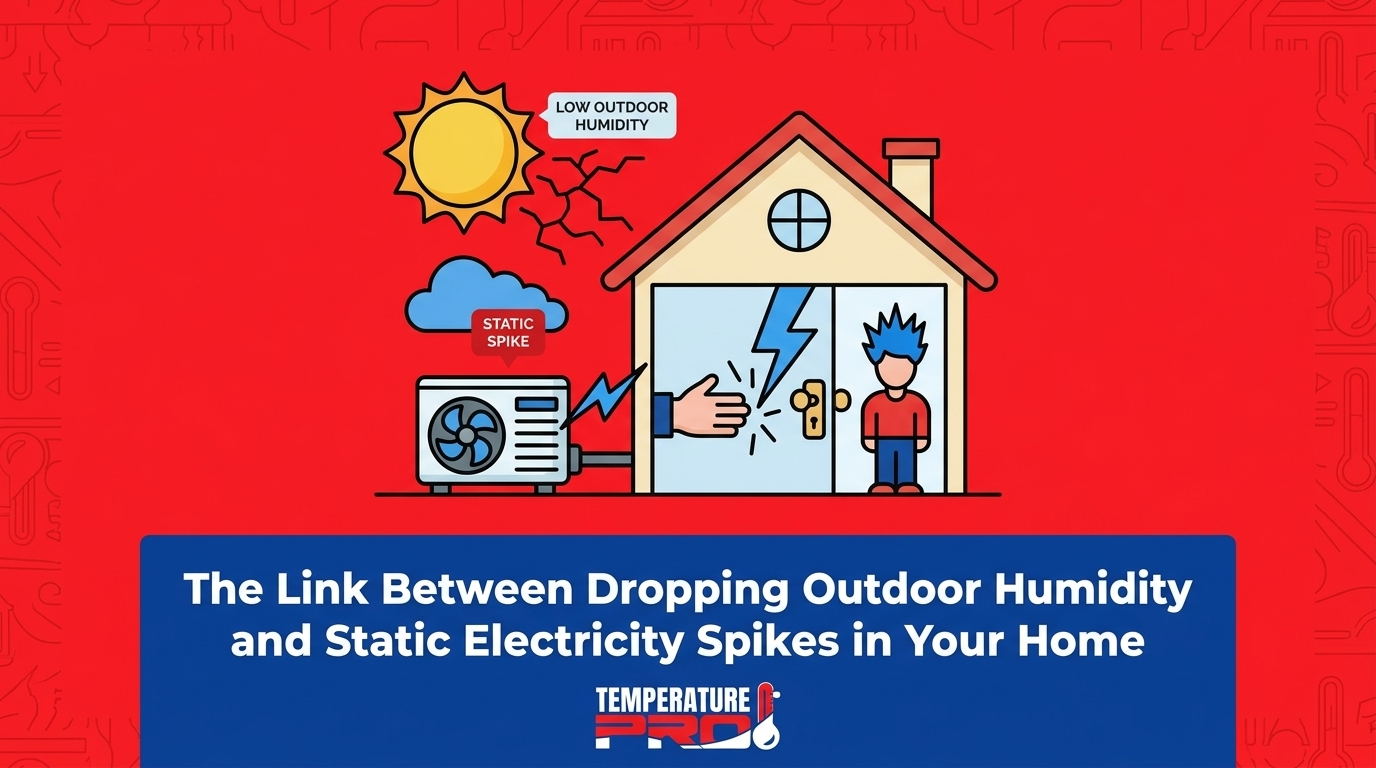
Sudden static shocks are a clear diagnostic sign that your indoor air is too dry. Understand the physics behind this fall shift and why whole-home humidification is the ultimate fix.
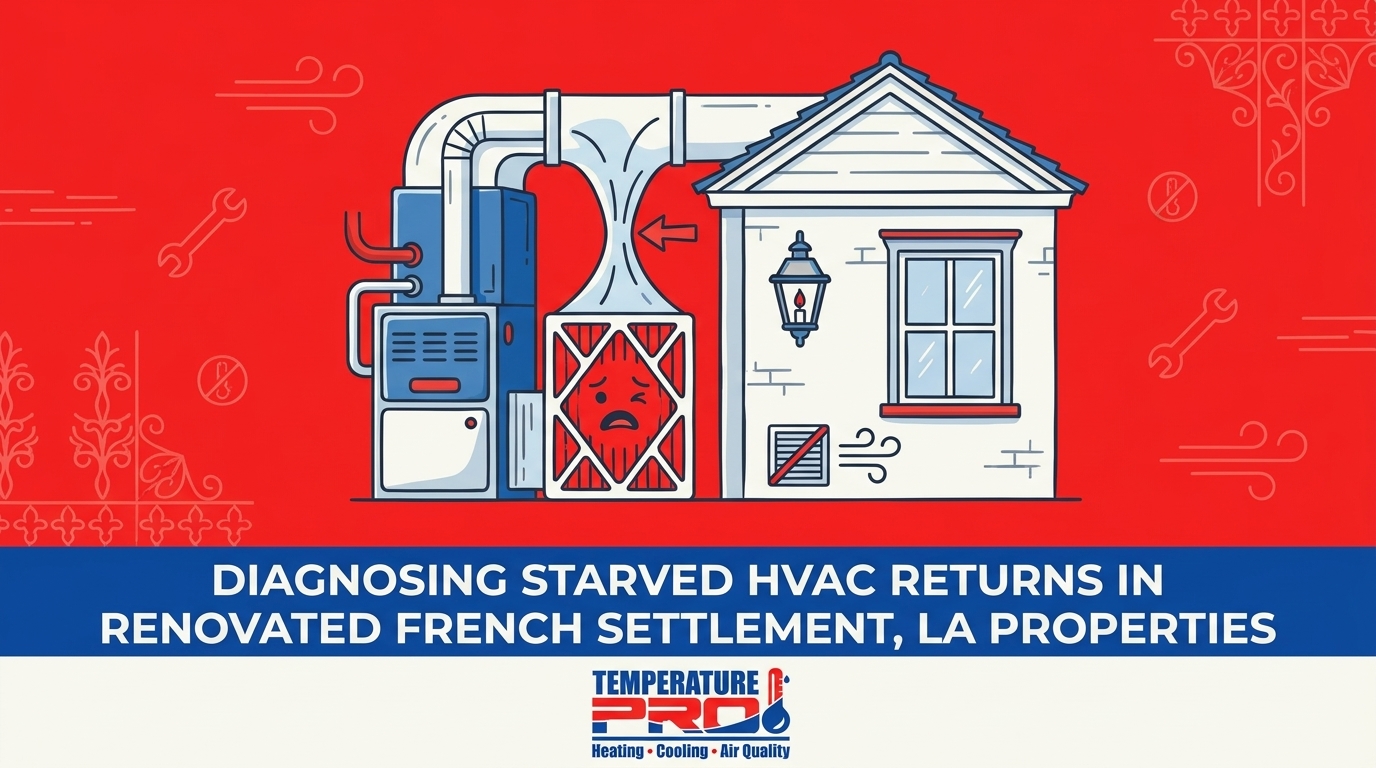
Flipped homes look great but often hide starved HVAC returns behind new drywall. Discover how objective static pressure testing reveals these hidden bottlenecks before winter heating season begins.