5 min read
Home Maintenance Tips and Troubleshooting for Your Fall HVAC Switchover
Smelling burning dust when the heat kicks on? Decide with confidence using vital home maintenance tips and troubleshooting steps for fall HVAC switchovers.


Alarmed by a burning dust smell during your fall heating startup? Use these home maintenance tips and troubleshooting facts to determine when to call a pro.
When our customers at TemperaturePro Baton Rouge ask us for reliable home maintenance tips and troubleshooting guides, the sudden smell of burning dust coming from your vents during the first cool evening of the year is a common starting point. October finally brings a welcome break in the heat across our area, signaling the time to switch your thermostat from cooling to heating. However, as our team knows all too well, that highly anticipated first cycle often comes with an unexpected and alarming surprise: a distinct, toasted odor filling your living space.
For most homeowners, this sudden smell forces an immediate decision point. You have to determine whether this odor is a harmless, temporary byproduct of the seasonal switch or a clear warning sign of a mechanical failure inside your HVAC system. Making the right call matters for both your comfort and your safety.
To understand what is happening, we always tell our clients to look at how your equipment operates throughout the year. During the long, demanding summer months, the heating components of your system sit completely idle. While the blower fan works overtime to circulate chilled air, the furnace burners, heat exchangers, or heat pump heating strips remain cold and inactive. As the system enters the fall season, this long period of dormancy sets the stage for the exact odors we receive calls about during that initial October heating startup.
The Problem: You turn on your heater for the first time in months, and within minutes, the entire house smells like a dusty campfire or a hot clothing iron. The odor is dry, slightly acrid, and strong enough to make you wonder if something has caught fire inside the ductwork.
The Cause: The explanation lies in the natural accumulation of household airborne particles. Over the course of the spring and summer, ambient household dust, pet dander, dead skin cells, and other microscopic debris constantly circulate through your ductwork. Even with a high-quality filter in place, our technicians consistently find that a small amount of this material naturally settles on the cold, inactive heating elements and heat exchangers inside your unit.
When you finally switch the thermostat to heating mode, these internal components rapidly rise in temperature. The settled layer of dust and dander is subjected to sudden, intense heat. The resulting odor you smell is quite literally the incineration of this accumulated debris. We reassure our customers that this is a completely normal mechanical transition, presenting as a temporary toasted or burning smell as the elements clean themselves off through heat.
The Solution: The most effective approach is simply to monitor the system while allowing it to run. If our team recently provided air conditioning services or a fall tune-up, your technician verified that the system is clean and safe to operate. You can open a few windows slightly to provide cross-ventilation, which will help clear the initial smell from your living space much faster.
Understanding the exact timeline for this process is critical for your peace of mind. In our experience, the incineration of settled dust is a rapid process.
• The standard window: The burning dust smell should peak within the first 10 to 15 minutes of operation and completely dissipate within the first 30-60 minutes of the heating cycle.
• Decreasing intensity: The odor should steadily decrease in strength during this timeframe. It should never grow stronger or more pungent as the hour progresses.
• Ventilation helps: Running ceiling fans and cracking a few windows during this initial 60-minute window will prevent the smell from lingering in fabrics and upholstery.
While a dry, burning dust smell is entirely normal, a damp, stale odor indicates a completely different mechanical issue. This phenomenon, commonly referred to in the HVAC industry as "dirty sock syndrome," smells exactly like a gym bag or wet laundry left in the washing machine too long. To understand why this happens, we have to look at the specific regional climate factors at play.
The impact of summer moisture: South Louisiana's oppressive summer heat and extreme humidity—frequently hovering between 70% and 90%—dramatically increase the latent heat load on your cooling equipment. To cool your home, the indoor evaporator coil must extract massive amounts of moisture from the indoor air. This creates constant, heavy condensation on the coil, making it sweat like a cold glass of sweet tea on a July afternoon.
The microbial breeding ground: Over a long cooling season, this dark, constantly damp environment inside the air handler becomes an ideal breeding ground for microbial growth. Our crews frequently see bacteria and mildew naturally forming along the aluminum fins of the evaporator coil and inside the condensate drain pan. While the system is running in cooling mode, the cold temperatures generally keep the odors suppressed.
The fall transition: When you turn on the heat for the first time, the sudden blast of warm air passes directly over this heavily soiled, damp coil. The heat activates the stagnant microbial growth, pushing a wave of musty, foul-smelling air directly into your living space. Unlike burning dust, dirty sock syndrome will not burn off or fade away on its own. We recommend professional indoor air quality solutions, such as a deep chemical coil cleaning or the installation of UV germicidal lights, to permanently neutralize the biological growth.
Knowing the difference between harmless dust incineration and a dangerous electrical failure is a critical skill for any homeowner. While dust smells like toasted lint, electrical failures produce harsh, chemical odors that demand immediate action. If you detect the smell of melting plastic, burning rubber, or a sharp ozone scent, your system is likely experiencing a severe malfunction, such as a failing blower motor, melting wire insulation, or a seized bearing.
We always warn our customers that electrical odors do not dissipate after an hour; they typically grow stronger and more acrid as the failing component continues to overheat. These smells are often accompanied by mechanical warning signs, such as a sluggish fan, unusual grinding noises, or a system that repeatedly trips the circuit breaker. If you experience any of these symptoms, you must immediately power down the unit at the thermostat and flip the dedicated breaker in your electrical panel to the "off" position.
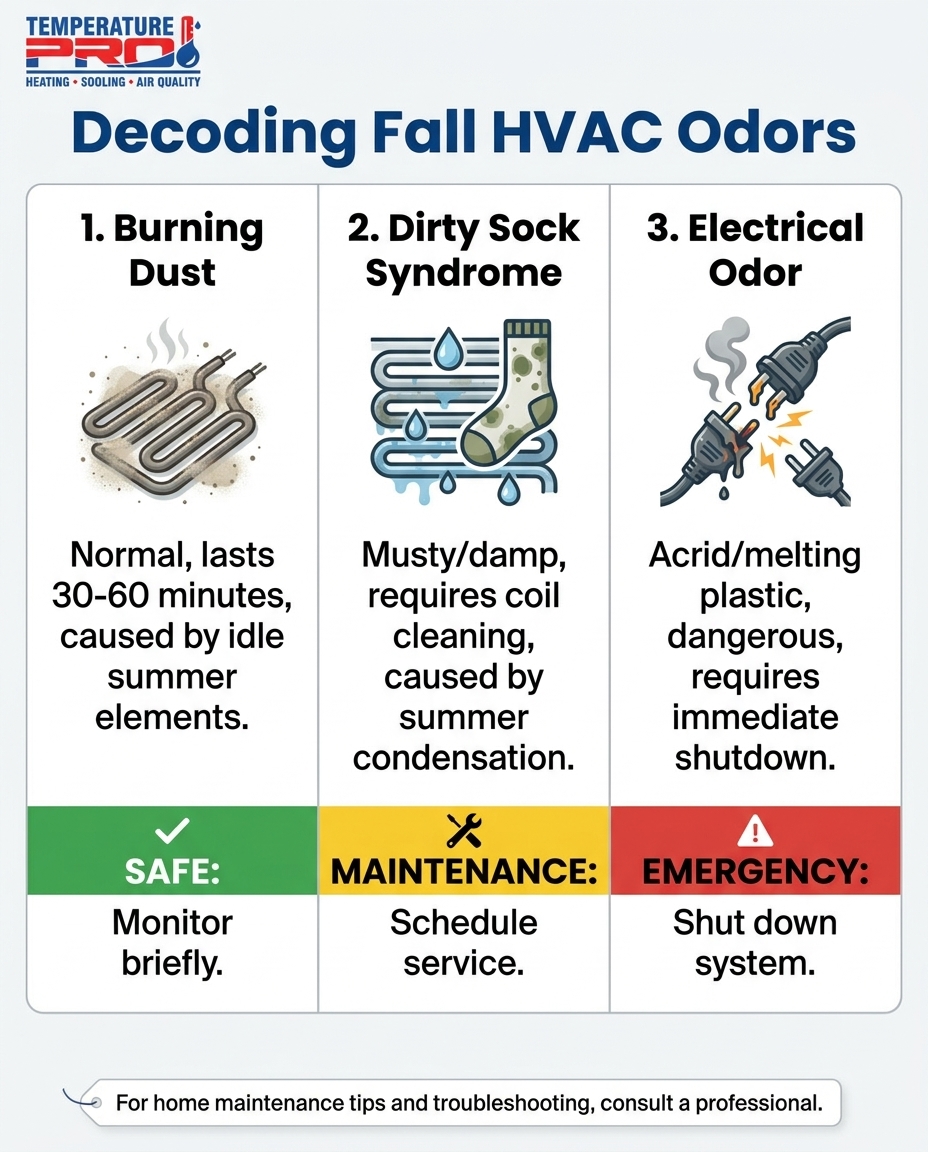
• Dry, Toasted Dust — Typical Cause: Idle heating elements burning off settled summer debris. — Expected Duration: 30 to 60 minutes during the first startup. — Required Action: Monitor the system and ventilate the house. No repair needed.
• Musty, Damp, Stale — Typical Cause: Microbial growth on the indoor coil (Dirty Sock Syndrome). — Expected Duration: Persistent; occurs every time the system runs. — Required Action: Schedule a professional coil cleaning or IAQ assessment.
• Acrid, Melting Plastic — Typical Cause: Overheating wires, failing motors, or electrical shorts. — Expected Duration: Grows stronger; does not fade. — Required Action: Shut off power at the breaker immediately and call a professional.
• Rotten Eggs / Sulfur — Typical Cause: Natural gas leak (if using a gas furnace). — Expected Duration: Persistent and highly dangerous. — Required Action: Evacuate the home, call the gas company, and seek emergency service.
When an odor persists beyond the normal 60-minute burn-off window, or if you detect the distinct smell of an electrical hazard, bringing in a licensed professional is the only safe path forward. Complex system transitions from cooling to heating require thorough, accurate testing to ensure every component is operating within safe limits.
A comprehensive diagnostic evaluation does much more than just treat the symptom of a bad smell; it identifies the root mechanical cause. For instance, if a blower motor is overheating and producing a burning rubber smell, our technicians will test the electrical draw to determine if the motor is failing or if a simple capacitor needs replacing. This is where working with a company that prioritizes honest diagnostics becomes invaluable.
Consider a situation our team handled for a Baton Rouge homeowner during a summer storm. On a Saturday evening, as a hurricane approached the coast, their air conditioner suddenly stopped cooling properly. Rather than using the stressful weather event to push an immediate, costly system replacement, our technician arrived late in the evening, accurately diagnosed a refrigerant leak, added the necessary charge, and fixed the line. We apply that exact same commitment to honest, straightforward repair paths during fall heating transitions.
As a veteran-owned company, TemperaturePro Baton Rouge ensures you benefit from a culture of discipline, accountability, and integrity. When you schedule routine AC maintenance or a fall heating tune-up with us, our goal is always to provide a clear, factual assessment of your equipment. Whether that means cleaning a musty coil, tightening a loose electrical connection, or recommending specialized UV treatments to permanently eliminate dirty sock syndrome, you receive a solution based on data, not high-pressure sales tactics.
While electrical testing and coil cleaning must be left to licensed professionals, there are several safe, proactive steps we encourage you to take to support your system during the transition into the colder months. Proper preparation reduces strain on the equipment and minimizes the severity of startup odors.
1. Start with a fresh air filter: The single most important step before turning on your heater is replacing the air filter. A clogged filter severely restricts airflow, which forces the blower motor to work harder and causes the heat exchanger to run hotter than intended. This excess heat can amplify burning smells and lead to unexpected system shutdowns.
2. Clear the breathing room around vents: Over the summer, furniture, rugs, or storage boxes may have been moved over floor registers or in front of return vents. Walk through every room and ensure all supply and return vents have at least two feet of clear space to promote balanced airflow.
3. Clean the exterior unit: If you utilize a heat pump, the outdoor cabinet needs to be free of fall leaves, overgrown vegetation, and debris. The system requires unobstructed airflow to absorb ambient heat from the outdoor air efficiently.
4. Schedule a pre-winter inspection: Having a professional verify that the transition from cooling to heating is mechanically sound is the best way to prevent mid-winter breakdowns. Our technicians will check safety limits, test ignition sequences, and ensure the heat exchanger is intact.
5. Monitor system behavior closely: Pay attention to how long the system runs and how quickly it satisfies the thermostat. If you are wondering why your AC blows warm air in the late afternoon during the summer, similar performance drops can happen in winter if the system is struggling to maintain temperature. Any unusual behavior should be logged and reported to your technician.
Yes, we assure homeowners it is completely normal for a heating system to produce a temporary burning smell during its first use of the season. Over the summer, dust, pet dander, and airborne particles settle on the inactive heating elements inside the unit. When the heat is finally turned on in the fall, those elements heat up rapidly and incinerate the accumulated debris, creating a distinct, toasted odor.
A normal dust burn-off smell should peak within the first 10 to 15 minutes and completely dissipate within 30 to 60 minutes of the initial heating cycle. You can help clear the odor faster by opening a few windows to create cross-ventilation. If the burning smell lasts longer than an hour or grows stronger, it may indicate a more serious electrical or mechanical issue.
A failing system will produce harsh, unnatural odors that do not fade away. You might notice the acrid smell of melting plastic, burning rubber, or a sharp, electrical ozone scent, all of which point to overheating wiring or a seized motor. If you have a gas furnace, the smell of rotten eggs or sulfur indicates a dangerous natural gas leak that requires immediate evacuation and emergency service.
Dirty sock syndrome is an industry term used to describe a stale, damp, and musty odor coming from the air vents that smells like unwashed gym clothes. It is caused by a buildup of bacteria and microbial growth on the indoor evaporator coil, which thrives in the dark, damp environment created by heavy summer condensation. When the warm air of the heating cycle hits this bacteria, it pushes the foul odor into the home.
No, cleaning the indoor evaporator coil is not a DIY project and requires a licensed HVAC professional. The aluminum fins on the coil are incredibly delicate and can be easily crushed, which will permanently restrict airflow and ruin the system's efficiency. A professional possesses the correct chemical cleaners, specialized brushes, and safety training to thoroughly sanitize the coil without damaging the equipment.
Navigating the seasonal transition doesn't have to be a source of anxiety. While the initial dust odors during the October startup are a perfectly normal part of owning an HVAC system, persistent musty smells or sharp electrical odors always warrant closer attention. By understanding the mechanical reasons behind these scents, you are empowered to make confident, safe decisions regarding your home's comfort. If you are looking for more home maintenance tips and troubleshooting guidance, or if you simply want the peace of mind that comes from a thorough professional inspection, reaching out to our team at TemperaturePro Baton Rouge ensures your system is clean, safe, and ready to perform flawlessly all winter long.
Go With Experience