Why Is My Air Conditioner Blowing Warm Air Only in the Late Afternoon?
Why Is My Air Conditioner Blowing Warm Air Only in the Late Afternoon?
Your AC works perfectly all morning, only to start blowing warm air right at 4 PM. Determine if this late-day struggle is a temporary heat overload or an escalating mechanical failure.
Is It Normal for Your AC to Stop Cooling at 4 PM?
Are you wondering, why is my air conditioner blowing warm air only in the late afternoon? It is an incredibly frustrating situation to walk through the door during the late August back-to-school transition, expecting a blast of cold air, only to find your house feeling like an oven. Your system was running perfectly all morning, keeping the indoor temperature perfectly balanced. But right as the day hits its peak, the vents start blowing lukewarm air, and your thermostat begins to climb.
At TemperaturePro Baton Rouge, our technicians see this exact pattern almost every day during the late-summer heat. A system that works flawlessly at 9 AM but fails at 4 PM is telling you a very specific story about how it handles stress. The critical decision you face right now is determining if this warm air is a temporary environmental overload or the start of an escalating mechanical failure. When you need dependable air conditioning services, having a routine AC maintenance plan is the ultimate safeguard against these peak-hour failures. By understanding what happens to your system when the sun is at its highest, you can make the right call for your home's comfort.
The Physics of 4 PM: Understanding Late-Summer Heat Loads
To understand why your system struggles specifically in the late afternoon, you have to look at the immense thermal pressure placed on your home as the day progresses. The 4 PM peak temperature and grid load create the ultimate stress test for any cooling equipment. If you are unsure what to do when your AC stops working in summer, our team recommends understanding these baseline physics as your first and most important step.
The 20-Degree Differential Rule
Residential air conditioners are generally designed to handle a 20-degree temperature differential between the indoor and outdoor air. If it is 95 degrees outside, your system is designed to comfortably maintain an indoor temperature of about 75 degrees. When outdoor temperatures push past 95 or 100 degrees, the system simply does not have the physical capacity to keep the house at 70 degrees. It will run continuously, eventually blowing air that feels warmer simply because the heat transfer process is maxed out.
Thermal Saturation in Your Home
At 9 AM, your attic and roof have cooled off overnight. But by 4 PM, the sun has been beating down on your roof for hours. Your attic can easily reach temperatures exceeding 130 degrees. This heat radiates down through your ceiling and into your living space. This phenomenon, known as thermal saturation, means your air conditioner is no longer just cooling the air; it is fighting the radiant heat baking into the very structure of your home.
Sensible vs. Latent Cooling (The Humidity Factor)
Air conditioners perform two distinct jobs: sensible cooling (lowering the actual temperature you read on the thermostat) and latent cooling (removing humidity from the air). In our experience servicing local HVAC systems, Baton Rouge's extreme late-August humidity creates a massive latent cooling load that peaks in the afternoon. Before your AC can drop the room temperature by a single degree, it has to wring gallons of water out of the indoor air. When the system is overwhelmed by this heavy, humid latent heat, it exhausts its cooling capacity just trying to dehumidify. The result? The air coming out of your vents feels warm, and the temperature inside refuses to drop.
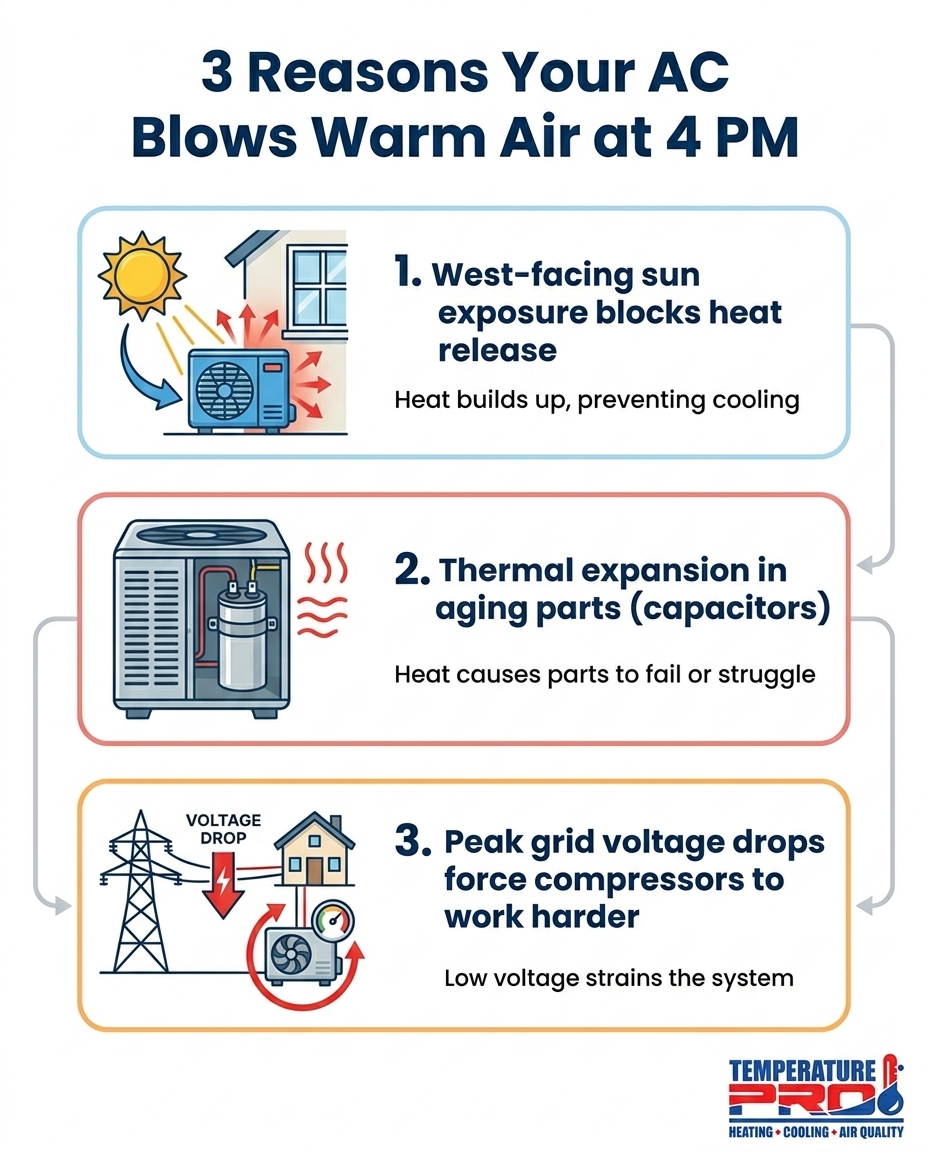
3 Reasons Your AC Blows Warm Air at 4 PM
If your system consistently loses its cooling power late in the day, there is usually a specific trigger. Utilizing an HVAC troubleshooter can help identify which of these symptoms matches your system's behavior. Here are the three primary culprits our field technicians encounter during the hottest part of the day.
1. West-Facing Sun Exposure
The problem: The location of your outdoor condenser unit plays a massive role in its afternoon efficiency. We frequently respond to afternoon service calls where Baton Rouge homes with west-facing outdoor units experience maximum direct solar radiation exactly between 3 PM and 6 PM.
How it works: Your outdoor unit's job is to release the heat it absorbed from inside your home into the outside air. To do this effectively, the outside air needs to be cooler than the hot refrigerant inside the condenser coils. When the late-afternoon sun beats directly down on the metal cabinet, the ambient temperature immediately surrounding the unit skyrockets. This significantly reduces the condenser's ability to release heat. If the unit cannot release heat outside, it cannot bring cold air inside, resulting in warm air blowing from your indoor vents.
2. Thermal Expansion in Aging Parts
The problem: Heat causes materials to expand, and electrical components are no exception. As ambient temperatures rise throughout the day, the electrical resistance in aging parts—particularly capacitors and contactors—increases.
How it works: A capacitor stores energy to give the compressor a powerful jolt to start up and keep running. As a capacitor ages in the brutal Louisiana heat, its internal fluids can degrade. When the afternoon heat peaks, thermal expansion can cause these weakened internal connections to separate or short out. This forces the compressor to draw too much electrical current and overheat. Once the compressor overheats, an internal safety switch trips, shutting off the cooling process to protect the motor. The indoor fan keeps running, but because the outdoor compressor has shut down, you only get warm air circulating through the house.
3. Peak Grid Voltage Drops
The problem: At 4 PM, businesses are still running their commercial cooling systems, and families are returning home, turning down their thermostats, and firing up appliances. This massive neighborhood electrical draw can cause subtle voltage drops on the local power grid.
How it works: Your air conditioner's compressor requires a specific amount of total power (measured in watts) to operate. Power is calculated by multiplying voltage and current (amps). If the neighborhood grid voltage drops, the compressor is forced to work harder, drawing more amperage to make up the difference. Higher amperage generates excessive heat in the electrical wiring and the compressor motor. Just like with thermal expansion, this causes the compressor to overheat and trip its safety limits right when you need it most.
3 Reasons Your AC Blows Warm Air at 4 PM
Environmental Overload vs. Escalating Mechanical Failure
When you feel warm air coming from your vents in the late afternoon, you have to decide whether to wait out the heat or call for professional help. Understanding the difference between a system that is simply overwhelmed and a system that is breaking down is crucial for your comfort and your wallet.
The Signs of Environmental Overload:
• The system runs continuously but the indoor temperature only creeps up a few degrees above your set point.
• The air coming from the vents is cool, just not as ice-cold as it is in the morning.
• Once the sun sets and outside temperatures drop, the system successfully catches up and cools the house back down to your desired temperature.
The Red Flags of Mechanical Failure:
• The air blowing from the vents is noticeably warm or matches the room temperature entirely.
• The outdoor fan is spinning, but the system sounds unusually quiet because the compressor is not running.
• The system frequently turns on and off in short bursts (short-cycling) without ever cooling the room.
• The indoor temperature continues to rise rapidly even after the sun goes down.
• Cool but weak airflow; catches up at night — Likely Cause: Environmental Overload — Recommended Action: Keep blinds closed; check air filter; wait for evening.
• Warm air blowing; outdoor compressor silent — Likely Cause: Failing Capacitor / Overheating — Recommended Action: Turn off system immediately; call for professional diagnostics.
• System short-cycles rapidly in the heat — Likely Cause: Voltage issues or low refrigerant — Recommended Action: Turn off system to prevent compressor damage; schedule service.
Urgent afternoon failures often require rapid professional intervention to restore comfort before the evening. Our service team sees this urgency often. For example, our dispatchers recently took a call from a local homeowner who reached out for help when their AC stopped working completely on the very day they moved into their new house. Because afternoon heat creates dangerous indoor temperatures so quickly, they required same-day service from our team to diagnose the failure and get the cooling system back online before nightfall.
A critical safety warning: Homeowners should never attempt DIY electrical or refrigerant diagnostics. Testing capacitors, checking voltage drops, or measuring refrigerant pressures requires specialized tools and high-voltage training. Opening an AC cabinet exposes you to dangerous electrical currents that can cause severe injury.
Why Disciplined Diagnostics Matter for Intermittent Cooling Issues
When an air conditioner only acts up at a specific time of day, finding the root cause requires a meticulous approach. In our years of servicing local homes, we've found that intermittent, time-of-day failures require disciplined testing of components under peak load. A part that tests perfectly fine on a cool Tuesday morning might fail completely on a scorching Thursday afternoon.
As a veteran and family-owned company, the TemperaturePro Baton Rouge team believes in an honest, root-cause diagnostic approach rather than guesswork. The industry is unfortunately full of "quick-fix" mentalities that push immediate, unnecessary equipment replacements the moment a system struggles in the heat. A proper, disciplined assessment by our licensed technicians identifies the exact failing part, checks the warranty status, and provides a clear, logical path forward. (It's also worth noting that if a replacement is ultimately needed, federal tax credits may apply to qualifying high-efficiency installations, which we can help you navigate.)
Proper diagnostics start with thorough maintenance. For instance, during a recent late-summer visit, a homeowner called us for their first AC tune-up since moving into their house. Our technician didn't just wipe down the outside cabinet; they cleaned the system thoroughly, evaluated its overall condition under electrical load, and explained exactly what aging components might struggle during the back-to-school heatwave. That level of detail ensures you have a clear plan to address issues before they turn into a 4 PM breakdown.
Frequently Asked Questions About Afternoon AC Struggles
Why does my AC stop cooling in the afternoon?
Your AC usually stops cooling in the afternoon because the extreme outdoor heat and direct sun exposure overwhelm the system's capacity to transfer heat. When outside temperatures peak, the outdoor condenser struggles to release the heat it absorbed from your home. Additionally, aging electrical parts like capacitors can overheat and temporarily fail during the hottest part of the day, causing the compressor to shut down while the indoor fan continues to blow warm air.
Is it normal for AC to struggle in extreme heat?
Yes, it is completely normal for an air conditioner to struggle when outdoor temperatures exceed its design limits. Most residential systems are engineered to maintain a 20-degree difference between the indoor and outdoor air. If it is 100 degrees outside, your system will naturally struggle to cool your home below 80 degrees. As long as the system catches up and cools the house once the sun goes down, it is likely experiencing normal environmental overload rather than a broken part.
Why is my AC blowing warm air during the day but cold at night?
This pattern typically indicates that the outdoor compressor is overheating and tripping its internal thermal overload switch during the peak heat of the day. When the compressor shuts down to protect itself, only the indoor fan runs, blowing warm air. Once the sun sets and the outdoor temperature drops, the compressor cools off, the internal switch resets, and the system begins blowing cold air again. This is a major warning sign of a failing component or a dirty condenser coil.
How do I protect my outside AC unit from the sun?
The best way to protect your outside unit from the sun is by utilizing natural, breathable shade, such as planting trees or tall shrubs a few feet away from the unit. You must ensure that any shade structure allows for massive amounts of airflow; never build a tight box or solid roof directly over the condenser. The unit needs at least two to three feet of completely unobstructed clearance on all sides and above it to properly exhaust the hot air it pulls from your home.
Can a failing capacitor cause intermittent warm air only when it's hot outside?
Yes, a failing capacitor is one of the most common causes of intermittent warm air during peak heat. Heat causes the internal components of an aging capacitor to expand, which can break the electrical connection needed to keep the compressor running. When this happens, the compressor drops offline, and your vents blow warm air. Once the temperature cools down, the metal contracts, the connection is restored, and the system may temporarily work fine again until the next hot afternoon.
Get Professional Answers for Your Afternoon Cooling Problems
A 4 PM failure is not just bad luck; it is a specific reaction to peak heat, thermal expansion, or grid voltage drops that can be accurately diagnosed and resolved. If you are tired of coming home to a hot house and waiting hours for the system to catch up, it is time to stop guessing and get definitive answers.
Our veteran-owned team encourages you to schedule a professional inspection with TemperaturePro Baton Rouge to determine the exact root cause of your afternoon cooling struggles. One of our licensed technicians can test your components under load and tell you exactly whether you are dealing with a simple airflow issue or a failing electrical part. Don't let the late-summer heat dictate your comfort—ensure your system is ready for the hottest part of the day.
Thank you! Your submission has been received!
Oops! Something went wrong while submitting the form.
Prevent sudden heating breakdowns with these home maintenance tips and troubleshooting insights. Get clear answers on why pre-winter HVAC inspections matter.
Most homeowners think a late-week appointment is the most convenient choice for an HVAC tune-up. Discover why our dispatchers highly recommend booking on a Tuesday morning instead.
A furnace shutting down repeatedly during early fall tests is frustrating, but jumping the safety switch is a dangerous mistake. Understand the severe fire hazards of this DIY workaround.