5 min read
Why Your Heater Smells Like Burning Dust During the October Startup
Alarmed by a burning dust smell during your fall heating startup? Use these home maintenance tips and troubleshooting facts to determine when to call a pro.


Why do fall HVAC startups fail? Apply these home maintenance tips and troubleshooting steps to safely transition your system before winter.
Your air conditioning system has likely been running nonstop since April, and as the mornings finally begin to cool down, you are likely looking for reliable home maintenance tips and troubleshooting strategies to prepare for the seasonal shift. The transition from a grueling summer to a mild autumn presents a unique set of challenges for your climate control equipment. The extreme wear placed on systems during a relentless Baton Rouge summer often leaves internal components fatigued, making the shift to heating mode a delicate process. If you want to skip the guesswork and ensure your system is ready for the changing weather, you can always rely on our team at TemperaturePro Baton Rouge. Through our years of experience servicing local homes, we've tailored our professional HVAC services to evaluate exactly how Louisiana summers impact your equipment.
Starting up a heat pump or furnace in mid-fall without conducting a proper inspection can lead to unexpected electrical lockouts, strange odors, or complete system failures. Preparing for this transition requires a clear understanding of exactly what components took the most abuse over the last six months. By evaluating your system's health before the first cold snap arrives, you can identify lingering issues from the cooling season and address them proactively. The goal of your October heating startup is to achieve a seamless, safe transition that keeps your indoor environment comfortable without triggering emergency repairs.
The problem: During the peak of summer, many homeowners notice their air conditioning systems running continuously without ever reaching the set temperature on the thermostat. This constant operation is a direct result of Louisiana's extreme heat and high humidity, which put massive sensible and latent heat loads on AC systems, often pushing them far past their design limits.
The cause: To understand why your system struggles, you must understand the difference between sensible heat and latent heat. Sensible heat is the actual temperature you read on a thermometer. Latent heat refers to the moisture or humidity in the air. In Baton Rouge, your air conditioner must work twice as hard to remove the heavy moisture from the air before it can effectively lower the actual temperature in the room.
• Sensible Heat — What It Measures: The raw temperature of the air (e.g., 95°F). — Impact on Your HVAC System: Forces the compressor to run longer cycles to cool the air down to your thermostat setting.
• Latent Heat — What It Measures: The amount of moisture/humidity in the air. — Impact on Your HVAC System: Forces the evaporator coil to extract gallons of water from the air, heavily stressing the blower motor.
Continuous operation to battle both types of heat causes excessive wear on critical components. Capacitors degrade under constant electrical loads, blower motors overheat from pushing dense, humid air, and coils accumulate thick layers of dust and condensation. Undiagnosed cooling issues during the summer often mask deeper mechanical fatigue. For instance, our technicians responded to a call this past summer from a Baton Rouge homeowner whose AC unit was struggling under the heavy afternoon heat load. Our team provided a prompt same-day repair, addressing the underlying strain so the system could cool properly again. Without addressing that strain, the lingering mechanical fatigue severely threatens the system's ability to switch modes smoothly when fall arrives.
The solution: Recognizing the signs of summer wear is the first step toward a successful seasonal transition. Understanding your equipment's limits is crucial, which is why exploring options for choosing an AC for Louisiana heat and humidity can help you plan for future upgrades that handle the latent heat load more effectively.
For homes equipped with a heat pump, the transition from cooling to heating relies on a single, critical component: the reversing valve. The reversing valve is a mechanical device that changes the direction of the refrigerant flow. During the summer, it directs heat out of your home. During your October heating startup, it reverses the flow to absorb heat from the outside air and transfer it indoors.
In our experience repairing local heat pumps, we frequently find that prolonged summer operation can cause the internal slide mechanism of the reversing valve to become stuck. When a system operates continuously in cooling mode for six to seven months, the sudden command to shift into heating mode can physically jam the valve, leaving you stuck with cold air blowing from your vents. Furthermore, dirty evaporator and condenser coils resulting from heavy summer use severely reduce heating efficiency. If the outdoor coil is blanketed in dirt and lawn debris, it cannot absorb the ambient heat required to warm your home.
Failing to address these issues increases the risk of hard electrical lockouts. A system that struggled to cool your home efficiently during August will almost certainly struggle to heat it efficiently in November. The electrical components that survived the summer by a narrow margin often fail when asked to perform the demanding switch to heating mode. Proactive inspections of these components are a vital part of comprehensive air conditioning solutions that protect your investment year-round.
While comprehensive mechanical inspections require a professional, there are several safe, actionable steps you can take to evaluate your system before the cold weather sets in. Maintaining strict boundaries between safe DIY checks and licensed professional work ensures your safety and protects your equipment from accidental damage during your October heating startup.
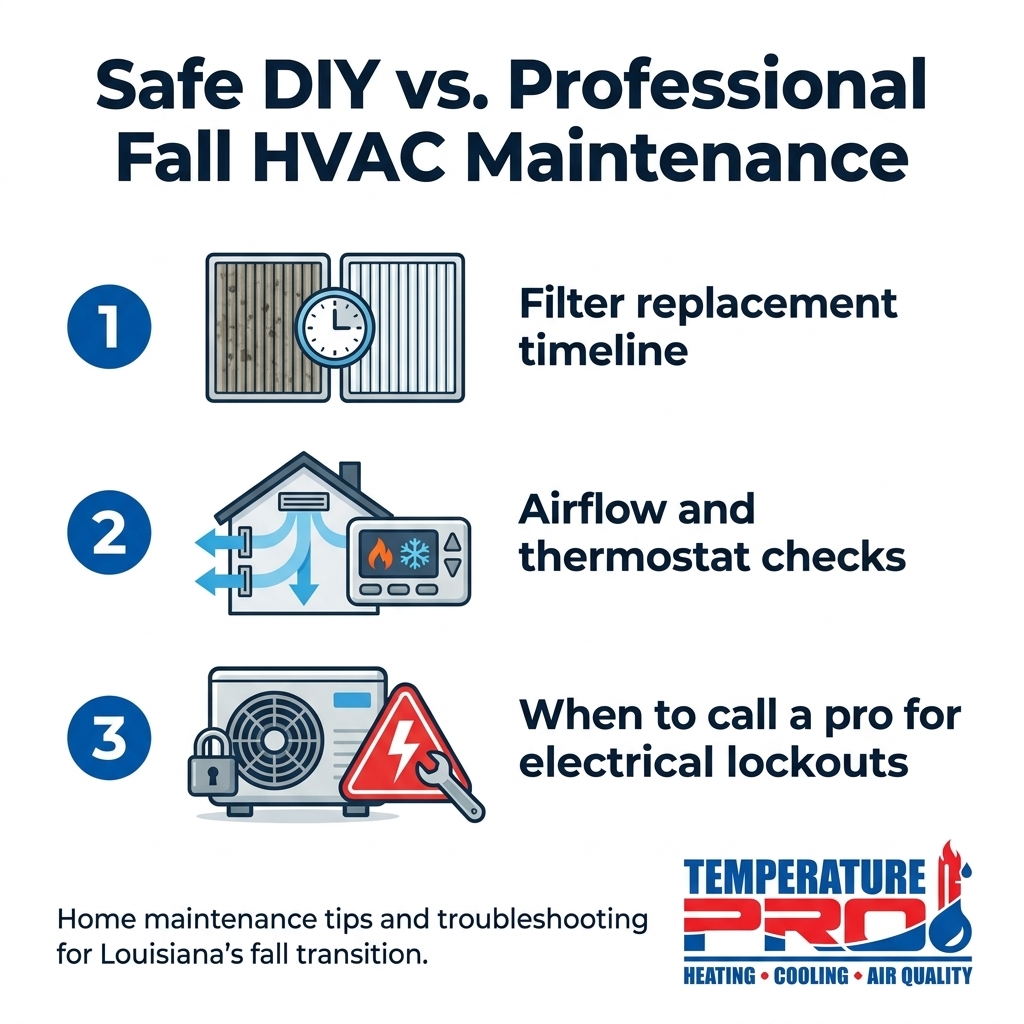
1. Inspect and replace the air filter: Start by checking the indoor air filter. Continuous summer operation pulls a massive amount of dust, pet dander, and airborne particles through the return vents. A clogged filter severely restricts airflow, forcing the blower motor to work harder and increasing the risk of an overheated furnace or frozen heat pump coil. Replace the filter with a clean one that matches your manufacturer's specifications.
2. Verify open vents: Walk through your home and ensure that all supply and return vents are fully open and unobstructed by furniture or rugs. Closing vents in unused rooms disrupts the system's airflow balance and creates unnecessary static pressure.
3. Clear outdoor debris: Head outside to the condenser unit. Carefully remove any leaves, twigs, or overgrown vegetation that accumulated around the base during the late summer storms. The heat pump requires a minimum of two feet of clear space on all sides to pull in enough air for the heating cycle.
1. Switch modes on a mild day: Do not wait for a freezing night to test your heating system. On a mild fall afternoon, switch your thermostat from "Cool" to "Heat" and raise the temperature a few degrees above the current room temperature.
2. Listen for engagement: Stand near the indoor air handler and the outdoor unit. Listen for the system to engage. You should hear the click of the thermostat, the hum of the blower motor starting, and the outdoor unit powering on.
3. Monitor for unusual noises: Pay close attention to any grinding, squealing, or violent rattling sounds. These are clear indicators of mechanical distress that require immediate professional attention.
Never attempt to open electrical panels, test capacitors, or clean internal evaporator coils yourself. Touching high-voltage components or handling refrigerant without proper certification is highly dangerous and illegal. If your basic airflow checks do not resolve performance issues, it is time to look into indoor air quality upgrades or professional diagnostics to clear the internal blockages safely.
The problem: One of the most common reasons customers call our dispatch center in a panic during an October heating startup is a distinct burning odor coming from the vents the very first time the heat kicks on. Many homeowners immediately fear an electrical fire or a catastrophic system failure.
The cause: In most cases, a burning dust smell during the first heating cycle is a completely normal occurrence. Over the long summer months, dust, pet hair, and microscopic debris settle on the heat exchanger or the electric heating elements. When these components heat up for the first time in over half a year, that accumulated layer of dust is instantly incinerated, producing a noticeable odor that circulates through your ductwork.
The solution: This typical burning dust odor should naturally dissipate within 30 to 45 minutes of continuous operation. You can safely open a few windows to help ventilate the home while the system burns off the residue. However, it is vital to differentiate between the harmless smell of burning dust and the dangerous, acrid smell of burning plastic, melting wire insulation, or electrical ozone. If the smell is sharp, chemical, or accompanied by visible smoke or sparking from the vents, shut off the system immediately at the thermostat and the breaker panel. A persistent electrical smell indicates a severe wiring failure or an overheating motor that requires emergency professional intervention.
Knowing when to step back and call a licensed technician is the most important part of home maintenance. While changing filters and clearing debris are excellent habits, diagnosing complex mechanical failures falls strictly under the domain of trained professionals. Identifying the signs of complex failure early can save you from a freezing night without heat.
If you notice persistent strange odors, rapid short-cycling (where the system turns on and off every few minutes), or a heat pump that simply refuses to switch out of cooling mode, you need expert intervention. A professional pre-winter tune-up is designed to catch failing capacitors, worn contactors, or slow refrigerant leaks before a cold snap pushes the system to the breaking point. Securing replacement parts for failing systems is also best handled by technicians who can navigate complex warranty claims, ensure the correct manufacturer-approved components are installed, and advise you on any utility incentive programs or federal tax credits that may apply to qualifying high-efficiency heat pump installations.
As a veteran-owned business, our team at TemperaturePro Baton Rouge takes pride in providing honest assessments—telling you straight whether your system is just battling the weather or if it has a true mechanical failure. This straightforward approach ensures you never pay for unnecessary repairs. For example, during a Friday afternoon emergency this past summer, a local homeowner's upstairs area completely lost cooling right before company arrived. Our technicians quickly diagnosed the failing component, and we completed the repair just in time to restore comfort. Relying on licensed professionals for these urgent electrical and mechanical issues guarantees a safe resolution. Scheduling routine AC maintenance in the fall bridges the gap between summer wear and winter reliability.
A burning dust smell during the first heating cycle is completely normal. Dust and airborne particles settle on the heat exchanger and heating elements over the summer months while the system is in cooling mode. When the heat turns on for the first time, this dust burns off, creating a temporary odor. The smell should dissipate entirely within 30 to 45 minutes of operation. If the smell is sharp, smells like melting plastic, or persists for hours, shut the system down and call a professional.
We recommend testing your heating system on a mild day in mid-to-late fall before the first major cold front arrives in Baton Rouge. Testing the system when the outside temperature is around 65°F allows you to verify that the reversing valve and blower motor are functioning correctly. Waiting until the temperature drops to freezing limits your options if the system fails to start, often resulting in emergency service calls during the busiest time of the year.
Preparing your heat pump involves ensuring proper airflow and verifying the system's mechanical health. Start by replacing your indoor air filter and clearing all leaves, tall grass, and debris at least two feet away from the outdoor condenser unit. Next, schedule a professional pre-winter inspection to have the electrical connections tightened, the reversing valve tested, and the refrigerant levels verified for optimal heating performance.
To safely test your heat pump, switch your thermostat to "Heat" mode and set the temperature three to four degrees above the current room temperature. Listen closely to the indoor air handler and the outdoor unit to ensure they power on smoothly without grinding or screeching noises. Verify that warm air is flowing steadily from your supply vents. If the system trips a breaker or blows cold air after fifteen minutes, turn it off and contact a technician.
Yes, continuous operation during a grueling summer takes a significant toll on shared system components like the blower motor, capacitors, and internal coils. The heavy latent heat load from high humidity forces the equipment to work at maximum capacity for months. If summer wear and tear goes unaddressed, it can lead to electrical lockouts, stuck reversing valves, and reduced efficiency when you attempt your October heating startup.
Addressing the intense wear and tear your system sustained over the summer is the only way to guarantee reliable performance when the temperatures drop. Your October heating startup does not have to be a stressful event if you take the time to perform safe, basic airflow checks and recognize the signs of deeper mechanical fatigue. Understanding the limits of DIY maintenance ensures your safety while protecting the longevity of your equipment. If your system is exhibiting signs of strain, strange odors, or refuses to switch modes smoothly, do not wait for the first freezing night. Schedule a professional evaluation with TemperaturePro Baton Rouge today to secure your comfort and enjoy total peace of mind throughout the upcoming winter season.
Go With Experience