Home Maintenance Tips and Troubleshooting for Your Fall HVAC Switchover
Home Maintenance Tips and Troubleshooting for Your Fall HVAC Switchover
Smelling burning dust when the heat kicks on? Decide with confidence using vital home maintenance tips and troubleshooting steps for fall HVAC switchovers.
Navigating the First Chilly Morning: What to Expect When the Heat Kicks On
Searching for reliable home maintenance tips and troubleshooting guidance usually happens right after you switch your thermostat to "heat" on a late October morning, only to be greeted by a harsh burning smell and weak airflow. Here at TemperaturePro Baton Rouge, our team fields dozens of frantic calls during that first real cold snap. Testing your heating system for the first time after months of dormant heating components is a notoriously stressful moment for homeowners. You expect instant, cozy warmth, but instead, you are left wondering if your home is safe. The strange noises, the campfire-like odors, and the lukewarm air blowing from your vents all create an immediate sense of anxiety.
The core decision you face right now is determining whether these strange symptoms are just harmless first-use quirks or actual signs of a hazardous mechanical issue that requires immediate attention. A successful transition into the colder months actually begins long before the temperature drops. As we often remind our clients, the ongoing health of your system relies heavily on the air conditioning services you received throughout the summer. Keeping up with a comprehensive AC maintenance plan ensures that your system transitions seamlessly into your mid-fall heating startup, preventing minor summer wear from snowballing into a major winter breakdown.
The Summer Toll: Why Shared HVAC Components Struggle in Autumn
Most homeowners assume their heating system is perfectly rested and ready to go because it has been turned off since last winter. However, central heating and cooling systems share several critical components. While the furnace burners or heat pump reversing valves have been dormant, other parts of the system have been working relentlessly all summer long. In our experience servicing local homes, this accumulated mechanical stress makes the autumn switchover a high-risk moment for sudden, unexpected component failure.
The Role of the Blower Motor
The shared workhorse: The blower motor is the lungs of your HVAC system. It does not care whether the air it pushes is hot or cold; its job is simply to circulate air through the ductwork. Throughout a long, demanding summer in Baton Rouge, this motor runs for hundreds of hours.
Bearing wear and tear: By the time October arrives, the bearings inside that blower motor have endured significant friction. The lubrication may have dried up, and the motor itself might be operating slightly out of balance. When the heat is finally engaged, the change in temperature and pressure can expose this bearing wear, leading to strange noises or sluggish airflow right when you need reliable heating the most.
Electrical Contact Wear and Tear
The impact of high humidity: Extreme humidity forces your system to run much longer cycles to adequately dehumidify the home. Every time your system cycles on and off to battle that Baton Rouge humidity, electrical components like contactors and capacitors engage and disengage.
Weakened under a new load: This frequent summer cycling slowly pits and burns the electrical contacts. Our technicians frequently replace contactors that were barely holding on during the final days of summer cooling, only to fail entirely when tasked with the new, heavy electrical load of a heating cycle. Preventive awareness regarding this shared electrical strain is the key to avoiding a total system breakdown during the first real cold snap of the season.
Decoding the Odor: Normal Dust Burn-Off vs. Electrical Hazards
The most common complaint our dispatchers hear during a mid-fall heating startup is an alarming burning smell spreading through the house. Because fire safety is deeply ingrained in us, smelling smoke or burning odors immediately triggers panic. However, not all heating odors are created equal. Knowing the difference between normal operational smells and dangerous electrical hazards can save your equipment and protect your home.
The 30-Minute Rule for Dormant Dust
The physics of settling dust: Over the long spring and summer months, airborne dust, pet dander, and microscopic debris naturally settle onto the dormant heat exchanger and heating elements inside your unit.
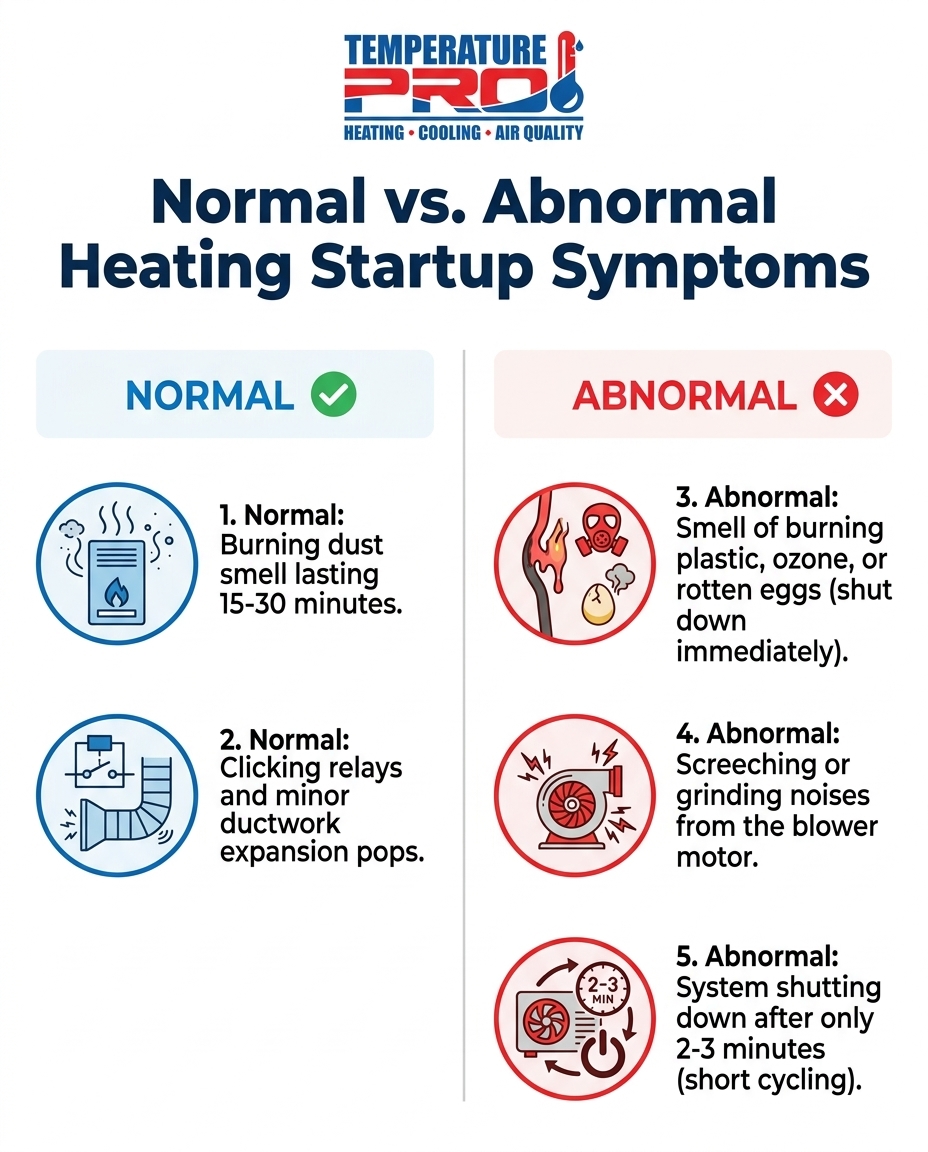
The burn-off phase: When you initiate that first mid-fall heating startup, the heat exchanger rapidly reaches high temperatures, instantly incinerating that settled layer of dust. This creates a distinct, campfire-like odor that circulates through your vents. This is an entirely normal part of the seasonal transition. The general rule of thumb our team recommends is the 15 to 30-minute rule: normal dust odors should begin to dissipate quickly after the system has run for half an hour. If the smell fades, your system is simply clearing its throat for winter.
When to Shut the System Down Immediately
Identifying red-flag odors: While burning dust is normal, the smell of burning plastic, melting wire insulation, ozone, or acrid electrical odors is never normal. Additionally, a sulfur or "rotten egg" smell strongly indicates a natural gas leak.
Strict safety protocols: If you detect an electrical, chemical, or gas odor, do not wait for the 30-minute mark. Shut the system off immediately at the thermostat. Never attempt DIY electrical or gas troubleshooting. Opening the cabinet to inspect wiring or gas lines without a license is incredibly dangerous and can lead to severe injury or property damage.
• Campfire / Dusty Burning — Likely Cause: Dormant dust burning off the heat exchanger. — Required Action: Monitor for 15-30 minutes; it should naturally dissipate.
• Melting Plastic / Ozone — Likely Cause: Failing electrical components or melting wire insulation. — Required Action: Shut system off at thermostat immediately. Call a professional.
• Rotten Eggs / Sulfur — Likely Cause: Natural gas leak near the furnace or gas line. — Required Action: Evacuate the home, call the gas company, and request emergency HVAC service.
• Musty / Mildew Smell — Likely Cause: Moisture buildup or dirty coils from summer cooling. — Required Action: Schedule a system tune-up and duct inspection.
Normal vs. Abnormal Heating Startup Symptoms
Listening for Trouble: What Grinding and Screeching Means
Your heating system will always make some noise. The gentle click of electrical relays engaging and the soft popping of metal ductwork expanding as warm air fills it are standard operational sounds. However, mechanical noises that sound aggressive, metallic, or strained are clear warning signs that your system is struggling with internal wear rather than normal function.
Identifying Blower Motor Strain
The high-pitched squeal: If you hear a loud screeching or squealing sound when the heat kicks on, it almost always points directly to the blower motor. Specifically, this sound indicates that the motor bearings have lost their lubrication or have worn down completely.
The risk of failure: This is a direct result of the heavy summer wear discussed earlier. Because the blower motor runs constantly to battle Baton Rouge heat, we consistently see worn bearings as the first component to give out in the fall. Replacing or lubricating these enclosed bearings requires a licensed professional to safely dismantle the blower assembly.
Recognizing Loose Components
Rattling and banging: A harsh grinding or banging noise usually means a component has vibrated loose. This could be a loose motor mount, a failing belt, or an unbalanced blower wheel striking the metal housing as it spins.
Preventing catastrophic damage: Ignoring these aggressive mechanical sounds can quickly lead to a complete motor seizure, which turns a relatively minor repair into a major, expensive replacement. If you are noticing strange auditory symptoms, understanding why your AC is making a loud banging noise can also shed light on how shared blower components behave when they are failing.
Short Cycling Explained: Why the Heater Shuts Down Prematurely
One of the most frustrating experiences during a mid-fall heating startup is when the system turns on, blows a little bit of warm air, and then shuts down just two or three minutes later. This rapid on-and-off behavior is known as short cycling. Not only does short cycling prevent your home from ever reaching the target temperature on the thermostat, but it also places immense strain on the system's ignition and electrical components.
Airflow Restrictions and Overheating
The high-limit safety switch: Modern heating systems are equipped with a high-limit switch designed to prevent fire hazards. If the internal temperature of the furnace gets too hot, this switch automatically cuts the power to the burners to prevent damage to the heat exchanger.
Trapped heat: The most common cause of an overheating system is severely restricted airflow. If air cannot flow freely over the heat exchanger to absorb the warmth and carry it into your home, that heat remains trapped inside the cabinet. The system overheats, the high-limit switch trips, and the heater shuts down prematurely.
Safety Sensor Interventions
Dirty flame sensors: For gas furnaces, our maintenance crews frequently find that short cycling is caused by a dirty flame sensor. Over the summer, dust and light soot can coat this small metal rod. When the burners ignite, the coated sensor fails to detect the flame and shuts the gas valve off immediately as a safety precaution.
Professional intervention: Blocked exhaust flues can also trigger safety lockouts. Cleaning flame sensors or clearing flue pipes requires specific training to ensure gas safety. Before calling an expert, you can use an HVAC troubleshooter tool to help narrow down your exact symptoms so you can provide accurate information to your technician.
Proactive Airflow Management: Filters and Air Quality
While electrical testing and mechanical repairs must be left to the professionals, there are actionable, safe steps you can take to prevent many of the startup issues discussed above. We always tell our Baton Rouge customers that managing your home's airflow is the most effective way to ensure a smooth transition into the heating season.
Choosing the Right Filter for Fall
Changing your air filter is the single most important step you can take before your mid-fall heating startup. A filter that is clogged with months of Baton Rouge summer dust, pollen, and pet dander will directly cause the short-cycling and overheating issues that trip your high-limit switch.
• Check the MERV rating: Ensure you are using a filter with a MERV rating appropriate for your system. Filters that are too thick can restrict airflow just as badly as a dirty filter.
• Start fresh: Always begin the heating season with a brand-new, correctly sized filter to guarantee maximum airflow over the heat exchanger.
• Monthly checks: Commit to checking the filter once a month throughout the winter, replacing it the moment it appears gray or opaque.
Managing Indoor Dust and Debris
Proper filtration does more than just protect the furnace; it also mitigates that initial burning dust smell by keeping the internal components cleaner year-round.
• Clear the perimeter: Keep the area around your indoor air handler or furnace completely clear of storage boxes, laundry, and clutter to ensure proper return airflow.
• Open all vents: Walk through your home and ensure all supply and return registers are fully open and unblocked by furniture or rugs.
• Upgrade your air quality: If your family struggles with winter allergies or respiratory sensitivities, exploring indoor air quality solutions like whole-home purifiers can significantly improve your overall comfort.
Prioritizing Safety Over Guesswork This Season
As you navigate your mid-fall heating startup, the most important takeaway is to prioritize safety over assumption. While a brief campfire smell from burning dormant dust is a normal part of the seasonal transition, screeching mechanical noises, electrical burning odors, and rapid short cycling are clear signals that your system needs help.
Guessing whether a frayed wire or a failing blower motor will hold up through the winter is never worth the risk to your property or your peace of mind. Working with our veteran-owned team at TemperaturePro Baton Rouge means you can expect straightforward, disciplined safety guidance rather than unnecessary upselling. Relying on a trusted local expert ensures your heating system is thoroughly inspected, safely calibrated, and completely ready to handle the colder months ahead.
Frequently Asked Questions
Is it normal for my heater to smell like burning dust?
Yes, a burning dust smell is entirely normal during the first few uses of the season. Over the summer, dust and debris settle on the dormant heat exchanger. When the system heats up for the first time, it burns this dust off, creating a distinct, campfire-like odor that circulates through your vents.
How long does the burning smell last when you turn on the heater?
The standard rule of thumb our technicians follow is that the burning dust smell should last between 15 and 30 minutes. As the system continues to run and cycle air, the odor should noticeably fade. If the smell persists for hours or grows stronger, shut the system down and request a professional inspection.
When should I worry about my heater smelling?
You should be immediately concerned if the heater smells like melting plastic, burning wires, ozone, or rotten eggs. These odors indicate severe electrical failure or a natural gas leak. If you detect any of these chemical or gas smells, turn the system off at the thermostat immediately and contact a licensed professional.
Why is my HVAC short cycling on heat?
Short cycling in heating mode is most often caused by restricted airflow, usually due to a severely clogged air filter. Poor airflow traps heat inside the unit, causing it to overheat and trip the high-limit safety switch, which shuts the system down prematurely. Dirty flame sensors in gas furnaces can also cause rapid safety lockouts.
What should I check before turning on the heat for winter?
Before turning on the heat, you should replace your air filter with a brand-new one to ensure proper airflow. Next, verify that all vents and registers in your home are open and unblocked by furniture. Finally, clear the area around your indoor unit so it has plenty of space to draw in air safely.
Can high summer humidity affect my heater in the fall?
Yes, prolonged high humidity forces your HVAC system's shared components, like the blower motor, to run much longer cycles to dehumidify the air. This heavy summer workload wears down motor bearings and electrical contacts, making them more susceptible to sudden failure when the heavy load of heating begins in the fall.
Thank you! Your submission has been received!
Oops! Something went wrong while submitting the form.
Waking up to strange burning smells? See our home maintenance tips and troubleshooting criteria to decide when to ride it out and when to call a professional.
Prevent a fall HVAC breakdown with these home maintenance tips and troubleshooting steps. See why we check refrigerant levels before switching to heat.
Prevent sudden heating breakdowns with these home maintenance tips and troubleshooting insights. Get clear answers on why pre-winter HVAC inspections matter.