What Constitutes a True AC Emergency vs. a Next-Day Repair in July
What Constitutes a True AC Emergency vs. a Next-Day Repair in July
A sudden AC failure on a 95-degree evening forces a stressful choice. Use this triage checklist to determine if you need an immediate after-hours dispatch or can safely wait until morning.
Facing an 8 PM AC Breakdown: Do You Need Immediate Help?
Is your air conditioner actually broken, or is it just struggling to keep up with the evening heat? At TemperaturePro Baton Rouge, our team fields countless frantic calls every summer evening from homeowners trying to figure out exactly what constitutes a true AC emergency vs. a next-day repair in July. It is a decision no homeowner wants to make, especially when the sun goes down and the house is still sweltering. A sudden loss of cooling at 8 PM forces a stressful choice: do you pay for an after-hours emergency dispatch, or can you safely wait until morning? When the heat index is hovering at a punishing 95+ degrees, that decision feels incredibly urgent.
Before you panic, reviewing common HVAC troubleshooting questions can help you clarify the severity of the symptoms. Assessing your immediate environment is the first step to avoiding unnecessary stress. You need to look for signs of electrical danger, severe water leaks, or immediate health hazards. Understanding basic triage helps you protect your home and your family without rushing into a late-night service call if it isn't absolutely necessary.
The Triage Mindset: Safety First, Comfort Second
When your system fails after hours, your primary goal is to determine if the situation is dangerous. A malfunctioning air conditioner can sometimes pose a threat to your property or your physical safety. If you identify a threat, you need immediate help. If the issue is simply that you are uncomfortable, you have more options.
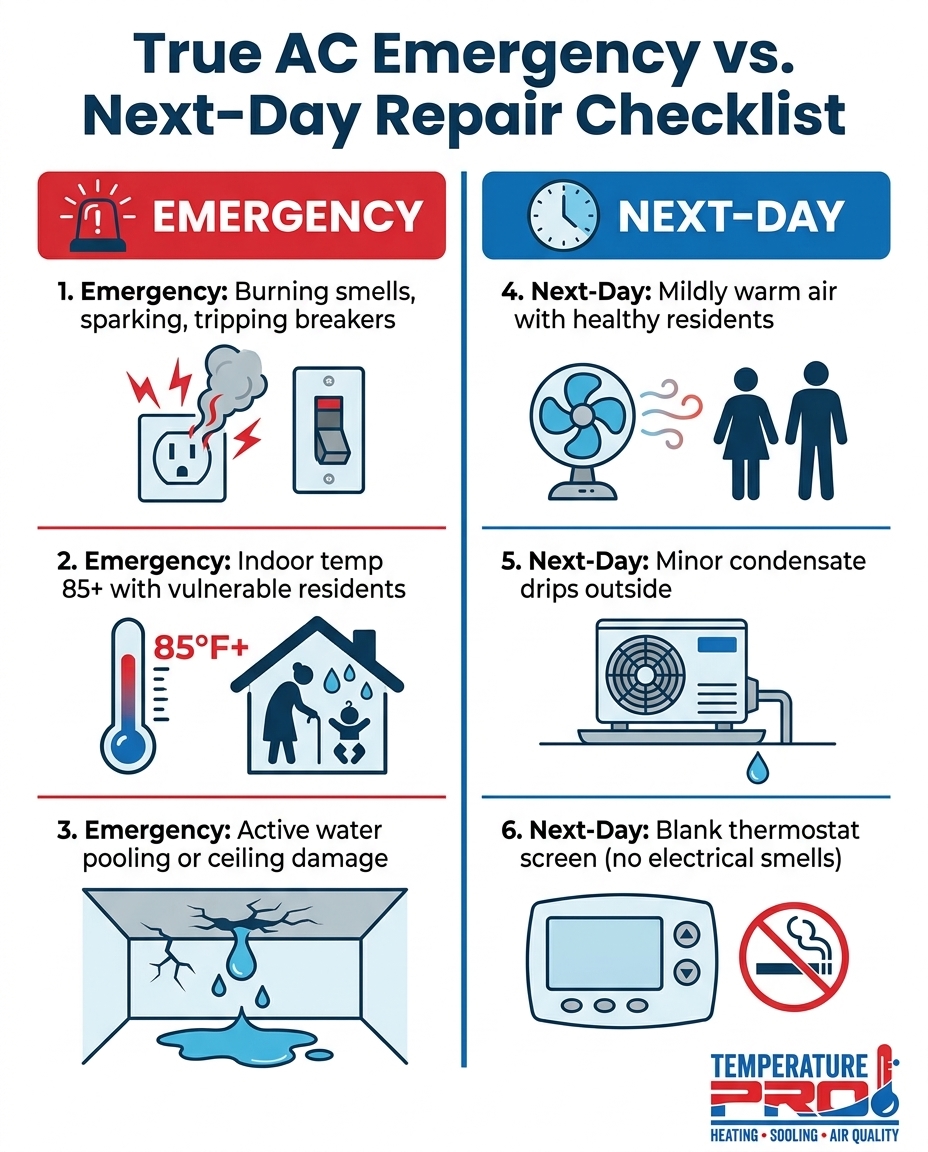
• Immediate Danger — Examples: Burning smells, sparking, rapid water leaks, 85+ degree indoor temp with vulnerable residents — Recommended Action: Shut off system immediately; call for emergency repair.
• System Risk — Examples: Frozen coils, continuous loud grinding, tripping breakers — Recommended Action: Shut off system to prevent damage; wait for morning service.
• Uncomfortable but Safe — Examples: Mildly warm air, blank thermostat (no smells), slow outdoor drip — Recommended Action: Use fans, stay hydrated, schedule a next-day repair.
By categorizing the symptoms your system is showing, you take control of the situation. You can make an informed, confident decision about whether to pick up the phone right now or wait for the sun to come up.
When Indoor Temperatures Become a True Health Hazard
A lack of cooling quickly transitions from a frustrating comfort issue to a serious medical emergency when the heat becomes trapped indoors. A 95+ degree heat index dramatically reduces the human body's ability to cool itself. This is especially true indoors, where poor ventilation can trap stagnant, hot air, turning your living room into an oven.
In our years of restoring comfort across Baton Rouge's hot-humid subtropical climate, we've seen firsthand how an AC failure creates unique health hazards. The rapid accumulation of indoor heat is compounded by thick moisture in the air. High indoor humidity prevents sweat from evaporating off your skin, making the ambient temperature feel significantly hotter and far more dangerous than a dry heat would.
Identifying Vulnerable Household Members
Healthy adults can often tolerate a warm house overnight with the help of ceiling fans and cold water. However, you must carefully evaluate who is inside the home. An indoor temperature that rapidly climbs past 85 degrees constitutes a true emergency if you have vulnerable residents present. This includes:
• Infants and toddlers: Young children cannot regulate their body temperatures as effectively as adults.
• The elderly: Older adults are highly susceptible to heat exhaustion and heatstroke.
• Immunocompromised individuals: Those recovering from illnesses or taking certain medications may have a lowered tolerance for extreme heat.
• People with respiratory issues: Asthma and COPD can be severely aggravated by hot, thick, humid indoor air.
If any of these individuals are in the home and the indoor temperature is spiking, do not wait. We frequently see this urgency firsthand. For example, one Baton Rouge homeowner noticed their AC wasn't cooling properly on a Saturday evening right before Hurricane Ida hit. Because of the impending storm, rising indoor heat, and the urgent need for a safe environment, our technicians were dispatched late that evening to add refrigerant and fix a leak, providing critical relief before the weather worsened. When health and safety are on the line, immediate action is the only correct choice.
Electrical Warning Signs You Should Never Ignore
While a warm house is uncomfortable, electrical failures are actively dangerous. Critical electrical symptoms mandate an immediate system shutdown and an emergency call to prevent serious fire hazards. If your air conditioner is exhibiting any of the following signs, turn off the power at the thermostat and do not attempt to run the system again.
• Acrid, burning smells: If you detect an odor resembling melting plastic, burning rubber, or electrical ozone coming from your vents, shut the system down instantly. This usually indicates melting wire insulation or a failing motor.
• Sparking or popping noises: Loud buzzing, popping, or visible sparks originating from the indoor air handler or the outdoor condenser mean electrical arcing is occurring. This is a severe fire risk.
• Continuous breaker tripping: If your system repeatedly trips the circuit breaker upon startup, it is drawing a dangerous amount of current. This is often a sign of a grounded compressor or a major short circuit.
• Scorched components: If you can see black soot or scorch marks around your thermostat, indoor unit, or outdoor disconnect box, the system has already experienced an electrical failure.
Our technicians always warn customers: never attempt to reset a continuously tripping breaker more than once, and never open electrical panels yourself to investigate the wiring. These situations require professional air conditioning services. High-voltage HVAC components carry enough current to cause fatal injuries, and bypassing safety switches can easily start a house fire. Treat any electrical anomaly as a strict, non-negotiable emergency.
Water Leaks and Property Damage Risk in Extreme Humidity
A standard central AC unit doesn't just cool the air; it removes moisture. During peak summer weather, an air conditioner can produce 5 to 20 gallons of condensation per day. In our region, July peak summer humidity in Louisiana causes rapid condensate buildup. Our crews frequently respond to homes where overwhelmed drain lines have turned a minor drip into a severe water damage emergency.
The Problem: Overwhelmed Drainage Systems
Your air conditioner collects moisture from the air via the indoor evaporator coil. This water drips into a drain pan and flows outside through a condensate drain line. When the local humidity is oppressive, the sheer volume of water moving through this system is massive. If that line becomes obstructed, the system backs up rapidly.
The Cause: Clogs and Frozen Coils
Clogged condensate drain lines are incredibly common in mid-summer. Algae, mold, and dust mix with the water to form a thick sludge that blocks the PVC pipe. When this happens, the drain pan overflows. Another major cause of water damage is a completely frozen evaporator coil. If your system freezes into a block of ice due to poor airflow or low refrigerant, that ice will eventually thaw, potentially releasing a massive volume of water into the home all at once.
The Solution: Immediate Shutdown and Triage
If water is actively pooling around your indoor unit or dripping through your ceilings, immediate intervention is necessary to prevent severe property damage. Ruined drywall, collapsed ceilings, and warped hardwood floors cost thousands of dollars to repair.
• Turn the system off: Stop the condensation process immediately.
• Locate the indoor unit: Check the drain pan (usually in the attic or a utility closet) to see if it is overflowing.
• Clear the area: Move valuables, electronics, and furniture away from the leak.
• Call for help: An active, spreading leak inside the house qualifies as an after-hours emergency to protect your property.
AC Symptoms That Can Safely Wait Until Morning
Not every AC malfunction requires a frantic late-night phone call. Providing honest triage is crucial so you aren't pushed into paying after-hours emergency fees if the repair can safely wait until the next morning. As a veteran-owned business, our team at TemperaturePro Baton Rouge believes in operating with strict integrity—which means telling you when it is perfectly safe to hold off on a service visit.
Identifying Non-Emergencies
If your home is secure, your family is healthy, and your property is not actively taking on water, you can likely manage until standard business hours. Here are the symptoms that generally do not require a midnight dispatch:
• Mildly warm air blowing from vents: The system is running, but the air isn't ice cold. As long as the indoor temperature remains tolerable and no vulnerable residents are at risk, this can wait.
• Minor outdoor condensation: Small puddles or drips around the outdoor condenser unit are normal and do not threaten your home's interior.
• A blank thermostat screen: If the screen is dead, but there are no burning smells or sparking sounds, it is likely a tripped float switch, a blown low-voltage fuse, or dead batteries.
• A slightly noisy fan motor: If the outdoor fan is humming a bit louder than usual but is still circulating air effectively and not grinding or screeching, it will likely survive the night.
If you determine your situation falls into these categories, your best course of action is to shut the system down to prevent further strain. Open windows if the outside air is cooler, turn on all ceiling fans, and review temporary cooling tips during an AC breakdown to stay comfortable overnight. Saving the emergency fee is always the smarter financial move when safety is not compromised.
True AC Emergency vs. Next-Day Repair Checklist
How to Safely Shut Down Your System Overnight
If you have decided that your AC issue is not a dire emergency, you still need to take action to protect the equipment. Leaving a struggling or malfunctioning air conditioner running all night is a guaranteed way to turn a minor repair into a major replacement. You must secure the HVAC system while waiting for a next-day repair.
We see this pattern often: a local customer has a system issue that requires a specific part replacement. Because they follow our dispatcher's instructions to safely shut down their system to prevent further damage, they avoid destroying their compressor while waiting for our technician to return and install the warranted part.
Step-by-Step System Shutdown
1. Switch the thermostat to 'Off': Move the setting from 'Cool' to 'Off'. This immediately stops the compressor from overworking, overheating, or sustaining further mechanical damage.
2. Adjust the fan setting: If you suspect a frozen evaporator coil (usually indicated by ice on the refrigerant lines or zero airflow), switch the fan setting from 'Auto' to 'On'. This forces the indoor blower motor to circulate warm house air over the frozen coil, helping to safely thaw the system before the technician arrives.
3. Check the air filter: A severely clogged, filthy air filter restricts airflow and is the leading cause of frozen coils. Pull the filter out and inspect it. If it is caked in dust, leave it out while the system thaws. This is a safe, easy fix to check while waiting.
4. Leave the heavy lifting to the pros: Do not attempt any DIY electrical testing or refrigerant repairs. Once the system is off and thawing, wait for a qualified technician to properly diagnose your HVAC problem in the morning.
Transitioning from Emergency Triage to Long-Term Reliability
Summer heat stress tests every single component of an HVAC system. Our maintenance experts at TemperaturePro Baton Rouge regularly find that these extreme conditions expose hidden weaknesses that lay dormant during the milder spring months. When the temperature refuses to drop at night, your system works overtime, pushing aging capacitors, worn contactors, and low refrigerant levels to their absolute breaking point.
Once the immediate crisis of an 8 PM breakdown is resolved, the focus must shift to preventing it from ever happening again. Surviving July peak summer humidity in Louisiana requires more than just reactive fixes; it requires a proactive approach to system health. You cannot afford to wait for the system to fail before giving it attention.
The Value of Proactive Care
Routine inspections catch electrical wear, slow refrigerant leaks, and partially clogged drain lines long before they escalate into an after-hours nightmare. A technician can test the microfarads on a capacitor and replace it weeks before it actually fails and leaves you sweating in the dark.
Enrolling in a preventative AC maintenance plan provides absolute peace of mind throughout the most demanding months of the year. Regular maintenance ensures your coils are clean, your drains are clear, and your electrical connections are tight. By bridging the gap between emergency crisis management and long-term reliability, you protect your investment and guarantee your home remains a comfortable sanctuary, no matter how hot it gets outside.
Frequently Asked Questions About Summer AC Emergencies
What is considered a true AC emergency?
A true AC emergency involves situations that threaten your safety, health, or property. This includes electrical burning smells, sparking, or continuous breaker tripping. Severe water leaks risking ceiling or floor damage also qualify. Finally, a complete system failure when vulnerable individuals (infants, elderly) are present in extreme heat is a medical emergency requiring immediate attention.
Should I call for 24 hour hvac repair or wait until morning?
You should call immediately if there are health risks, electrical hazards, or major water leaks actively damaging your home. You can safely wait until morning if the issue is minor warm air blowing, the indoor temperature is tolerable for healthy residents, and there are no signs of electrical or water damage. Waiting can save you unnecessary after-hours fees.
What should I do if my AC freezes up at night?
Turn the thermostat to the OFF position and switch the fan setting to ON. This stops the cooling cycle but keeps air moving over the ice to help it melt safely. Allow the system to thaw completely before a technician arrives, which usually takes several hours. You should also check and replace the air filter if it is dirty, as restricted airflow causes freezing.
Can a frozen AC wait until morning?
Yes, a frozen AC can almost always wait until morning as long as the melting ice is draining properly and not overflowing into the home. The system must be turned off to thaw completely anyway before a technician can properly diagnose or repair it. This makes it perfectly safe, and actually necessary, to wait for morning service.
How long can you safely go without AC in the summer?
How long you can safely go without cooling depends entirely on the outdoor heat index, your home's insulation, and the health of the residents. Healthy adults can often manage overnight with open windows and ceiling fans. However, vulnerable individuals, such as the elderly or infants, should not endure prolonged exposure to high indoor heat and require a faster solution.
Do you offer 24/7 emergency ac service in baton rouge?
Yes, true emergencies are handled promptly to ensure your safety and prevent severe property damage. We prioritize calls involving electrical hazards, major leaks, and health risks. We also provide honest triage over the phone to help determine if an immediate after-hours visit is truly necessary or if you can safely save money by waiting until morning.
Get Honest, Reliable AC Repair When You Need It Most
Whether you are facing a true late-night emergency with sparking wires and overflowing water, or you just need to schedule a standard next-day repair for a sluggish system, expert help is available. You don't have to guess about your safety. Rely on honest triage to make the best decision for your home, your family's safety, and your budget.
When you need a clear, no-nonsense assessment of your cooling system, don't wait for the problem to worsen. Contact our team for professional air conditioning services to restore your comfort safely and effectively.
Thank you! Your submission has been received!
Oops! Something went wrong while submitting the form.
Prevent sudden heating breakdowns with these home maintenance tips and troubleshooting insights. Get clear answers on why pre-winter HVAC inspections matter.
Most homeowners think a late-week appointment is the most convenient choice for an HVAC tune-up. Discover why our dispatchers highly recommend booking on a Tuesday morning instead.
A furnace shutting down repeatedly during early fall tests is frustrating, but jumping the safety switch is a dangerous mistake. Understand the severe fire hazards of this DIY workaround.