Why Every Baton Rouge Homeowner Needs a Post Hurricane HVAC Checklist
Following a post hurricane HVAC checklist for homeowners could be the difference between a quick recovery and a costly system failure. After a storm rolls through Baton Rouge, the instinct is to check the roof, clear the yard, and get the lights back on. But your HVAC system — one of the most expensive appliances in your home — may be quietly suffering from damage you can't see.
Here is a quick checklist to get you started safely:
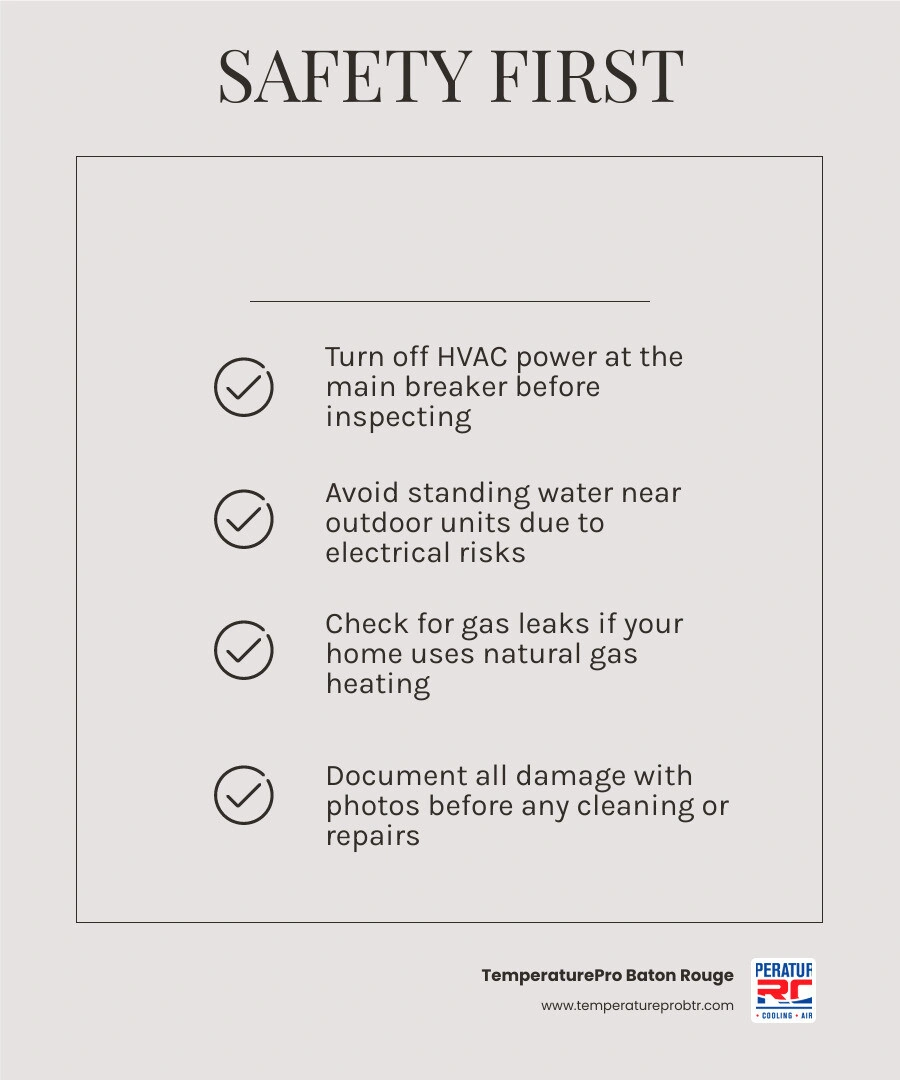
1. Turn off power to your HVAC system at the main breaker before inspecting anything
2. Stay away from standing water near the outdoor unit — treat it as an electrical hazard
3. Check for gas leaks if your home uses natural gas heating
4. Inspect the outdoor unit for debris, bent fins, and any shifting off its pad
5. Do not restart the system if the unit was submerged or if you see mud inside electrical compartments
6. Replace wet air filters immediately to prevent mold growth
7. Document all damage with date-stamped photos before touching or cleaning anything
8. Call a licensed HVAC technician for a full inspection before running the system
Flooding, high winds, and storm surges are all part of hurricane season in Louisiana. Mold can begin growing inside wet ductwork within just 24 to 48 hours, and a flooded outdoor unit that gets switched back on too soon can destroy the compressor entirely. In coastal areas like South Louisiana, saltwater from storm surges adds another layer of risk — accelerating corrosion on coils and electrical contacts far faster than fresh water ever would.
This guide walks you through every step so you can inspect safely, document thoroughly, and know exactly when to call in a professional.
Before you even think about walking out to your backyard to check your air conditioner, we must emphasize safety first. Hurricanes bring unpredictable hazards that linger long after the winds have died down. As we navigate the 2026 hurricane season, keeping yourself and your family safe is our absolute priority.
• Beware of Standing Water and Electrical Hazards: Standing water around your home is a major conductor of electricity. If your outdoor condenser unit is sitting in water, or if you have to walk through puddles to reach it, do not approach it. Nearly 80% of power outages across the United States are caused by weather events. When that power flickers back on, flooded electrical equipment can short-circuit, creating a severe electrocution hazard.
• Watch for Downed Power Lines: High winds frequently tear down overhead power lines. Scan your yard and the surrounding area carefully. If you spot a downed line, stay at least 30 feet away and report it to your utility provider immediately.
• Check for Gas Leaks: If your home in Prairieville or Denham Springs relies on natural gas for heating or appliances, use your nose before your eyes. If you smell rotten eggs, or hear a hissing sound, leave the area immediately and call your gas company.
• Gear Up Properly: When you are cleared to inspect, protect yourself. Wear heavy-duty gloves, safety glasses, and sturdy, rubber-soled boots. Storm debris often contains hidden nails, broken glass, and sharp metal.
• Cut the Power: Never inspect your HVAC components while they are connected to power. Switch off the dedicated breaker for your heating and cooling system at your home's main electrical panel.
Taking these precautions is just the first step in protecting your household. For a complete look at how to get your home ready before the clouds even gather, check out our Hurricane Season HVAC Preparation Guide.
The Outdoor Unit Post Hurricane HVAC Checklist for Homeowners

Once you have verified that the surrounding area is safe and the power is completely shut off, it is time to perform a visual assessment of your outdoor condenser unit. This is the heart of your cooling system, and because it sits completely exposed to the elements, it takes the brunt of any tropical storm or hurricane.
Understanding how local weather patterns impact your system is incredibly helpful here. For more details on this, read about How Louisiana Climate Affects Your HVAC System.
When evaluating your outdoor unit, look closely for the following issues:
• Unit Alignment and Shifting Pads: The concrete or composite pad beneath your condenser is designed to keep the unit perfectly level. Heavy rain and localized flooding can wash away the supporting soil, causing the pad to tilt or shift. Even a minor shift of an inch or two can put immense stress on the copper refrigerant lines connecting the outdoor unit to your home. If these lines kink, crack, or begin hissing, you have a refrigerant leak on your hands.
• The 30% Rule for Bent Fins: The delicate aluminum fins surrounding your outdoor unit are critical for heat exchange. Flying debris or high-velocity winds can easily flatten or puncture these fins. As a rule of thumb, if more than 30% of the fins are flattened, the system's heat exchange capability will be severely compromised. This forces your compressor to work much harder, leading to rapid wear and eventual failure.
• Saltwater Corrosion and Coastal Surge: If you live in coastal areas or low-lying communities near St. Gabriel or French Settlement, storm surges can carry saltwater inland. Saltwater is incredibly destructive to HVAC systems, causing rapid oxidation. It eats away at aluminum fins and copper coils at an accelerated rate compared to fresh water. If your unit was exposed to salt spray or saltwater flooding, it requires immediate professional attention and a specialized rinse to prevent permanent ruin.
Assessing Outdoor Damage with a Post Hurricane HVAC Checklist for Homeowners
To keep your inspection organized, we recommend breaking down your outdoor assessment into clear, actionable visual checks:
• Clear the Perimeter: Remove any large branches, leaves, or wind-blown trash from around the unit. Aim to maintain an open perimeter of at least 18 to 24 inches around the condenser. Even a small amount of debris clinging to the sides can block up to 25% of the airflow, forcing your system to work harder.
• Inspect the Fan Grill: Peer through the top grill of the unit. Are there twigs, pine needles, or leaves trapped inside near the fan blades? Do not reach inside to clean it yourself, as you risk damaging delicate wiring or the fan motor. Note it down so a professional can clean it safely.
• Look for Projectile Damage: Hurricanes turn everyday yard items into high-velocity projectiles. Check the metal casing for deep dents or punctures that may have damaged the internal compressor or electrical control board.
If you notice any of these issues during your visual walkthrough, it is highly likely your system will need professional care before it can safely run again. Learn more about identifying these warnings in our guide on Signs Your AC Needs Repair in Louisiana Heat.
Inspecting Indoor HVAC Components and Ductwork
While the outdoor unit faces the wind and rain directly, the indoor components of your HVAC system are also highly vulnerable to storm damage. Water can find its way into your home through roof leaks, damaged vents, or rising floodwaters, impacting your air handler, furnace, and ductwork.
• Check the Air Handler and Furnace: If your system is located in a closet, crawl space, or utility room, inspect the base of the unit for standing water or watermarks. Even a small amount of moisture can ruin the blower motor or the gas valve.
• Examine Your Air Filters: Pull out your air filter. Is it damp, sagging, or covered in dirt? A wet air filter is a major hazard. It restricts airflow and serves as the perfect breeding ground for mold spores, which will quickly be distributed through your home once the system starts.
• The 24-48 Hour Mold Window: Mold can begin to grow in wet insulation or ductwork within just 24 to 48 hours. If your home experienced water intrusion, acting fast is crucial to protect your indoor air quality.
To help you understand the severity of water exposure, here is a quick comparison of how different water sources impact your system:
• Primary Risk — Freshwater Flooding (Rain/River): Silt, mud, and electrical short-circuits. — Saltwater Flooding (Storm Surge): Severe, rapid corrosion of copper and aluminum.
• Electrical Impact — Freshwater Flooding (Rain/River): High risk of shorting; components may be salvageable if dried properly. — Saltwater Flooding (Storm Surge): Extreme risk; electrical contacts and boards are usually permanently ruined.
• Ductwork Impact — Freshwater Flooding (Rain/River): Saturated insulation must be replaced; metal ducts can sometimes be sanitized. — Saltwater Flooding (Storm Surge): Saturated insulation must be replaced; salt residue accelerates duct rust.
• Recommended Action — Freshwater Flooding (Rain/River): Professional inspection and deep cleaning. — Saltwater Flooding (Storm Surge): Complete system replacement is almost always required.
Dealing with water damage can be overwhelming, but having a clear plan helps. You can read our detailed Post-Storm HVAC Checklist for Louisiana Homeowners to navigate this process.
If the damage is extensive, you will need to weigh your options. We have put together helpful resources to guide you through this decision, including our guides on When to Repair vs Replace Your HVAC System and Repair vs Replace Your AC in Louisiana.
Indoor Steps on Your Post Hurricane HVAC Checklist for Homeowners
When inspecting your indoor system, pay close attention to your ductwork, especially if it runs through an attic or crawl space:
• Look for Disconnected Ducts: The extreme pressure changes and high winds of a hurricane can rattle your home's structure, sometimes causing sections of ductwork to pull apart or collapse.
• Check for Water Stains: Inspect the ceiling around your vents and any visible ductwork in your attic. Water stains or dripping water indicate that rain has entered your ventilation system.
• Sniff for Musty Odors: If you detect a damp, earthy, or musty smell near your return vents, mold may already be growing inside.
Ensuring your indoor air is clean and your system is sealed is vital for getting through the hot months ahead. Discover how to keep your home comfortable by reading How to Make Sure Your AC Survives a Louisiana Summer.
Frequently Asked Questions about Post-Storm HVAC Care
Is it safe to turn on my AC if the outdoor unit was in standing water?
No, it is not safe. If water rose high enough to submerge any part of your outdoor condenser unit, you must keep the power off.
Water can easily penetrate the electrical compartments, the fan motor, and the compressor terminals. Turning the system on while moisture, mud, or silt is trapped inside can cause an immediate electrical short, permanently destroying the compressor or starting a fire. Always schedule a professional inspection to perform an insulation test on the motor windings before restoring power.
How does saltwater affect my AC unit differently than fresh water?
Saltwater is incredibly corrosive. While freshwater flooding carries dirt and debris, saltwater carries dissolved salts that cause rapid oxidation.
When saltwater contacts aluminum fins and copper coils, it initiates a chemical reaction that degrades the metal within days. This can destroy the heat transfer capabilities of your system and lead to catastrophic refrigerant leaks. While a freshwater-damaged unit can sometimes be cleaned and repaired, saltwater exposure almost always requires a complete system replacement to ensure safety and reliability. Most HVAC systems last 10–15 years under normal conditions, but saltwater exposure can end a system's lifespan instantly.
For more on system longevity, read about How Long Does an AC System Last in Louisiana or the Average Lifespan of an AC System in the South.
What should I do if my circuit breaker keeps tripping after a storm?
If your HVAC circuit breaker trips after a storm, follow the one-reset rule: you may attempt to reset the breaker exactly once. If it immediately trips again, do not try to reset it a second time.
A repeatedly tripping breaker is a clear warning sign of a severe electrical short, wind-driven rain inside the outdoor electrical panel, or a seized compressor motor. Forcing the breaker to reset can cause permanent damage to your home's electrical panel or lead to an electrical fire. Keep the breaker off and call a certified technician to perform a professional diagnostic.
Conclusion
Recovering from a hurricane is a step-by-step process, and your comfort and safety depend on taking care of your home's heating and cooling system. By following a thorough post hurricane HVAC checklist for homeowners, you can protect your investment, avoid dangerous electrical hazards, and keep your indoor air clean and healthy.
At TemperaturePro Baton Rouge, we are a family and veteran-owned HVAC company dedicated to helping our neighbors across Baton Rouge, Prairieville, Gonzales, Denham Springs, Walker, Central, Zachary, St. Gabriel, and French Settlement, LA. We provide fast, reliable emergency AC services, comprehensive inspections, and preventative maintenance to ensure your home remains a safe haven.
If you suspect your system has suffered storm damage, or if you are considering an upgrade to a more resilient system, explore our AC System Upgrade Guide.
Don't take chances with your family's safety or comfort. Contact us today to schedule our professional HVAC services and let our certified technicians give you true peace of mind.