Why Mould Is Such a Big Problem for Louisiana Homeowners
How your HVAC system prevents mould in Louisiana comes down to one thing: controlling moisture. Louisiana's subtropical climate means humidity levels regularly climb above 70% — well past the 60% threshold where mould starts to thrive. Mould spores are always present in the air inside your home. They only become a problem when they land on a damp surface and take hold. In Baton Rouge and the surrounding communities, your HVAC system is the first and most important line of defence against that happening.
When your system is working properly, it pulls excess moisture out of the air as it cools your home. When it isn't — whether due to a clogged drain line, a dirty filter, or an oversized unit that short-cycles — humidity builds up fast. And in Louisiana's heat, mould can begin colonising damp surfaces within just 24 to 48 hours of a system shutdown.
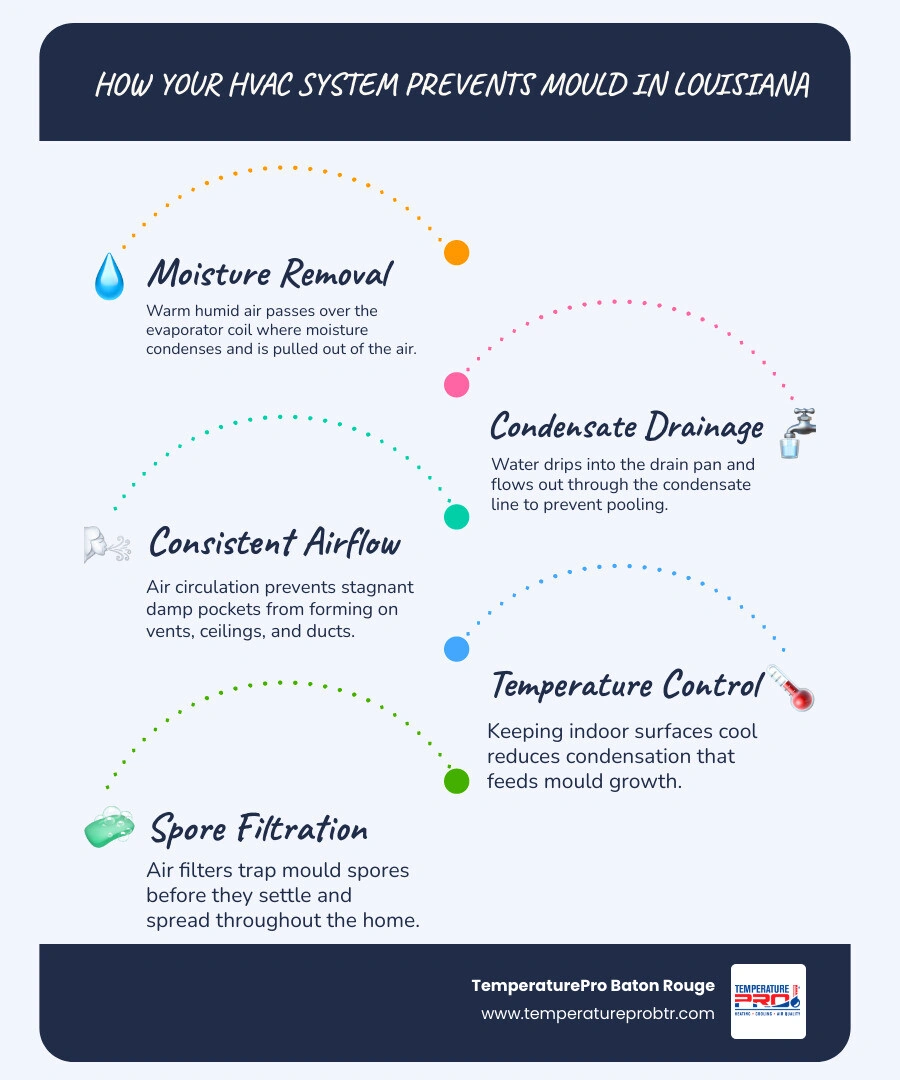
Here is a quick breakdown of how your HVAC system helps prevent mould:
• Dehumidification - Your AC removes moisture from indoor air as part of the normal cooling process
• Airflow - Consistent circulation prevents stagnant, damp pockets of air from forming
• Temperature control - Keeping surfaces cool reduces the condensation that feeds mould growth
• Filtration - Air filters trap mould spores before they can settle and spread
• Drainage - Condensate lines carry moisture out of your home so it does not pool inside the system
The sections below cover the causes, warning signs, maintenance habits, and upgrades that matter most for keeping mould out of your home in Louisiana's climate.
How Your HVAC System Prevents Mould in Louisiana
Your air conditioner does not "kill mould" like a superhero with a cape. What it does do is remove the conditions mould needs to grow. That is the real win.
As warm, humid air passes over the evaporator coil, the coil pulls out both heat and moisture. That moisture condenses on the coil, drops into the drain pan, and leaves through the condensate line. At the same time, the system keeps air moving so moisture is less likely to linger on vents, ceilings, and duct surfaces.
A properly operating system helps by:
• Lowering indoor relative humidity
• Removing moisture during normal cooling cycles
• Keeping air circulating through the home
• Filtering airborne dust and spores
• Draining condensation safely outside or to an approved drain
If any part of that process breaks down, mould risk rises quickly in Louisiana's long humid season.

How your hvac system prevents mould in louisiana through dehumidification
Dehumidification is the heart of the process. During cooling, refrigerant inside the evaporator coil absorbs heat from indoor air. Because the coil is cold, water vapor in the air condenses on it. That is why AC systems naturally act like dehumidifiers when they are running correctly.
For many homes, the system needs enough runtime to do this well. Short cycles often cool the air before enough moisture is removed. In general, longer cycles in the 15 to 20 minute range are better for dehumidification than quick bursts.
That is why a home can feel cool but still feel sticky. Temperature and humidity are not the same thing. If the system drops the temperature too fast, the latent moisture load stays behind.
Why Louisiana homes are more vulnerable to HVAC mould
Homes in Baton Rouge, Prairieville, Gonzales, Denham Springs, Walker, Central, Zachary, St. Gabriel, and French Settlement face a mold-friendly climate most of the year.
Why?
• Outdoor humidity is often extremely high
• Dew points stay elevated for long stretches
• Attics can get very hot, which increases duct sweating if ducts leak
• Mild weather can still be humid, even when the AC does not run much
• Storms and water intrusion can push indoor moisture levels up fast
That combination makes HVAC moisture control especially important here. If you want a deeper look at local climate effects, read how Louisiana climate affects your HVAC system.
The humidity range that helps stop mould growth
The target for most homes is simple:
• 30-50% — What it means: Ideal comfort and mold prevention range
• 50-55% — What it means: Watch closely, especially in summer
• 60%+ — What it means: Mold can begin to thrive
• 70%+ — What it means: Strong breeding conditions for mold
The EPA guidance commonly referenced for indoor comfort and mold prevention is 30% to 50% relative humidity. Once indoor humidity gets to 55% and above, we start paying much closer attention. At 60% or higher, mould risk rises. Over 70%, mould has exactly the kind of environment it likes.
A simple hygrometer can help you monitor indoor humidity room by room.
Common Causes of Mould in HVAC Systems in Humid Louisiana Homes
Most HVAC mould problems are moisture problems first. The spores are already around. The question is whether your system is giving them a wet place to settle.
Common causes include:
• Clogged condensate drain lines
• Standing water in the drain pan
• Dirty filters that trap moisture and restrict airflow
• Leaky ducts pulling in hot, humid attic or crawlspace air
• Wet or damaged duct insulation
• Dirty blower compartments and coils with dust buildup
• Long system shutdowns during humid weather
• Water damage from roof leaks, plumbing leaks, or storms
A 2004 study found about 20% of buildings across the US, Canada, and Europe showed signs of dampness. In Louisiana, that statistic feels less surprising than we would like.
How your hvac system prevents mould in louisiana when drainage and airflow are working properly
When drainage and airflow are healthy, the system dries itself much more effectively.
That means:
• The coil gets wet during cooling, then drains correctly
• The pan does not stay full of standing water
• The condensate line carries moisture away
• Strong airflow helps the coil avoid staying damp too long
• The fan setting is usually best left on auto so moisture is not re-evaporated and blown back into the home after a cooling cycle
A clean, dry-moving system is much less inviting to mould than a dirty, wet, stagnant one.
The most common mould hotspots inside the system
If mould develops, it often shows up in the same trouble spots:
• Evaporator coils
• Drain pans
• Condensate lines
• Blower compartments
• Supply vents and registers
• Return ducts
• Wet duct insulation
These areas are dark, enclosed, and often dusty. Add moisture, and you have a tiny unwanted greenhouse.
What causes mould even when the house feels cool
This is one of the most common homeowner frustrations: "My house is cold, so why does it still feel damp?"
Usually, one of these issues is involved:
• The AC is oversized and short-cycling
• The thermostat is satisfying too quickly
• Return ducts are leaking and pulling in humid air
• Airflow is imbalanced
• Negative pressure is drawing outdoor moisture into the home
• The system is cooling temperature well but not removing enough humidity
An oversized system is a classic Louisiana problem. It cools fast, shuts off fast, and leaves moisture behind. For more practical tips, see AC and humidity control tips for Gulf Coast homes.
Best HVAC Maintenance Tasks to Reduce Mould Risk
Preventing mould is much easier than dealing with it after it spreads through the system. The best maintenance plan focuses on moisture, airflow, and cleanliness.
Homeowner maintenance habits that make the biggest difference
A few simple habits go a long way:
• Change 1-inch filters every 1 to 3 months, or follow manufacturer guidance for deeper media filters
• Check visible vents monthly for dust, dark spots, or moisture
• Flush the condensate line periodically if your system and installer guidance allow it
• Use bathroom exhaust fans during showers
• Run kitchen ventilation when cooking
• Keep interior doors open enough for balanced airflow
• Leave the thermostat fan on auto rather than on
• Clear debris around the outdoor unit
• Use a hygrometer to keep an eye on humidity levels
Dirty filters are a bigger problem than many people realize. They restrict airflow, can contribute to coil icing, and after thawing may leave excess moisture behind.
Professional maintenance tasks that prevent hidden mould
Some of the most important mould-prevention work is not DIY-friendly because it involves internal components, drainage checks, and airflow measurement.
During professional maintenance, we may check:
• Evaporator coil condition and cleanliness
• Drain pan and condensate line operation
• Airflow and static pressure
• Duct leakage and sweating risks
• Filter fit and filtration level
• Blower compartment cleanliness
• Signs of short cycling or sizing problems
• Indoor humidity trends
Twice-yearly HVAC service is a smart goal in our climate. For more on why routine care matters, visit benefits of regular AC maintenance.
Seasonal maintenance for Louisiana spring and summer
Spring and early summer are prime times for mould prevention because that is when humidity starts climbing hard.
A smart seasonal checklist includes:
• Pre-summer system tune-up
• Drain line and pan inspection
• Coil cleaning if needed
• Filter replacement
• Duct inspection for leaks or sweating
• Thermostat and humidity setting review
• Post-storm inspection if the home had water intrusion
Mild-weather months matter too. In Louisiana, humidity does not politely wait for July. Homes can get clammy in spring or even during warmer winter stretches if the system is not removing enough moisture.
Helpful reads:
• summer AC maintenance tips
• how Louisiana heat and humidity affect AC lifespan
Signs Your HVAC System May Have Mould and When to Call a Professional
Mould inside an HVAC system is often hidden, but it usually leaves clues.
Early warning signs homeowners should not ignore
Watch for signs like:
• Musty odor when the AC starts
• Visible black, green, or fuzzy spots around vents
• Persistent stale smell in the house
• Allergy-like symptoms that improve when you leave home
• Coughing, headaches, or throat irritation indoors
• Weak airflow from some vents
• Excess condensation near equipment or ductwork
• Water dripping around the indoor unit
• Dust buildup around registers that seems damp or sticky
A musty smell from vents is one of the clearest red flags. If the odor gets stronger when the system kicks on, the issue may be near the coil, pan, blower, or nearby ductwork.
When DIY stops and professional help is the safer choice
If you can see a little dust on a vent cover, you can clean the vent cover. That is not the same as solving HVAC mould.
Professional help is the safer move when:
• The smell keeps coming back
• Mould appears inside the air handler or ductwork
• You see wet insulation
• There has been a flood, major leak, or roof intrusion
• The affected area is larger than about 10 square feet
• Household members have asthma, allergies, or weakened immune systems
• You suspect hidden mould but cannot see the source
HVAC systems have hidden sections that are hard to inspect without opening equipment. If insulation inside ducts is wet and mouldy, it may need replacement rather than cleaning.
After water intrusion, speed matters. Mould can keep spreading until the moisture source is corrected and wet materials are dried or removed.
If your home has had storm-related or leak-related moisture:
1. Stop the water source first.
2. Do not keep running a contaminated system without inspection.
3. Dry affected areas as quickly as possible.
4. Check ducts, insulation, and the air handler for moisture.
5. Have the system inspected if water reached HVAC components.
6. Address drainage issues before restarting normal operation.
If you are dealing with recurring water around your system, read solving AC drainage issues.
UV Lights, Dehumidifiers, and Other IAQ Upgrades That Help Prevent Mould
Sometimes maintenance alone is not enough for Louisiana humidity. In homes with persistent moisture issues, indoor air quality upgrades can add another layer of protection.
How UV lights help reduce microbial growth inside HVAC equipment
UV-C lights are installed near the evaporator coil or other high-moisture areas. They work by damaging the genetic material of microorganisms, which helps reduce growth on coil surfaces and nearby components.
They can be especially useful for:
• Keeping coil surfaces cleaner
• Reducing microbial buildup near the drain pan
• Limiting growth in dark, damp equipment sections
But UV lights are not a standalone cure. They do not fix clogged drains, poor airflow, or oversized equipment. Think of them as backup, not magic.
When a whole-home dehumidifier makes sense in Louisiana
A whole-home dehumidifier can make a lot of sense when:
• Indoor humidity stays high even with AC running
• The home feels cool but clammy
• Humidity rises during mild weather
• The system is oversized or short-cycles
• The home is tightly sealed and holds moisture
• Family members are sensitive to poor indoor air quality
These systems help maintain steadier humidity year-round, including those in-between seasons when the AC may not run enough to handle moisture by itself.
Indoor air quality upgrades that support mould prevention
Other upgrades that can support mould prevention include:
• Better whole-home filtration
• Air purifiers that help capture airborne particles
• Duct sealing to reduce humid air infiltration
• Smart controls with humidity monitoring
• Airflow balancing improvements
Helpful resources:
• how to improve indoor air quality in humid climates
• advanced purifier options for better air quality
• indoor air quality solutions
Frequently Asked Questions About How Your HVAC System Prevents Mould in Louisiana
Can air conditioning kill mould or only prevent it?
Air conditioning helps prevent mould by controlling moisture and airflow. It does not remove established mould colonies on its own. If mould is already growing inside the system, the system may need cleaning, repair, and in some cases professional remediation.
How often should Louisiana homeowners inspect ducts and HVAC components for mould risk?
We recommend regular filter checks, visible vent checks, and twice-yearly HVAC maintenance. Duct inspections every 2 to 3 years can be helpful in humid Louisiana homes, and sooner if you have had leaks, flooding, musty odors, or airflow problems.
What indoor air quality level should I aim for to prevent mould?
Aim for 30% to 50% relative humidity indoors, and try to keep it under 60% at all times. A hygrometer makes daily monitoring easy. If you want more help with local IAQ solutions, visit IAQ indoor air quality Baton Rouge LA.
Conclusion
In Louisiana, mould prevention starts with moisture control. That is the big idea behind how your HVAC system prevents mould in Louisiana. When your system is sized correctly, drains properly, moves air consistently, and gets regular maintenance, it helps keep indoor humidity in the safer 30% to 50% range where mould struggles to grow.
For homeowners in Baton Rouge and nearby communities, that means paying attention to the small things before they become big things: filters, drain lines, airflow, duct leaks, and musty smells that should not be ignored.
At TemperaturePro Baton Rouge, we are family-owned and veteran-owned, and we treat every customer like family. If you want help improving humidity control and creating healthier indoor air in your home, learn more about indoor air quality services in Baton Rouge.