Why Louisiana Homeowners Need to Think Differently About Indoor Air
How to improve indoor air quality in humid climates is one of the most important things you can do as a homeowner in Baton Rouge, LA. Here's a quick overview of the most effective steps:
1. Control humidity - Keep indoor levels between 30-50% (EPA recommendation) using a dehumidifier
2. Replace air filters regularly - Every 30-60 days in humid climates like Louisiana
3. Use exhaust fans - Run them during and for 20 minutes after cooking or showering
4. Improve ventilation - Consider Energy Recovery Ventilators (ERVs) to bring in fresh air without outdoor humidity
5. Reduce indoor pollutant sources - Avoid harsh chemical cleaners and heavily scented products
6. Schedule HVAC maintenance - Clean coils, ducts, and check refrigerant levels regularly
7. Vacuum frequently - Use a HEPA vacuum to reduce dust, mold spores, and allergens
If you've ever walked into your Baton Rouge home and felt that heavy, sticky air that just won't quit — you're not imagining it. Louisiana's climate creates some of the most challenging indoor air conditions in the country. High outdoor humidity, frequent rain, and warm temperatures year-round push moisture into your home constantly. And once moisture gets in, it doesn't just make you uncomfortable. It feeds mold, encourages dust mites, and traps pollutants that circulate through your air every time your HVAC system runs.
According to the EPA, Americans spend around 90% of their time indoors — and indoor pollutant levels are often two to five times higher than outdoor air. In a climate like Baton Rouge's, that gap can be even wider. The good news is that with the right approach, you can breathe easier at home.
Why Indoor Air Quality is a Challenge in Louisiana’s Humid Climate
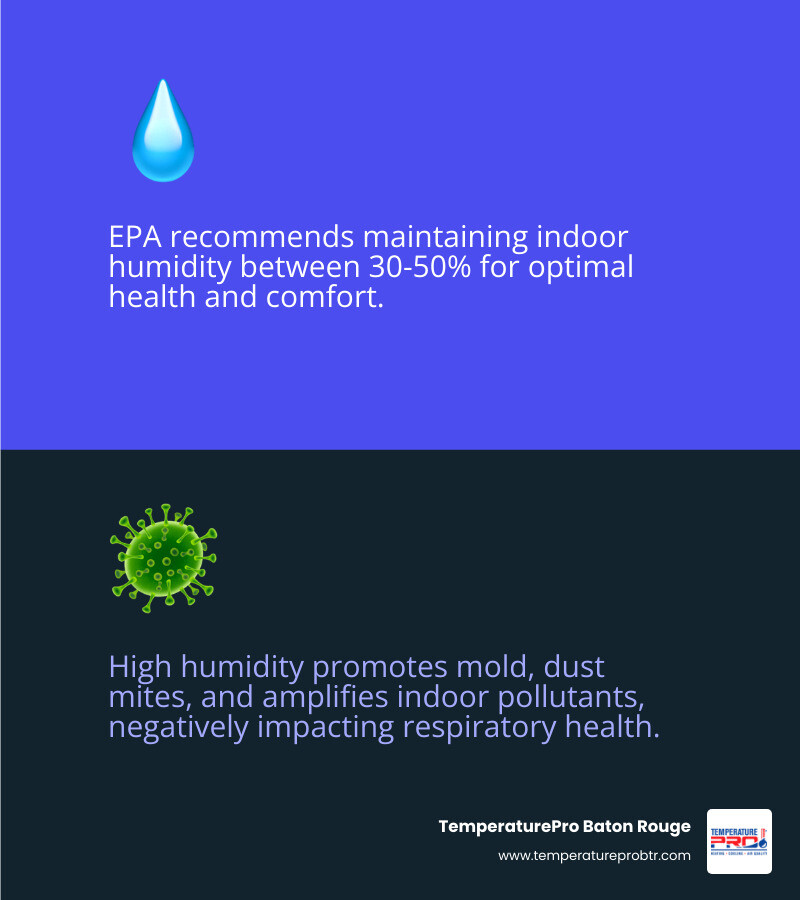
In the Bayou State, humidity acts like an accelerant for indoor air quality (IAQ) problems. While homeowners in drier states might just worry about dust, those of us in Baton Rouge, Prairieville, and Denham Springs have to battle a "moisture-first" environment. When the air outside is consistently above 60% or 70% humidity, it exerts pressure on your home, finding its way in through every crack, gap, and open door.
High humidity provides the perfect breeding ground for several common pollutants:
• Mold Spores: These are always present in the air, but they only become a problem when moisture levels stay elevated. In humid climates, mold can thrive in hidden spots like ductwork, behind drywall, or inside closets.
• Dust Mites: These microscopic pests love warm, damp environments. They thrive in drapes, carpets, and mattresses when humidity levels aren't kept in check.
• Volatile Organic Compounds (VOCs): These are gases released by household products like paints, cleaners, and new furniture. High humidity can actually increase the rate of "off-gassing," making the chemical smell in a new home even more intense.
• Bacteria: Moist environments allow certain bacteria to survive longer on surfaces and in the air.
When these pollutants accumulate, they can cause real respiratory distress. Many of our neighbors in Zachary or Central find that their allergies or asthma symptoms worsen when they are inside their own homes. If you notice persistent musty odors, headaches that go away when you leave the house, or Indoor Air Quality issues like condensation on your windows, it’s a sign that the moisture is winning.
How to Improve Indoor Air Quality in Humid Climates with Humidity Control
The single most effective way to protect your home's air is to control the moisture. The EPA recommends keeping indoor humidity between 30% and 50%. In Louisiana, hitting that 30% mark can be tough (and sometimes uncomfortable), so many experts suggest a target of 45–55% to balance comfort with health.
Why is this range so important? When humidity stays above 60%, the air feels "heavy," and mold growth becomes much more likely. On the flip side, keeping it within the ideal range helps you sleep better and allows your body to cool itself naturally through sweat evaporation.
While your air conditioner does remove some moisture as a byproduct of cooling, it isn't a dedicated dehumidifier. During the "shoulder seasons" in April or October, when it’s humid but not hot enough to run the AC constantly, your home can become a swamp. This is where dedicated dehumidification comes in.
• Coverage — Portable Dehumidifier: Single room or small area — Whole-Home Dehumidifier: Entire house via ductwork
• Maintenance — Portable Dehumidifier: Must empty water tank daily — Whole-Home Dehumidifier: Automatically drains
• Noise — Portable Dehumidifier: Can be loud in living spaces — Whole-Home Dehumidifier: Quiet (located near HVAC)
• Efficiency — Portable Dehumidifier: Lower; runs independently — Whole-Home Dehumidifier: Higher; works with HVAC
• IAQ Impact — Portable Dehumidifier: Localized — Whole-Home Dehumidifier: Comprehensive
For homeowners in the IAQ Indoor Air Quality Baton Rouge LA service area, a whole-home system is often the best investment. It integrates directly with your HVAC system to pull moisture out of the air before it ever reaches your vents, ensuring every room stays crisp and dry.
The Role of Advanced Filtration and Ventilation
If humidity control is the shield, then filtration and ventilation are the sword. Many homeowners think that buying the most expensive, thickest filter will solve their problems, but in humid climates, you have to be careful.
How to improve indoor air quality in humid climates using advanced filtration
We generally recommend high-quality pleated filters with a MERV-13 rating. These are excellent at capturing fine particles like mold spores, bacteria, and smoke. However, there is a common misconception about HEPA filters. While HEPA filters are the "gold standard" for air purifiers, they are often too dense for residential AC units. Using a HEPA filter in a standard HVAC system can restrict airflow so much that the system works harder, uses more energy, and might even freeze up.
In the humid environment of French Settlement or St. Gabriel, filters can actually become breeding grounds for mold if they get damp. That’s why we recommend a replacement cycle of every 30 to 60 days. If you have pets or severe allergies, you might even need to swap them monthly during the peak of a Louisiana summer. For those looking for even more protection, you can Enhance Air Quality with Advanced Purifiers that use UV light or ionization to neutralize biological contaminants that filters might miss.
How to improve indoor air quality in humid climates through routine maintenance
You wouldn't drive your car 50,000 miles without an oil change, and your HVAC system needs the same love—especially in our climate. Routine maintenance is essential for IAQ.
• Duct Cleaning: We recommend professional duct cleaning every 3 to 5 years. In humid areas, dust in the ducts can absorb moisture and become a host for mold.
• Coil Inspection: Your evaporator coil is where the dehumidification happens. If it’s dirty, it can’t remove moisture effectively and can actually blow musty smells into your home.
• Refrigerant Levels: If your system is low on refrigerant, it won't cool or dehumidify properly, leading to that "stale" air feeling.
Proper ventilation is the final piece of the puzzle. Modern homes are built to be airtight for energy efficiency, but this traps pollutants inside. You can Breathe Easier with Ventilation Services like Energy Recovery Ventilators (ERVs). An ERV is a smart system that brings in fresh outdoor air but "strips" the humidity and heat from it using the outgoing stale air, giving you fresh air without the Louisiana "soup" coming inside.
Essential Daily Habits for Cleaner Indoor Air
While professional systems do the heavy lifting, your daily habits make a massive difference in your home's air health. Here are a few expert-backed tips:
• The 20-Minute Rule: Always run your bathroom exhaust fans while showering and keep them running for at least 20 minutes afterward. This ensures all the steam is actually pulled out of the house rather than settling into your drywall.
• Cook with Care: Use your kitchen range hood every time you cook, especially when boiling water. Keep lids on pots to trap steam.
• Choose Natural Cleaners: Many common cleaners contain bleach or harsh chemicals that release VOCs. Opt for fragrance-free, organic, or natural cleaning solutions (like vinegar and baking soda) to keep your lungs happy.
• Manage Your Jungle: We love houseplants, but in a humid home, too many of them can actually increase indoor moisture. Also, be careful not to overwater them, as mold can grow in the damp soil.
• HEPA Vacuuming: Dust is more than just dirt; it’s a mix of skin cells and allergens. Vacuuming at least twice a week with a HEPA-certified vacuum prevents these particles from becoming airborne.
• Laundry Logic: Avoid air-drying clothes indoors during the summer. That moisture has nowhere to go but into your carpets and walls.
Frequently Asked Questions about IAQ in Baton Rouge
What is the ideal indoor humidity level for Louisiana homes?
While the EPA suggests 30-50%, most Louisiana homeowners find that 45-55% is the "sweet spot." It is low enough to prevent mold growth and dust mite activity but high enough that your skin and throat don't feel overly dry. If your home stays above 60% consistently, it's time to look into dehumidification solutions.
Why isn't my air conditioner enough to control humidity?
Air conditioners are designed primarily to control temperature. While they do remove moisture, they only do so when they are actively running. On a humid, 75-degree day, your AC might not turn on very often, allowing humidity to spike. Additionally, if your AC system is oversized, it will "short-cycle," cooling the house so fast that it doesn't have time to remove the moisture, leaving you feeling cold and clammy.
How often should I change my air filters during a humid summer?
In Baton Rouge, we recommend checking your filter every 30 days. High humidity makes dust "stickier," which can clog filters faster than in dry climates. If you see any gray or black spots on the filter, replace it immediately, as this could be the start of mold growth.
Conclusion
Living in the Bayou doesn't have to mean living with poor air quality. By focusing on how to improve indoor air quality in humid climates through a combination of humidity control, advanced filtration, and smart daily habits, you can transform your home into a true sanctuary.
At TemperaturePro Baton Rouge, we are a family and veteran-owned company that understands the unique challenges of the Louisiana climate. Whether you are in Prairieville, Walker, Gonzales, or right here in Baton Rouge, we treat every customer like family. We offer 24/7 support to ensure your home stays comfortable and healthy all year long.
If you're tired of musty smells or constant allergies, our team can help you design a customized IAQ plan that fits your home and your budget. Improve your home's health with our Indoor Air Quality services today and start breathing the fresh air you deserve!