Why We Use Ladder Feet Covers and Drop Cloths During Every HVAC Service Call
Why We Use Ladder Feet Covers and Drop Cloths During Every HVAC Service Call
Technical expertise is only half the job. Discover the non-negotiable threshold protocols we follow to protect your hardwood floors and carpets before we ever open a toolbox.
The Threshold Decision: Prioritizing Your Home Before We Open the Toolbox
If you have ever wondered why we use ladder feet covers and drop cloths during every HVAC service call, the short answer is simple: your home is not a construction zone. During the sweltering peak of a Baton Rouge August, a broken air conditioner or a failing furnace is stressful enough without the added worry of a technician tracking mud across your living room or scratching your hardwood floors. The actual technical repair is only one half of the job. The other half is ensuring your property remains completely pristine throughout the entire process.
For our team at TemperaturePro Baton Rouge, the service call truly begins before the first wrench is turned, right at your front door. If you are looking for reliable HVAC service, you deserve a contractor who treats property protection as an equal priority to technical expertise. Assessing your home's flooring, layout, and potential vulnerabilities is our first required step before we bring any heavy equipment inside.
This approach provides immediate psychological comfort. When you see our technicians actively preparing the workspace, laying down protective barriers, and taking precautions, you know your home is in respectful hands. According to TemperaturePro standard operating procedures, this threshold decision is non-negotiable. We prioritize your space before we ever open the toolbox, setting a standard of care that lasts until the final handshake.
The Physics of Flooring Damage: Why Ladder Feet Covers Are Non-Negotiable
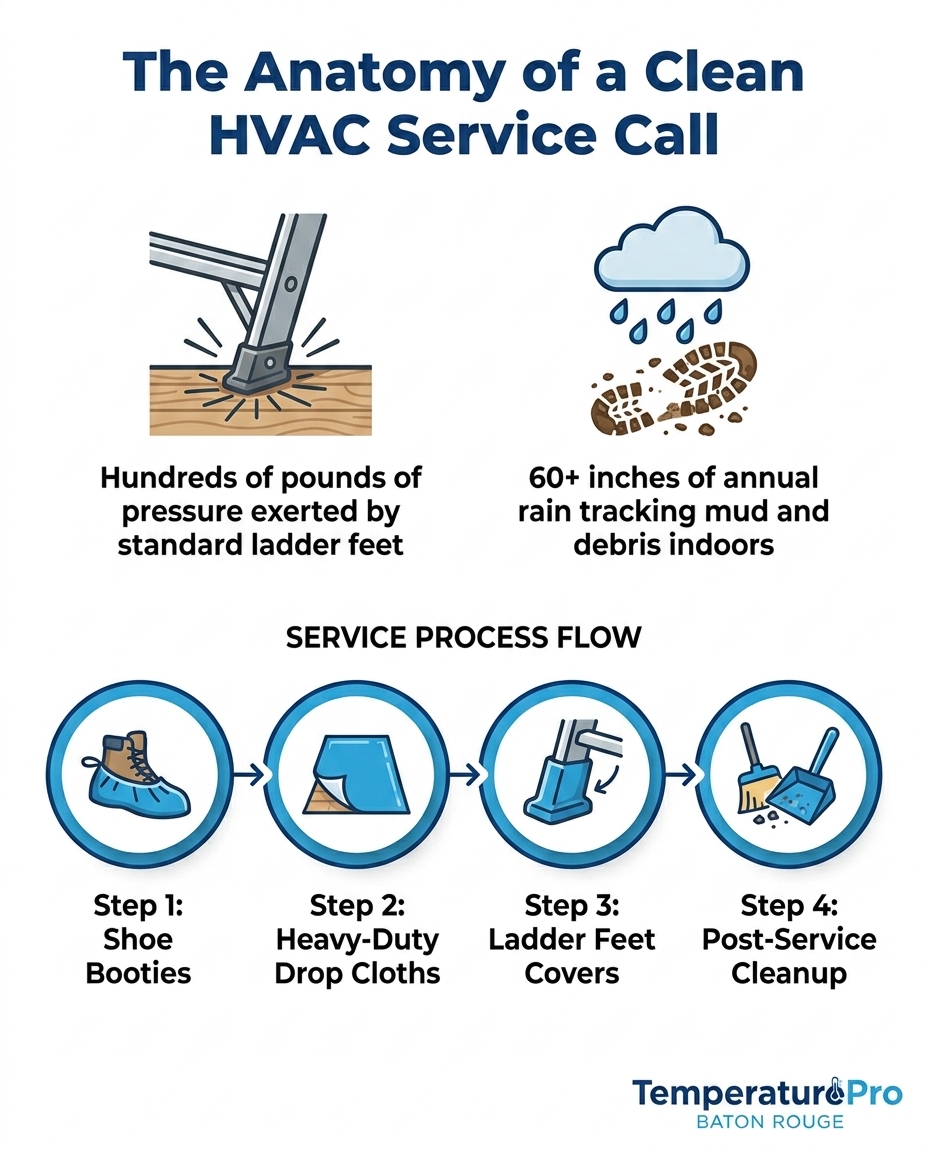
The problem: Standard aluminum or fiberglass extension ladders can exert over 300 pounds of pressure per square inch. When a technician climbs a ladder carrying a 40-pound tool bag to service an attic air handler, their entire body weight, plus the weight of the ladder and any tools, is concentrated onto four small contact points. On a standard residential floor, this intense pressure is a recipe for disaster.
The cause: Unprotected ladder feet can easily crack ceramic tile, gouge expensive hardwood, or permanently dent vinyl plank flooring. While standard shoe booties are excellent for preventing dirt from spreading, they offer zero structural padding against heavy metal equipment. The hard plastic or worn rubber on the bottom of a standard ladder simply cannot absorb the shock and weight of a technician working overhead.
The solution: This is exactly why our local area protocols require specialized heavy-duty covers for all indoor ladder use. One Baton Rouge homeowner recently called us for a second opinion after receiving a very high estimate for AC repair from another company. Our owner provided that second opinion, thoroughly inspected the attic unit, and found a simple fix that had the system up and running within 30 minutes. But before we ever climbed up to diagnose that unit, our very first action was securing heavy-duty covers over the ladder feet. In our experience, we never take shortcuts when it comes to your floors.
• Shoe Booties — Primary Function: Footwear coverage — What It Prevents: Mud, dirt, and outdoor allergens from boots
• Drop Cloths — Primary Function: Surface barrier — What It Prevents: Tool scratches, oil drips, and heavy foot traffic
• Ladder Covers — Primary Function: Weight distribution — What It Prevents: Cracked tile, gouged hardwood, and deep dents
Safely Accessing Attic and Closet Units
Many local homes feature HVAC units tucked away in tight closets or elevated attics. Maneuvering ladders into these confined spaces dramatically increases the risk of accidental scrapes against baseboards, walls, and flooring. When you are navigating a metal ladder through a narrow hallway, a single slip can cause severe structural damage to original 1960s hardwood floors.
Ladder covers act as a vital shock absorber during the initial setup and climbing phases. They provide a soft, grippy surface that stabilizes the ladder on slick floors while ensuring the hard metal edges never come into direct contact with your delicate surfaces.
Preventing Micro-Scratches on Hard Surfaces
Even if a ladder doesn't outright gouge the floor, there is a hidden danger: microscopic debris. Dust, sand, and tiny rocks easily get trapped under the hard plastic feet of a standard ladder. When dealing with delicate surfaces like luxury vinyl plank (LVP) installed in many modern local area homes, this trapped debris acts exactly like sandpaper when weight is applied and the ladder shifts slightly.
Rubberized, clean ladder covers ensure that this friction doesn't ruin the finish on your expensive flooring. By wrapping the feet in a clean, protective layer, our team completely eliminates the grinding action that causes those frustrating micro-scratches.
Battling the Elements: How Drop Cloths Shield Your Home from Tracked-In Debris
Bringing outdoor tools, heavy refrigerant gauges, and metal replacement parts into an indoor environment introduces immediate risks. Your HVAC system lives partially outside and partially inside, which means technicians are constantly moving back and forth between the two environments. Without the right precautions, the outdoors will quickly end up on your living room rug.
With Baton Rouge receiving an average of over 60 inches of annual rain, especially during the frequent torrential downpours of June and July, frequent mud and wet outdoor debris make heavy-duty drop cloths an absolute necessity year-round. Our technicians at TemperaturePro Baton Rouge don't view them as a polite gesture; they are a mandatory tool to block moisture from ruining indoor floors. Heavy-duty drop cloths create a secure, sterile pathway from your front door directly to the indoor air handler or thermostat.
• Protecting light-colored carpets: Drop cloths prevent muddy boots and dirty equipment from leaving permanent stains on sensitive fabrics.
• Shielding porous grout: Tile grout easily absorbs dirty water and oil. A thick drop cloth barrier keeps these liquids far away from your floors.
• Creating a safe tool zone: We use drop cloths to create a designated "drop zone" for wrenches, drills, and dirty parts so they never touch your bare floors.
• Managing wet weather: During heavy rain, drop cloths absorb the moisture that would otherwise create slipping hazards inside your home.
Implementing these strict cleanliness protocols is just as important to your overall home experience as reducing cooling costs without sacrificing comfort. Both require a proactive, thoughtful approach to how your home operates.
Shoe Booties and Indoor Air Quality: Keeping the Outside, Outside
Most homeowners associate shoe booties strictly with keeping floors looking clean, but there is a much deeper health benefit at play. In our daily service routes across the local area, we see firsthand how the secondary benefits of strict cleanliness protocols directly impact your home's indoor air quality. EPA data consistently highlights the dangers of tracked-in pollutants, mold spores, and outdoor allergens that make their way inside on the soles of shoes.
When technicians walk through wet grass, dusty attics, or muddy side yards, their boots pick up microscopic abrasives and biological contaminants like spring oak pollen. If they walk directly onto your carpets, those particles embed deep into the carpet fibers where standard household vacuums simply cannot reach. Over time, these trapped particles degrade the carpet and circulate back into the air you breathe.
Shoe booties instantly stop this transfer. By slipping on clean covers the moment we cross your threshold, we prevent outdoor allergens from taking root in your home. Maintaining a clean zone around the work area ensures we aren't introducing new respiratory irritants while we are there to fix your air conditioner. The cumulative effect of clean boots, thick drop cloths, and padded ladder covers makes a massive difference in your home's overall hygiene.
Step-by-Step: What to Expect During an Indoor HVAC Visit
Transparency is a core part of our service. When you schedule a visit, you shouldn't have to guess how the technician will treat your home. According to TemperaturePro Baton Rouge's standard operating procedures, every indoor service call follows a strict, step-by-step methodology designed to protect your property from start to finish, whether we are inspecting a compact 2-ton closet unit or a heavy 5-ton attic system.
1. The Threshold Assessment: The moment our technician arrives, they pause at the front door to assess the path to the HVAC unit. Before stepping inside, they immediately apply fresh, clean shoe covers over their work boots.
2. Laying the Pathway: If the repair requires moving heavy equipment or making multiple trips inside, the technician rolls out heavy-duty drop cloths. This creates a safe, protected walkway from the entrance directly to the thermostat and indoor air handler.
3. Ladder Preparation: If your unit is located in the attic or a high closet, the ladder is inspected outside. Before it crosses the threshold, thick protective feet covers are securely applied to ensure your floors remain safe from scratches and pressure dents.
4. Executing the Repair: All tools, gauges, and replacement parts are placed exclusively on the drop cloths, creating a designated safe zone. The actual technical repair is executed entirely within this protected area, ensuring no oil, dust, or metal shavings touch your flooring.
5. Rigorous Cleanup: Once the system is running perfectly, the cleanup process begins. Drop cloths are carefully rolled up to trap any fallen debris, ladder covers remain on until the equipment is back outside, and the area is restored to the exact condition we found it in.
The Anatomy of a Clean HVAC Service Call
Our 5-Star Customer Service Guarantee: Respecting Your Space
Technical expertise is only half the job; leaving the home exactly as we found it completes the service. We at TemperaturePro Baton Rouge strongly believe that the best AC repair in the world doesn't matter if it leaves you with a scratched floor or a stained carpet. That is why we explicitly link our cleanliness protocols—ladder covers, drop cloths, and booties—directly to our formal 5-star customer service guarantee.
Treating your property with meticulous care is a non-negotiable part of our daily operations. In fact, a recent 5-star review from a homeowner in the Broadmoor neighborhood specifically highlighted our floor protection, proving just how much immense value this brings to the people we serve. Homeowners notice when a company takes the extra time to respect their space.
Trust is built in the details. It starts with the very first step inside your home and ends with the final handshake. By standardizing these protective measures, we ensure that every single customer receives the same premium, respectful experience, regardless of how big or small the repair might be.
Frequently Asked Questions About HVAC Service Etiquette
How do HVAC technicians protect floors?
Professional technicians protect floors by using a combination of shoe booties, heavy-duty drop cloths, and padded ladder feet covers. Shoe booties prevent dirt and mud from tracking onto carpets, while drop cloths create a safe zone for heavy tools and dirty parts like 30-pound blower motors. Ladder feet covers are specifically used to distribute weight and prevent heavy metal edges from scratching hardwood or cracking tile.
What to expect during an indoor HVAC repair?
You should expect our TemperaturePro Baton Rouge technicians to prioritize your home's cleanliness before starting the repair. They will put on shoe covers at the door, lay down drop cloths along their walking path, and set up a protected work area around the indoor unit. Once the area is secure, they will diagnose the system, perform the repair, and then carefully clean up all protective materials before leaving.
Do HVAC technicians wear shoe covers?
Yes, wearing shoe covers is a mandatory standard operating procedure for our local area technicians. Booties are applied before entering the home to ensure that outdoor allergens, mud, and debris stay outside. If a technician needs to walk back and forth to their truck, they will remove or replace the booties to maintain a sterile indoor environment.
Do I need to clean up or prep before HVAC service?
You do not need to do a deep clean, but clearing a clear path to the thermostat, air handler, and attic access is highly recommended, especially for older homes built in the 1970s and 80s with narrow hallways. Moving fragile items, small rugs, or clutter out of the way allows the technician to lay down their drop cloths smoothly. The technician will handle all the protective prep work for the actual surfaces once they arrive.
Why are ladder feet covers necessary for attic HVAC units?
Ladder feet covers are necessary because accessing an attic requires bearing significant weight on a small surface area. Standard ladder feet are made of hard plastic or rubber that can easily gouge floors or trap abrasive dirt. Thick covers act as a shock absorber, protecting your flooring from the intense pressure and preventing micro-scratches as the ladder shifts.
How does local weather affect how technicians prep my home for service?
Local weather plays a massive role in indoor preparation, especially during the heavy Gulf Coast storm seasons. When the ground is wet and muddy, technicians must rely heavily on thick drop cloths and frequent bootie changes to keep moisture out of your home. Rain and humidity mean that outdoor dirt easily turns into mud, making strict barrier protection absolutely essential.
Experience the Difference of True Professional Care
Protecting your home's interior is just as important as restoring your comfort. When your heating or cooling system fails, you need a team that handles the technical work flawlessly while treating your living space with the utmost respect. True professionalism leaves no trace behind, ensuring your floors, walls, and carpets look exactly as they did before we arrived.
We at TemperaturePro Baton Rouge invite you to experience our rigorous, respectful service standards firsthand. Our clear, transparent approach to home protection proves that we value your property just as much as you do. Reach out today to schedule your next service with a team that truly cares about the details.
Thank you! Your submission has been received!
Oops! Something went wrong while submitting the form.
Prevent sudden heating breakdowns with these home maintenance tips and troubleshooting insights. Get clear answers on why pre-winter HVAC inspections matter.
Most homeowners think a late-week appointment is the most convenient choice for an HVAC tune-up. Discover why our dispatchers highly recommend booking on a Tuesday morning instead.
A furnace shutting down repeatedly during early fall tests is frustrating, but jumping the safety switch is a dangerous mistake. Understand the severe fire hazards of this DIY workaround.