5 min read
Fall HVAC Troubleshooting: Why Your Heater Smells Like Burning Dust on Startup
Is that burning dust smell normal? Read our home maintenance tips and troubleshooting to see why heating startup odors happen and when to call a professional.


Discover how much does a high seer ac save in Louisiana with SEER2 ratings, rebates, and expert tips for lower energy bills.
If you've been wondering how much does a high SEER AC save in Louisiana, here's what the numbers actually show:
| Upgrade | Energy Savings | Estimated Annual Savings |
|---|---|---|
| 10 SEER → 15 SEER | Up to 47% less energy | ~$400–$630/year |
| 10 SEER → 16 SEER | ~37–40% less energy | ~$370–$500/year |
| 10 SEER → 20 SEER | Up to 60% less energy | ~$650–$880/year |
| 14 SEER2 → 18 SEER2 | ~20–25% less energy | ~$200–$400/year |
| 14 SEER2 → 20 SEER2 | ~30–43% less energy | ~$289–$450/year |
Savings vary based on home size, system tonnage, thermostat settings, and local electricity rates. Louisiana sits in Climate Zone 2, with roughly 2,000–2,500 cooling hours per year — one of the highest in the country.
Louisiana summers are relentless. In Baton Rouge and across the state, air conditioners don't just run for a few months — they run hard for the better part of the year. That means your HVAC system's efficiency rating has a much bigger impact on your electricity bill here than it would in, say, Ohio or even Georgia.
The good news? Upgrading from an older, low-efficiency unit to a modern high-SEER2 system is one of the most effective ways to cut your cooling costs in Louisiana's hot-humid climate. And with federal tax credits and utility rebates now available, the financial case is stronger than ever.
This guide walks you through exactly what to expect — from real savings numbers and payback timelines to the factors that determine whether a 16 SEER2 or a 20 SEER2 is the smarter choice for your home.
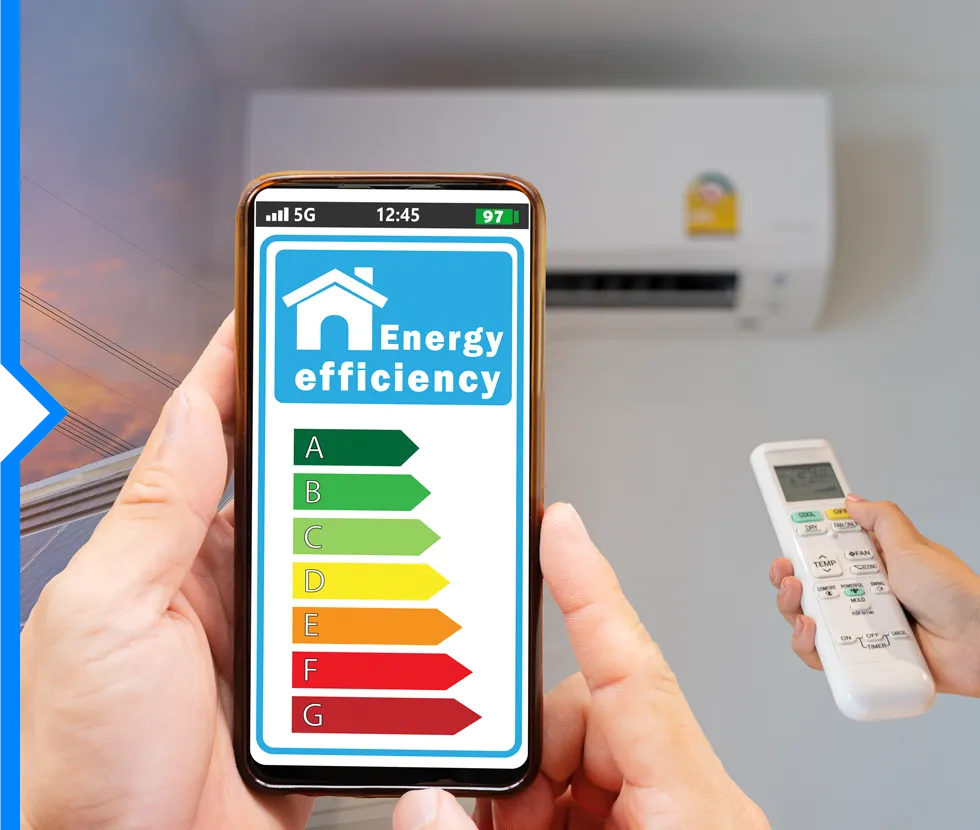
To truly understand how much a high-efficiency system can save you on your monthly utility bills, we first need to break down the acronyms. For years, the standard metric for measuring air conditioning efficiency was SEER, or the Seasonal Energy Efficiency Ratio.
However, as of January 1, 2023, the Department of Energy implemented a new, stricter testing standard known as SEER2 (Seasonal Energy Efficiency Ratio 2). The primary difference is that SEER2 testing utilizes a new "M1" testing procedure that subjects the equipment to five times higher external static pressure. This design change was made because real-world duct systems in homes usually have more resistance than the old laboratory tests accounted for.
Because the testing is much tougher, a system’s SEER2 rating is typically about 4.5% lower than its legacy SEER equivalent. For example, an old 14 SEER unit is roughly equivalent to a 13.4 SEER2 unit under the new guidelines. For a deep dive into these testing differences, you can read our guide on What is a SEER2 Rating on an AC Unit.
In the Southeast region, which includes Louisiana, the federal minimum standard for a newly installed split-system air conditioner is 14.3 SEER2. Because our state is located squarely in Climate Zone 2 (Hot-Humid), we experience massive cooling demands compared to the rest of the nation. In South Louisiana, our air conditioners run for approximately 2,000 to 2,500 hours per year. This heavy usage means that every single point of efficiency gain translates directly into noticeable, compounding dollar savings on your monthly utility bills.
If you are currently running an older 10 SEER air conditioner — which was the standard installation standard for many homes built or updated in the early 2000s — you are likely spending a small fortune on electricity. Upgrading from a legacy 10 SEER system to a standard 15 SEER unit can reduce your cooling energy consumption by up to 47%.
If you take it a step further and upgrade to a premium 20 SEER2 variable-speed unit, you can reduce your energy usage by up to 60% compared to that old 10 SEER baseline. To put that in perspective, in a typical South Louisiana home with a 3-ton air conditioner, running an old 10 SEER unit at an average electricity rate of $0.13 to $0.14 per kWh can easily cost $1,350 or more per year just for cooling. Upgrading to a highly efficient 20 SEER2 unit can drop that annual cooling operational cost down to roughly $675. That is a direct savings of $675 per year, every year, simply by shifting to a highly efficient system.
For homeowners looking to maximize these operational drops, check out our practical tips on How to Lower AC Bills During Louisiana Summers.
In Louisiana, we don't just battle high temperatures; we battle oppressive humidity. The moisture in the air actually makes your air conditioner work twice as hard. An air conditioner has to perform two jobs: sensible cooling (lowering the actual temperature on the thermostat) and latent cooling (removing water vapor from the air).
This is where high-efficiency systems, particularly those rated at 17 SEER2 and above, truly shine. These systems typically utilize two-stage compressors or variable-speed inverter technology. Unlike standard single-stage systems that operate on an "all-or-nothing" basis (either 100% on or completely off), variable-speed systems can scale their output down to as low as 25% or 30% of their total capacity.
By running continuously at lower, whisper-quiet speeds, these units keep air moving through the system longer. This extended run cycle allows the evaporator coil to continuously pull moisture out of the air, keeping your home’s relative humidity at a comfortable 45% to 50%. When the humidity is properly controlled, you feel cooler at higher temperatures, meaning you can set your thermostat a couple of degrees higher without sacrificing comfort.
To learn more about how humidity forces your system to work harder, read our article on How Humidity Affects Your AC Performance.
When deciding how much does a high SEER AC save in Louisiana, you have to look at the return on investment (ROI) over the system's lifespan. While a higher-efficiency unit requires a larger initial investment than a standard 14.3 SEER2 base model, the monthly utility savings will gradually pay back that difference.
To help you visualize how much energy you can save by stepping up your efficiency tiers, review this comparison table showing the approximate energy reduction percentages relative to older baseline systems:
| Current AC Rating | New SEER2 Rating | Approximate Energy Reduction |
|---|---|---|
| 10 SEER | 14.3 SEER2 | ~30% |
| 10 SEER | 16.0 SEER2 | ~40% |
| 10 SEER | 18.0 SEER2 | ~50% |
| 10 SEER | 20.0+ SEER2 | ~60% |
| 14 SEER | 18.0 SEER2 | ~22% |
| 14 SEER | 20.0+ SEER2 | ~33% |
Because our local cooling season is so long, the payback period in Louisiana is significantly shorter than in northern states. In a mild climate, it might take 12 to 15 years to recover the cost difference of a premium system. In hot-humid Louisiana, that payback period is often cut down to 5 to 8 years, depending on your lifestyle, home insulation, and how low you keep your thermostat.
If your current unit is constantly breaking down or is more than a decade old, it is highly beneficial to evaluate your options. Read our guide on When is it Time for AC Replacement to see if upgrading now makes financial sense.
When shopping for a new system, it is important to understand the concept of diminishing returns. The largest, most dramatic jump in energy savings occurs when you move away from a low-efficiency baseline (like an old 10 or 12 SEER unit) to a modern, mid-efficiency tier (such as a 15 or 16 SEER2 unit).
While moving from a 16 SEER2 to a 20+ SEER2 unit provides incredible comfort and excellent humidity removal, the incremental utility savings between those two high tiers is smaller than the jump from 10 to 16.
To decide how much to invest, consider how many years you plan to stay in your current home:
If you are trying to decide whether to keep patching up your old system or pull the trigger on a new one, you can apply The $5000 Dollar Rule for AC Replacement to make an informed, stress-free decision.
You do not have to shoulder the cost of upgrading to a high-efficiency system alone. There are several financial incentives available that can significantly lower your net investment and accelerate your payback period:
Simply buying a high-SEER2 box and putting it outside your home does not guarantee you will see maximum savings. An air conditioning system is part of a complex home ecosystem. To achieve the laboratory-tested efficiency ratings promised by the manufacturer, several crucial installation factors must be addressed.
First and foremost is proper system sizing. Many contractors use outdated "rules of thumb" (such as 1 ton of cooling capacity per 500 square feet) to size systems. This often leads to oversized air conditioners. An oversized system will cool your home too quickly and shut off before it has a chance to remove humidity—a process known as short-cycling. This constant on-and-off cycling places immense wear and tear on the compressor and consumes massive amounts of "start-up" electricity, completely erasing the benefits of a high SEER rating.
To get the sizing right, a professional HVAC technician must perform a detailed Manual J load calculation. This calculation takes into account your home’s square footage, ceiling heights, window directions, insulation values, and local climate data. For a complete guide on selecting the perfect unit for your home's unique layout, see our article on Choosing an AC for Louisiana Heat and Humidity.
Your ductwork is the highway system for your conditioned air. According to the Department of Energy, the average home loses roughly 20% to 30% of its conditioned air through duct leaks, poor connections, and uninsulated trunk lines.
If your ducts are leaking cold air into your attic or pulling hot, dusty attic air into your living spaces, your brand-new 18 SEER2 system will perform like a 12 SEER unit. When we install a high-efficiency system, we always inspect, seal, and insulate the ductwork to ensure that every ounce of cooled air you pay for actually reaches your living areas.
To explore more ways to optimize your home's airflow and trim your monthly utility bills, read our practical tips on Reducing Cooling Costs Without Sacrificing Comfort.
Like a high-performance sports car, a high-efficiency air conditioning system requires regular maintenance to keep running at peak performance. Over the course of a long Louisiana summer, dust, pollen, and outdoor debris will coat your outdoor condenser coils and clog your indoor air filters.
Dirty coils restrict heat transfer, forcing your compressor to run hotter and consume more electricity to cool your home. A clogged air filter restricts airflow, which can cause your indoor evaporator coil to freeze up and potentially damage your compressor.
By keeping your system clean and scheduled for annual tune-ups, you can maintain its high-efficiency rating for its entire operational life. To help you stay on top of your system's needs, we put together the Ultimate AC Maintenance Guide Louisiana.
Additionally, you can read about the long-term cost benefits of professional tune-ups in our article on the Benefits of Regular AC Maintenance.
On average, Louisiana homeowners who upgrade from an older 10–12 SEER unit to a high-efficiency 16–20 SEER2 system experience a 30% to 50% drop in the cooling portion of their monthly electric bills. During the hottest months of July and August, when air conditioners run almost continuously, this can translate to significant monthly savings on your electricity bill. These savings are even more pronounced with variable-speed systems, which spend the majority of their operating hours running at highly efficient, lower speeds.
For most homes in the Baton Rouge area, the "sweet spot" of value, comfort, and ROI is 16 to 18 SEER2. Units in this range are highly efficient, often feature two-stage or variable-speed compressors for superior humidity control, and qualify for federal tax credits and local utility rebates. This tier allows you to recoup your initial investment quickly while enjoying a massive upgrade in home comfort.
If you are trying to decide whether it is smarter to invest in a new system or repair your current one, check out our guide on Repair vs Replace Your AC in Louisiana.
In the hot, humid climate of the Gulf Coast, the average lifespan of a central air conditioning system is typically 10 to 15 years. Because our systems run for so many hours per year, they experience much higher mechanical wear and tear than systems in northern states. However, high-efficiency systems with variable-speed compressors often experience less physical strain because they avoid the harsh "hard starts" of single-stage units.
To learn more about what to expect regarding system longevity, read our detailed guides on How Long Does an AC System Last in Louisiana and the Average Lifespan of an AC System in the South.
Upgrading to a high-efficiency air conditioning system is one of the smartest investments you can make for your Louisiana home. By choosing a system with a high SEER2 rating, you aren't just lowering your monthly utility bills; you are investing in a more comfortable, less humid home environment for your family.
At TemperaturePro Baton Rouge, we are proud to be a family and veteran-owned HVAC company serving our neighbors in Baton Rouge, Prairieville, Gonzales, Denham Springs, Walker, Central, Zachary, St. Gabriel, and French Settlement, LA. We treat every customer like family, providing fast, reliable, and honest service 24/7.
Our certified technicians will perform a precise Manual J load calculation, inspect your ductwork, and help you select the perfect high-efficiency system that fits your home’s layout and your family's budget.
Ready to start saving on your monthly energy bills and experience a new level of indoor comfort? Schedule professional AC installation services with our friendly team today!
Go With Experience