Why Reducing Cooling Costs Without Sacrificing Comfort Is So Important in Baton Rouge
Reducing cooling costs without sacrificing comfort is one of the biggest challenges Baton Rouge homeowners face every summer — and for good reason. Louisiana's heat and humidity push air conditioners to work harder and longer than in most other parts of the country, and that shows up fast on your monthly energy bill.
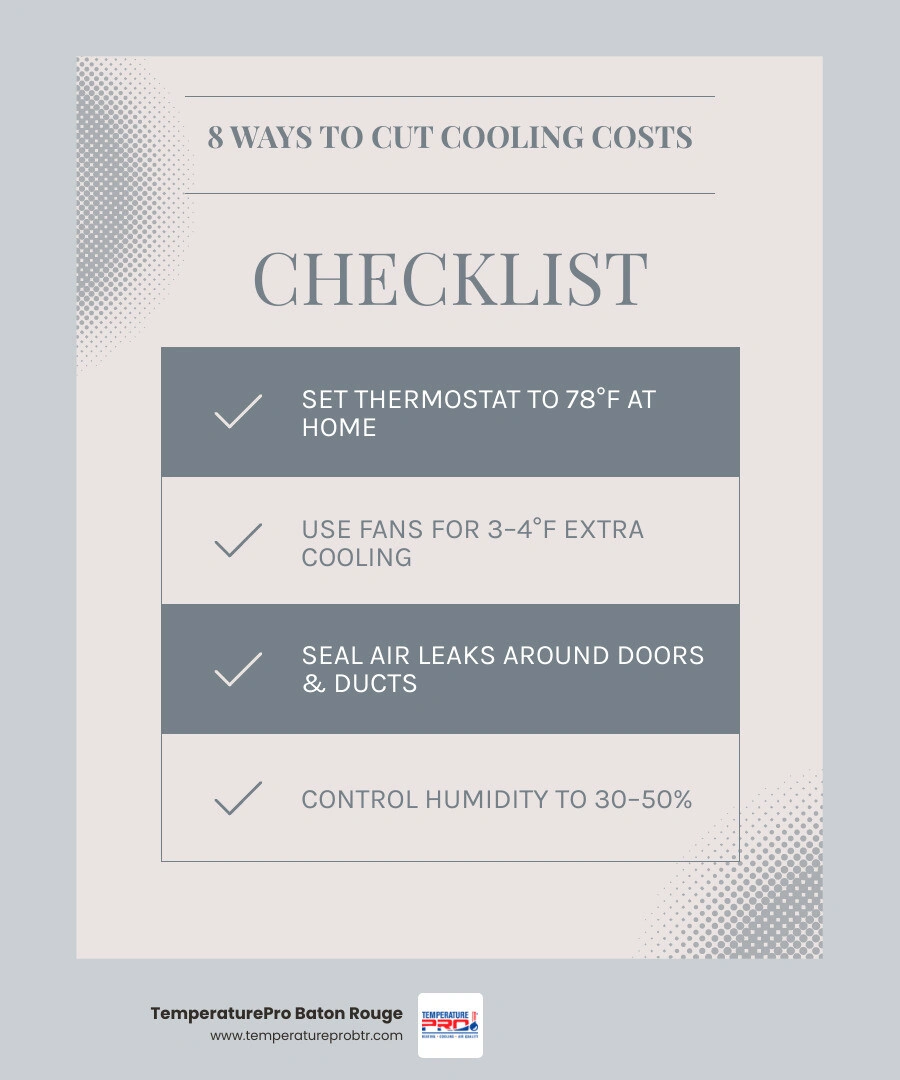
Here's a quick summary of the most effective ways to lower your cooling costs while staying comfortable:
1. Set your thermostat to 78°F when you're home, and raise it to 82–85°F when you're away
2. Use ceiling fans to feel 3–4°F cooler without lowering the thermostat
3. Seal air leaks around doors, windows, and ducts to stop cool air from escaping
4. Install a smart thermostat to automate temperature schedules and avoid wasting energy
5. Control indoor humidity — keeping it between 30–50% makes higher temperatures feel comfortable
6. Schedule regular HVAC maintenance to keep your system running at peak efficiency
7. Block solar heat gain by closing blinds and curtains during the hottest parts of the day
8. Consider upgrading to a high-SEER AC unit if your current system is 10–15 years old
The good news is that most of these strategies cost little to nothing to implement — and the savings add up quickly. Moving your thermostat from 72°F to 78°F alone can cut cooling energy use by as much as 18–30%, according to DOE and ENERGY STAR data. Add ceiling fans, smarter scheduling, and a well-maintained system, and you can make a significant dent in your summer energy bills without ever feeling too warm.
In the sections below, we'll walk through each of these strategies in detail — from simple daily habits to smart technology and system upgrades — so you can find the right combination for your home and budget.
Smart Thermostat Strategies for Reducing Cooling Costs Without Sacrificing Comfort
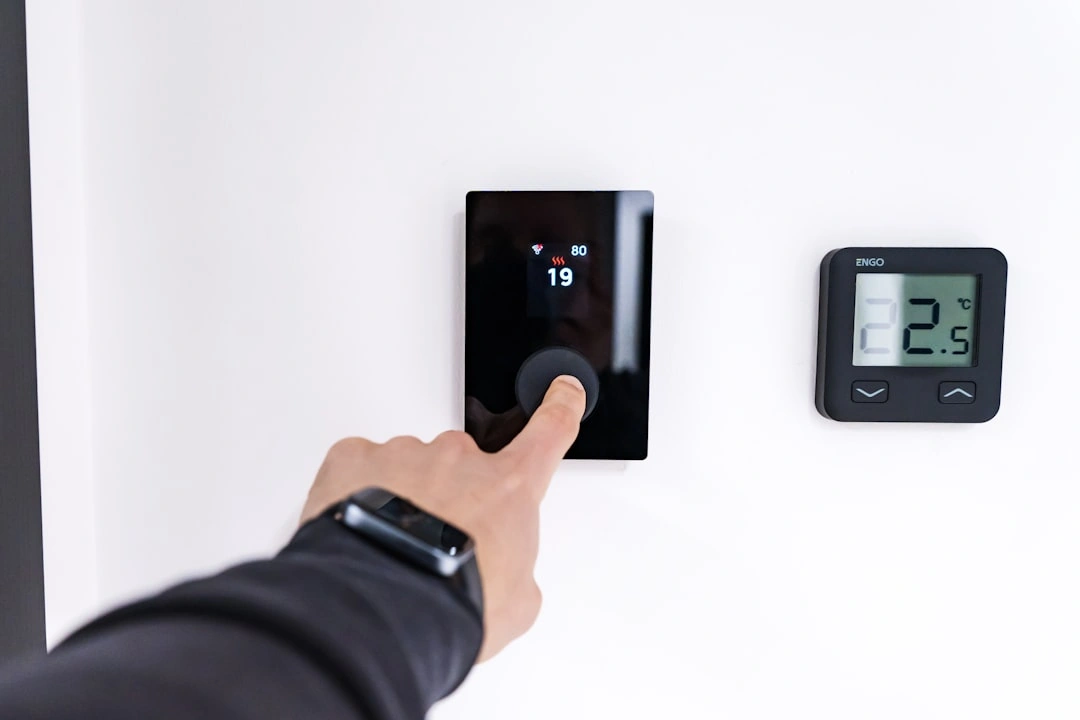
When the summer sun beats down on communities like Prairieville and Denham Springs, the temptation to crank the air conditioner down to a chilly 70°F is incredibly strong. However, treating your thermostat like an accelerator pedal is one of the quickest ways to send your utility bills through the roof.
To achieve real savings, we need to understand how our homes interact with temperature and how modern thermostat technology can do the heavy lifting for us.
Optimizing Your Daily Temperature Settings
The Department of Energy (DOE) and ENERGY STAR recommend setting your thermostat to 78°F (26°C) when you are at home and awake. While 78°F might sound warm at first, it is actually the most cost-efficient temperature to maintain comfort while keeping energy consumption in check.
Why? Because heat transfer is governed by the difference between indoor and outdoor temperatures. The smaller the gap between the blazing heat outside in Gonzales and the air inside your living room, the slower heat will seep into your home, and the less work your AC has to do. In fact, raising your thermostat by just 7–10°F from your normal setting for 8 hours a day can save you up to 10% annually on heating and cooling costs.
If you want to maximize these savings, you can implement what experts call the "7-Degree Drift" strategy. Instead of keeping your home at a static temperature 24/7, you allow the temperature to drift up by 7 to 8 degrees when you are away from home (targeting 82–85°F) or when you are asleep.
This works beautifully because of your home's "thermal mass." Your drywall, furniture, and carpeting act like thermal batteries, holding onto the cooler temperatures and releasing them slowly. By letting the temperature rise gradually while you're at work, you relieve pressure on your compressor and prevent the system from constantly cycling on and off.
To learn more about optimizing these settings for our unique South Louisiana climate, check out our guide on How to Lower AC Bills During Louisiana Summers.
Leveraging Smart Schedules and Automation
If adjusting your thermostat manually sounds like a chore, you aren't alone. That's where smart and programmable thermostats come in. A programmable or smart thermostat can reduce cooling energy use by about 10% when programmed for a consistent 8-hour daily setback. Better yet, these devices typically pay for themselves within 8 to 18 months through lower utility bills.
Modern smart thermostats go far beyond basic daily schedules. They use advanced features like:
• Geofencing: By tracking your smartphone's location, the thermostat knows when you've left Central or Zachary and automatically switches to an energy-saving "away" mode. As you drive back home, it starts cooling the house so it is perfectly comfortable the moment you walk through the door.
• Motion Sensors: Wireless remote sensors placed in high-traffic rooms detect occupancy, ensuring the system focuses on cooling the spaces you are actually using rather than empty hallways.
• Time-of-Use Optimization: If your local utility provider charges higher rates during peak afternoon hours, smart thermostats can "pre-cool" your home during cheaper off-peak hours, allowing the thermal mass of your home to keep you comfortable when rates are high.
Maximizing Airflow with Fans and Ventilation
Air conditioning is only one part of the home comfort equation. To truly master reducing cooling costs without sacrificing comfort, we have to look at how air moves through our living spaces. By combining strategic air movement with our AC systems, we can feel incredibly cool without demanding constant maximum output from our compressors.
Using Ceiling Fans to Offset Thermostat Settings
Ceiling fans are the ultimate, low-energy workhorses of home cooling. A typical ceiling fan uses roughly the same amount of electricity as a standard 60-watt light bulb, making them incredibly inexpensive to run.
However, there is a golden rule to remember: fans cool people, not rooms. Fans do not actually lower the air temperature in a room; instead, they create a "wind-chill effect" on your skin. By circulating air, fans speed up the natural evaporation of sweat from your body, making you feel 3 to 8°F cooler than the actual room temperature.
This physical phenomenon allows you to raise your thermostat setting by 2 to 4°F without losing an ounce of comfort. During a hot Walker or Central afternoon, setting your AC to 78°F while running a ceiling fan will make the room feel like a comfortable 74°F, saving you up to 15% on your cooling energy usage.
Just make sure your ceiling fans are spinning counterclockwise in the summer to push a cool breeze straight down. And remember to turn them off when you leave the room — there’s no point in cooling an empty space!
The Role of Humidity Control in Reducing Cooling Costs Without Sacrificing Comfort
In South Louisiana, it’s rarely just the heat that makes us miserable — it's the oppressive humidity. High humidity levels prevent sweat from evaporating efficiently, leaving us feeling sticky and much warmer than the thermometer indicates.
The Environmental Protection Agency (EPA) recommends keeping indoor relative humidity between 30% and 50%. When indoor humidity climbs above 60%, your AC has to spend a massive amount of energy pulling moisture out of the air before it can even begin to lower the temperature.
By installing a whole-home dehumidifier, you can maintain that sweet spot of 30–50% humidity. Dry air feels significantly cooler than damp air, allowing you to comfortably set your thermostat several degrees higher. For deep-dive advice on balancing moisture levels in our region, take a look at our AC and Humidity Control Tips for Gulf Coast Homes.
Low-Cost Habits for Reducing Cooling Costs Without Sacrificing Comfort
Beyond mechanical systems, your daily household habits play a massive role in how much heat enters your home. Try incorporating these simple, free strategies into your routine:
• Manage Window Coverings: Unprotected windows are a major source of solar heat gain. Installing interior blinds can reduce heat gain by up to 45%, while medium-colored drapes with white plastic backings can slash it by 33%. If you want a more permanent solution, window awnings can reduce solar heat gain by up to 65% on south-facing windows and a staggering 77% on west-facing windows.
• Time Your Appliance Use: Major appliances like ovens, stoves, dryers, and dishwashers generate a tremendous amount of heat and humidity. Try to run these appliances in the evening when outdoor temperatures drop, or fire up the outdoor grill instead of using the indoor oven.
• Leverage Natural Shade: Planting leafy trees on the east and west sides of your home in St. Gabriel or French Settlement provides natural shade that blocks intense sun rays before they ever touch your siding or windows.
Enhancing the Home Envelope and Air Distribution
You can have the most efficient air conditioner in the world, but if your home is drafty and poorly insulated, that expensive, conditioned air will slip right outside. Sealing your home's "envelope" ensures that the cool air you pay for stays exactly where it belongs: inside with you.
Sealing Air Leaks and Upgrading Insulation
Air leaks around windows, doors, plumbing penetrations, and attic hatches act like a slow drain on your wallet. Sealing these air leaks and improving your home's insulation can reduce cooling costs by 10% to 20% in homes with major envelope leaks.
Start by inspecting your doors and windows. If you can see daylight around a door frame or feel a draft near a window pane, it’s time to apply fresh caulk or install weatherstripping. Foam tape, rubber gaskets, and door sweeps are inexpensive, easy-to-install solutions that make an immediate difference.
Additionally, pay close attention to your attic. Heat naturally transfers from warm areas to cool areas, and during a Louisiana summer, your attic can easily reach temperatures upwards of 140°F. If your attic floor isn't properly insulated, that extreme heat will radiate straight down through your ceiling, forcing your AC to run continuously. Upgrading your attic insulation keeps that thermal barrier strong and prevents heavy heat transfer.
Zoning Systems and Professional Duct Care
In many multi-level or sprawling homes, a single thermostat leads to uneven temperatures — leaving some rooms freezing while others remain uncomfortably warm. This often leads homeowners to overcool the entire house just to make one bedroom comfortable.
A zone-based smart climate control system solves this by dividing your home into distinct areas (such as living, sleeping, or working zones) controlled by motorized dampers in your ductwork. This allows you to condition only the spaces you are actively using, which can cut monthly cooling bills by 25% while drastically improving overall comfort.
To keep your air distribution system working perfectly, regular duct care is essential. Leaky ductwork can lose up to 20–30% of your conditioned air to unconditioned spaces like crawlspaces or attics. Furthermore, dirty ducts restrict airflow, forcing your blower motor to work harder and wear out prematurely.
Along with professional duct sealing and cleaning, keeping up with basic maintenance is crucial. Find out how to stay on top of your indoor air quality with our article on How Often Should You Change Your AC Filter in Louisiana.
The Impact of Regular HVAC Maintenance
We often take our air conditioners for granted until they suddenly stop blowing cold air on a humid July afternoon. However, skipping routine maintenance is one of the primary causes of declining efficiency, rising energy bills, and premature system failure.
Preventing Efficiency Loss and Extending System Lifespan
Without professional maintenance, an air conditioning system can lose 5% to 10% of its operating efficiency every single year. Internal vibrations loosen electrical connections, dust builds up on sensitive coils, and moving parts lose their vital lubrication. This gradual drift from factory specifications forces your system to run longer cycles to achieve the same cooling effect.
During a professional maintenance visit, we perform several critical tasks to restore peak efficiency:
• Cleaning the Evaporator and Condenser Coils: Clogged, dirty coils insulate the refrigerant, making it incredibly difficult for the system to absorb heat from your indoor air and release it outside. Cleaning dirty coils can improve system efficiency by 5% to 15%.
• Checking Refrigerant Levels: Operating with too little or too much refrigerant damages the compressor and drastically reduces cooling capacity.
• Inspecting the Blower Assembly: Ensuring proper airflow prevents short-cycling and keeps your home's temperature perfectly balanced.
Investing in preventative care pays massive dividends over time by keeping your monthly bills low and preventing expensive, emergency breakdowns. To read more about why this service is so vital, explore the Benefits of Regular AC Maintenance and our comprehensive Ultimate AC Maintenance Guide Louisiana.
Taking these proactive steps is the single best way to protect your investment. Learn more about maximizing your system's lifetime with our tips on How to Extend the Life of Your AC in Louisiana.
When to Upgrade to a High-Efficiency AC System
Even with meticulous maintenance, every air conditioner eventually reaches the end of its natural lifespan. If your system is constantly breaking down, struggling to keep up with the summer heat, or costing you a fortune in monthly utility bills, it may be time to consider an upgrade.
Evaluating SEER Ratings and Heat Pump Benefits
Air conditioner efficiency is measured by the Seasonal Energy Efficiency Ratio (SEER). Older systems installed in our area might have SEER ratings as low as 10 to 13. Today, the minimum allowable SEER rating for new installations in the southern region is 14.3 (often referred to as SEER2), while high-efficiency systems can exceed 20 to 25 SEER.
Upgrading to an ENERGY STAR-certified air conditioner can lower your cooling costs by more than 15% compared to conventional models. For example, upgrading from an old SEER 14 system to a modern SEER 20 unit with variable-speed inverter technology can reduce your cooling electricity consumption by roughly 30%. Inverter technology allows the compressor to adjust its speed precisely to meet your home's cooling demand, running quietly at lower speeds for longer periods rather than loudly cycling on and off.
If you are looking to replace your system, it is also worth considering a high-efficiency heat pump. Heat pumps provide incredibly efficient cooling in the summer and reverse the process to keep you cozy during our brief Louisiana winters.
To help you make the right choice for your home, take a look at our guides on Choosing an AC for Louisiana Heat and Humidity and Central AC vs Heat Pump for Louisiana Homes.
Additionally, you can read about the year-round advantages of these systems in our article on Heat Pump Benefits for Louisiana Homeowners. If you're wondering how much time you have left with your current system, check out our resource on How Long Does an AC System Last in Louisiana.
Frequently Asked Questions about Home Cooling Efficiency
What is the most cost-efficient temperature to set my AC?
According to the Department of Energy and ENERGY STAR, the most cost-efficient temperature to set your AC when you are at home is 78°F (26°C). When you are away from home for 8 hours or more, raising the thermostat to 82–85°F can save you up to 10% on your annual cooling costs.
Do ceiling fans actually lower the temperature in a room?
No, ceiling fans do not lower the actual air temperature in a room. Instead, they cool people by creating a wind-chill effect on your skin, which speeds up sweat evaporation and makes the room feel 3 to 4 degrees cooler. Always turn fans off when leaving a room to avoid wasting electricity.
How much can I save by sealing air leaks in my home?
Sealing air leaks around windows, doors, and attic hatches, combined with adding proper insulation, can save homeowners between 10% and 20% on their heating and cooling bills. It is one of the most cost-effective home improvements you can make.
Conclusion
Reducing your home's cooling costs doesn't have to mean suffering through a hot, sticky summer. By combining smart thermostat automation, strategic fan usage, simple daily habits, and routine professional care, you can enjoy a perfectly comfortable home while keeping your utility bills under control.
At TemperaturePro Baton Rouge, we are proud to be a family-owned and veteran-owned HVAC company serving our neighbors across Baton Rouge, Prairieville, Gonzales, Denham Springs, Walker, Central, Zachary, St. Gabriel, and French Settlement, LA. We treat every customer like family, providing fast, reliable cooling, heating, and indoor air quality services.
Whether you need a seasonal system tune-up, a smart thermostat installation, or help choosing a high-efficiency AC upgrade, our certified technicians are here to help you maximize your comfort and savings.
Ready to start saving on your energy bills? Schedule professional AC services with TemperaturePro Baton Rouge today, or call us to learn more about our comprehensive maintenance plans!