Why Summers in Baton Rouge Demand Smarter Home Cooling
Finding smart ways to cool your home efficiently in the heat can mean the difference between a manageable energy bill and a monthly shock — especially in Baton Rouge, LA, where summers are long, humid, and relentless. Cooling already accounts for more than 8% of all electricity produced in the U.S., costing homeowners over $15 billion a year. In South Louisiana, where heat and humidity team up for months at a time, that number hits closer to home than almost anywhere else in the country.
The good news? You don't have to choose between staying comfortable and keeping costs under control. A layered approach — combining passive cooling, smart technology, good habits, and a well-maintained AC system — can cut your cooling energy use by 20% to 50%, according to building science research.
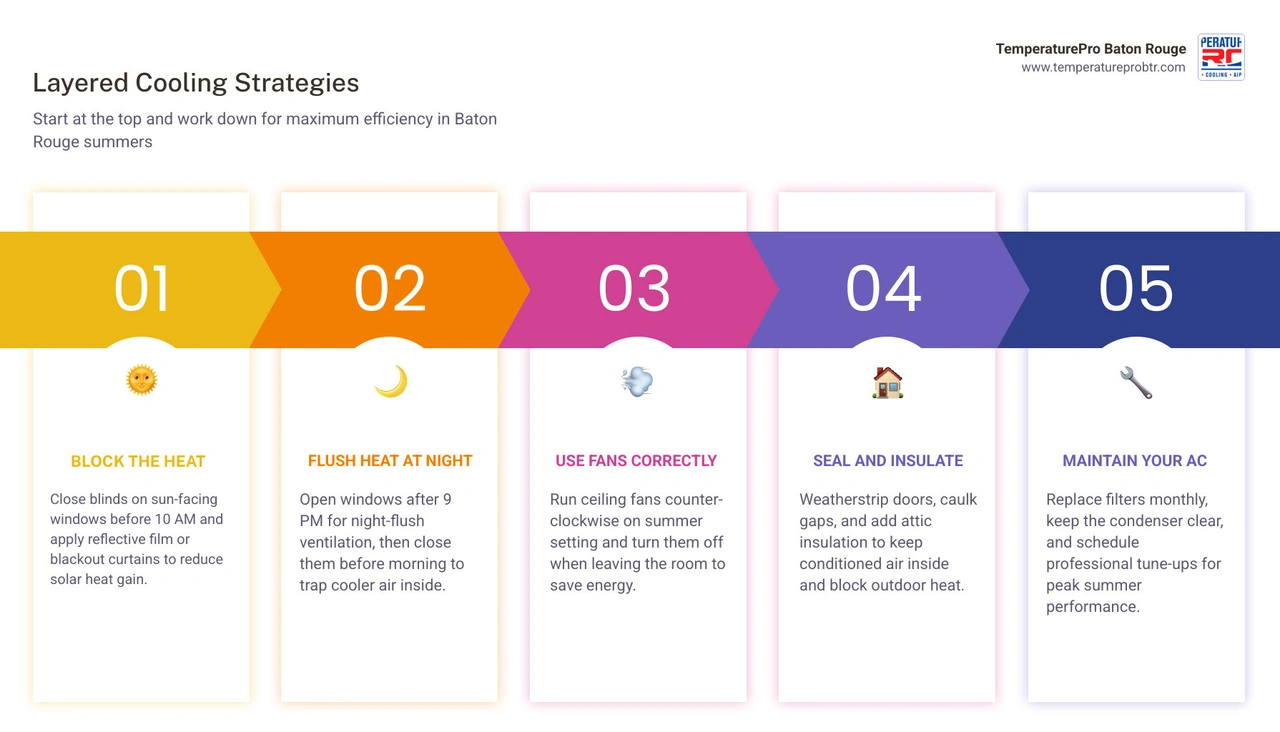
Here is a quick overview of the most effective strategies:
1. Block heat before it enters — close blinds on sun-facing windows before 10 AM, use reflective window film or blackout curtains
2. Use fans correctly — run ceiling fans counter-clockwise in summer to push cool air down; turn them off when you leave the room
3. Flush heat out at night — open windows after 9 PM to pull in cooler outdoor air, then close them before morning
4. Reduce internal heat sources — run ovens, dryers, and dishwashers after 9 PM; grill outdoors during peak heat hours
5. Seal air leaks and insulate — weatherstrip doors, caulk gaps, and add attic insulation to stop cool air from escaping
6. Set your thermostat wisely — 78°F when home, 85°F when away; every degree above 72°F saves roughly 3% on cooling costs
7. Control humidity — lower humidity makes the same temperature feel significantly cooler, especially in Gulf Coast climates
8. Maintain your AC system — clean or replace filters monthly in summer, keep the condenser clear, and schedule annual tune-ups
9. Upgrade when it counts — high-efficiency systems with strong SEER2 ratings and ductless mini-splits deliver real long-term savings
Read on for a full breakdown of each strategy, with specific tips for Baton Rouge and the surrounding Louisiana communities.
Smart ways to cool your home efficiently in the heat terms you need:
• how to lower ac bills during louisiana summers
• how to save on electricity during peak summer months
Passive Cooling: Smart Ways to Cool Your Home Efficiently in the Heat
Before we even look at our thermostats, we have to talk about building science. The most efficient way to cool a home is to prevent it from heating up in the first place. This concept is known as passive cooling. When the sun beats down on your roof and walls, it transfers energy into your living space through solar radiation and conduction.
In fact, roughly 30% of ambient heat enters your home directly through your windows. If you let that heat in, your air conditioner has to work twice as hard to pump it back out. By mastering a few passive strategies, you can slash your cooling load and discover How to Save on Electricity During Peak Summer Months without sacrificing your comfort.
Strategic Window Management and Night-Flush Ventilation
If you leave your windows unprotected on a hot afternoon, your indoor temperatures can rise by as much as 20°F. Managing your windows strategically is your single biggest lever for quick energy savings.
• Block the Sun Early: Close your blinds, shades, or curtains on south- and west-facing windows before 10:00 AM. This keeps the harsh afternoon sun from turning your living room into a greenhouse.
• Invest in High-Performance Window Treatments: Cellular shades are incredibly effective, reducing solar heat gain by up to 62%. Blackout curtains with light-colored backings also reflect sunlight away from your home, saving you up to $140 a year in energy costs.
• Apply Reflective Window Film: If you have older double-pane or single-pane windows, applying reflective window film can block up to 79% of incoming solar energy. Look for windows with a low Solar Heat Gain Coefficient (SHGC) if you are planning to upgrade.
• Practice Night-Flush Ventilation: In areas where the evening temperature drops below your indoor temperature, you can use night-flush ventilation. Open windows on opposite sides of your home after 9:00 PM to create natural cross-breezes that flush out the hot daytime air. Just make sure to close them early in the morning before the humidity and temperature start to climb again.
Landscaping and Exterior Shading as Thermal Armor
The best way to shade a window is from the outside. Once solar radiation passes through your window glass, the heat is already trapped inside. Exterior shading stops the sun before it ever touches your home.
• Plant Deciduous Trees: Planting fast-growing deciduous trees on the south and west sides of your home provides "thermal armor." In the summer, their thick leaves block the sun. In the winter, they shed their leaves, letting the warm sunlight naturally heat your home.
• Install Awnings and Trellises: Adding awnings or horizontal trellises above east- and west-facing windows can block direct summer sun while still allowing indirect light to brighten your rooms.
• Use Exterior Shades: Removable bamboo shades or solar screens installed on the outside of your windows are budget-friendly options that can reduce solar heat gain dramatically.
Maximizing Airflow: How to Use Fans Correctly
Fans are fantastic tools for keeping comfortable, but there is a major catch that many homeowners overlook: fans cool people, not rooms. A fan does not lower the actual temperature of the air; instead, it uses air movement to create a wind-chill effect on your skin, accelerating the evaporation of sweat and making you feel 4°F to 6°F cooler.
Because fans only work when you are in the room to feel them, running a fan in an empty room is just wasting electricity. Turn them off when you leave!
Ceiling Fan Direction and the Wind-Chill Effect
To get the most out of your ceiling fans, you need to make sure they are rotating in the right direction.
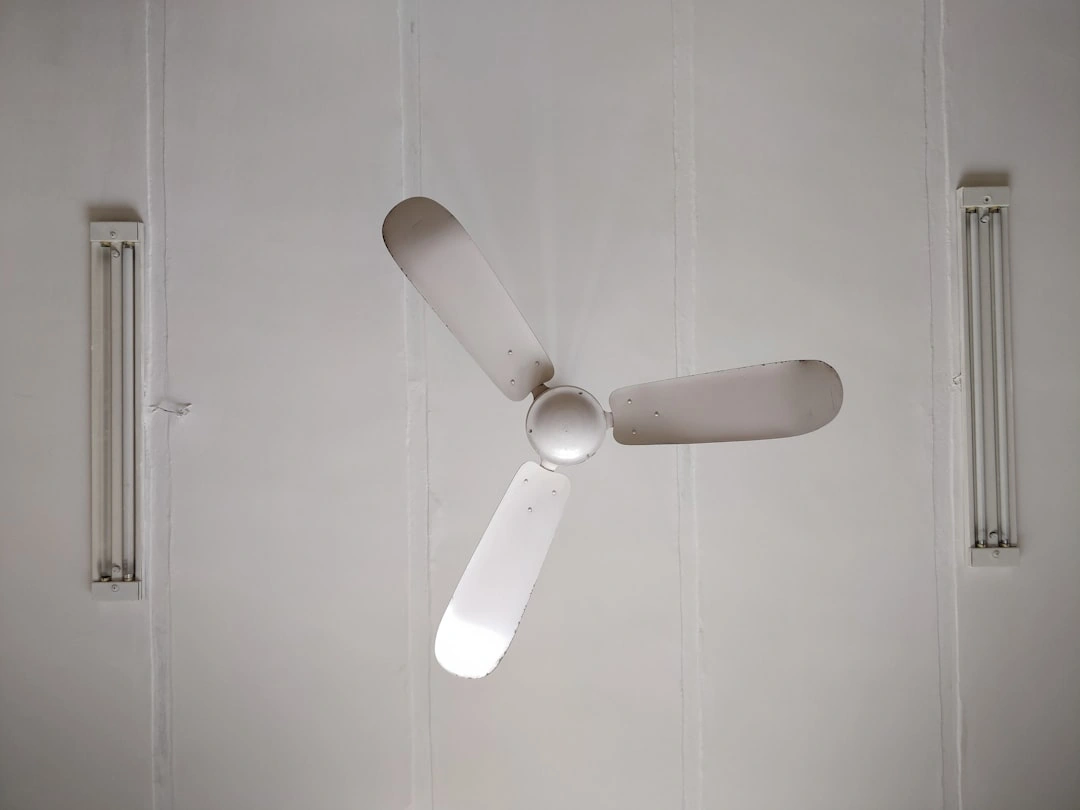
• Summer Setting (Counter-Clockwise): Your ceiling fan blades should rotate counter-clockwise in the summer. This pushes air straight down, creating a cooling breeze. If you stand directly under the fan, you should feel a distinct downdraft.
• Raise Your Thermostat: Because the wind-chill effect makes you feel cooler, you can raise your thermostat setting by 4°F without feeling any warmer. Since raising your thermostat saves about 3% on cooling costs for every degree, this simple trick can cut your energy bill by 12%.
• Look for ENERGY STAR Models: If you are buying a new fan, choose an ENERGY STAR-rated model. They are 60% more efficient than standard fans and cost less than a penny an hour to run.
Creating Cross-Breezes with Window and Exhaust Fans
When the outdoor air is cooler than the indoor air, you can use portable and exhaust fans to establish a high-velocity airflow tunnel.
• Strategic Window Fan Placement: Place a box fan in a window on the leeward side of your house (the side facing away from the wind) pointing outward to blow hot air out. Open a window on the windward side of the house to draw cool air in.
• Use Exhaust Fans Wisely: Your kitchen range hood and bathroom exhaust fans are designed to pull hot, humid air out of your home. Always run them while cooking or showering, and let them run for about 20 minutes afterward. Just don't leave them on all day, or they will pull your expensive, air-conditioned air right out of the house.
• Consider a Whole-House Fan: For homes in drier areas with cool nights, a whole-house fan installed in the attic floor can pull cool air through open windows and push hot air out through attic vents, using 10 to 15 times less energy than central air conditioning.
Upgrading Your Home Envelope: Insulation and Weatherization
Your home’s thermal envelope is the barrier between your indoor living space and the outdoor elements. If your envelope is leaky or poorly insulated, heat will constantly seep in, forcing your AC to run non-stop. Proper insulation and air sealing can reduce your cooling costs by 10% to 50%, depending on your climate zone.
• Air Sealing (Caulk & Weatherstripping) — Typical Upfront Cost: Low (DIY-Friendly) — Estimated Cooling Bill Savings: 10% – 20% — Comfort Impact: High (Eliminates drafts)
• Attic Insulation Upgrade — Typical Upfront Cost: Moderate to High — Estimated Cooling Bill Savings: 15% – 30% — Comfort Impact: Very High (Stops ceiling radiant heat)
• Duct Sealing — Typical Upfront Cost: Moderate — Estimated Cooling Bill Savings: 15% – 20% — Comfort Impact: High (Improves airflow balance)
• Radiant Barrier Installation — Typical Upfront Cost: Moderate — Estimated Cooling Bill Savings: 5% – 10% — Comfort Impact: Medium (Reduces attic heat transfer)
Sealing Air Leaks to Keep Cool Air Inside
Air infiltration is a silent energy killer. Hot, humid air slips in through tiny cracks around doors, windows, and electrical outlets, while your expensive, cooled air escapes.
• Apply Weather-Stripping: Check the seals around your exterior doors and windows. If you can see daylight or feel a draft, apply new weather-stripping or draft snakes.
• Caulk Gaps and Cracks: Use high-quality exterior caulk to seal gaps where different building materials meet, such as around window frames, outdoor water spigots, and siding seams.
• Seal Your Ducts: Central AC systems can lose 20% to 30% of their cooling energy through leaky ductwork. Sealing ducts in your attic or crawlspace ensures that all the air you pay to cool actually reaches your living spaces.
Attic Insulation and Radiant Barriers
On a blazing summer day, your attic can easily reach temperatures of 150°F to 180°F. That massive heat bomb sits right above your ceiling, radiating warmth down into your home.
• Upgrade Attic Insulation: Make sure your attic has adequate insulation. In our region, aiming for a depth of at least 12 inches (R-38 to R-60) is highly recommended to block heat conduction.
• Install Radiant Barriers: A radiant barrier is a highly reflective foil layer installed on the underside of your roof rafters. It reflects radiant heat away from your attic, reducing attic temperatures and lowering your cooling costs.
• Apply Cool Roof Coatings: If you are replacing your roof, consider lighter-colored shingles or cool roof coatings. These products can lower your roof's surface temperature by 50°F to 60°F and reduce peak cooling demand by 10% to 15%.
Leveraging Smart Technology and Automation
Keeping your home cool doesn't mean you have to spend your day micromanaging your thermostat. Modern smart home technology can automate your cooling schedule, keeping you perfectly comfortable when you are home and saving you money when you are away.
Smart Thermostats: Smart Ways to Cool Your Home Efficiently in the Heat
A smart thermostat is one of the most powerful tools in your energy-saving arsenal, cutting cooling costs by 10% to 23% annually.
• Set Geofencing Boundaries: Use your thermostat’s geofencing feature to automatically raise the temperature by 4°F to 7°F when the last person leaves the house. The system will detect when you are heading back and pre-cool the home so it’s comfortable the moment you walk through the door.
• Program Smart Schedules: Avoid cooling an empty house. Set your thermostat to 78°F when you are home, and let it rise to 85°F during the day when you are at work.
• Avoid the "Turbo" Myth: Setting your thermostat to 60°F won't cool your home down any faster. Air conditioners run at the same speed regardless of the setting. Setting it extra low only forces the system to run longer, wasting energy.
Humidity Control: Smart Ways to Cool Your Home Efficiently in the Heat
In South Louisiana, heat is only half the battle. High humidity makes hot air feel much worse because it prevents your body from cooling itself through sweat. Controlling indoor humidity is essential for both comfort and energy efficiency.
• Run a Dehumidifier: An ENERGY STAR-certified dehumidifier uses up to 15% less energy than standard models and can pull gallons of moisture out of your indoor air. Lowering your indoor humidity to between 45% and 50% allows you to set your thermostat higher while feeling just as cool.
• Use Your Heat Pump's "Dry" Mode: If you have a modern heat pump or mini-split system, utilize the "Dry" mode during muggy, mild days. This setting optimizes the system to remove moisture without over-cooling the air.
• Get Local Insights: Managing moisture is a science of its own. Check out our AC and Humidity Control Tips for Gulf Coast Homes for specialized advice on keeping your home dry and comfortable.
Efficient Mechanical Cooling and Essential Maintenance
When passive cooling and fans aren't enough to beat the heat, we rely on mechanical cooling. Because your air conditioner is the single largest energy consumer in your home during the summer, keeping it running at peak performance is vital.
Choosing Energy-Efficient AC Systems for Louisiana Summers
If your cooling system is more than 10 to 15 years old, upgrading to a high-efficiency model can cut your energy bills by 20% to 50%.
• Look at SEER2 Ratings: Seasonal Energy Efficiency Ratio 2 (SEER2) measures how efficiently an AC unit operates over an entire cooling season. Modern systems have much higher SEER2 ratings, meaning they deliver more cooling power for every watt of electricity they use.
• Consider Ductless Mini-Splits: Ductless mini-split systems allow you to cool specific zones of your home independently. By only cooling the rooms you are currently using, you avoid wasting energy on empty spaces. Plus, because they don't require ductwork, they eliminate the duct energy losses common in traditional central systems.
• Prepare Your System: To learn how to get your equipment ready for the peak summer months, read our guide on How to Make Sure Your AC Survives a Louisiana Summer.
• Make an Informed Choice: If you are ready to explore your options, read our detailed breakdown on Choosing an AC for Louisiana Heat and Humidity and learn How Humidity Affects Your AC Performance.
Preventative Maintenance to Keep Your AC Running Strong
A dirty, neglected air conditioner has to work much harder to cool your home, leading to higher energy bills, poor comfort, and premature system failure.
• Replace Air Filters Regularly: A clogged air filter restricts airflow, forcing your system's blower motor to work harder and increasing energy use by up to 15%. Check your filter monthly during the summer and replace it at least every 60 days. To find the right match for your system, see our guide on the Best AC Filter for Louisiana Homes and find out How Often Should You Change Your AC Filter in Louisiana.
• Clean the Outdoor Condenser Coils: Your outdoor unit needs to release the heat it gathered from inside your home. If the condenser coils are covered in dirt, leaves, or grass clippings, that heat gets trapped. Keep a 2-foot clearance around your outdoor unit and gently spray it down with a garden hose to keep the coils clean.
• Schedule Professional Tune-Ups: An annual professional inspection ensures that your electrical connections are tight, refrigerant levels are correct, and all components are clean. Taking this step can prevent costly breakdowns during a heatwave. For a complete checklist, read our Ultimate AC Maintenance Guide Louisiana and discover How to Extend the Life of Your AC in Louisiana.
Frequently Asked Questions About Efficient Home Cooling
Should I turn my AC off when I leave the house?
Generally, no. If you are only going to be gone for a few hours, turning your AC completely off can cause your home to heat up significantly. When you return, your system will have to run continuously for hours to cool down the hot walls, furniture, and air, while battling high indoor humidity.
Instead, raise your thermostat by 7°F to 10°F when you leave. This reduces the workload on your compressor while keeping indoor humidity at a manageable level. You should only turn your system completely off if you plan to be away from home for more than 24 hours.
How often should I change my AC filter in the summer?
During the peak of a Louisiana summer, you should check your air filter every 30 days. If you have pets, allergies, or a dusty home, you will likely need to replace it monthly. At a bare minimum, never let a filter go longer than 60 days during the cooling season.
Keeping a clean filter in place is also essential for controlling indoor moisture and mold. To learn more about how air filtration protects your living space, read How Air Filtration and Purification Reduce Mould Risk.
Do ceiling fans actually lower the room temperature?
No, ceiling fans do not lower the room temperature. They only cool the people in the room by moving air across your skin, which speeds up the evaporation of moisture and creates a wind-chill effect. Because fans do not cool the air itself, leaving a fan running in an empty room is a waste of electricity. Always turn off ceiling and portable fans when you leave a room.
Conclusion
Keeping your home cool and comfortable during a brutal Louisiana summer doesn't have to break the bank. By taking a layered approach — blocking outdoor heat with smart window management, maximizing airflow with strategic fan use, sealing up your home's envelope, and leveraging smart technology — you can stay incredibly comfortable while keeping your energy bills under control.
Of course, the heart of your home's summer comfort is a highly efficient, well-maintained air conditioning system. Whether you need a quick repair, a seasonal tune-up, or are ready to upgrade to a high-efficiency system, our team is here to help. We proudly serve families in Baton Rouge, Prairieville, Gonzales, Denham Springs, Walker, Central, Zachary, St. Gabriel, and French Settlement, LA.
Ready to boost your home comfort and start saving? Schedule professional AC maintenance or upgrade to an energy-efficient system with TemperaturePro Baton Rouge today!