Why Storm Season in Baton Rouge Is Dangerous for Your Outdoor AC Unit
Understanding how storm debris affects your outdoor AC unit could save you from a costly breakdown — especially here in Louisiana, where storm season runs hard from spring through fall. High winds, heavy rain, and flying debris put your outdoor condenser unit under serious stress. The damage isn't always obvious right away, but it adds up fast.
Here's a quick summary of how storm debris impacts your outdoor AC unit:
• Bent aluminum fins — flying debris and hail crush the soft fins around your condenser coils, blocking airflow
• Clogged coils — wind forces dirt, leaves, grass clippings, and mulch deep into the coil structure, creating an insulating layer that traps heat
• Compressor strain — restricted airflow forces the compressor to run longer and harder, raising energy bills and wearing it out faster
• Physical damage — heavy branches or displaced objects can dent the housing, damage refrigerant lines, or knock the unit off its pad
• Electrical damage — power surges from lightning can silently damage the control board and capacitors without any visible sign
• Moisture and corrosion — standing water after storms accelerates rust on internal components
According to insurance industry data, wind was reported as the cause of loss for 15% of residential HVAC equipment in 2024 — and of those confirmed wind-damaged units, 69% could be repaired rather than fully replaced. That means most storm damage is fixable, if you catch it early.
This guide walks Baton Rouge-area homeowners through exactly what storm debris does to your outdoor unit, how to spot the damage, and what steps to take before, during, and after a storm.
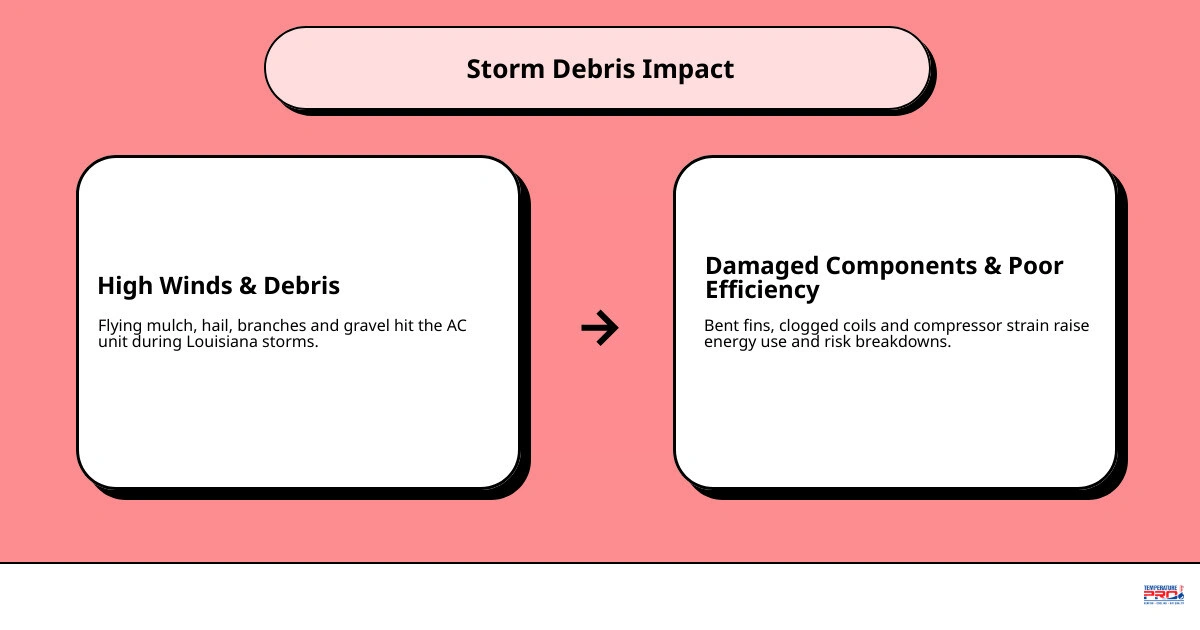
How storm debris affects your outdoor AC unit: Physical Damage and Efficiency

Your outdoor AC unit is built to handle normal weather. Louisiana storms are not always normal weather.
When wind starts throwing leaves, pine straw, twigs, mulch, gravel, and even small branches at your condenser, the unit can take a beating. Some damage is obvious, like a dented panel or a branch stuck in the fan guard. Some is subtle, like dirt packed deep into the coil or fins bent just enough to choke airflow.
That matters because the outdoor unit’s job is to release heat from your home. If storm debris interferes with that process, cooling performance drops and the system has to work much harder in already brutal Louisiana heat. If you have noticed weak cooling, longer run times, or rising utility use after rough weather, our guide to Signs Your AC Needs Repair in Louisiana Heat can help you compare symptoms.
Here is a simple breakdown of what common debris can do:
• Leaves and grass clippings — What it commonly hits: Coil surface and base of unit — Likely result: Airflow blockage, trapped moisture
• Dirt and dust — What it commonly hits: Coil fins and interior surfaces — Likely result: Insulating buildup, overheating
• Twigs and pine straw — What it commonly hits: Fan guard, coil openings — Likely result: Clogs, rattling, fan obstruction
• Mulch and small gravel — What it commonly hits: Fins, lower panels — Likely result: Bent fins, dents, restricted airflow
• Branches — What it commonly hits: Cabinet, refrigerant lines, fan grille — Likely result: Structural damage, line damage
• Hail — What it commonly hits: Fins, coil face, top grille — Likely result: Flattened fins, reduced heat transfer
• Lawn items or furniture blown by wind — What it commonly hits: Housing, pad, lineset area — Likely result: Dents, shifting, displacement
Storm damage is not just cosmetic. Restricted airflow can increase energy consumption, reduce cooling output, and strain the compressor, which is one of the hardest-working parts of the system.
How storm debris affects your outdoor AC unit fins and coils
The fins and coils are usually the first victims.
Condenser fins are thin aluminum slats wrapped around the coil. They help move heat out of the refrigerant and into the outdoor air. The problem is that aluminum fins are soft. Hail, gravel, twigs, and windblown debris can bend or flatten them surprisingly easily.
When enough fins are bent:
• Air cannot pass through the coil as freely
• Heat transfer becomes less effective
• The unit runs longer to cool the same space
• Compressor pressure and operating stress can rise
• Energy use goes up
Think of bent fins like trying to breathe through a pillow. Not impossible at first, but definitely not efficient.
Storms also force fine debris deeper into the coil structure. Dirt, grass, and mulch can create a packed layer that acts like insulation. Instead of releasing heat outdoors, the coil holds onto it. That trapped heat makes the system run hotter and longer.
In mild cases, fins can sometimes be straightened with a fin comb and coils can be cleaned carefully with proper products and low-pressure water. In more severe cases, coil damage may need professional repair. This is one reason routine tune-ups matter so much. Benefits of Regular AC Maintenance include catching storm wear before it snowballs into a midsummer breakdown.
Common debris projectiles in Louisiana storms
Louisiana storms have their own personality, and sometimes that personality is “chaotic yard tornado.”
In Baton Rouge, Prairieville, Gonzales, Denham Springs, Walker, Central, Zachary, St. Gabriel, and French Settlement, we often see outdoor units affected by:
• Wet leaves packed against the coil
• Twigs and pine straw pulled into the cabinet base
• Tree limbs falling across the top grille
• Mulch blown from flower beds into the fins
• Gravel or decorative rock striking lower coil sections
• Outdoor furniture or tools shifting into the unit
• Hail denting coil faces and fan guards
• Mud and silt left behind after heavy rain and standing water
Strong winds can also do more than throw objects. They can physically shift the condenser off its pad, especially if the soil around it softens after heavy rain. When that happens, refrigerant lines, electrical whips, and mounting points can all be stressed. A unit that is no longer level may vibrate more, drain poorly, and wear out faster.
That is especially important in our climate, where heat and humidity already push air conditioners hard for much of the year. For more on that bigger picture, see How Louisiana Heat and Humidity Affect AC Lifespan.
Identifying Hidden and Long-Term Damage After the Storm
Not all storm damage shows up the same day.
A unit can look mostly fine from the outside and still have hidden issues developing inside. That is why post-storm checks matter. We often remind homeowners that storms do not just cause “instant failure” problems. They also create “everything seems okay until next week” problems.
Examples of hidden or delayed storm-related damage include:
• Small refrigerant leaks from vibration or impact
• Capacitors weakened by power surges
• Control board damage after lightning activity
• Fan motor stress from debris contact
• Rust forming after trapped moisture sits in the cabinet
• Corrosion on electrical connections
• Unit shifting that causes long-term vibration
• Dirt impacted deep in the coil that slowly reduces efficiency
In 2022, wind and hail made up roughly 40% of homeowner insurance claims. That tells you how common storm-related property damage really is. HVAC systems are often part of that story, even when the damage is not dramatic enough to be obvious from the driveway.
If your system is older and storm damage is piling onto existing wear, it may also be worth reviewing your options in this AC System Upgrade Guide.
Recognizing hidden ways how storm debris affects your outdoor AC unit
The most frustrating storm damage is the kind that pretends not to exist.
Here are some delayed warning signs homeowners should watch for after the weather clears:
• Your AC runs longer than usual
• Cooling feels weaker in the afternoon
• Energy bills rise without another clear reason
• The unit makes buzzing, rattling, or scraping sounds
• The condenser fan starts but the system struggles
• The unit short cycles or turns on and off too often
• You see rust spots, new stains, or corrosion
• The system trips breakers or hesitates to restart
• Ice forms where it did not before
• Indoor humidity seems higher than normal
A common hidden issue is impacted dirt in the coil. Even if the face of the unit looks only a little dirty, wind can drive dust and organic material deeper into the coil. That buildup becomes an insulating blanket, reducing heat release and causing overheating.
Another hidden issue is electrical weakness. Lightning and power fluctuations may not destroy parts instantly, but they can weaken capacitors or control components so they fail later. That is one reason maintenance inspections are so valuable after severe weather. A good checkup can spot trouble before it becomes an emergency. Our article on Benefits of Regular AC Maintenance explains why preventive service is often the difference between a small fix and a miserable weekend without cooling.
Safe Steps for Homeowners to Clear Debris and Restore Power
After a storm, it is tempting to walk outside, yank a branch off the unit, and flip the thermostat back to cool. We get it. Louisiana heat does not exactly encourage patience.
Still, safety comes first.
Before touching the outdoor unit:
• Make sure the storm has fully passed
• Stay away from downed power lines
• Do not step into standing water around the condenser
• Do not open access panels
• Do not force the fan by hand
• Do not use a pressure washer on coils or fins
If conditions are safe, homeowners can handle light cleanup around the unit. Start by turning the system off at the thermostat. If you suspect impact damage, flooding, or electrical issues, shut off power at the breaker as well.
Then do a visual inspection from the outside. Look for:
• Branches or debris on top of the unit
• Leaves packed into the coil surface
• Bent or crushed fins
• Obvious dents or panel damage
• Exposed or damaged wiring
• Refrigerant line damage or missing insulation
• Standing water or muddy pooling around the base
• A unit that looks tilted or shifted
Maintain at least a 2-foot clearance around the unit when cleaning up. That helps with both safety and airflow. For broader seasonal care tips, see our AC Maintenance Guide Denham Springs LA.
If you are only removing loose leaves or light debris, use gloved hands or a soft brush. For coil cleaning, use a gentle condenser coil cleaner and a garden hose with light pressure only if the unit is undamaged and power is off. If the fins are badly bent, leave them alone until a technician can inspect them. DIY enthusiasm is admirable, but condenser fins do not forgive rough handling.
If the area had standing water, wait until the unit is completely dry before restarting. Drying time can range from a few hours to a day or more depending on conditions. If floodwater reached critical electrical components or the unit was partially submerged, do not restart it yourself.
Post-storm AC recovery checklist
Use this checklist after a major storm:
1. Confirm conditions are safe outside.
2. Turn the thermostat off.
3. Shut off the breaker if you suspect electrical, flood, or impact damage.
4. Check for standing water, exposed wires, or a shifted unit.
5. Remove loose debris from around the condenser.
6. Clear light debris from the top grille and coil surface carefully.
7. Inspect fins for visible bending or flattening.
8. Look for dents, loose panels, rattling parts, or damaged insulation on refrigerant lines.
9. Let the unit dry completely if water pooled around it.
10. Restore power only when the unit appears dry and undamaged.
11. Wait at least 3 minutes before restarting after shutdown or outage so system pressures can stabilize.
12. Set the thermostat to cool and monitor operation for the next 24 to 48 hours.
After restart, pay attention to:
• Unusual noises
• Weak airflow indoors
• Warm air from vents
• Frequent cycling
• Breaker trips
• Rising humidity
• Longer run times
If anything seems off, stop running the system and call for service.
Preventing Future Storm Damage with Protective Measures
The best storm repair is the one you never need.
A few practical steps can reduce the odds of future damage without smothering your condenser in a bad cover idea. Prevention is especially important in south Louisiana, where storm season and cooling season overlap like unwelcome roommates.
Here is what we recommend:
• Keep a 2 to 3 foot clearance around the unit
• Trim shrubs and remove overhanging limbs
• Avoid loose mulch or gravel right next to the condenser
• Secure lawn furniture, tools, and yard decor before storms
• Make sure drainage around the pad moves water away from the unit
• Consider elevating the unit if your property is prone to water pooling
• Install surge protection for storm-related electrical events
• Schedule maintenance before peak storm season
Protective cages and hail guards can help, but only if they are designed for HVAC airflow. A poorly designed barrier can restrict ventilation and create the very efficiency problems you are trying to avoid.
The same caution applies to covers. Full solid covers or plastic tarps can trap moisture, encourage rust, and even create a nasty surprise if someone forgets to remove them before turning the system back on. If you use any temporary protection during storm season, it should be breathable, used only while the system is off, and removed promptly afterward.
In some cases, a simple top shield may help protect against falling debris without blocking side airflow. For homeowners in flood-prone areas, raised pads and better drainage can be just as important as impact protection. If your current setup leaves the unit exposed to repeated storm problems, our AC System Upgrade Guide can help you think through longer-term improvements.
Frequently Asked Questions and Conclusion
Storms in Baton Rouge and nearby communities like Prairieville, Gonzales, Denham Springs, Walker, Central, Zachary, St. Gabriel, and French Settlement can do a number on outdoor equipment. The good news is that homeowners can often prevent the worst damage with a little preparation and catch repairable issues early with the right inspection habits.
At TemperaturePro Baton Rouge, we know how tough Louisiana weather can be on cooling systems. As a family-owned and veteran-owned HVAC company, we provide fast, reliable service and 24/7 support when homeowners need help after storms, outages, and sudden AC problems. If your system may have been affected by debris, moisture, or surge-related damage, Schedule your professional post-storm inspection with TemperaturePro Baton Rouge.
Can I run my air conditioner during a severe storm?
Usually, it is better to shut it off during severe storms with strong wind, hail, or frequent lightning.
Normal rain alone is not usually a problem for a properly installed outdoor unit. But severe weather raises the risk of:
• Flying debris damaging fins and coils
• Lightning-related power surges
• Sudden outages and unstable voltage
• Water pooling around electrical components
If a severe storm is approaching, turn the AC off at the thermostat. In higher-risk conditions, many homeowners also shut off the dedicated breaker until the storm passes. Once power is stable again, wait a few minutes before restarting. This gives internal pressures time to equalize and helps protect the compressor.
Should I use a cover on my outdoor AC unit during storm season?
Sometimes, but carefully.
A breathable, manufacturer-appropriate cover or top shield may help with falling debris when the system is off. But a full solid cover or plastic wrap can trap moisture, promote mold and corrosion, and block airflow. Never run the unit while it is covered.
In our humid Louisiana climate, moisture trapping is a real risk. So if you use any temporary protection, remove it as soon as conditions are safe. If your main concern is windblown debris, proper landscaping, tree trimming, and a well-designed protective barrier are often better long-term solutions than wrapping the whole unit.
Call for professional help if you notice any of the following:
• Visible coil or fin damage
• A branch struck the unit
• The condenser shifted off its pad
• Refrigerant lines look bent or damaged
• Standing water reached the unit
• The breaker trips after restart
• The system cools poorly
• The unit makes unusual sounds
• There was lightning activity and the AC now acts strangely
• Energy bills rise after the storm
• Humidity indoors is suddenly worse
These problems can point to hidden issues that are not safe or practical to diagnose on your own. If you are unsure whether your symptoms are storm-related or heat-related, our article on Signs Your AC Needs Repair in Louisiana Heat is another helpful place to start.
Storm debris does not have to destroy your AC to hurt it. Sometimes all it takes is a layer of packed dirt, a few bent fins, or a slight shift in the unit’s position to reduce efficiency and shorten system life. Knowing how storm debris affects your outdoor AC unit helps you respond faster, restart more safely, and protect your comfort through Louisiana’s roughest weather.
If you want peace of mind before or after the next storm, TemperaturePro Baton Rouge is here to help with maintenance, repairs, inspections, and dependable 24/7 emergency support across our service area.