Why HVAC Best Practices in Baton Rouge Are a Year-Round Survival Skill
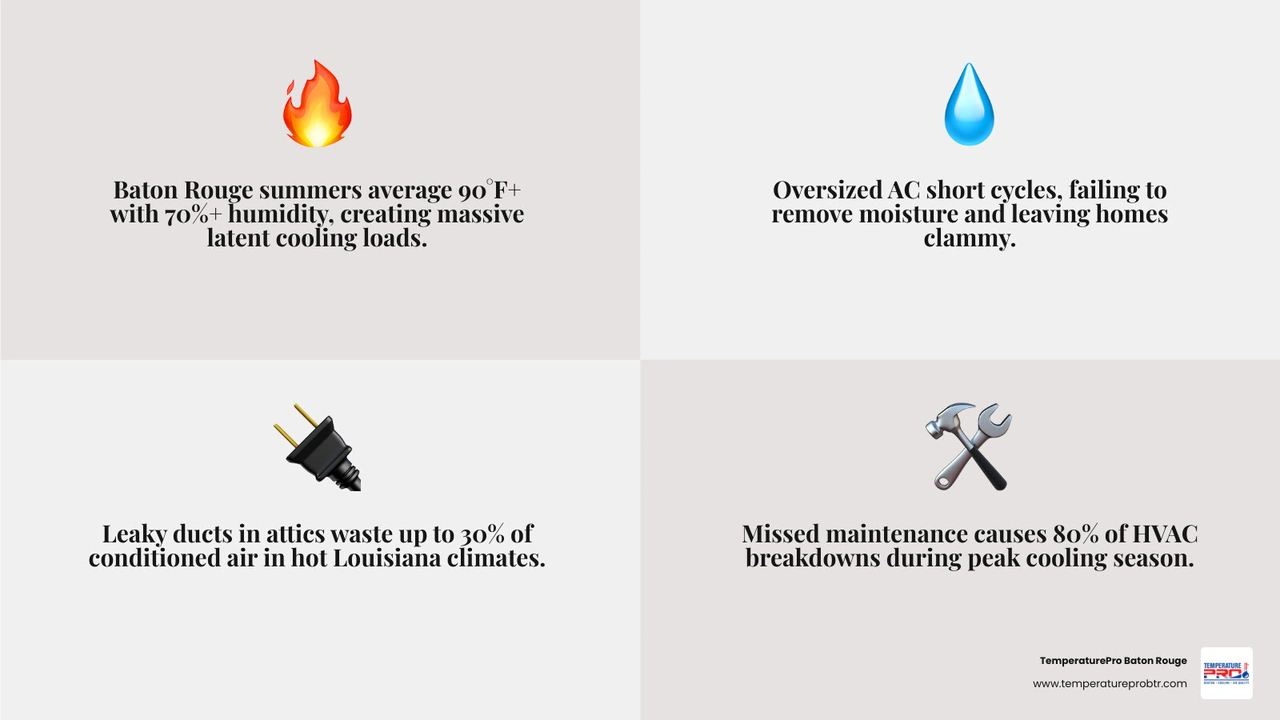
The best HVAC practices for Baton Rouge area homeowners are not the same as what works in Atlanta, Dallas, or anywhere else — and that difference matters a lot when your cooling season stretches six to seven months and outdoor humidity regularly tops 70%.
Here is a quick overview of the most important HVAC best practices for Baton Rouge homeowners:
1. Size your system correctly using Manual J load calculations — oversized units cool too fast to remove moisture, leaving rooms clammy
2. Change or inspect filters monthly during peak cooling season (April through October)
3. Schedule two professional tune-ups per year — one in spring before cooling season and one in fall before heating season
4. Flush your condensate drain line monthly with white vinegar to prevent algae clogs
5. Seal your ductwork with mastic sealant — leaky attic ducts waste up to 30% of your conditioned air
6. Keep the fan set to "Auto" (not "On") to avoid recirculating humid air
7. Set your thermostat to 76–78°F when home, with a 4–6°F setback when away
8. Maintain 2 feet of clearance around your outdoor condenser unit
9. Watch for warning signs like warm air, musty odors, ceiling stains, or rising energy bills
10. Use a whole-home dehumidifier if your AC alone cannot keep indoor humidity comfortable
Baton Rouge's subtropical climate places extreme stress on HVAC systems. The combination of relentless heat, high latent moisture loads, and long cooling seasons means a neglected system does not just underperform — it can fail entirely, sometimes within days of a weather event. As one local scenario illustrates the stakes well: when an AC system fails during a period of record-high humidity, mold can begin forming on walls and carpets within days. In this climate, routine HVAC care is not optional maintenance — it is how you protect your home, your air quality, and your family's comfort all year long.
This guide walks you through every layer of smart HVAC ownership in Baton Rouge, from sizing and seasonal maintenance to duct sealing, humidity control, equipment choices, and how to find a contractor you can trust.
Best HVAC Practices for Baton Rouge Area Homeowners Start With Climate-Smart Sizing
The first rule of surviving a Baton Rouge summer is simple: bigger is not always better. A system has to match the house, not just the square footage. That is why proper sizing is one of the most important parts of our HVAC services.
Why proper HVAC sizing matters more in Baton Rouge’s hot, humid climate
In our area, the AC is not just lowering temperature. It is also removing moisture. If a unit is oversized, it cools the home too quickly, shuts off too soon, and never runs long enough to pull enough humidity out of the air. The result is a home that feels cold and sticky at the same time, which is basically the least satisfying version of comfort possible.
An undersized system causes different trouble. It may run constantly, struggle to hit the thermostat setting, and wear itself out faster during long summer stretches.
For best hvac practices for baton rouge area homeowners, we always recommend load calculations instead of rule-of-thumb sizing. A proper Manual J calculation helps match equipment to both sensible heat and latent moisture load, which matters a lot in a humid Louisiana home.
What Baton Rouge homes need evaluated before installing new equipment
Before new equipment goes in, several home-specific details should be reviewed:
• Window size and orientation
• Attic insulation levels
• Air leaks around doors, windows, and penetrations
• Duct leakage and duct location
• Return air sizing
• Home age and construction style
• Shading from trees or nearby structures
• Crawlspace or attic moisture conditions
Older homes in Baton Rouge, Denham Springs, Zachary, and nearby communities often have legacy duct layouts, insulation gaps, or undersized returns that change how a system should be selected.
Prevent the Most Common Baton Rouge HVAC Problems Before They Become Emergencies
In our climate, small HVAC issues do not stay small for long. A little restricted airflow in April can become a frozen coil in June and a no-cooling call in July. You can learn more about cooling care on our air conditioning page.
Best hvac practices for baton rouge area homeowners to avoid common breakdowns
The most common local problems are also some of the most preventable:
• Refrigerant leaks
• Clogged condensate drain lines
• Dirty evaporator or condenser coils
• Weak airflow from dirty filters or duct leaks
• Frozen indoor coils
• Musty odors from moisture or microbial growth
• Rising energy bills caused by inefficiency
• Storm-related electrical or debris damage
The best prevention habits are straightforward:
• Check filters monthly and replace them every 1 to 3 months, or more often with pets or allergies
• Flush the drain line monthly during cooling season
• Keep at least 2 feet of clearance around the outdoor unit
• Use fan setting "Auto" instead of "On"
• Keep supply and return vents open and unblocked
• Rinse outdoor coils gently with a garden hose, not a pressure washer
• Watch utility bills for sudden spikes
• Inspect the system after major storms before restarting it
Warning signs your system needs repair or replacement
Do not wait for a complete breakdown if you notice these red flags:
• Warm air from vents
• Hissing sounds near refrigerant lines
• Banging, buzzing, or grinding noises
• Uneven temperatures between rooms
• Frequent short cycling
• Excess indoor humidity
• Musty or dirty-sock odors
• Water around the indoor unit
• Ceiling stains near vents or air handlers
• Repeated breaker trips
• An older system with worsening comfort
If a system is aging, needs frequent repairs, and no longer controls humidity well, replacement may be the smarter long-term move.
Emergency HVAC issues Baton Rouge homeowners see after heat waves and storms
After severe weather, we commonly see no-cooling calls linked to power surges, tripped breakers, soaked insulation, clogged drain lines, debris-damaged condensers, and flood-related electrical issues. In Baton Rouge and surrounding areas, high humidity after a storm can turn an HVAC outage into an indoor air quality issue quickly.
If your system has been exposed to floodwater or storm debris, do not simply flip it back on and hope for the best. That is a great strategy for suspense movies, not home comfort.
Baton Rouge HVAC Maintenance Schedule: What to Do Monthly, Seasonally, and Yearly
Routine maintenance is one of the easiest ways to reduce breakdown risk and extend equipment life. With regular care, many systems last 15 to 20 years. For local homeowners, our Maintenance Plan and Baton Rouge AC Maintenance Programs are built around that reality.
How often should Baton Rouge homeowners schedule professional HVAC maintenance?
For our climate, twice-yearly professional maintenance is the sweet spot:
• Spring tune-up before heavy cooling season
• Fall tune-up before winter heating use
That schedule helps catch airflow, refrigerant, electrical, and drainage issues before the system is pushed hardest. Baton Rouge cooling seasons are long, so waiting until the unit sounds unhappy is not a maintenance strategy. That is just an invitation.
Monthly homeowner tasks still matter:
• Inspect filters
• Check thermostat operation
• Look for water near the indoor unit
• Keep the outdoor unit clear
• Flush the condensate line during peak cooling months
What a professional HVAC tune-up typically includes
A thorough tune-up usually includes:
• Cleaning coils as needed
• Checking refrigerant charge
• Verifying airflow
• Inspecting blower components
• Testing capacitors and contactors
• Tightening electrical connections
• Calibrating the thermostat
• Clearing the condensate drain properly at the source
• Inspecting safety controls
• Checking for wear on motors and moving parts
Good maintenance is not just a quick glance and a sticker. It should include real testing and system performance verification.
Why maintenance plans help systems last longer and reduce emergency breakdowns
Maintenance plans are valuable because they create consistency. They also often include benefits homeowners appreciate, such as priority scheduling, service reminders, and repair discounts.
Just as important, a plan builds service history. That makes it easier to spot changes in performance over time, catch recurring issues early, and avoid emergency calls during extreme weather. For more on the long-term value, see Benefits of Regular AC Maintenance and How to Extend the Life of Your AC in Louisiana.
Humidity, Indoor Air Quality, and Ductwork Are the Hidden Efficiency Drivers
Temperature gets all the attention, but in Baton Rouge, moisture control is often the real comfort issue. You can have a cool house that still feels miserable if humidity is too high. That is why these topics matter just as much as the equipment itself. Learn more on our HVAC page.
High indoor humidity can make homeowners lower the thermostat just to feel comfortable, which increases energy use. It can also encourage mold growth, contribute to musty odors, and make the home feel sticky.
Strategies that work best here include:
• Correct system sizing with strong latent moisture removal
• Variable-speed or inverter-style equipment that runs longer at lower output
• Fan set to "Auto"
• Whole-house dehumidifiers for homes that stay humid even when the AC runs properly
• Bathroom and kitchen exhaust fan use
• Air sealing and duct sealing to reduce humid air infiltration
How to improve indoor air quality in humid Baton Rouge homes
Indoor air quality and humidity are tied together. Good HVAC care helps reduce dust, allergens, and moisture-related issues.
A practical indoor air quality plan includes:
• Checking filters monthly
• Using a filter that balances airflow and filtration, often in the MERV 8 to MERV 11 range if the system supports it
• Running bathroom fans during and after showers
• Using kitchen exhaust while cooking
• Keeping return grilles clean and unobstructed
• Considering UV or added IAQ options when recommended for the home
• Bringing in fresh air carefully when outdoor conditions allow
Why proper ductwork design and sealing matter in Baton Rouge
Ductwork can make or break HVAC performance. Research consistently shows that leaky ducts in attics can waste around 30% of a home's heating and cooling. In our climate, that lost air is expensive in both comfort and energy.
Proper duct best practices include:
• Designing airflow with Manual D principles
• Sealing joints with UL 181 mastic or approved foil tape
• Avoiding standard cloth duct tape
• Testing leakage after installation or major repair
• Targeting less than 5% leakage after proper sealing
• Keeping ducts in conditioned space when possible
• Leaky attic ducts — Likely result: Hot spots, dust intrusion, humidity problems, high bills
• Properly sealed ducts — Likely result: Better airflow, more even comfort, cleaner air, lower energy waste
Choose Efficient Equipment and Smart Controls for Lower Bills and Better Comfort
Efficiency matters in Baton Rouge because cooling dominates the year. The right system and controls can help reduce wasted energy without sacrificing comfort. For equipment options, see our heat pumps and heating pages.
Which efficiency ratings matter most for Baton Rouge homes?
For our area, cooling efficiency is usually the top priority.
• SEER2 measures cooling efficiency under updated test conditions and is especially useful because systems often operate at part load
• HSPF matters for heat pumps since it measures heating efficiency
• AFUE matters for furnaces, though it is generally a lower priority here than AC efficiency because winters are shorter and milder
Homeowners should prioritize strong cooling performance, humidity control, and part-load efficiency. Energy Star-qualified central units start at efficient levels, but the best choice depends on the home, ductwork, and runtime needs.
Are heat pumps a good option for Baton Rouge homes?
For many homes in Baton Rouge, Prairieville, Gonzales, Central, Walker, St. Gabriel, and nearby communities, yes. Heat pumps are often a strong fit because they provide both cooling and heating, and our winters are usually mild enough for them to perform well.
They still need maintenance, including:
• Monthly filter checks
• Coil cleaning
• Refrigerant checks during professional service
• Outdoor unit clearance
• Thermostat review to avoid unnecessary backup heat use
For a deeper comparison, visit Central AC vs Heat Pump for Louisiana Homes and Heat Pump vs AC Only System Which is Better.
Everyday habits that cut HVAC energy use without sacrificing comfort
Small habits add up:
• Set cooling to 76 to 78 degrees when occupied
• Use a 4 to 6 degree setback when away
• Keep the fan on "Auto"
• Use ceiling fans to feel cooler and support higher thermostat settings
• Close blinds during peak sun
• Seal attic and wall penetrations
• Make sure attic insulation is up to regional recommendations, often around R-38 to R-60
• Keep vents unblocked by furniture or rugs
• Use a smart thermostat for scheduling and consistency
Even a one-degree thermostat adjustment can reduce cooling costs, and ceiling fans can make a room feel several degrees cooler. Just remember: fans cool people, not empty rooms.
How to Choose the Right HVAC Contractor in Baton Rouge
The right contractor matters as much as the equipment. Poor installation, poor airflow setup, or skipped commissioning can undercut even a great system. If you want to learn more about us, visit About Us or see our Service Areas.
Questions homeowners should ask before booking HVAC service
When booking service or replacement, ask:
• Do you perform Manual J load calculations for new systems?
• Will you inspect the ductwork and airflow?
• What does your maintenance process include?
• Do you offer emergency support?
• What warranty coverage applies?
• Will I receive a clear written scope of work?
• Do you document findings and recommendations?
These questions help you avoid vague answers and get a clearer picture of how the work will be done.
What service quality looks like for Baton Rouge homeowners in 2026
In 2026, homeowners should expect more than a quick diagnosis and a rushed recommendation. Good service should include:
• Clear diagnostics
• Respectful communication
• Clean work habits, including protecting the home
• Follow-up when needed after major installation
• Attention to total system performance, not just one failed part
• Reliable support from a local team
At TemperaturePro Baton Rouge, we are family-owned and veteran-owned, and we believe homeowners deserve fast, reliable service with the kind of communication we would want in our own homes.
Frequently Asked Questions About Baton Rouge HVAC Care
What seasonal HVAC prep matters most before Baton Rouge summer and winter?
Before summer:
• Replace or inspect filters
• Clear the drain line
• Clean around the outdoor unit
• Test the thermostat
• Schedule spring maintenance
Before winter:
• Schedule a heating inspection
• Check weather sealing around doors and windows
• Test heat mode before the first cold snap
• Replace filters if needed
• Make sure vents are open and unobstructed
When should a Baton Rouge homeowner replace instead of repair an HVAC system?
Replacement becomes more likely when:
• The system is around 15 to 20 years old
• Repairs are becoming frequent
• Humidity control keeps getting worse
• Cooling is uneven
• Energy bills are rising without another clear cause
• The system uses older refrigerant or has major component failure
For more guidance, read How Long Does an AC System Last in Louisiana and When Should You Replace Your AC in a Hot Climate.
A lot more than most homeowners expect.
Older homes may have:
• Undersized returns
• Leaky ducts
• Poor attic insulation
• Air leaks around plumbing, wiring, and framing penetrations
• Uneven airflow room to room
Ducts in hot attics work against the system all summer long. If those ducts also leak, the problem multiplies. Likewise, insulation gaps and air leakage increase load, while poor return design can create pressure issues and weak airflow.
In other words, the equipment may not be the whole problem. Sometimes the house is making the system do extra homework every day.
Conclusion
The best HVAC practices for Baton Rouge area homeowners come down to a simple idea: match your system to the home, maintain it before peak season, control humidity aggressively, and do not ignore the ductwork.
At TemperaturePro Baton Rouge, we provide fast, reliable heating, cooling, and indoor air quality service for homeowners throughout Baton Rouge, Prairieville, Gonzales, Denham Springs, Walker, Central, Zachary, St. Gabriel, and French Settlement. As a family-owned and veteran-owned company, we treat our customers like family and offer 24/7 support when comfort cannot wait.
If you want help protecting your home for the long Baton Rouge cooling season ahead, learn more about our HVAC services.