What Business Owners Should Know About Commercial HVAC in Baton Rouge
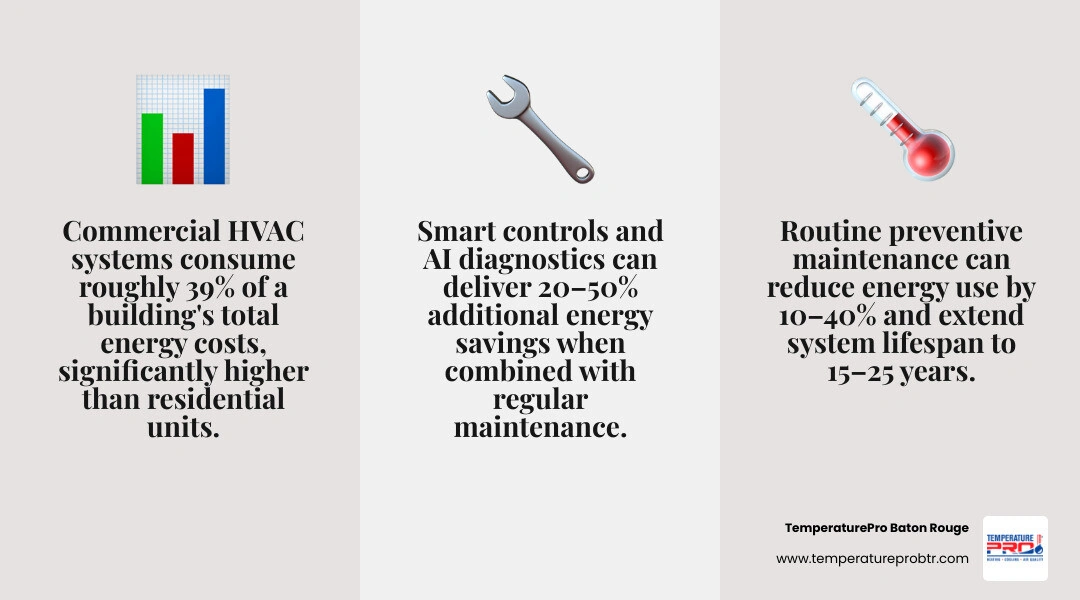
What business owners should know about commercial HVAC comes down to a few core ideas: these systems are larger and more complex than residential units, they drive roughly 39% of your building's energy costs, and proactive maintenance is what separates smooth operations from expensive breakdowns.
Here's a quick overview of the essentials:
• System types matter — Rooftop units, VRF systems, split systems, and chilled water systems each suit different building sizes and uses
• Maintenance is non-negotiable — Routine care can cut energy use by 10–40% and extend equipment life to 15–25 years
• Smart controls save real money — Automation and AI-driven diagnostics can deliver 20–50% energy savings when paired with regular maintenance
• Refrigerant rules are changing — The phase-down of R-410A means businesses need to plan for low-GWP refrigerant transitions now
• Indoor air quality is a business issue — Poor filtration leads to tenant complaints, absenteeism, and compliance risks
• DOE efficiency standards apply to you — SEER2 and EER2 ratings now govern what equipment can be legally installed
• Service agreements pay for themselves — Preventive contracts reduce emergency calls and create predictable budgeting
When your HVAC system runs well, nobody notices. When it fails — especially in Louisiana's brutal summer heat — everyone notices, fast. For business owners in Baton Rouge and surrounding communities, understanding your commercial HVAC system isn't just a facilities management detail. It's a direct factor in your operating costs, your employees' productivity, your customers' comfort, and your regulatory compliance.
The U.S. commercial HVAC market is growing steadily, and the technology is evolving quickly — from AI-powered predictive maintenance to refrigerant phase-downs driven by federal regulation. Whether you're managing a single retail space or a multi-tenant office building, this guide walks you through everything you need to know to make smart, confident decisions about your commercial HVAC system.
Commercial vs. Residential Systems: What Business Owners Should Know About Commercial HVAC
To make informed decisions about your facilities, you must first understand how commercial systems differ from the residential units you might have at home. While both serve the same basic purpose—keeping occupants comfortable by regulating temperature and humidity—their design, scale, and complexity are worlds apart.
Residential systems are typically self-contained, single-zone systems designed to cool a relatively small footprint. They rarely exceed 5 tons of cooling capacity. In contrast, commercial HVAC systems are modular, highly complex, and can range anywhere from 10 to over 100 tons of capacity to accommodate large spaces, high foot traffic, and heat-generating office equipment.
• Cooling Capacity — Residential HVAC Systems: Small (typically 1.5 to 5 tons) — Commercial HVAC Systems: Massive (10 to 100+ tons)
• System Complexity — Residential HVAC Systems: Standard split or packaged systems — Commercial HVAC Systems: Modular, customized, multi-zone configurations
• Zoning Requirements — Residential HVAC Systems: Single or dual-zone — Commercial HVAC Systems: Dozens of independent zones with varying loads
• Equipment Location — Residential HVAC Systems: Ground level or backyard — Commercial HVAC Systems: Rooftop (RTUs) or dedicated mechanical rooms
• Ventilation & IAQ — Residential HVAC Systems: Basic filtration; relies on natural air exchange — Commercial HVAC Systems: Advanced filtration (MERV 13+), dedicated outdoor air systems (DOAS)
• Maintenance Needs — Residential HVAC Systems: Twice-yearly seasonal tune-ups — Commercial HVAC Systems: Monthly to quarterly professional checkups
Commercial systems must also handle vastly different occupancy patterns. An office building might be packed from 8 AM to 5 PM and empty overnight, while a retail shop or restaurant experiences sudden, dramatic spikes in heat load during lunch and dinner hours. Managing these shifts requires sophisticated zoning capabilities.
If you are planning a new property or retrofitting an older building, understanding these structural differences is key to executing a successful Commercial Properties HVAC Installation that matches your building's specific thermal profile.
Key System Types and How They Differ
Not all commercial buildings are configured the same way, which is why there are several distinct system types designed to meet different architectural demands:
• Packaged Rooftop Units (RTUs): These are the most common systems for low-rise commercial buildings, retail spaces, and restaurants. All components—compressor, condenser, evaporator, and fan coil—are housed in a single, weather-resistant cabinet installed on the roof. This saves valuable indoor square footage and keeps operational noise away from your employees and customers.
• Split Systems: Similar to residential setups but on a much larger scale, commercial split systems have separate indoor and outdoor units. They are highly effective for smaller office spaces, clinics, or individual retail shops where roof access is limited or unnecessary.
• Variable Refrigerant Flow (VRF) Systems: VRF systems are incredibly sophisticated and energy-efficient. They use smart heat recovery technology to heat one zone of a building while simultaneously cooling another. By moving heat from warm zones (like a server room) to cool zones (like corner offices), VRF systems can improve energy efficiency by up to 30%.
• Chilled Water Systems and Boilers: Typically reserved for large facilities over 100,000 square feet, these systems use water instead of air to distribute heating and cooling throughout the building. Water is chilled or heated centrally and pumped to air handling units (AHUs) across various zones.
Choosing between these options depends heavily on your property's size, layout, and localized climate demands. For instance, businesses operating in nearby areas can benefit from specialized local planning, such as implementing a tailored system via Commercial HVAC Zachary LA to ensure local building codes and extreme humidity levels are fully addressed.
Core Components and Smart Technologies Driving Efficiency
To understand what business owners should know about commercial HVAC, you don't need a degree in mechanical engineering, but you should know the primary components that keep your air moving and comfortable.
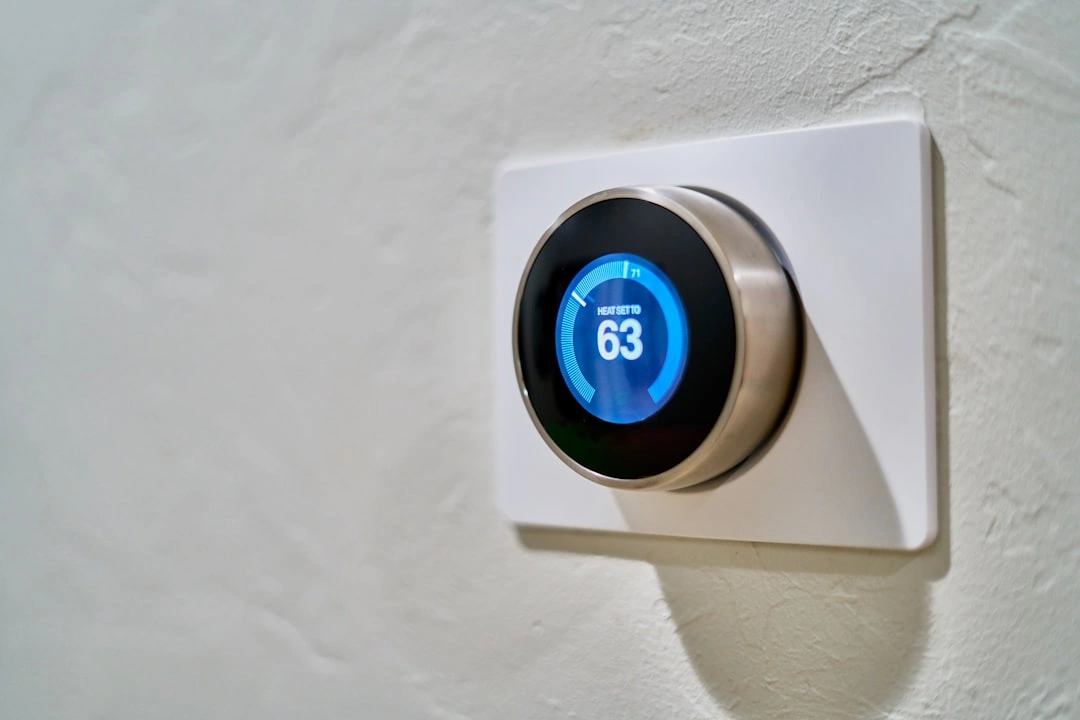
Every commercial system relies on a network of core hardware:
• Air Handling Units (AHUs): The lungs of the system, which condition and circulate air.
• Compressors & Condensers: The heavy-duty machinery that pressurizes refrigerant to release heat outside.
• Economizers: Smart dampers that draw in cool outdoor air when local weather permits, providing "free cooling" and giving your compressors a much-needed break.
• Variable Speed Drives (VFDs): Devices that allow fans and motors to run at precise speeds matching the actual demand, rather than running at 100% capacity all the time.
When these components are paired with modern smart controls, the savings are substantial. Space heating, cooling, and ventilation typically account for 35% to 45% of a commercial building's total energy consumption. Upgrading to high-efficiency equipment with variable-speed technology and advanced economizers can dramatically lower those monthly utility bills.
What Business Owners Should Know About Commercial HVAC Automation
If your facility still relies on manual thermostats, you are likely wasting a significant amount of energy. Modern commercial buildings utilize Building Management Systems (BMS) and smart automation to eliminate human error and optimize climate control.
By integrating occupancy sensors, your HVAC system can automatically enter an eco-mode when conference rooms, classrooms, or warehouses are empty. Furthermore, Demand Control Ventilation (DCV) uses carbon dioxide ($CO_2$) sensors to monitor air quality in real-time. Instead of continuously conditioning a set volume of outdoor air, DCV only increases ventilation when occupancy rises, preventing unnecessary heating and cooling during low-traffic periods.
On the maintenance side, AI-driven diagnostics and predictive monitoring are changing how we care for commercial systems. Instead of waiting for a component to break and halt your business operations, smart sensors track performance trends, vibration, and temperature drift. This allows our technicians to identify and address minor mechanical issues before they turn into major, expensive system failures.
Indoor Air Quality, Filtration, and Regulatory Compliance
Indoor air quality (IAQ) is no longer just a comfort issue—it is a health, safety, and productivity priority. Poor IAQ can lead to "Sick Building Syndrome," causing headaches, fatigue, and throat irritation among your staff, which ultimately increases absenteeism and lowers overall productivity.
Commercial systems use heavy-duty filtration to clean the air. Standard commercial guidelines recommend utilizing MERV 13 filters (Minimum Efficiency Reporting Value) or higher, as they are dense enough to capture fine airborne particles, allergens, and viruses without choking system airflow. For highly sensitive environments like medical facilities or laboratories, HEPA (High-Efficiency Particulate Air) filters are used to eliminate 99.97% of microscopic contaminants.
Additionally, technologies like bipolar ionization and UV-C light purifiers can be integrated directly into your ductwork. Bipolar ionization releases charged ions that bond with airborne impurities, neutralizing odors, mold spores, and viruses, making them easier for your filtration system to trap.
From a regulatory standpoint, commercial buildings must comply with strict standards:
• ASHRAE Standard 62.1: Defines the minimum ventilation rates and air quality parameters required to ensure acceptable indoor air quality for human occupants.
• ASHRAE Standard 90.1: Establishes the baseline energy efficiency standards for buildings, influencing local building codes and equipment requirements.
What Business Owners Should Know About Commercial HVAC Refrigerant Phase-Downs
The environmental regulations surrounding refrigerants are undergoing a massive shift. Under the federal AIM (American Innovation and Manufacturing) Act, traditional high-GWP (Global Warming Potential) hydrofluorocarbon (HFC) refrigerants like R-410A are being phased down in favor of more environmentally friendly options.
As a business owner, here is what this transition means for you:
1. New Low-GWP Refrigerants: Modern commercial systems are transitioning to next-generation refrigerants, primarily R-32 and R-454B.
2. Phased-Out Supply: While you do not need to rush to replace an existing, perfectly functional R-410A system, the supply of older refrigerants will decrease over the coming years, making repairs on older units more expensive as chemical costs rise.
3. Future-Proofing Upgrades: If you are planning a system replacement, investing in a unit designed for low-GWP refrigerants ensures long-term compliance and easier maintenance down the road.
Proactive Maintenance Strategies and Lifecycle Management
A commercial HVAC system represents a major capital investment. Treating it reactively—only calling for help when the system stops working—is a recipe for shortened equipment lifespans, frequent operational disruptions, and inflated energy bills.
Proactive preventive maintenance is the single most effective tool you have to protect your bottom line. Routine tasks like cleaning coils, checking electrical connections, and calibrating thermostats can recover 10% to 40% of a system's energy efficiency. In fact, just 0.042 inches of dirt buildup on a condenser coil can reduce its cooling efficiency by up to 21%, forcing your system to run longer and work harder to achieve the same indoor temperature.
By keeping your system clean and properly tuned, you can extend its operational lifespan to its full 15-to-25-year potential. To understand why this matters, read more about the Commercial HVAC Maintenance Importance and how it keeps your business comfortable year-round.
Staying ahead of issues also means knowing when your system is struggling. Familiarizing yourself with the primary Business Needs HVAC Services Signs—such as uneven airflow, rising utility bills, or unexpected cycling—can prevent minor wear from turning into a complete system shutdown.
Seasonal Checklists and Professional Service Agreements
To keep your system running optimally, we recommend a multi-tiered maintenance approach. While your on-site facility team can handle basic visual inspections and monthly filter checks, deep mechanical tune-ups require a licensed professional.
A comprehensive seasonal checklist should include:
• Spring/Summer Prep: Inspecting compressors, cleaning condenser and evaporator coils, checking refrigerant charge, flushing condensate drain lines to prevent water damage, and testing fan belts.
• Fall/Winter Prep: Inspecting the furnace or heat pump assembly, examining the heat exchanger for cracks, testing ignition controls, and verifying proper ventilation.
For businesses planning heating upgrades or replacements ahead of the cold season, reviewing resources like our Commercial Furnace Installation Guide Prairieville LA or the Commercial Furnace Replacement Guide Prairieville LA can help you plan your capital expenditures wisely.
Partnering with a professional team for a commercial service agreement ensures these tasks are completed on schedule, giving you priority service status, predictable maintenance budgeting, and peace of mind.
Frequently Asked Questions About Commercial HVAC
How long do commercial HVAC systems typically last?
On average, a well-maintained commercial HVAC system will last between 15 and 25 years. The actual lifespan depends heavily on the system type, local operating conditions, and maintenance history. Systems that receive regular professional tune-ups consistently last years longer than those subjected to reactive "run-to-failure" management.
How often should commercial HVAC filters be replaced?
In most commercial settings, filters should be inspected monthly and replaced every 1 to 3 months. High-occupancy buildings, restaurants, medical clinics, or facilities in dusty environments will require more frequent filter changes to maintain strong airflow and protect indoor air quality.
What are the signs that a business needs commercial HVAC repairs?
Key warning signs include:
• Inconsistent Temperatures: Hot and cold spots developing across different zones.
• Strange Noises: Banging, squealing, or rattling coming from the ductwork or rooftop units.
• Short Cycling: The system turning on and off rapidly, which strains the compressor.
• Spiking Energy Bills: A sudden, unexplained increase in your monthly utility costs, indicating the system is losing efficiency.
Conclusion
Managing a commercial facility comes with plenty of responsibilities, but your heating and cooling systems shouldn't be a source of constant stress. By understanding the fundamentals of your system, embracing smart automation, and prioritizing proactive maintenance, you can keep your energy bills low, your indoor air clean, and your business operations running smoothly.
At TemperaturePro Baton Rouge, we are proud to be a family and veteran-owned business. We treat our clients like family, providing fast, reliable, and professional heating, cooling, and indoor air quality services tailored to the unique demands of Louisiana businesses. Whether you need emergency repairs, a system replacement, or a customized preventative maintenance agreement, our certified technicians are ready to help.
We proudly serve commercial properties across our entire local service area, including Baton Rouge, Prairieville, Gonzales, Denham Springs, Walker, Central, Zachary, St. Gabriel, and French Settlement, LA.
Are you ready to optimize your building's comfort and efficiency? Contact us today to explore our comprehensive Commercial HVAC Services or schedule a professional system evaluation to keep your business running at its best.