5 min read
When Your AC Can't Keep Up in Louisiana Heat: Troubleshooting the Fall Transition
Why do fall HVAC startups fail? Apply these home maintenance tips and troubleshooting steps to safely transition your system before winter.


What Baton Rouge Homeowners Need to Know About AC Maintenance in Extreme HeatKnowing how to maintain your AC in extreme heat is one of the most important things you can do as a homeowner in Baton Rouge, LA. When summer temperatures climb in
Knowing how to maintain your AC in extreme heat is one of the most important things you can do as a homeowner in Baton Rouge, LA. When summer temperatures climb into the upper 90s and humidity makes it feel even hotter, your air conditioner isn't just running — it's fighting for its life. And if it loses that fight, you'll know immediately.
Here's a quick overview of the essential steps to maintain your AC during extreme heat:
1. Replace or clean your air filter every 30 days during peak summer — a dirty filter alone can cut efficiency by up to 15%
2. Clear at least 2 feet of space around your outdoor condenser unit so heat can escape properly
3. Set your thermostat to 78°F when you're home and 82°F when you're away
4. Close blinds and curtains on south- and west-facing windows during peak afternoon hours
5. Clean your condenser coils to prevent the system from overheating
6. Check your condensate drain line for clogs that can shut your system down
7. Schedule a professional tune-up before or during peak heat season — not after something breaks
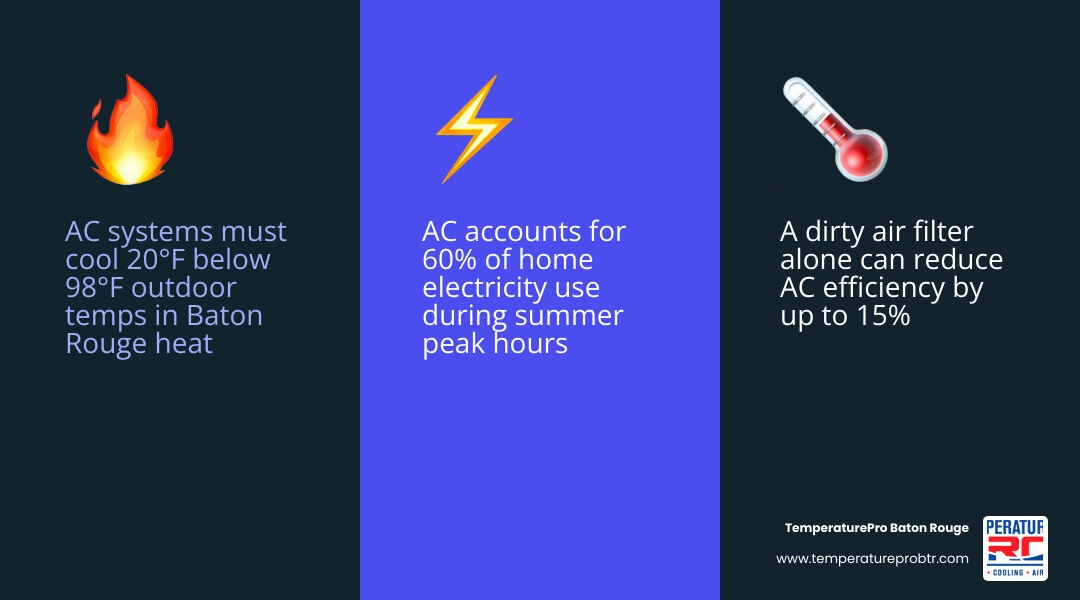
Most residential AC systems are designed to cool your home about 20 degrees below the outdoor temperature. That means on a 98°F Baton Rouge afternoon, your system is already working at or near its design limit just to keep you at 78°F. Add Louisiana's notorious humidity — which forces your AC to remove moisture from the air on top of lowering the temperature — and you have a recipe for system strain, reduced efficiency, and potentially costly breakdowns.
Air conditioning accounts for nearly 60% of residential electricity usage during summer peak hours. So when your system struggles, your energy bills climb fast. The good news is that most heat-related AC failures are preventable with the right maintenance habits and a few smart home adjustments.
This guide covers everything you need to keep your system running reliably through even the hottest Louisiana summers.
Basic how to maintain your ac in extreme heat glossary:
• how to clean your ac condenser unit safely
• hvac maintenance tips for louisiana homeowners
To understand how to maintain your AC in extreme heat, you first have to understand what your system is up against when a Louisiana heatwave strikes. Many homeowners think of their air conditioner as a machine that creates "cold air." In reality, your AC is a heat exporter. It absorbs the heat inside your home and dumps it outside.
When outdoor temperatures climb past 95°F, this dumping process becomes incredibly difficult. The laws of physics dictate that heat naturally moves toward cooler areas. When the outdoor air is already scorching hot, your outdoor condenser unit has to work twice as hard to force more heat into an already hot environment. This physical limitation is governed by what HVAC professionals call the "design temperature."
Most residential cooling systems in the Baton Rouge area are sized and designed based on historical climate data to handle outdoor temperatures up to about 95°F. When we hit those triple-digit heat index days in July and August, the outdoor temperature exceeds the system's design parameters.
This triggers a chain reaction of operational stress:
• Continuous Run Cycles: To keep up with the relentless heat entering your home, your AC may run continuously for 12 to 16 hours a day.
• Elevated Compressor Strain: The compressor—the "heart" of your AC—must compress refrigerant at much higher pressures, raising its operating temperature and accelerating wear and tear.
• Nighttime Recovery Failure: During a severe heatwave, nighttime temperatures often stay above 80°F. Without a cool night to let the system rest, the AC starts the next morning already thermally stressed.
Over time, this constant workload takes a toll. To learn more about how our local climate impacts your system over the years, check out our guide on How Louisiana Heat and Humidity Affect AC Lifespan.
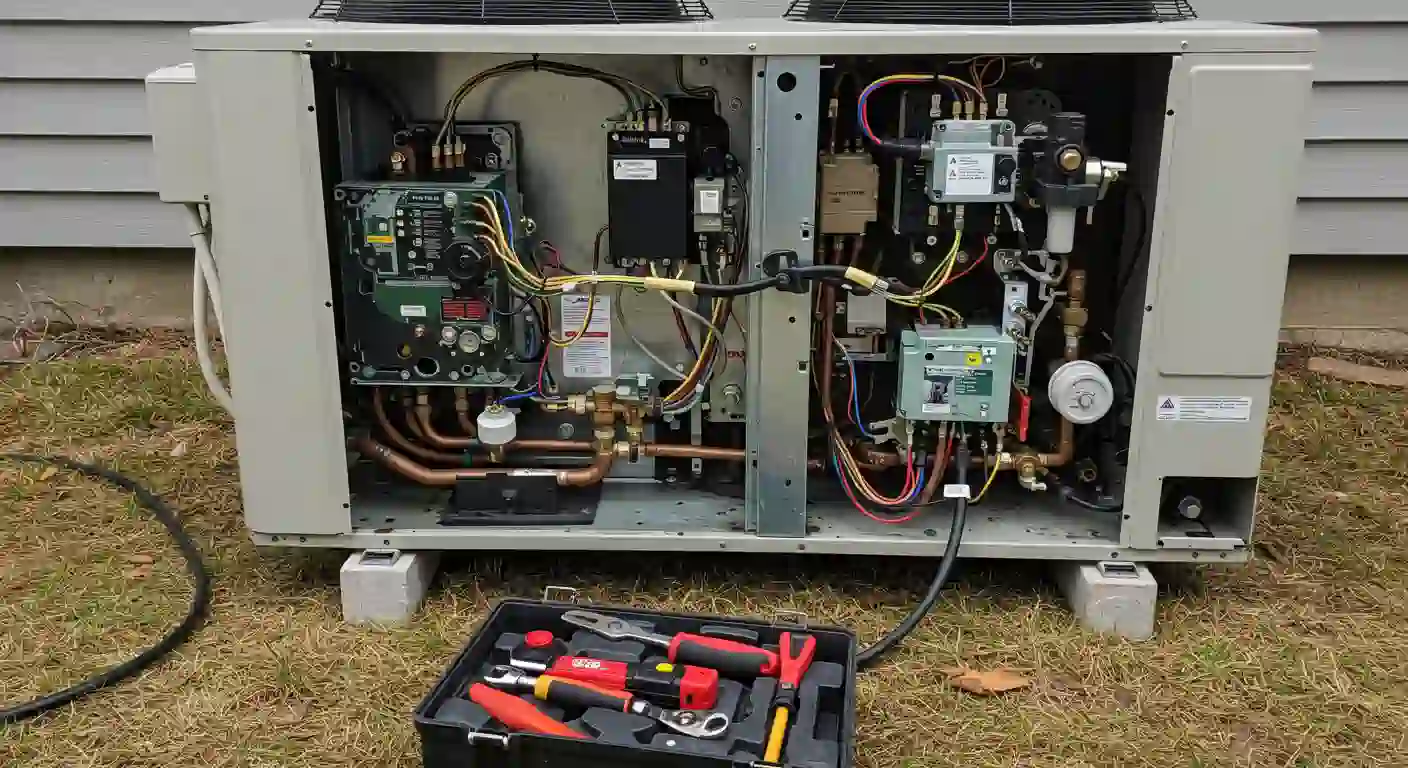
The cooling process relies entirely on the refrigerant cycle. Your indoor evaporator coil absorbs heat from your indoor air, turning the liquid refrigerant inside the coil into a gas. This gas travels to the outdoor compressor, which squeezes it, raising its temperature even higher. The outdoor condenser coil then releases that heat into the outside air, turning the refrigerant back into a liquid to repeat the cycle.
In Louisiana, we also have to contend with "latent heat"—which is a fancy scientific term for humidity. Because humid air holds onto heat much more effectively than dry air, your AC has to spend a massive amount of energy pulling moisture out of the air before it can effectively lower the temperature. In fact, a central AC unit in a humid climate can pull anywhere from 5 to 20 gallons of water out of your indoor air every single day!
If your outdoor condenser coil is dirty, or if the airflow around it is blocked, the refrigerant cannot release its heat. The heat stays trapped in the loop, forcing the compressor to run hotter and consume more electricity. This is why keeping the outdoor unit clean is the absolute baseline of extreme heat maintenance. For a deeper dive into protecting your system, read our article on How to Make Sure Your AC Survives a Louisiana Summer.
When the sun gets serious in South Louisiana, any pre-existing weakness in your HVAC system will be magnified. A small issue that goes unnoticed during a mild spring afternoon can easily turn into a total system breakdown during a June heatwave.
Here are the most common mechanical failures we see when temperatures soar:
• Capacitor Failure: The capacitor acts like a temporary battery that gives your compressor and fan motor the electrical push they need to start running. Capacitors are highly sensitive to heat. When subjected to high outdoor temperatures and nonstop run cycles, they can easily overheat, bulge, and fail, leaving you with a system that hums but won't blow cold air.
• Refrigerant Leaks: High operating pressures put immense stress on the copper lines and joints in your AC system. If there is a tiny, pre-existing weak spot, the extreme pressure of a heatwave can turn it into an active refrigerant leak, rapidly dropping your system's cooling capacity.
• Frozen Evaporator Coils: It sounds counterintuitive, but your AC can freeze into a solid block of ice on a 100-degree day. This usually happens when restricted airflow (often from a dirty filter) prevents the indoor coil from absorbing enough heat, causing the refrigerant temperature to drop below freezing.
To help you distinguish between normal heavy-duty operation and a system in distress, we've put together this comparison table:
• Run Time — Normal Extreme Heat Operation: Runs continuously during the hottest afternoon hours (2 PM - 7 PM). — Sign of System Failure / Distress: Runs 24/7 without stopping, even during cool mornings or late nights.
• Airflow Temperature — Normal Extreme Heat Operation: Air coming from vents is cool and consistent (approx. 15-20°F below return air). — Sign of System Failure / Distress: Air is lukewarm, warm, or extremely weak.
• Thermostat Accuracy — Normal Extreme Heat Operation: Indoor temp stays within 2-3 degrees of thermostat setting during peak heat. — Sign of System Failure / Distress: Indoor temp climbs 5-10 degrees above your setting and never recovers.
• Outdoor Unit Sound — Normal Extreme Heat Operation: Steady, predictable hum from the fan and compressor. — Sign of System Failure / Distress: Loud screeching, grinding, clicking, or rapid turning on and off (short-cycling).
• Condensate Line — Normal Extreme Heat Operation: Steady dripping or draining of water outside or to a floor drain. — Sign of System Failure / Distress: Water pooling around your indoor furnace/air handler, or dry drain with a frozen indoor coil.
The electrical components of your air conditioner are particularly vulnerable to extreme heat. When the outdoor temperature rises, the electrical resistance in wires and motors increases, meaning your system requires more electrical current to do the same amount of work.
During regional heatwaves, this problem is compounded by power grid overload. As everyone in the Baton Rouge area cranks their AC units simultaneously, voltage fluctuations and minor brownouts can occur. When your AC motors receive lower voltage than they are designed for, they draw more current to compensate, which causes them to run incredibly hot.
This thermal overload can melt wire insulation, burn out fan motors, or cause the compressor's internal oil to become acidic. Once the compressor oil turns acidic, it destroys the motor windings, leading to a catastrophic compressor burnout that often requires a full system replacement.
Fortunately, you don't need a tool belt or a specialized degree to protect your system from the summer heat. There are several highly effective DIY maintenance tasks you can perform to keep your AC happy.
During peak summer, check your air filter every single week and replace it at least every 30 days. A dirty filter blocks airflow, forcing your blower motor to work harder and consume more energy. A clogged filter can reduce your system's efficiency by up to 15% and is the leading cause of frozen evaporator coils.
Your outdoor unit needs to breathe. Turn off the power to your AC at the outdoor breaker box, then use a garden hose to gently rinse the metal fins of your outdoor unit. Wash away dirt, grass clippings, pollen, and leaves that have accumulated on the coils.
• Note: Never use a pressure washer, as the high-pressure water will easily bend the delicate aluminum fins, permanently blocking airflow.
Keep plants, shrubs, weeds, and outdoor storage at least two feet away from your outdoor unit. If you have trees overhead, regularly clear away fallen leaves and twigs from the top grille.
High humidity means your AC is pulling gallons of water out of the air. This water drains through a small PVC pipe. Over time, algae and mold can grow inside this pipe, forming a thick clog. If the line clogs, water can back up into your home, causing major water damage or triggering your system's safety switch to shut the AC down entirely. Pouring a cup of plain white vinegar down your condensate drain access point once a month during the summer can keep it clear of algae.
For a complete seasonal checklist, read our comprehensive Summer AC Maintenance Tips.
Airflow is the lifeblood of your air conditioning system. If air cannot flow freely through your home and your equipment, heat transfer stops, and your energy bills skyrocket.
One common mistake homeowners make is buying the highest-rated air filter available without checking if their system can handle it. Filters are rated by MERV (Minimum Efficiency Reporting Value). While a MERV 13 filter is fantastic for trapping tiny allergens, it is also highly restrictive. If your HVAC system's blower motor wasn't designed for that level of resistance, a high-MERV filter will choke your system's airflow just like a dirty filter would. For most residential systems, a MERV 8 to MERV 11 filter offers the perfect balance of filtration and unrestricted airflow.
Additionally, make sure you aren't accidentally blocking your return air grilles inside your home. Keep furniture, drapes, and large toys clear of all vents. Closing interior doors can also restrict airflow throughout the house, so keep bedroom doors cracked when possible to allow air to circulate back to the central return vent. To learn more about maximizing your system’s efficiency and airflow, check out our guide on How to Extend the Life of Your AC in Louisiana.
Maintaining your AC isn't just about cleaning the equipment; it's also about managing the "heat load" on your home. The less heat that enters your house, the less work your AC has to do.
More than 700 Americans die from extreme heat every year, making home cooling a matter of safety as much as comfort. By sealing your home's envelope, you protect both your family and your cooling equipment.
Here are the most effective home optimization strategies:
• Upgrade Attic Insulation: Proper attic insulation can prevent up to 40% of heat from escaping through windows and reduce solar heat absorption by as much as 60% during peak cooling periods. Overall, implementing proper insulation in your home can lead to an energy consumption decrease of up to 40%!
• Seal Your Ductwork: Leaky ducts can waste up to 30% of your cooling energy by dumping cold air into your attic or crawlspace instead of your living room.
• Block Solar Heat Gain: Up to 30% of unwanted heat enters your home through your windows. Close your blinds, drapes, or thermal curtains on the south- and west-facing sides of your house during the afternoon. Installing reflective window film can also reject up to 70% of solar heat before it ever enters your living space.
1. Use Ceiling Fans: Run your ceiling fans counter-clockwise. This creates a wind-chill effect that can make you feel up to 4 degrees cooler, allowing you to raise your thermostat setting without sacrificing comfort. (Just remember: fans cool people, not rooms, so turn them off when you leave!).
2. Avoid Heat-Producing Appliances: Don't run your oven, clothes dryer, or dishwasher during the hottest parts of the day (typically 2 PM to 7 PM). These appliances dump massive amounts of heat and humidity directly into your living space, forcing your AC to work even harder.
3. Seal Air Leaks: Use weatherstripping and caulk to seal gaps around doors and windows to keep humid Louisiana air outside where it belongs.
How you interact with your thermostat during a heatwave can make or break your AC unit. Many homeowners make the mistake of turning their AC completely off when they leave for work, thinking it saves energy. However, during extreme heat, your home's walls, furniture, and flooring will "heat soak." When you turn the AC back on at 5 PM, the system has to run nonstop for hours just to remove that trapped thermal mass, putting immense strain on the compressor.
Instead, raise your thermostat 7–10 degrees for eight hours a day when you are away. This simple habit can save you up to 10% on your summer cooling bill while preventing your home from completely overheating.
Another highly effective strategy is pre-cooling (sometimes called supercooling).
By cooling your home's structure down during the cooler morning hours, your walls and furniture act as a "thermal battery," helping keep the indoor temperature stable during the scorching afternoon hours without forcing your AC to run continuously.
While DIY maintenance is incredibly helpful, there are times when your AC needs professional expertise. Trying to fix complex electrical or refrigerant issues yourself can be dangerous and can easily cause permanent damage to your equipment.
If you notice any of the following warning signs, it's time to call in the pros:
• The AC Blows Warm Air: If the air coming from your vents is warm or lukewarm, you may have a failed capacitor, a faulty compressor, or a serious refrigerant leak.
• Weak Airflow: If you can barely feel air coming out of your vents even with a brand-new filter, your blower motor may be failing or your ductwork may have collapsed.
• Short-Cycling: If your system turns on and off every few minutes, it is likely overheating or experiencing an electrical fault. This rapid cycling will quickly destroy your compressor if left unaddressed.
• Unusual Noises: Screeching, grinding, clanging, or loud clicking noises are clear indicators of mechanical failure.
• Water Leaks: If you see water pooling around your indoor unit, your condensate drain is completely clogged, or your evaporator coil is freezing and thawing rapidly.
Scheduling a professional tune-up before the worst of the summer heat arrives is the best way to prevent emergency breakdowns. Regular maintenance can prevent up to 95% of emergency repairs and ensures your system is running at peak efficiency. To read more about the long-term savings, take a look at the Benefits of Regular AC Maintenance.
At TemperaturePro Baton Rouge, we understand that our local climate presents unique challenges. The heavy humidity of South Louisiana means your air conditioner has to work much harder than a system in a dry, desert climate. That’s why we’ve tailored specific maintenance guides for our local communities.
No matter where you live in our service area, we have localized advice to help you keep your cool:
• If you reside in East Baton Rouge Parish, check out our AC Maintenance Central LA Complete Guide.
• For our neighbors in Ascension Parish, we’ve built the AC Maintenance Prairieville LA Complete Guide.
• Living in Livingston Parish? Read our expert AC Maintenance Guide Denham Springs LA (or access our alternative Denham Springs Maintenance Resource for more tips).
This is usually due to the physical limits of your system, often referred to as the 20-degree rule. Most residential air conditioners are designed to create a maximum 20-degree difference between the outdoor air and the indoor air. If it is 98°F outside with high humidity, your system is working at its absolute physical limit to keep your home at 78°F.
If your system is running constantly and cannot get the temperature down to a safe level, check for dirty filters, dirty condenser coils, or leaky ductwork.
While filter packages often say they last 90 days, Louisiana summers are incredibly demanding. Because your system runs almost continuously during June, July, and August, we recommend checking your filter every 30 days. If you have pets, high indoor dust, or active allergy sufferers in your home, you may need to replace it every 3 weeks to prevent airflow restriction.
If you notice ice on your indoor evaporator coil or on the copper lines leading to your outdoor unit, follow these steps immediately:
1. Turn the thermostat to "OFF" to stop the cooling cycle and prevent further ice buildup.
2. Set the fan switch to "ON" (instead of "AUTO"). This forces warm indoor air over the frozen coil, helping it melt safely.
3. Check your air filter. If it's dirty, replace it immediately.
4. Let the ice melt completely before turning the system back on (this can take several hours).
5. Never pick at the ice with sharp objects, as you can easily puncture the delicate copper coils and release refrigerant. If the system freezes up again after restarting, call a professional technician to check for refrigerant leaks or blower motor issues.
When the Louisiana summer sun gets serious, your air conditioner is your home's most important defense system. Knowing how to maintain your AC in extreme heat isn't just about avoiding a sweaty afternoon; it's about protecting your financial investment, keeping your energy bills manageable, and ensuring your family stays safe and comfortable.
By staying on top of simple DIY tasks—like changing your filters every 30 days, keeping your outdoor unit clear of debris, and using smart thermostat settings—you can dramatically reduce the strain on your cooling system.
But when the heat index climbs past 100 degrees and your system needs professional attention, you don't have to face the heat alone. TemperaturePro Baton Rouge is a family- and veteran-owned HVAC company dedicated to providing fast, reliable cooling services to our neighbors in Baton Rouge, Prairieville, Gonzales, Denham Springs, Walker, Central, Zachary, St. Gabriel, and French Settlement, LA. We offer 24/7 emergency support, treating every single customer like member of our own family.
Don't wait for your system to break down on the hottest day of the year. Take action to protect your home comfort today.
Schedule professional HVAC maintenance in Central LA today with our team of certified technicians, and enjoy a cool, worry-free summer!
Go With Experience