What an AC Maintenance Visit Includes (And Why It Matters in Baton Rouge)
What an AC maintenance visit includes is something every Baton Rouge homeowner should understand before summer heat puts their system to the test. Louisiana's climate is brutal — long stretches of heat and humidity push air conditioners harder than almost anywhere else in the country. A system that seems fine in April can struggle badly by July if it hasn't been properly serviced.
A professional AC maintenance visit typically covers:
• Air filter inspection and replacement
• Evaporator and condenser coil cleaning
• Refrigerant level check and leak inspection
• Electrical component testing (capacitors, contactors, wiring)
• Blower motor and fan inspection
• Condensate drain line clearing
• Thermostat calibration and testing
• Overall system performance and safety check
Think of it like an annual physical for your air conditioner. A doctor doesn't wait for you to feel sick before running tests — and a good HVAC technician doesn't wait for a breakdown before checking your system. Preventive care catches small problems before they become expensive ones, and in a climate like Baton Rouge's, that kind of proactive attention can mean the difference between a comfortable summer and a multi-day wait for emergency repairs.
Research consistently shows that regular maintenance prevents up to 85% of emergency repair calls and helps well-maintained systems last 20% to 50% longer than neglected ones. That's not a small margin — it's a significant return on a simple annual service visit.
In this guide, we'll walk through exactly what happens during a professional AC maintenance visit, step by step, so you know what to expect and why each task matters.
What Does an AC Maintenance Visit Include?
At a basic level, an AC maintenance visit includes inspection, cleaning, testing, and adjustment. The goal is not just to see whether the system turns on. The goal is to verify that it is operating safely, efficiently, and reliably before the hottest part of the year.
A thorough tune-up usually includes:
• Checking thermostat operation
• Inspecting or replacing the air filter
• Cleaning indoor and outdoor coils
• Testing blower performance and airflow
• Checking refrigerant pressures and charge
• Inspecting condensate drainage
• Testing capacitors, contactors, and wiring
• Measuring temperature split between return and supply air
• Looking for wear, vibration, corrosion, and early failure signs
For homeowners asking what does an AC maintenance visit include, the short answer is: everything that helps us catch small issues before they turn into no-cooling calls.
Why homeowners schedule AC maintenance in Louisiana
In Baton Rouge, Prairieville, Gonzales, Denham Springs, Walker, Central, Zachary, St. Gabriel, and French Settlement, AC systems do not get much of a break. Heat, humidity, pollen, storm debris, and long cooling seasons all add stress.
That is why many homeowners schedule spring maintenance before peak summer arrives. Regular service helps with:
• Seasonal preparation before heavy runtime
• Lower energy use
• Better humidity control
• Fewer surprise breakdowns
• Longer equipment life
• More consistent room temperatures
If you want a deeper look at why scheduled service matters all year, see AC Service Year-Long System Efficiency.
What does an AC maintenance visit include for central air systems?
For a central air system, we are usually checking both indoor and outdoor components because the system only works well when both sides are working together.
Key parts typically inspected include:
• Thermostat and settings
• Air filter and filter slot
• Evaporator coil
• Condenser coil
• Blower wheel and blower motor
• Drain pan and condensate line
• Refrigerant lines and pressures
• Capacitor
• Contactor
• Electrical wiring and terminals
• Airflow at vents and returns
• Temperature split across the system
If one of these is off, the whole system can suffer. A dirty filter can choke airflow. A weak capacitor can keep motors from starting properly. A clogged drain can cause water issues. Maintenance is about connecting those dots before your AC starts waving a white flag.
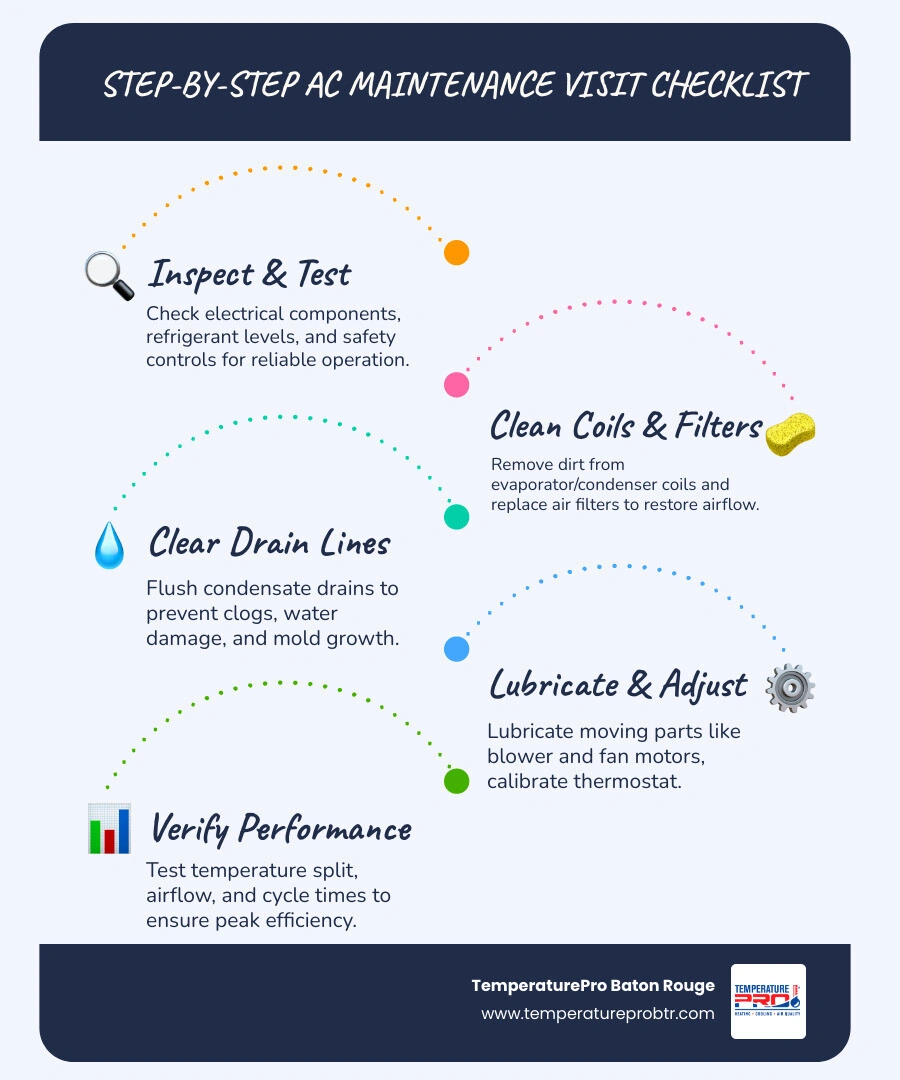
The Professional AC Maintenance Checklist, Step by Step
A professional tune-up is more than a quick glance and a thumbs-up. We follow a step-by-step checklist to inspect operation, clean critical components, and verify performance.
Core tune-up tasks usually include:
• Inspect system condition
• Test thermostat response
• Check air filter
• Measure airflow
• Inspect indoor blower components
• Check evaporator coil condition
• Inspect and clear condensate drain
• Clean condenser coil
• Test capacitor and contactor
• Tighten electrical connections as needed
• Measure voltage and amperage
• Check refrigerant pressures
• Verify supply and return temperature readings
• Run system through a full cooling cycle
• Note repair recommendations if needed
Indoor components checked during a maintenance visit
The indoor side of your system handles airflow, heat absorption, and moisture removal. That means a lot of comfort problems start here.
Indoor items commonly checked include:
• Air handler cabinet
• Blower wheel cleanliness
• Blower motor condition
• Evaporator coil condition
• Air filter and filter fit
• Thermostat calibration
• Drain pan condition
• Condensate line flow
• Supply and return vent airflow
If the blower wheel is dusty, airflow drops. If the evaporator coil is dirty, heat transfer suffers. If the drain line is clogged, water can back up and create humidity, mold, or ceiling damage. None of those are fun surprises.
Outdoor components checked during a maintenance visit
The outdoor condenser releases the heat your home no longer wants. It needs clean airflow and healthy electrical parts to do that job.
Outdoor items often checked include:
• Condenser coil condition
• Outdoor fan motor
• Compressor operation
• Electrical disconnect
• Contactor condition
• Capacitor performance
• Refrigerant lines and insulation
• Debris clearance around the unit
A good rule of thumb is that the outdoor unit should not look like it is trying to disappear inside a hedge. Plants, leaves, and grass clippings can block airflow and make the system work harder than necessary.
What does an AC maintenance visit include in electrical and safety testing?
Electrical testing is one of the most important parts of maintenance because many failures begin with weak or damaged electrical components.
We typically check:
• Voltage
• Amperage draw
• Wiring connections
• Relays and controls
• Capacitor readings
• Contactor wear or pitting
• Safety switches
• Drain safety devices, where equipped
Loose electrical connections can shorten component life and create safety risks. Weak capacitors can lead to hard starts, short cycling, or complete no-start conditions. Worn contactors can cause unreliable operation. These are exactly the kinds of problems maintenance is designed to catch early.
Cleaning Tasks That Make the Biggest Difference
Cleaning is not the glamorous part of AC maintenance, but it may be the most important. Dirt is the quiet villain of HVAC performance.
Dust and airborne particles can block airflow, insulate coils, and make motors work harder. Even a thin layer of buildup on coils reduces heat transfer. That means longer run times, less cooling, and higher electric bills.
For more on why routine cleaning matters, read Benefits of Regular AC Maintenance.
Air filters, coils, and blower cleaning
This is where efficiency gains often show up fastest.
Important cleaning tasks include:
• Inspecting and replacing dirty air filters
• Cleaning condenser coils
• Cleaning evaporator coils when accessible and needed
• Removing dust from blower components
• Clearing debris around the outdoor unit
Research shows a clean air filter can reduce energy consumption by about 5% to 15%. Airflow problems can reduce system efficiency by up to 15%. And in one cited example, a dirty 5-ton system used over 15,000 kilowatts per season, while a clean one used closer to 10,000. That is roughly a 32% difference.
In plain English: dirt is expensive.
Filters should generally be checked monthly and replaced every 1 to 3 months depending on pets, dust levels, and runtime. Many homeowners can handle that task themselves between professional visits.
In Louisiana, moisture management matters almost as much as temperature control.
During maintenance, we look at:
• Condensate drain line
• Drain pan
• Signs of algae or sludge
• Evidence of overflow or water staining
A clogged drain can lead to high indoor humidity, water damage, microbial growth, and system shutdowns if a float switch activates. Clearing the drain is a simple task with a big impact.
Why clean systems run better and use less electricity
A clean AC transfers heat more efficiently, moves air more easily, and runs with less strain. That translates to:
• Shorter cooling cycles
• Lower electrical use
• Better comfort
• Less wear on motors and the compressor
• Reduced risk of overheating components
When dirt blocks airflow or coats the coil, your system has to run longer to do the same job. That extra runtime is where higher utility bills come from.
Refrigerant checks are a standard part of professional maintenance because refrigerant charge directly affects cooling performance.
Your AC does not "use up" refrigerant like a car uses gas. If levels are low, that usually points to a leak or an installation issue. Low charge can reduce cooling, freeze the evaporator coil, and put serious strain on the compressor.
If your system already seems off, you may also want to read Signs Your AC Needs Repair in Louisiana Heat.
Why refrigerant levels matter and what low refrigerant means
Proper refrigerant charge helps the system absorb and release heat correctly. If charge is low, you may notice:
• Weak cooling
• Longer run times
• Frozen indoor coil
• Higher humidity indoors
• Hissing from a leak
• Higher electric bills
Low refrigerant is not something to ignore. It can lead to compressor damage, and the compressor is one of the most important parts of the system.
At the end of the visit, we do not just assume everything is fine because the unit turned on. We verify operation.
Typical performance checks include:
• Measuring supply and return air temperatures
• Confirming acceptable temperature differential
• Checking airflow
• Verifying thermostat response
• Listening for unusual noises
• Watching for vibration or rough startup
• Running the system through a cooling cycle
This final testing helps confirm that the service actually improved operation and that no major warning signs were missed.
Signs your AC needs maintenance before a breakdown
Do not wait for a complete failure. Common signs your AC needs attention include:
• Weak airflow
• Uneven cooling from room to room
• Rising utility bills
• Musty or burning odors
• Grinding, squealing, or buzzing sounds
• Frequent on-and-off cycling
• Sticky indoor humidity
• Water around the indoor unit
These symptoms often point to maintenance-related issues like dirty coils, clogged drains, airflow restrictions, or aging electrical parts.
How Often to Schedule Maintenance, What You Can DIY, and How to Prepare
Most residential central AC systems should be professionally serviced at least once per year, ideally in spring before heavy cooling season. In some cases, twice-yearly service makes sense.
Helpful seasonal reading:
• Spring AC Tune-Up Tips
• Summer AC Maintenance Tips
How often should you schedule an AC maintenance visit?
General guidelines:
• Standard central AC: once yearly
• Older systems, especially 10+ years: consider twice yearly
• Heat pumps: typically twice yearly because they cool and heat
• Heavy-use homes: may benefit from more frequent filter checks and monitoring
Scheduling before peak season helps you avoid the summer rush and catch problems early. It may also help with manufacturer maintenance requirements.
AC maintenance vs. AC repair: what’s the difference?
Maintenance is preventive. Repair is reactive.
• Planned service — AC Repair: Problem-driven service
• Includes inspection, cleaning, testing — AC Repair: Includes diagnosis and fixing a specific failure
• Helps prevent breakdowns — AC Repair: Happens after something goes wrong
• Focuses on efficiency and reliability — AC Repair: Focuses on restoring operation
• Usually finds small issues early — AC Repair: Often addresses larger or urgent issues
Research suggests regular maintenance prevents up to 85% of emergency repairs. That is why tune-ups matter so much in our climate. If you do need urgent help, visit Trusted 24-Hour AC Repair Services.
What homeowners should do before the technician arrives
A little prep helps the visit go more smoothly.
We recommend:
• Clear space around indoor and outdoor units
• Secure pets
• Make sure thermostat access is easy
• Write down comfort problems you have noticed
• Note hot rooms, smells, noises, humidity issues, or high bills
• Have recent service history handy if available
• Know your filter size if possible
Those details can help us connect symptoms to specific system issues faster.
DIY AC maintenance homeowners can safely handle
There are several helpful tasks homeowners can do safely between professional visits:
• Check filters monthly
• Replace or clean filters every 1 to 3 months
• Keep supply and return vents unobstructed
• Remove leaves and debris around the outdoor unit
• Trim plants back at least two feet from the condenser
• Seal obvious air leaks around doors and windows
• Keep insulation in good shape where possible
What should not be DIY? Refrigerant handling, electrical testing, capacitor checks, contactor testing, and deep coil access. Those tasks need proper tools, safety procedures, and technical judgment.
Should You Get a Maintenance Plan and What Happens After the Visit?
For many homeowners, a maintenance plan makes staying on schedule much easier. It turns "I should probably book something soon" into "it is already handled."
Learn more here:
• Maintenance Plan
• Baton Rouge AC Maintenance Programs
Why maintenance plans make scheduling easier
A maintenance agreement can help by providing:
• Preseason scheduling
• Reminder-based consistency
• Better service documentation
• Fewer missed tune-ups
• Less chance of surprise issues during peak weather
That consistency is a big deal. Maintenance works best when it happens before a problem, not after your house feels like a greenhouse.
How regular maintenance extends AC system life
Wear and tear is unavoidable, but neglect makes it worse.
Regular service helps extend equipment life by:
• Keeping coils clean for better heat transfer
• Protecting the compressor from strain
• Preventing airflow restrictions
• Catching weak electrical components early
• Reducing overheating and excessive cycling
Research suggests well-maintained systems can last 20% to 50% longer than neglected ones. If you want more context on lifespan in our region, read Average Lifespan of an AC System in the South and How Long Does an AC System Last in Louisiana.
What to expect after the appointment
After a professional maintenance visit, you should expect a clear summary of findings, not mystery and vague nodding near the condenser.
Typically, we will provide:
• Notes on system condition
• Confirmation of maintenance tasks completed
• Any repair recommendations
• Priority level of any issues found
• Guidance on timing for the next visit
At TemperaturePro Baton Rouge, we believe homeowners should know what we found, what it means, and what comes next. If you want a simpler way to stay ahead of service, our Maintenance Plan is a practical next step.
Frequently Asked Questions About AC Maintenance Visits
How long does a typical AC maintenance visit take?
Most AC maintenance visits take about 60 to 90 minutes. Larger systems, difficult access, heavy cleaning, or extra refrigerant diagnostics can add time. A well-maintained, easy-to-access system is usually quicker than a unit that has been collecting dust like it is building a personal museum.
Can homeowners do all AC maintenance themselves?
No. Homeowners can handle basic upkeep like filter changes, vent checks, and debris removal around the condenser. But professional maintenance includes refrigerant checks, electrical testing, safety inspections, coil evaluation, and performance measurements that should be done by a trained HVAC professional.
Is AC maintenance really worth it if the system seems fine?
Yes. Many AC issues start small and stay hidden for a while. Dirty coils, weak capacitors, low airflow, and drainage problems do not always cause immediate failure, but they do reduce efficiency and increase wear. Maintenance helps catch those hidden problems early, keeps comfort more consistent, and lowers the odds of a midsummer breakdown.
If you are ready to protect your comfort in Baton Rouge or the surrounding area, we invite you to schedule service with TemperaturePro Baton Rouge. We are proud to serve local homeowners with reliable AC maintenance, repair, and year-round support that treats every customer like family.