5 min read
When Your AC Can't Keep Up in Louisiana Heat: Troubleshooting the Fall Transition
Why do fall HVAC startups fail? Apply these home maintenance tips and troubleshooting steps to safely transition your system before winter.


Your Quick Post-Storm HVAC Checklist for Louisiana HomeownersThe post storm hvac checklist for louisiana homeowners below covers the most important steps to take after a hurricane or severe storm before you touch your system:Stay safe first
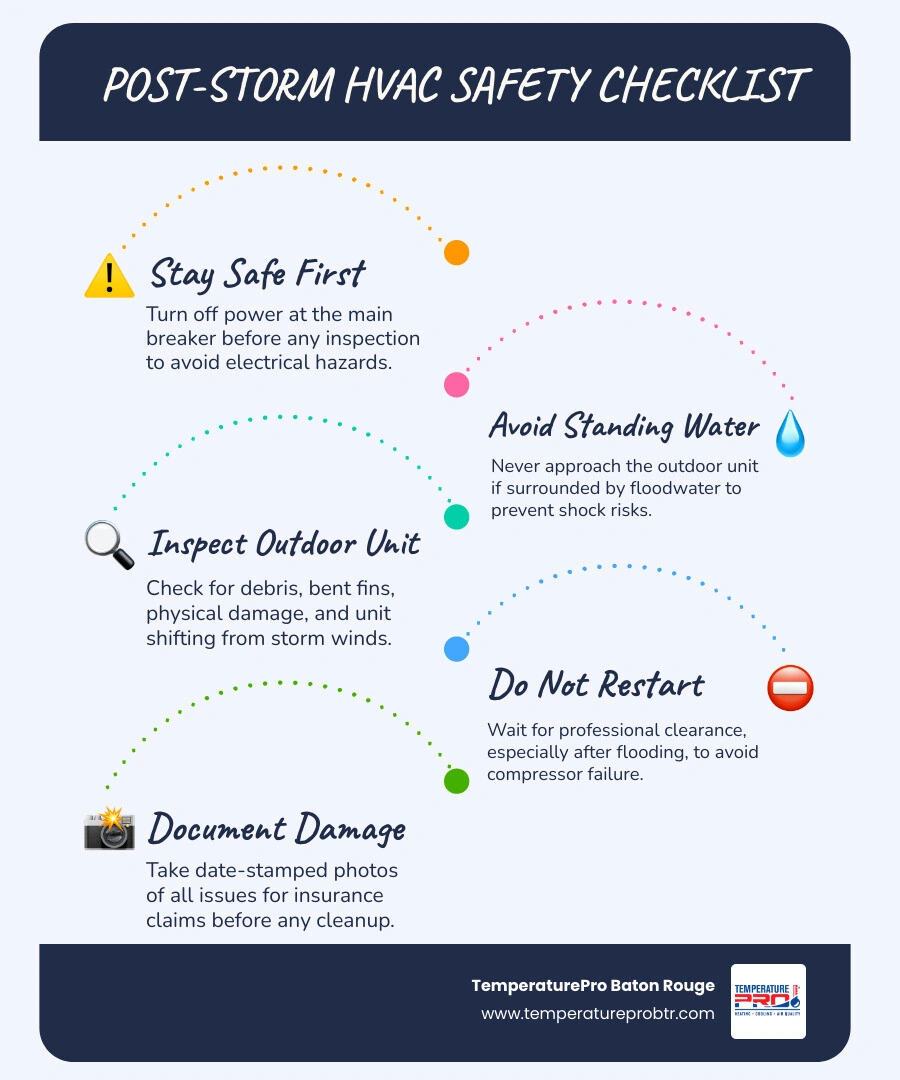
The post storm hvac checklist for louisiana homeowners below covers the most important steps to take after a hurricane or severe storm before you touch your system:
1. Stay safe first - Turn off power to your HVAC at the main breaker before inspecting anything
2. Check for standing water - Do not approach the outdoor unit if it is surrounded by floodwater
3. Inspect the outdoor unit - Look for debris, physical damage, bent fins, and any shifting of the unit
4. Do not restart your system - Wait until a professional has cleared it, especially after flooding
5. Check the indoor unit - Look for water intrusion, wet filters, and signs of mold
6. Inspect your ductwork - Check attic ducts for disconnections or water damage
7. Document everything - Take date-stamped photos of all damage before cleaning or repairing
8. Call a licensed HVAC technician - Get a full professional inspection before running the system again
Louisiana's hurricane season runs from June 1 through November 30, with the most dangerous stretch falling between August and October. For homeowners in the Baton Rouge area, that means storm damage to HVAC systems is not a rare event — it is a real and recurring risk every single year.
When a storm passes through, the instinct is to get life back to normal as fast as possible. That usually means cranking up the AC. But turning on a storm-damaged HVAC system without inspection is one of the most costly mistakes a Louisiana homeowner can make. Hidden water damage, debris in the compressor, shifted refrigerant lines, and electrical faults can all cause serious harm the moment you power the unit back on.
This checklist walks you through exactly what to check, what to avoid, and when to call in a professional.
Before you step outside to assess the damage, we want to remind you that safety is the absolute priority. Louisiana storms, especially major hurricanes, leave behind hazards that aren't always visible to the naked eye.
If your yard is flooded, stay away from your outdoor unit. Standing water can be electrically charged if there are downed power lines nearby or if the unit’s internal wiring has shorted out. Even if the water has receded, the ground may still be saturated and dangerous. Always turn off the power at the main circuit breaker inside your home before you even think about approaching the HVAC equipment.
For those of us in Baton Rouge and surrounding areas like Zachary or Central, many homes use natural gas for heating. If you smell rotten eggs or hear a hissing sound, leave the area immediately and contact your gas provider. Additionally, check the structure of your home. If a tree has fallen on your roof or the siding is compromised, the attic components of your HVAC system (like the air handler or ductwork) may be under structural stress.
If you are unsure about the safety of your system, it is always best to lean on experts. You can find more info about emergency HVAC services to help you navigate these initial hours safely.
It is tempting to flip the switch the moment the power comes back on in 2026. However, doing so can turn a small, repairable issue into a total system replacement.
Running a storm-damaged system often leads to:
• Electrical Short Circuits: Water inside the electrical compartments can cause an immediate short, frying the control boards.
• Compressor Failure: If debris is lodged in the fan blades or if water has entered the refrigerant lines through a pinhole leak, the compressor — the "heart" of your AC — can burn out. Replacing a compressor can cost at least a few hundred or even a few thousand dollars.
• Refrigerant Issues: High winds can cause vibration that weakens copper refrigerant lines. Running the system with a leak causes the unit to overheat rapidly.
By waiting for a professional check, you protect your investment. For more details on what can go wrong, see our more info about AC repair services.
The outdoor condenser is the most vulnerable part of your cooling system. In Louisiana, we face a unique combination of high winds and, in coastal areas, salty air that can be devastating to metal components.
The "fins" are the thin metal slats on the side of your unit that allow heat to escape. Hail and flying debris often crush these. If you notice that more than 30% of these fins are severely bent, the airflow will be restricted. This strains the system and can lead to a total breakdown.
For our neighbors closer to the coast or in low-lying areas of St. Gabriel and French Settlement, saltwater is a major concern. Saltwater is highly corrosive and can eat through coils in a matter of days. If your unit was splashed by storm surge or even heavy salt-laden rain, it needs a professional coil cleaning immediately to prevent permanent damage. You can learn more info about AC maintenance to see how we handle professional cleaning after a storm.
High winds can do more than just blow leaves around. We have seen units moved several inches off their pads.
• Hurricane Straps: Check if your hurricane straps are still secure or if they have snapped.
• Unit Leveling: If the unit has shifted even a couple of inches, it can break the copper refrigerant lines. An unlevel unit also causes the internal oil to settle incorrectly, which can starve the compressor of lubrication.
• Common Debris: Look for sticks, leaves, mud, or even pieces of roofing shingles lodged inside the grilles. These block airflow and can unbalance the fan blades.
Sometimes the damage isn't visible. If you do attempt to start the system and hear unusual grinding noises, smell something burning, or if the breaker trips repeatedly, shut it down immediately.
A professional diagnostic is the only way to ensure the internal electrical components haven't been compromised by power surges or moisture.
Don't forget the parts of the system you can't see from the yard. In Louisiana, the high humidity following a storm creates a breeding ground for mold if water has entered the home.
1. Air Filters: Check your filters immediately. If they are damp, they must be replaced. A wet filter is a primary source of mold growth that can be blown throughout your entire home.
2. Attic Ductwork: In many Baton Rouge homes, ductwork is located in the attic. High winds can cause "flex duct" to disconnect or tear. If you notice one room is suddenly much warmer than others, you likely have a disconnected duct.
3. Insulation: If your attic insulation is wet, it can weigh down on the ducts or cause moisture to drip into the air handler.
Maintaining your indoor air quality is vital for your family's health after a storm.
If you do find damage, you need a paper trail. Most insurance policies in Louisiana cover sudden storm damage, but they require proof.
• Take Photos: Capture wide shots of the property and close-ups of the unit, including the serial number plate.
• Date-Stamp Everything: Use your phone’s settings to ensure the date and time are recorded.
• Keep a Log: Write down any unusual behavior the system showed before you turned it off.
• Electrical — Homeowner Visual Check: Check for tripped breakers — Professional Inspection: Voltage and continuity testing
• Refrigerant — Homeowner Visual Check: Look for oily stains (leak sign) — Professional Inspection: Pressure testing and leak detection
• Internal Parts — Homeowner Visual Check: Visual debris check — Professional Inspection: Fan motor and capacitor testing
• Coils — Homeowner Visual Check: Check for bent fins — Professional Inspection: Deep chemical cleaning and fin combing
• Ductwork — Homeowner Visual Check: Check for visible gaps — Professional Inspection: Airflow and static pressure testing
Saltwater causes rapid oxidation. It can destroy the aluminum fins and copper coils of an HVAC system much faster than fresh water. If your unit was exposed to salt spray, it must be rinsed with fresh water and professionally cleaned to stop the corrosion process.
Do not turn it on. Ever. If the water reached the level of the electrical components, the unit is likely a safety hazard. A professional must inspect the wiring, the motor, and the compressor to see if they can be salvaged or if the unit requires replacement.
While the season starts in June, peak activity typically occurs between August and October. This is when we see the most intense tropical developments in the Gulf.
Recovering from a storm is stressful, but taking the time to follow a post storm hvac checklist for louisiana homeowners can save you from the secondary disaster of a total HVAC failure. At TemperaturePro Baton Rouge, we are a family and veteran-owned company that understands exactly what our neighbors in Prairieville, Gonzales, and Denham Springs go through every hurricane season.
We offer 24/7 support to ensure that when the clouds clear, your home stays cool and safe. Don't risk your system's longevity on a guess. Schedule your post-storm HVAC inspection today and let us treat you like family.
Go With Experience