Why Denham Springs Homes Near Wooded Areas Need Extra Protection Against Fall Rodent Chewing
Why Denham Springs Homes Near Wooded Areas Need Extra Protection Against Fall Rodent Chewing
As September temperatures drop, field mice seek warmth inside outdoor HVAC electrical panels. Discover how professional wire armoring prevents sudden heating failures in rural Louisiana.
The Hidden Fall Threat to Your Outdoor HVAC Equipment
Your air conditioner might still be running during the day, but our team at TemperaturePro Baton Rouge knows all too well about the quiet, destructive threat moving into your outdoor equipment as the nights get cooler. Why Denham Springs homes near wooded areas need extra protection against fall rodent chewing comes down to a simple biological drive: the search for warmth. While you are focused on keeping the inside of your home comfortable, your outdoor condenser is rapidly becoming a prime target for nesting wildlife.
Whether you need comprehensive heating services to recover from sudden damage or want to secure your system with a proactive HVAC maintenance plan, professional intervention is the only way to stop this hidden threat before the cold weather sets in.
September brings a subtle but critical shift to Louisiana weather. The days often remain warm and humid, but those September and early fall temperature drops at night trigger rapid field mice migration. As the dense woods and surrounding brush begin to cool down, rodents instinctively seek out warm, sheltered, and dry environments to survive the coming winter. The outdoor electrical panels of your HVAC system provide the absolute perfect refuge. They are heavily insulated from the wind, completely dry, and safely shielded from natural predators.
Standard seasonal maintenance is crucial, but it often misses this highly specific vulnerability. Most homeowners assume that clearing away dead leaves and hosing off the outside of the unit is enough to prepare for the season. However, physical defenses against determined pests are a completely different requirement. When the temperatures drop, the urgency for rodents increases dramatically, making your outdoor equipment highly vulnerable to sudden, severe damage if it is not properly armored.
Why Rural Denham Springs Properties Face Higher Pest Pressures
The geography of our region plays a massive role in how your home's exterior systems hold up against nature. In our years of servicing this region, we've seen firsthand how properties situated near the Amite River basin, dense brush, or sprawling rural stretches act as the absolute first line of defense during seasonal pest migrations. When field mice leave the cooling woods in search of shelter, the first large, warm, humming metal box they encounter is often a residential HVAC condenser.
The pest pressure in a rural environment is vastly different from a densely packed suburban subdivision. Homes in the Denham Springs service area typically have larger outdoor HVAC footprints. You might have multiple large condenser units, extended refrigerant line runs, or standby generators, all of which offer ample hiding spots for migrating wildlife. Generalized pest advice—like keeping your trash cans sealed or moving firewood away from the siding—falls woefully short for these high-pressure, edge-of-the-woods environments.
Key factors that increase your property's vulnerability:
• Proximity to natural water sources: Areas near the Amite River support larger wildlife populations that migrate inland as temperatures drop.
• Dense tree canopies: Heavy foliage provides natural cover for rodents right up to the edge of your property line.
• Undisturbed rural acreage: Larger lots mean less daily human foot traffic to scare away nesting pests.
• Multiple outdoor units: Larger homes often have two or three outdoor condensers, tripling the potential nesting sites.
The sheer volume of wildlife moving away from the woods means that rural and wooded properties require a much more robust, physical approach to pest deterrence. Hoping the mice bypass your property is not a strategy; you have to actively harden the targets they are looking for.
The Anatomy of a Rodent Invasion: Targeting Low-Voltage Wiring
To understand how to stop the damage, you have to understand exactly what is happening inside that metal box. The damage is rarely malicious; it is entirely biological. Rodents have incisors that never stop growing throughout their lives. To keep these teeth filed down to a manageable length, they are biologically compelled to constantly chew on semi-soft materials.
Unfortunately, the protective casing around your outdoor HVAC electrical panels and low-voltage wiring feels exactly like a chew toy to a field mouse. The plastic and rubber insulation provides the perfect amount of resistance for their teeth. Once they chew through the protective outer layer, they expose the delicate copper wiring underneath.
This low-voltage wiring is the critical communication lifeline between your indoor thermostat and your outdoor condenser. It carries the signals that tell the system when to turn on, when to switch from cooling to heating, and when to shut down. If this wire is severed, the system is essentially rendered blind and deaf. Furthermore, mice bring in massive amounts of nesting debris—dry leaves, twigs, stolen fiberglass insulation, and grass clippings—packing it tightly around electrical contactors. This creates a severe fire hazard and blocks critical airflow, causing the system components to overheat.
How Rodents Breach the Condenser Unit
A field mouse does not need a large opening to gain access to your system's most sensitive components. Because their skeletons are incredibly flexible, mice can squeeze through gaps as small as a dime. Once they find a tiny breach, they will push their way into the electrical panel.
Common entry points include:
• Unsealed electrical knockouts: The pre-cut metal circles on the side of the panel that were removed during installation but never properly filled with a conduit connector.
• Refrigerant line chases: The gaps where the copper pipes enter the metal casing of the unit. If the insulating foam has degraded, it leaves a perfect mouse-sized door.
• Damaged louvered vents: The metal slats designed to let air flow through the unit. If these are bent from weed eaters or flying debris, rodents can slip right through.
• Rusted base pans: Older units may develop rust holes near the bottom, allowing pests to crawl up from the soil directly into the wiring compartments.
The High Cost of Chewed Wires and Sudden Shutdowns
The most immediate and frustrating symptom of chewed low-voltage wiring is an abrupt, total loss of communication. You might walk up to your thermostat as the first real cold snap of the season arrives, switch the setting to "heat," and realize the outdoor unit remains completely silent. These failures rarely happen on a mild Tuesday afternoon; they happen unexpectedly when the September and early fall temperature drops finally push you to turn on the heat.
We recently helped a local homeowner who reached out during the fall when their heating system suddenly stopped working just as the weather turned, while their AC fan began behaving erratically. Upon inspection, our technician discovered severe wiring damage inside the outdoor unit—a direct result of pest interference—that was completely disrupting the communication between the indoor and outdoor components. Once the compromised wiring was corrected and the heater repaired, the entire system's performance was fully restored.
Warning signs of rodent electrical damage:
• Erratic fan behavior: The outdoor fan turns on and off randomly, regardless of what the thermostat is set to.
• Complete unresponsiveness: The thermostat clicks, but the outdoor condenser does nothing.
• Tripped breakers: The circuit breaker for the HVAC unit trips repeatedly, indicating a direct electrical short where bare wires are touching metal.
• Strange smells: A burning plastic odor coming from the outdoor unit, often caused by exposed wires arcing against nesting debris.
Diagnosing these electrical shorts is highly complex because the damage is often intermittent. A wire might be only partially chewed, causing the system to short out only when vibrations from the fan motor shift the exposed copper. This leads to frustrating, unpredictable performance and a deeply uncomfortable home right when you need reliable heating the most.
Pest Control vs. Mechanical Armoring: Bridging the Gap
Many homeowners assume that their regular quarterly pest control service is enough to protect their HVAC system. While bait stations and perimeter repellents are excellent for keeping rodents out of your kitchen and attic, they are fundamentally reactive. A mouse has to enter the property and interact with the bait for it to work. In the meantime, that same mouse can cause catastrophic damage to the wiring inside your condenser before the pest control measures take effect.
Pest control cannot fix, heal, or physically shield the vulnerable components inside your equipment. This is where mechanical prevention bridges the critical gap in your home's defense strategy. Mechanical armoring involves physically blocking access and hardening the targets that rodents seek out.
• Traditional Pest Control — How It Works: Uses baits, traps, and chemical repellents around the perimeter of the rural Denham Springs or wooded property. — Limitations for HVAC: Reactive. Does not stop a mouse from chewing a wire before the bait takes effect. Chemicals cannot be sprayed inside electrical panels.
• Mechanical Armoring — How It Works: Physically shields wires with heavy-duty conduit and seals panel entry points with rodent-proof materials. — Limitations for HVAC: Requires professional installation to ensure high-voltage safety and proper system airflow.
For rural Denham Springs and wooded properties, physical armoring is an essential, complementary step to any pest management strategy. It is the difference between hoping a mouse eats the bait and knowing the mouse simply cannot reach your critical wiring. You need both approaches: pest control to manage the population on your property, and mechanical armoring to make your expensive HVAC equipment an impenetrable fortress.
Professional Solutions: How We Armor and Seal Your System
Securing your outdoor condenser against wildlife is absolutely not a DIY weekend project. Working inside an outdoor electrical panel involves high-voltage components, heavy-duty capacitors that hold lethal electrical charges long after the power is turned off, and delicate system communications. Attempting to seal gaps with standard hardware store caulk or expanding foam can actually trap moisture, cause components to overheat, or permanently damage the circuit boards.
As your local authority in HVAC protection, our team at TemperaturePro Baton Rouge proactively armors low-voltage wiring and seals panel gaps for rural Denham Springs properties, rather than just reacting to breakdowns after the damage is done. We understand exactly how local wildlife behaves and exactly where they try to breach the system.
The professional armoring process includes:
1. Comprehensive Vulnerability Inspection: A licensed technician meticulously inspects the outdoor HVAC electrical panels and low-voltage wiring for any existing microscopic chew marks, frayed insulation, or early signs of nesting debris.
2. Installing Protective Conduit: We encase the exposed, vulnerable low-voltage wires in heavy-duty, flexible protective conduit. This physical barrier completely eliminates the soft, chewable texture that attracts rodents in the first place.
3. Sealing Electrical Knockouts: Any oversized gaps, unused knockouts, or missing conduit connectors are professionally sealed using HVAC-safe, rodent-deterrent materials that will not degrade under the intense heat of the compressor.
4. Securing Line Set Entries: The area where the thick refrigerant lines enter the metal casing is tightly packed and sealed to prevent mice from using the pipes as a highway into the control board.
Whether you rely on a traditional air conditioner or utilize year-round heat pump systems, this specialized physical armoring is vital for uninterrupted operation throughout the fall and winter.
Professional Steps to Protect Outdoor HVAC Panels from Rodents
Integrating Rodent Defense into Your Pre-Heating Tune-Up
Based on what our team sees every autumn, the most efficient and cost-effective way to protect your system is to integrate these specialized rodent defenses into your standard seasonal maintenance routine. You do not need to schedule a separate, standalone appointment just for wire armoring. The ideal window to complete this work is during comprehensive pre-fall HVAC inspections.
During this single, thorough visit, a technician can accomplish multiple critical tasks to prepare your home for the changing weather. First, they will meticulously clean out any accumulated summer debris—such as grass clippings, dirt, and dead leaves—that might attract pests to the base of the unit in the first place. Next, they will verify all heating cycles, test the reversing valve (if you have a heat pump), and ensure the system is mechanically ready for the coming cold.
Finally, while the panels are already open and the high-voltage power is safely disconnected, the technician will install the necessary wire armoring and panel seals. This combined approach offers tremendous peace of mind. You are not just ensuring that the equipment is mechanically sound; you are physically verifying that it is protected against the inevitable September and early fall temperature drops that drive wildlife toward your home. Encouraging proactive scheduling before the late fall rodent migration reaches its absolute peak is the best advice we can give to homeowners in wooded areas.
Expert Answers on Defending Your HVAC from Fall Pests
How do I keep mice out of my outside AC unit?
The most effective method is professional mechanical sealing. A technician will install heavy-duty wire armoring over vulnerable low-voltage lines and seal any oversized electrical knockouts or gaps with HVAC-safe deterrents. Relying solely on perimeter repellents is rarely enough to protect outdoor HVAC electrical panels and low-voltage wiring from determined pests.
Can mice ruin an air conditioner or heat pump?
Yes, mice can cause catastrophic damage to both air conditioners and heat pumps. They routinely chew through critical communication wires, causing sudden system shutdowns, and their highly flammable nesting debris creates severe fire hazards while blocking essential airflow inside the condenser.
Does homeowners insurance cover rodent damage to HVAC?
In most cases, standard homeowners insurance policies consider rodent damage to be a preventable home maintenance issue and will not cover the cost of electrical repairs. This makes proactive mechanical armoring an incredibly important financial investment for homeowners living near wooded or rural areas.
Why do field mice chew on HVAC wires specifically?
Rodents have constantly growing incisors that require them to vigorously chew on semi-soft materials to file their teeth down. The plastic and rubber insulation surrounding your system's communication wiring provides the perfect resistance for this biological need, unfortunately resulting in severed connections.
Can I use regular pest control spray inside my HVAC panel?
No, you should never spray liquid pest control products or place loose chemical bait inside an HVAC electrical panel. These chemicals can heavily corrode sensitive electrical components, create dangerous short circuits, and pose a significant safety hazard when mixed with high-voltage electricity.
Secure Your System Before the Temperatures Drop Further
Living near the beautiful, wooded areas of rural Denham Springs comes with unique responsibilities for your home's upkeep. As the seasons change, the threat of field mice seeking refuge in your outdoor condenser becomes a very real, very costly possibility. Do not wait for a sudden heating failure on a chilly night to discover that your critical communication wiring has been compromised by pests.
By taking proactive steps to armor your low-voltage lines and professionally seal vulnerable entry points, you can enjoy the changing seasons without worrying about unexpected, frustrating breakdowns. Schedule a comprehensive inspection today and ask our team about enrolling in a professional HVAC maintenance plan to keep your system mechanically sound, highly efficient, and physically protected against wildlife all year long.
Thank you! Your submission has been received!
Oops! Something went wrong while submitting the form.
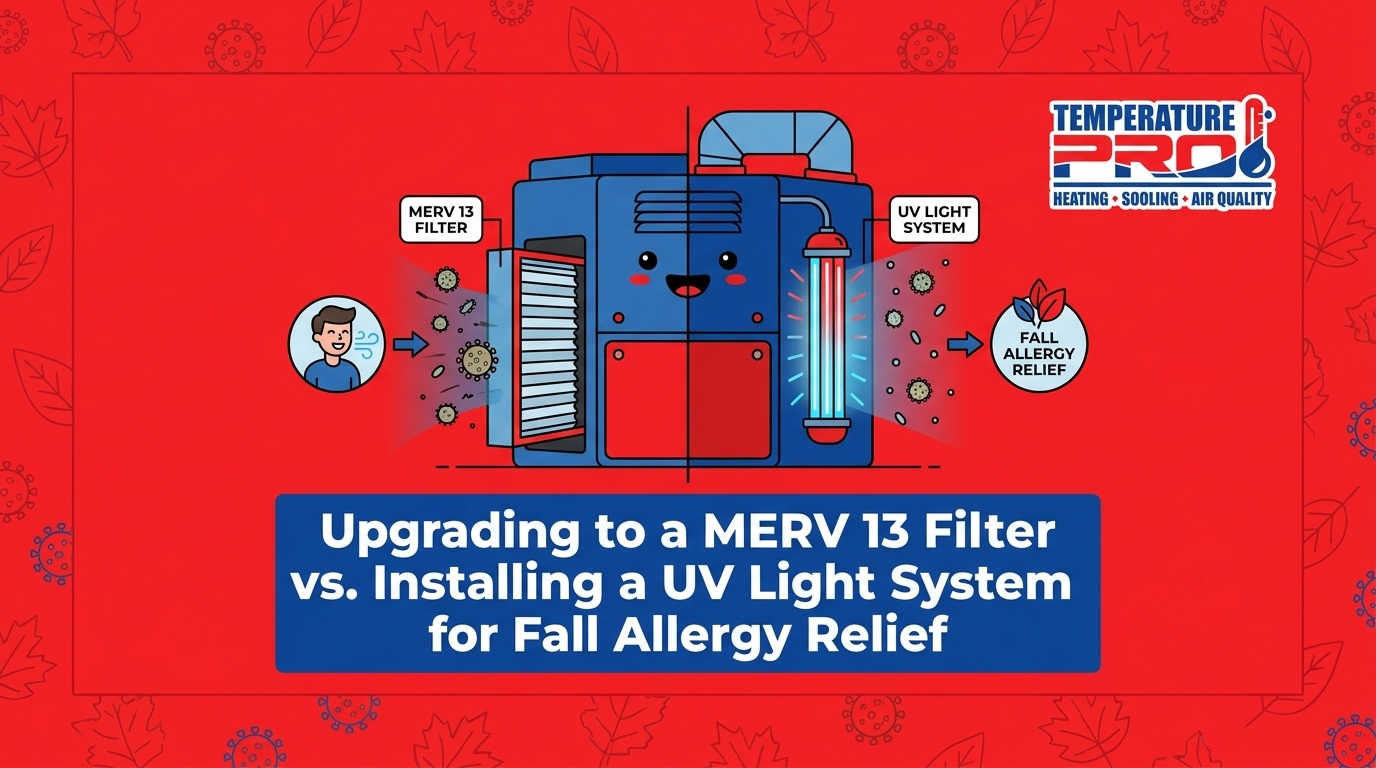
Fighting fall ragweed? Blindly adding a highly restrictive filter could freeze your AC coils. Compare particulate filtration versus biological control to safely improve your indoor air quality.
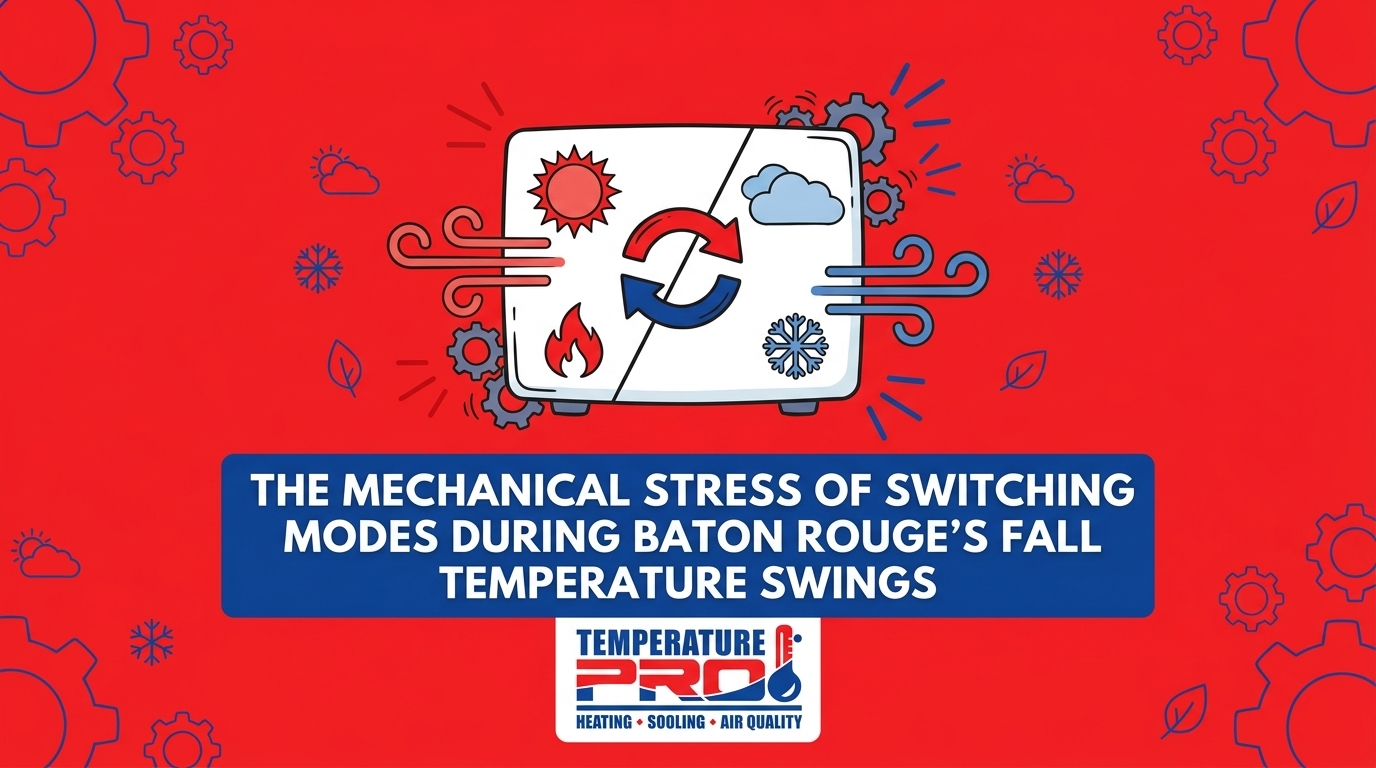
Flipping straight from morning heat to afternoon AC strains your system's valves. Waiting just five minutes between modes protects your equipment during fall temperature swings.
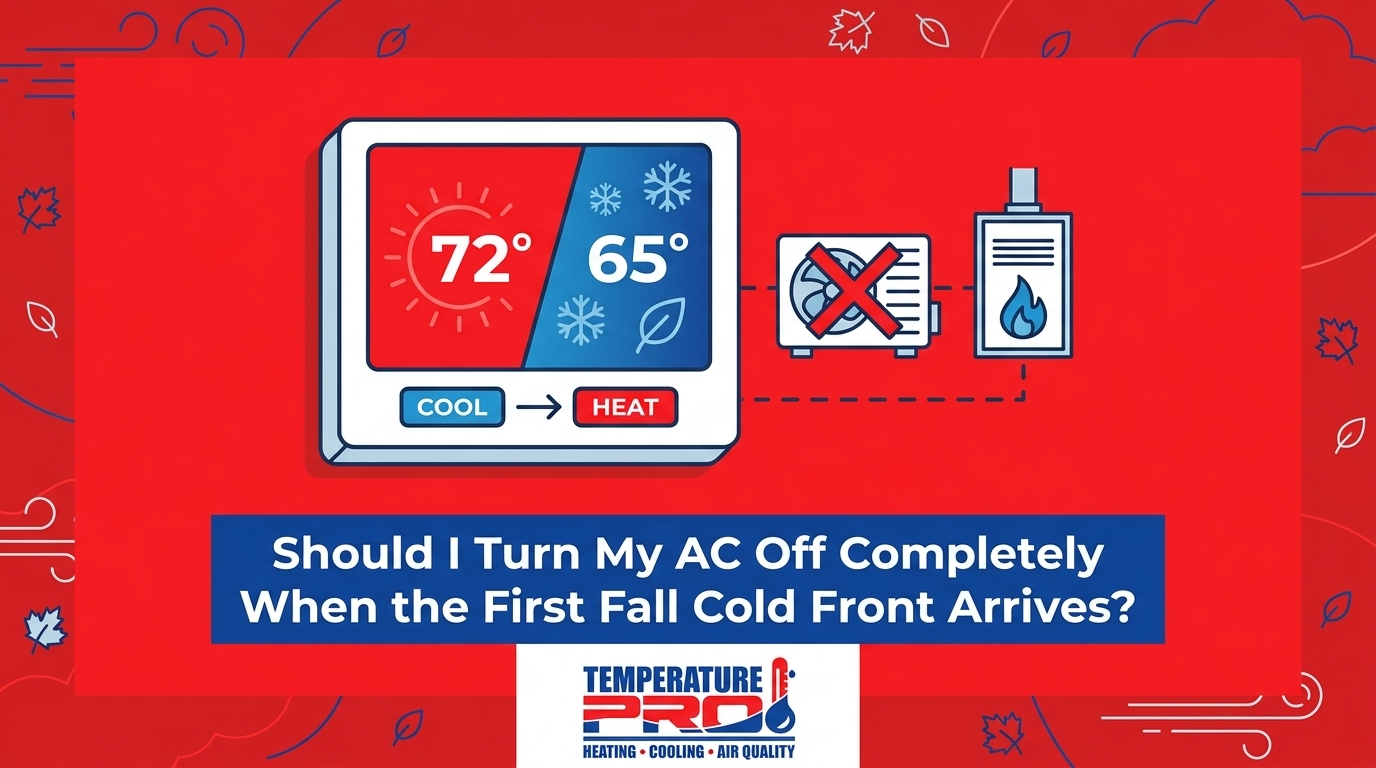
Shutting down your HVAC system during that first cool September breeze allows dense coastal moisture to invade your home. Maintaining constant dehumidification is critical during the false fall.