Why Does My Air Conditioner Sound Different When Running in Lower September Temperatures?
Why Does My Air Conditioner Sound Different When Running in Lower September Temperatures?
As summer ends, you might notice your outdoor AC unit humming at a lower pitch. Discover why cooler September evenings naturally change your system's acoustic profile.
Is Your AC Sounding Different as Summer Ends?
Have you found yourself wondering, why does my air conditioner sound different when running in lower September temperatures? You are certainly not alone. At TemperaturePro Baton Rouge, our technicians field dozens of calls every early fall from homeowners who have become highly attuned to the specific acoustic profile of their cooling equipment after a grueling summer of continuous operation. You know exactly how loud the fan is, what the compressor sounds like when it kicks on, and how long a normal cycle lasts. When those familiar sounds suddenly change as the weather begins to cool, it is completely natural to feel a wave of concern. You immediately face a critical decision point: is this sudden change in cycle length and sound indicating a failing mechanical component, or is it simply normal physics reacting to a shifting season?
Your air conditioner sounds different in lower September temperatures because the drop in ambient outdoor heat reduces the refrigerant head pressure. In our experience servicing local systems, we see how this decreased workload on your compressor often results in a quieter, lower-pitched hum compared to its peak summer operation. When the outside air is cooler, your system simply does not have to fight as hard to release the heat it absorbed from inside your house.
Understanding this transition is the key to peace of mind. A reliable air conditioning system is designed to adapt to environmental changes, and a routine AC maintenance plan keeps it running smoothly through these seasonal shifts. For homeowners in Baton Rouge, where the weather can change from blistering heat to mild evenings in a matter of weeks, our team knows that understanding the difference between a relaxing system and a breaking system can save you unnecessary stress.
The Science Behind the Sound: Ambient Heat and Compressor Load
To truly understand why your outdoor unit sounds different, we have to look at the physics of how your cooling equipment interacts with the outside air. Your system does not actually create cold air; it removes heat from your indoor air and pumps it outside. The compressor is the heart of this process, and its workload is directly tied to the temperature of the air surrounding it.
The Strain of Peak Summer Operation
When our team performs mid-summer repairs, we see firsthand the toll the extreme peak heat of South Louisiana Augusts takes on equipment. When it is 95 degrees or hotter outside, the outdoor condenser coil is trying to release heat into air that is already sweltering. This creates immense resistance. To overcome this resistance, the system operates with high condensation pressure. The compressor must work at its absolute maximum capacity to force the heat transfer to happen.
What this sounds like: When working against high ambient heat, the compressor produces a loud, aggressive roar. The fan runs at top speed, and the entire unit vibrates with the intense effort of battling the summer weather.
The Relief of Mild Evenings
As we transition into early fall, the environmental conditions change dramatically. While the days might still feel warm, September evenings often bring much milder temperatures. When the outdoor temperature drops to 75 degrees, the air can absorb heat much more easily.
This drop in ambient outdoor heat directly causes a state of lower refrigerant head pressure. Because there is less resistance from the outside air, the condensation pressure inside the outdoor coil decreases significantly. The compressor no longer has to push with maximum force.
A Quieter, Lower-Pitched Hum
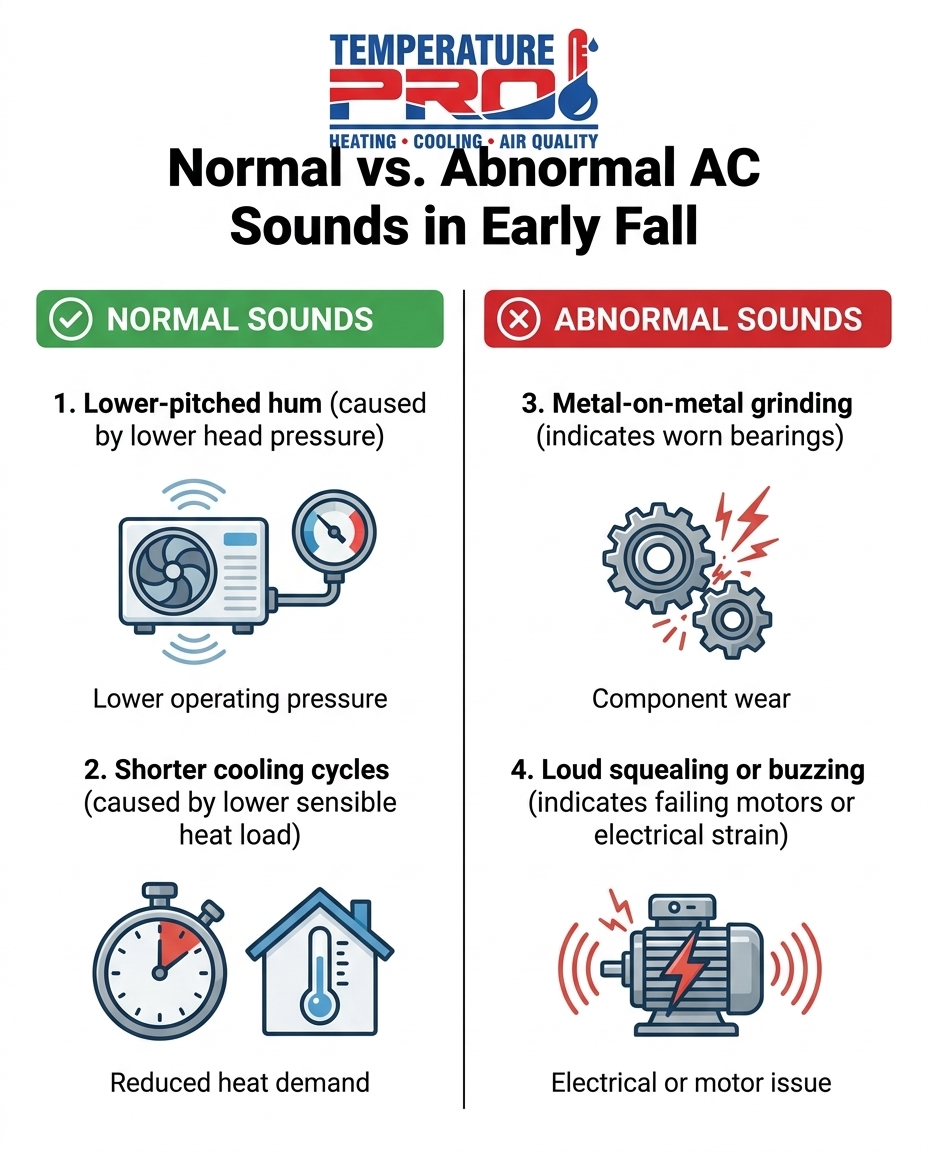
A compressor working against this reduced resistance naturally produces a very different sound. Instead of a strained, high-pitched roar, you will hear a smoother, lower-pitched hum. The system is essentially "relaxing" under favorable conditions. This change in tone is not a sign of weakness or impending failure. It is simply the sound of your equipment operating efficiently without the heavy burden of extreme summer heat.
Normal Acoustic and Cycling Changes to Expect in Early Fall
The transition to early fall brings more than just a change in volume. You will likely notice several alterations in how your equipment behaves on a daily basis. Knowing what is normal can prevent unnecessary panic.
Shorter Cooling Cycles
During the peak of summer, your unit might run for 20 to 30 minutes at a time just to keep up with the heat penetrating your roof and windows. In the fall, the "sensible heat load"—the actual measurable temperature of the air inside your home—drops much faster. Because the equipment does not have to overcome as much heat, the thermostat reaches its set point much quicker. You will likely notice the system turning on and shutting off in shorter intervals.
The Dehumidification Factor
While the temperature drops in early fall, local humidity often remains quite high. Your equipment serves two purposes: cooling the air and removing moisture. In September, the dehumidification role often becomes more prominent than the pure cooling role. The system must still run to pull moisture out of the indoor air, which can alter its cycling behavior even when the thermostat temperature is quickly met. You might hear the fan running longer, or the unit cycling on just to manage the sticky feeling in the house.
Comparing Summer and Fall Operation
To help you visualize the difference, here is a breakdown of how your system's behavior shifts as the seasons change:
• Compressor Workload — Peak August Heat: Maximum strain — Mild September Evenings: Relaxed, lower effort
• Refrigerant Pressure — Peak August Heat: High head pressure — Mild September Evenings: Lower head pressure
• Acoustic Profile — Peak August Heat: Loud, aggressive roar — Mild September Evenings: Smoother, lower-pitched hum
• Cycle Length — Peak August Heat: Long, continuous cycles — Mild September Evenings: Shorter, frequent cycles
• Primary Function — Peak August Heat: Aggressive temperature cooling — Mild September Evenings: Temperature maintenance and dehumidification
Acoustic Red Flags: When a Different Sound Means Trouble
While a quieter, smoother hum is a perfectly normal reaction to cooler weather, certain noises are never caused by weather changes. After enduring a harsh summer, components can wear down. It is vital to distinguish between normal seasonal quieting and actual mechanical red flags that require a professional diagnosis.
Sounds That Always Require Attention
If you hear any of the following sounds, your system is not just relaxing—it is crying out for help:
• Metal-on-metal grinding: This harsh, scraping sound usually indicates that the bearings in your fan motor have worn out. If left unaddressed, the motor will seize completely, leading to a much more extensive repair.
• Loud squealing or shrieking: A high-pitched squeal often points to a failing blower motor or a slipping belt (in older systems). It can also indicate a dangerous buildup of pressure inside the compressor.
• Aggressive electrical buzzing: A loud, continuous buzz from the outdoor unit is often a sign of a failing capacitor, a sticking contactor, or loose electrical connections. This means the system is struggling to pull the electricity it needs to start.
• Violent rattling or banging: If the unit sounds like a washing machine off-balance, a component has likely come loose inside the housing, or the fan blades are striking debris.
We strongly advise against guessing or ignoring these harsh sounds. When components begin to fail, they put extra strain on the rest of the system. Getting a professional assessment to troubleshoot HVAC issues accurately can save you from a catastrophic breakdown. Addressing a worn part early often prevents a chain reaction of failures. For example, our team recently helped a local homeowner who experienced a harsh squealing noise after a long summer of heavy use. One of our technicians assessed the unit, explained the failing blower motor clearly, and returned to install the warranted part, resolving the issue completely during their pre-heating-season tune-up.
Normal vs. Abnormal AC Sounds in Early Fall
Frequently Asked Questions About Fall AC Operation
As the seasons shift, our technicians receive many questions from homeowners who are carefully monitoring their equipment. If you hear something unusual, figuring out if you have an AC making strange noises or just a relaxing system is key. Here are clear answers to the most common questions about fall operation.
Why is my AC quieter in the fall?
Lower outdoor temperatures reduce the pressure inside the condenser coil, which naturally lowers the volume of the unit. When the air outside is cooler, the compressor doesn't have to work as hard to reject heat from your home. This significant reduction in mechanical strain results in a lower-decibel, smoother operating sound. You are simply hearing the equipment run without the massive burden of peak summer heat.
Does outdoor temperature affect AC noise?
Yes, ambient heat directly dictates the system's head pressure, which fundamentally changes how loud the unit runs. Higher temperatures equal higher pressure, forcing the compressor to strain and create a louder, more aggressive roar. Conversely, lower temperatures equal lower pressure, allowing the mechanical parts to operate with less resistance and produce a much quieter acoustic profile.
Why is my AC running less in September?
The sensible heat load—the actual temperature of the air—drops faster in the fall than the indoor temperature, allowing the thermostat to reach its set point faster. Because the sun is not beating down on your roof with the same intensity as in August, the equipment removes the heat quickly. However, the system may still cycle on frequently for short bursts primarily to manage indoor humidity rather than heat, ensuring your home stays comfortable and dry.
What does a struggling AC compressor sound like?
A struggling compressor will often make a hard starting noise, loud buzzing, or heavy clicking when it tries to turn on. It may also produce a violent shaking or rattling sound upon startup or shutdown, indicating it is fighting against internal pressure or electrical failure. These sounds indicate severe electrical or mechanical strain, which is completely unlike the smooth, consistent hum of normal, healthy operation.
Why does my AC sound different at night?
Nighttime temperatures drop significantly compared to daytime highs, providing immediate relief to the compressor's workload. This rapid drop in ambient heat lowers the refrigerant pressure, softening the tone of the motor. Additionally, the lack of ambient background noise at night—like traffic and lawnmowers—makes the system's baseline hum much more noticeable to your ears, even though the unit is actually running quieter than it was at noon.
Ensure Your System is Ready for the Seasonal Shift
Navigating the transition from extreme summer heat to milder fall weather does not have to be a source of anxiety. A quieter, lower-pitched hum from your outdoor unit in mild weather is a completely normal sign of a healthy, relaxing system. It simply means the equipment is taking advantage of the lower ambient temperatures and operating under reduced refrigerant pressure.
However, it is crucial to stay vigilant. If the sounds lean toward grinding, squealing, or aggressive electrical buzzing, those are clear indicators of mechanical wear and tear from a long summer of hard work. Our team at TemperaturePro Baton Rouge highly encourages homeowners to schedule a professional pre-heating-season tune-up to ensure the system transitions smoothly into the cooler months. Catching a worn bearing or a weak capacitor now ensures your home remains comfortable, optimizes your indoor air quality, and prevents small issues from turning into major breakdowns when you need your system the most. Plus, completing necessary upgrades now may even qualify you for generic utility incentive programs or federal tax credits, so checking with your utility provider or tax professional is always a smart fall-prep move.
Thank you! Your submission has been received!
Oops! Something went wrong while submitting the form.
When hot kitchens meet dropping overnight temperatures, commercial coolers are vulnerable to severe ice buildup. Properly adjusting your defrost timers protects perishable inventory this fall.
When autumn weather turns your dining room into a wind tunnel, your heating system likely isn't to blame. Balancing your restaurant's make-up air solves severe negative pressure drafts.
Property managers prepping multi-family duplexes for the fall heating season face a crucial choice. Evaluate the safety of electric systems against the fast recovery of gas.