5 min read
Why Your Heater Smells Like Burning Dust During the October Startup
Alarmed by a burning dust smell during your fall heating startup? Use these home maintenance tips and troubleshooting facts to determine when to call a pro.


When Your AC Talks, You Should Listen: A Quick Guide to Strange SoundsAC making strange noises what they mean is something every Baton Rouge homeowner should understand — because those sounds are your system's way of flagging a problem befo
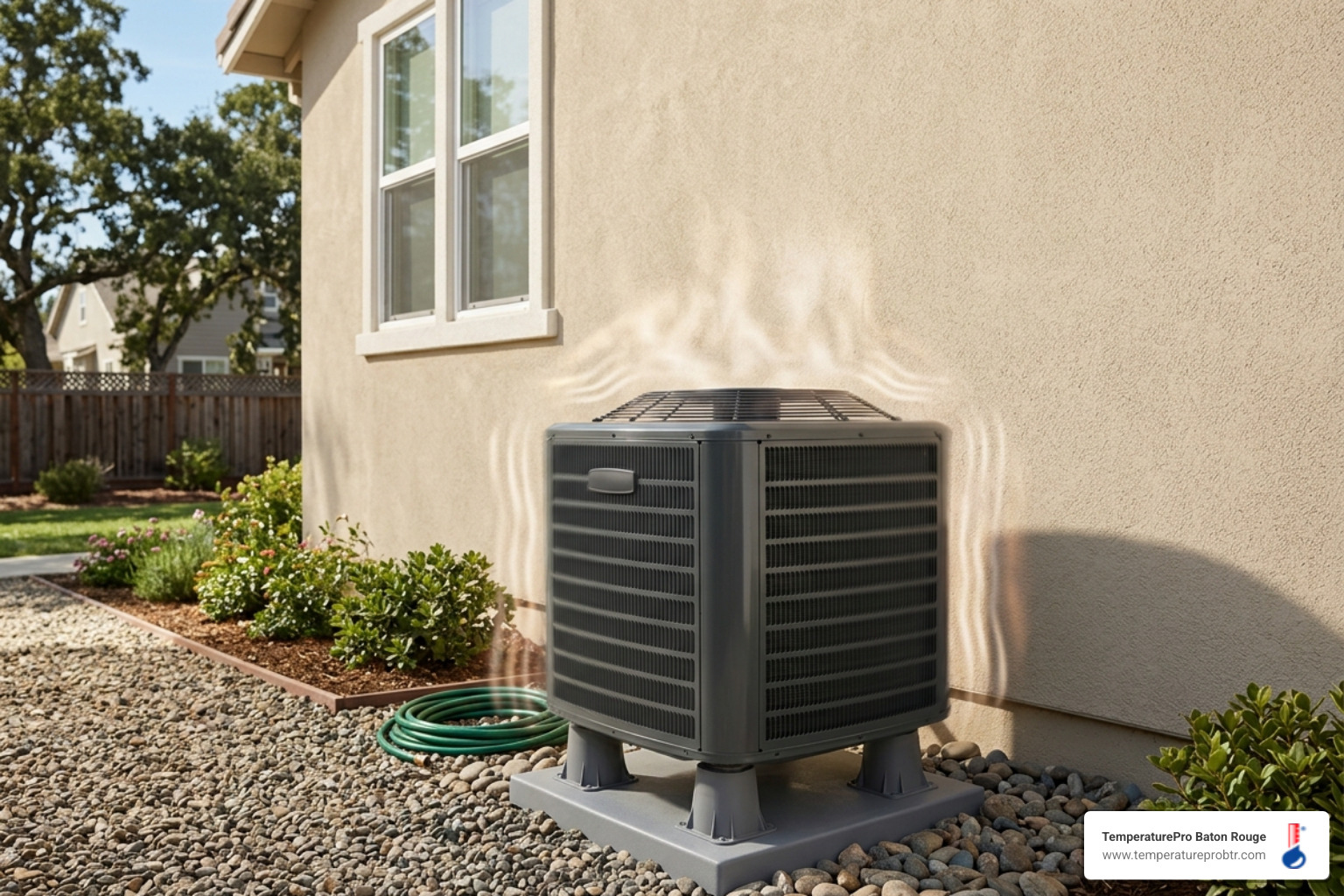
AC making strange noises what they mean is something every Baton Rouge homeowner should understand — because those sounds are your system's way of flagging a problem before it becomes a costly breakdown. Whether it's a sudden bang, a persistent hiss, or an eerie screech, each noise points to something specific happening inside your unit.
Here's a quick-reference guide to the most common AC noises and what they mean:
• Banging / Clanking — Likely Cause: Loose or broken part in compressor or fan — Urgency: High — shut off immediately
• Screeching / Squealing — Likely Cause: Worn fan motor bearings or damaged belt — Urgency: High — shut off immediately
• Buzzing / Humming — Likely Cause: Electrical issue, loose wiring, or frozen coils — Urgency: High — call a pro
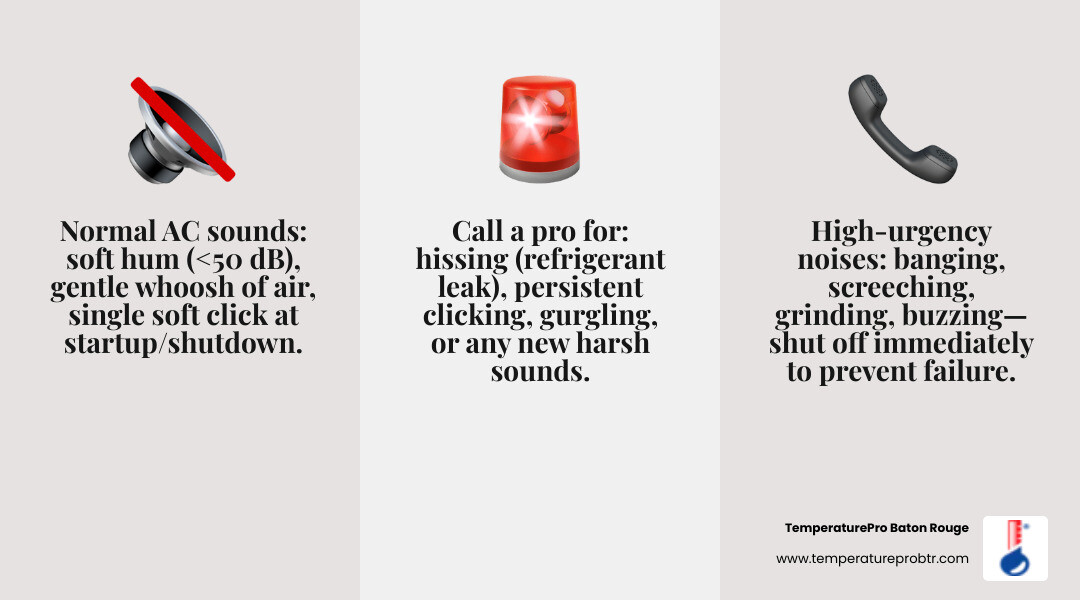
• Hissing — Likely Cause: Refrigerant leak or faulty expansion valve — Urgency: High — call a pro
• Rattling — Likely Cause: Loose panels, debris in condenser, or loose screws — Urgency: Moderate — inspect soon
• Clicking (persistent) — Likely Cause: Thermostat or relay malfunction — Urgency: Moderate — call a pro
• Whistling — Likely Cause: Clogged air filter or blocked return vent — Urgency: Low-Moderate — check filter first
• Gurgling / Bubbling — Likely Cause: Blocked condensate drain or refrigerant leak — Urgency: Moderate — call a pro
• Grinding — Likely Cause: Failing motor bearings — Urgency: High — shut off immediately
• Soft click at startup/shutdown — Likely Cause: Normal contactor relay engagement — Urgency: Normal — no action needed
• Gentle whoosh of air — Likely Cause: Normal airflow from vents — Urgency: Normal — no action needed
Modern central AC systems are designed to run quietly — often no louder than a soft, steady hum. So when something new or harsh cuts through the background noise in your Baton Rouge home, that's not something to tune out. It's an early warning sign.
Some noises are minor. Others mean your system is seconds away from a serious mechanical failure. The key is knowing which is which — and acting fast when it matters.
In the heat of a Louisiana summer, your air conditioner is the MVP of your home. When it’s working perfectly, it’s a silent partner, fading into the background of your daily life. However, when you start hearing an ac making strange noises what they mean becomes the most important question on your mind. Understanding these sounds is the first step in Troubleshooting AC Sounds and Odors before they lead to a total system shutdown.
A healthy HVAC system, especially one less than 15 years old, should produce nothing more than a consistent, low-level hum. This hum is the sound of the indoor blower motor and the outdoor condenser fan doing their jobs. If that hum turns into a rhythmic thumping, a sharp whistle, or a metallic grind, your system is trying to tell you that a component is failing, a connection is loose, or the airflow is dangerously restricted.
Not every sound requires a frantic call for emergency repair. When your thermostat signals for cooling, several mechanical and electrical processes happen nearly simultaneously. You might hear a single "click" — this is the thermostat relay and the outdoor contactor engagement. It’s the sound of high-voltage power being sent to the compressor and fan.
Following that click, you may hear a brief "whoosh" of air as the blower motor ramps up. In variable-speed systems, this might sound like a jet engine slowly gaining power, which is often normal for the first 10–15 seconds. You might even hear a faint hum as the capacitor discharges its stored energy to kickstart the motors. These are the "heartbeats" of your system. However, if that startup click turns into a rapid-fire "chatter" or the whoosh is accompanied by a heavy thud, it's time to dig deeper.
The indoor unit, or air handler, is responsible for circulating conditioned air through your home. Because it’s located inside — often in a closet or attic — noises here are much more noticeable. If you hear a "thwapping" sound, similar to playing cards in bicycle spokes, it usually means a piece of debris or a loose flap of insulation is hitting the blower blades.
One of the most common indoor sounds we hear about in Baton Rouge is a "glug-glug" or bubbling noise. Learning What a Gurgling AC Sound Means for Your Baton Rouge Home is vital because it often points to a backed-up condensate drain line. In our humid climate, your AC pulls gallons of water out of the air every day. If that water can’t drain, it bubbles, which can eventually lead to water damage in your ceiling or floors.
The outdoor unit houses the compressor—the "heart" of your AC—and the condenser fan. Because this unit is exposed to the elements in places like Prairieville and Central, it’s prone to different types of mechanical stress. If you’ve ever wondered Why Your AC is Making a Loud Banging Noise, the answer is usually found within this metal cabinet.
It is also important to note that if you have a dual-purpose system, understanding Why Heat Pump Makes Strange Sounds is slightly different, as these units have reversal valves that can make a distinct "whoosh" or "clunk" when switching modes.
A loud banging or clanking noise from the outdoor unit is one of the most serious "red flag" sounds. This usually indicates that a part has come loose or broken inside the compressor itself. It could be a loose connecting rod, a broken piston pin, or an internal crankshaft that has failed.
Since the compressor is a sealed unit, these internal parts cannot usually be repaired individually. If you hear heavy metal-on-metal banging, shut the system off immediately. Continuing to run the unit can cause the broken part to shatter the compressor housing, leading to a much more expensive replacement and potential refrigerant contamination.
If your AC sounds like a banshee, you’re likely dealing with a high-pitched screech or squeal. In older systems, this is often a damaged blower belt that has slipped or frayed. In newer, beltless systems, this sound typically points to failing bearings in the condenser fan motor or the indoor blower motor.
However, there is a more dangerous cause: high internal pressure. If the compressor is operating under extreme pressure, it may emit a piercing scream. Most modern units have a high-pressure switch to shut the system down, but if that switch fails, the screeching is a final warning before a major mechanical failure. This noise requires professional lubrication or part replacement and should never be ignored.
Buzzing is often electrical in nature. It could be a faulty contactor relay (the switch that starts the unit) that is "chattering" because it can't quite close the connection. It could also stem from loose wiring or a failing capacitor.
Sometimes, buzzing is mechanical. If your refrigerant lines are touching each other or the cabinet wall, the natural vibration of the system can cause a loud buzzing or "thrumming" sound. Additionally, if your evaporator coils are frozen due to a dirty filter or low refrigerant, the unit may buzz as it struggles to move air through a solid block of ice.
Your ductwork acts like a musical instrument; if the air pressure isn't exactly right, it will start making music you don't want to hear. Airflow issues are a major contributor to an ac making strange noises what they mean for your utility bills and comfort.
• Static Pressure: When air is forced through a space that is too small, the pressure increases, leading to whistling.
• Air Leaks: Small holes in the ductwork can act like a flute, creating high-pitched sounds as air escapes.
• Thermal Expansion: Metal ducts can "pop" or "bang" as they heat up and cool down when the air starts flowing.
Does your AC sound like a tea kettle? Whistling is almost always an airflow problem. The most common culprit is a clogged air filter. When the filter is caked in dust, the blower motor has to work twice as hard to pull air through the remaining gaps, creating a high-velocity whistle.
If the filter is clean, check your vents. If too many supply vents are closed or if furniture is blocking the return air grille, the system becomes "starved" for air. This creates high static pressure that forces air through tiny cracks in the ductwork or around the edges of the filter, resulting in that annoying whistling sound.
While whistling is often air, a distinct "hissing" sound — like a snake or air escaping a tire — usually points to a refrigerant leak. This can occur in the copper lines connecting the units or within the evaporator or condenser coils.
Refrigerant is under high pressure; even a pinhole leak will hiss as the gas escapes. This is an environmental hazard and a major threat to your compressor's health. If the hissing is coming from the outdoor unit specifically, it could also be a faulty expansion valve or a leak in the compressor itself. Professional leak detection is required to find and seal these holes.
Rattling is the "loose change" of AC noises. Most of the time, it’s simply a loose screw on an access panel or the cabinet vibrating against the floor or wall. You can often fix this yourself by tightening the screws on the unit’s exterior.
However, if the rattling is coming from inside the outdoor unit, it might be debris — like a small twig, a rock, or a rogue Louisiana cicada — that has fallen into the fan housing. If left alone, that debris can bend the fan blades, leading to an unbalanced motor and a much louder, more expensive vibration issue later on.
Knowing when to "pull the plug" can save you thousands of dollars in repairs and keep your family safe. While a soft rattle might wait until Monday morning, certain noises are emergency signals that require you to switch the system off at the thermostat and the circuit breaker immediately.
Immediate Shutdown Checklist:
• Loud Screaming or Screeching: Indicates dangerously high pressure or total bearing failure.
• Heavy Metallic Banging: Signals broken internal compressor parts.
• Persistent Hissing: Points to a significant refrigerant leak.
• Burning Smells combined with Buzzing: Indicates an electrical fire hazard.
Electrical issues are nothing to play with. If you hear a loud buzzing that sounds like "sizzling" or "arcing," your unit likely has a loose high-voltage connection or a failing circuit breaker. This can lead to electrical fires or "frying" the expensive control boards inside your unit. If your AC frequently trips the circuit breaker, do not keep resetting it. This is a safety feature telling you that the system is drawing too much power, often due to a "grounded" compressor or a short circuit.
Grinding is the sound of metal-on-metal friction. This typically happens when the bearings in your motor have lost their lubrication or have worn down completely. If you continue to run a grinding motor, the heat generated by the friction can cause the motor to "seize" or even catch fire. An emergency HVAC service call can often replace a motor before it destroys the entire system, but once a motor seizes, the repair becomes much more complex.
Yes, a single, distinct click when the system shuts down is usually just the contactor relay opening to cut power to the unit. However, if you hear rapid, repeated clicking as the system tries to shut down, you may have a failing relay or a thermostat communication issue that needs to be addressed.
This is common in modern high-efficiency units with variable-speed motors. These motors ramp up slowly to save energy, which can sound like a turbine gaining speed. However, if the "jet engine" sound is accompanied by heavy vibration or if it’s a new sound in an older, single-stage system, it could mean the blower wheel is out of balance or the motor bearings are failing.
Absolutely. A dirty filter restricts airflow, which can cause whistling, humming, and even loud banging (as the ductwork "flexes" under the pressure change). More importantly, a dirty filter can cause the evaporator coils to freeze into a block of ice, which leads to buzzing and gurgling sounds as the ice begins to melt.
Your home's comfort shouldn't come with a soundtrack of bangs, whistles, and grinds. When it comes to an ac making strange noises what they mean is usually "help me!" At TemperaturePro Baton Rouge, we understand the stress that comes with a noisy HVAC system. As a family and veteran-owned company, we treat your home like our own, providing honest diagnostics and reliable repairs across Baton Rouge, Denham Springs, Walker, and the surrounding areas.
Don't wait for a small rattle to turn into a total system failure. Regular maintenance is the best way to keep your system quiet, efficient, and long-lasting. Whether you need a quick tune-up or 24/7 emergency support, our team is ready to restore the "symphony of silence" to your home. Schedule your professional AC inspection today and let us keep your family cool and comfortable all year long.
Go With Experience