Repairing a Leaking Evaporator Coil vs. Replacing the Entire Air Handler on a 12-Year-Old System
Repairing a Leaking Evaporator Coil vs. Replacing the Entire Air Handler on a 12-Year-Old System
Discovering a refrigerant leak in late summer forces a tough choice. Use our diagnostic framework to decide if patching an older R-410A system is worth the investment.
The Myth of the 'Simple Patch' in Late Summer
At TemperaturePro Baton Rouge, we constantly encounter a persistent myth among homeowners that a quick spot-weld and a refrigerant top-off will easily get a struggling air conditioner through the rest of the season. When you are facing the decision of Repairing a Leaking Evaporator Coil vs. Replacing the Entire Air Handler on a 12-Year-Old System, our team typically sees that a temporary patch rarely provides the long-term relief you expect. Discovering a refrigerant leak during the relentless heat of August is incredibly frustrating. Just as families are transitioning into the busy back-to-school routine, your system has been running almost non-stop for months to combat the end-of-season cooling load, and now it is blowing warm air when you need it most.
Our technicians frequently see homeowners assuming that patching the visible leak is the smartest financial move. However, treating a symptom without evaluating the overall health of an aging system often leads to repeated breakdowns. Making an informed decision requires a transparent, step-by-step diagnostic framework rather than relying on guesswork or temporary fixes. By carefully evaluating whether to invest in ongoing repairs or explore comprehensive HVAC services, you can secure reliable comfort. For many older units we inspect, planning for a full air conditioning replacement becomes the most logical pathway to restore efficiency and peace of mind.
The Mechanical Reality of an Aging Evaporator Coil
When our team explains why a simple patch often fails, we point to the physical degradation taking place inside your equipment. Over a decade of continuous operation places immense stress on the internal components of your air conditioner. The evaporator coil, which is responsible for absorbing heat from your indoor air, is constantly exposed to moisture, fluctuating temperatures, and airborne particles. In the typical 12-year-old R-410A systems we service locally, this continuous runtime fundamentally degrades the copper tubing and aluminum fins.
1. Vibration and metal fatigue: Years of the blower motor running causes micro-vibrations that slowly weaken the joints where copper tubes meet.
2. Formicary corrosion: Microscopic amounts of volatile organic compounds (VOCs) in household air mix with the condensation on the coil, creating a weak acid that eats away at the metal from the outside in.
3. High-pressure stress: R-410A refrigerant operates at a much higher pressure than older refrigerants. When the metal weakens, this high pressure pushes through the thinnest points, creating leaks.
4. Loss of heat transfer: As the aluminum fins corrode and flatten out, the system has to run longer cycles to cool the house, which only accelerates the wear and tear on the weakened metal.
For example, one Baton Rouge homeowner reached out to our team four days after Hurricane Ida when their system was struggling to keep up. A technician arrived just three hours after the call, provided helpful advice, and successfully diagnosed and fixed the problem with a specific part replacement. However, as we often warn customers dealing with a 12-year-old R-410A system that has endured over a decade of severe weather and constant operation, a single part replacement might only be a temporary reprieve if the main evaporator coil is structurally compromised.
Why Micro-Leaks Defy Simple Repairs
An evaporator coil is built with a complex, honeycomb-like structure designed to maximize the surface area for heat transfer. When corrosion attacks the metal, it rarely creates just one single hole. Instead, our diagnostic tools typically reveal a network of "micro-leaks" across the entire surface.
Patching a micro-leak involves welding the weakened copper. While this seals the immediate hole, the intense heat of the welding torch often weakens the already fragile metal right next to the patch. Furthermore, sealing one leak forces the high-pressure refrigerant to find the next weakest point in the corroded coil. This is a pattern we see often: homeowners who pay for an emergency spot-welding repair experience another blowout in a different part of the coil just weeks later. Emergency refrigerant top-offs provide temporary relief, but they fail to address the underlying structural failure of the equipment.
The R-410A Phase-Out: Why Refrigerant Obsolescence Matters
The Problem: Beyond the mechanical condition of the metal, we always advise homeowners to consider the regulatory landscape of the HVAC industry. The Environmental Protection Agency (EPA) enacted the AIM Act, which mandates a strict, phased reduction in the production and consumption of hydrofluorocarbons (HFCs).
The Cause: R-410A, the standard refrigerant used in almost all residential systems built over the last decade, is an HFC targeted by this legislation. Because manufacturers are legally required to drastically reduce their production of R-410A, the supply of this specific refrigerant is shrinking rapidly. As the supply drops, the availability of R-410A for servicing older systems becomes increasingly restricted.
The Solution: Investing heavily in major components for an obsolete refrigerant framework is rarely a sound long-term strategy. If you replace just the evaporator coil on a 12-year-old R-410A system, you are locking yourself into using a refrigerant that is being actively phased out. When the inevitable next repair arises, sourcing R-410A will be significantly more difficult. Contrasting this dying standard with modern, compliant alternatives—such as systems utilizing R-454B or R-32—demonstrates why we recommend moving to a new air handler and condenser as the more sustainable choice for your home.
Latent Cooling and Dehumidification: The Gulf Coast Factor
As a team serving the Gulf Coast region, we know firsthand that cooling a home is only half the battle. The intense late-summer heat and extreme humidity of a Baton Rouge August place maximum strain on an air conditioner's dehumidification capabilities. This introduces the critical difference between sensible cooling (dropping the temperature on the thermometer) and latent cooling (removing moisture from the air).
An air conditioner removes humidity when warm indoor air blows across the freezing-cold evaporator coil. The moisture in the air condenses on the metal fins and drips away. However, a degraded 12-year-old coil with damaged, corroded, or flattened fins loses its ability to effectively pull humidity out of the air. The surface area required for condensation simply no longer exists.
This loss of latent cooling creates a highly uncomfortable situation. You might notice a "sticky" or clammy feeling in your home where the thermostat reads a cool 72 degrees, but the indoor humidity remains oppressively high. Patching a refrigerant leak does absolutely nothing to restore the lost fin surface area. To truly resolve indoor humidity issues, you need equipment designed to handle severe moisture loads. If you are struggling with a damp indoor environment, choosing an AC for Louisiana heat and humidity involves selecting a system with a pristine, fully intact coil surface.
The Hidden Risks of Mismatched HVAC Components
When faced with a leaking coil, some homeowners ask our technicians if they can replace just the indoor evaporator coil while keeping their 12-year-old outdoor condenser. This creates a mechanical mismatch that carries significant operational risks.
Modern evaporator coils are engineered to meet current Department of Energy (DOE) efficiency guidelines. They are physically larger and utilize different internal metering devices than coils manufactured over a decade ago. Pairing a brand-new, high-efficiency indoor coil with a worn-out, less efficient outdoor condenser forces both units to fight against each other. The old compressor has to work overtime to push refrigerant through a coil it was never designed to support. This leads to reduced lifespans, lower SEER ratings, and increased operational strain across the board.
• System Efficiency — Replacing Coil Only (Mismatched): Severely reduced; components fight each other. — Replacing Full Air Handler & Condenser: Maximum efficiency; components are engineered to match.
• Refrigerant Type — Replacing Coil Only (Mismatched): Locks you into obsolete R-410A. — Replacing Full Air Handler & Condenser: Upgrades you to modern, compliant refrigerants.
• Latent Cooling — Replacing Coil Only (Mismatched): Improves slightly, but limited by old compressor. — Replacing Full Air Handler & Condenser: Fully restored dehumidification power.
• Long-Term Reliability — Replacing Coil Only (Mismatched): High risk of outdoor unit failing soon after. — Replacing Full Air Handler & Condenser: Decade-plus reliability with fresh warranties.
Our Transparent Diagnostic Framework: When to Stop Patching
As a veteran-owned, family-operated business, TemperaturePro Baton Rouge operates on strict integrity. We never push for a replacement when a repair makes sense. For instance, during a recent late-summer service call, our team assessed a customer's AC, thoroughly explained the problem, and discovered the necessary part was actually still under warranty. We simply returned and installed it. We apply that same transparent diagnostic process when evaluating an aging evaporator coil.
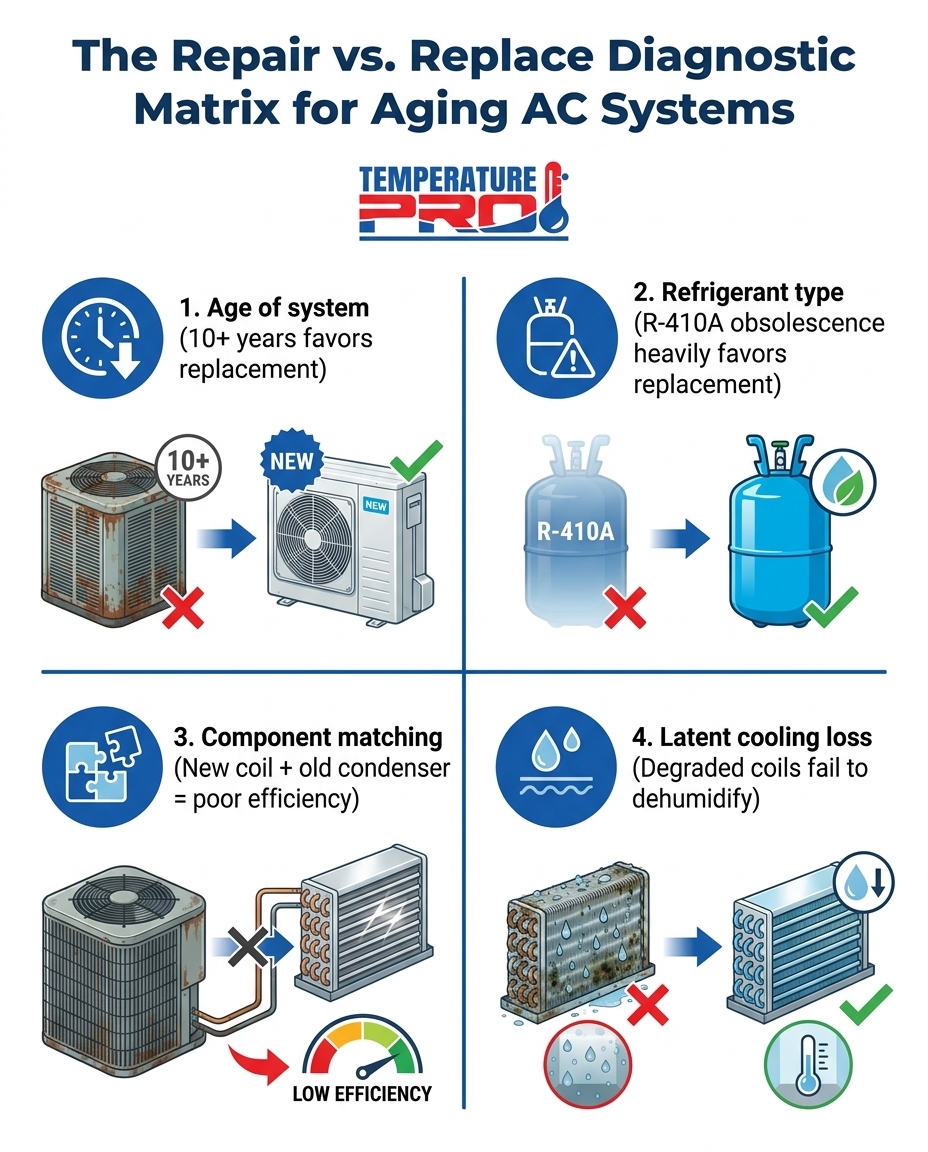
To help you make an informed choice without the pressure, we use a clear decision-making matrix. Here is how our technicians evaluate your system:
• Step 1: Evaluate the total age and runtime history. A system in Baton Rouge runs significantly more hours per year than the national average. If the unit is past the 10-to-12-year mark, major component failure is statistically imminent.
• Step 2: Assess the severity of the leak and coil fins. We inspect the physical condition of the metal. If the fins are crumbling to the touch or covered in rust, a patch will not hold under pressure.
• Step 3: Factor in the R-410A obsolescence timeline. We review the current regulatory phase-out to ensure you aren't investing heavily in obsolete technology.
• Step 4: Analyze latent cooling performance. We check your indoor humidity levels. If the system can no longer dehumidify the air, a simple patch will not restore your comfort.
Always seek a reliable second opinion when faced with a costly repair estimate. A thorough, honest diagnostic process from our team empowers you with facts, not vague sales pitches.
The Repair vs. Replace Diagnostic Matrix for Aging AC Systems
Protecting Your Comfort: Next Steps and Upgrades
Whether you choose to maintain your current equipment for one more season or plan for a major system upgrade, taking proactive steps is essential. Catching minor performance drops early can prevent catastrophic failures during the hottest weeks of the year. If our diagnostic framework points toward replacement, planning ahead reduces unnecessary stress as the school year begins.
Upgrading your entire system is a significant investment in your home's infrastructure. Fortunately, flexible HVAC financing options can make a full replacement more accessible than repeatedly paying for temporary patches and emergency service calls. The ultimate goal is to prioritize long-term reliability over short-sighted fixes that leave you sweating out the end of the summer.
The Role of Ongoing System Care
If you have a newer system or decide to proceed with a repair, regular tune-ups are non-negotiable. Routine care allows our technicians to monitor refrigerant levels closely and inspect coil health before a micro-leak turns into a complete blowout. Enrolling in preventative AC maintenance keeps your equipment running as efficiently as possible, regardless of its age. Well-maintained systems provide better warning signs before a major component failure, giving you time to plan rather than reacting to a sudden breakdown.
Frequently Asked Questions About Aging Evaporator Coils
Is it worth replacing an evaporator coil on a 12-year-old AC?
In our experience, the short answer is usually no. Replacing just the evaporator coil on a 12-year-old system is risky because the outdoor condenser is equally old and likely to fail soon. Furthermore, investing in a major component for an aging R-410A unit locks you into obsolete technology. A full system replacement generally offers better long-term reliability and efficiency.
How does the R-410A phase-out affect AC repairs?
The EPA's AIM Act mandates a strict reduction in the production of HFCs, including R-410A. As the supply of this refrigerant shrinks, servicing older systems becomes increasingly difficult. Major repairs on R-410A systems are becoming less viable as the industry shifts to modern, compliant refrigerants.
Will a new evaporator coil work with an old condenser?
While it is physically possible to connect them, a new evaporator coil paired with an old condenser creates a severe mechanical mismatch. Modern coils are designed for higher efficiency standards and different airflow requirements. This mismatch forces the older outdoor unit to overwork, drastically reducing its remaining lifespan.
Can you replace just the evaporator coil and not the condenser?
You can, but it violates Department of Energy efficiency recommendations and often voids manufacturer warranties. Heating and cooling systems are engineered to operate as matched pairs. Replacing only the indoor half compromises the entire system's performance and leaves you vulnerable to imminent outdoor unit failure.
How does a failing evaporator coil impact home humidity levels?
A failing evaporator coil loses its ability to perform latent cooling, which is the process of removing moisture from the air. When the metal fins corrode or flatten out over time, condensation cannot form properly. This leaves your home feeling sticky, damp, and uncomfortable, even if the thermostat registers a cool temperature.
What are the signs of micro-leaks in an older AC system?
The most common signs of micro-leaks our team finds include a gradual loss of cooling power, longer run cycles, and ice forming on the refrigerant lines or the coil itself. You might also hear a faint hissing sound near the indoor unit. Because micro-leaks are incredibly small, they often require a professional electronic leak detector to locate accurately.
Make a Confident Decision for Your Home's Comfort
Throwing good money after bad on an obsolete, struggling system rarely pays off in the long run. When dealing with the complexities of Repairing a Leaking Evaporator Coil vs. Replacing the Entire Air Handler on a 12-Year-Old System, you need facts, not guesswork. Rely on a transparent, professional evaluation from TemperaturePro Baton Rouge to understand the true mechanical condition of your equipment. Schedule an inspection or a replacement consultation today to secure reliable, efficient cooling for your home, ensuring your family stays comfortable no matter how intense the late-summer heat becomes.
Thank you! Your submission has been received!
Oops! Something went wrong while submitting the form.
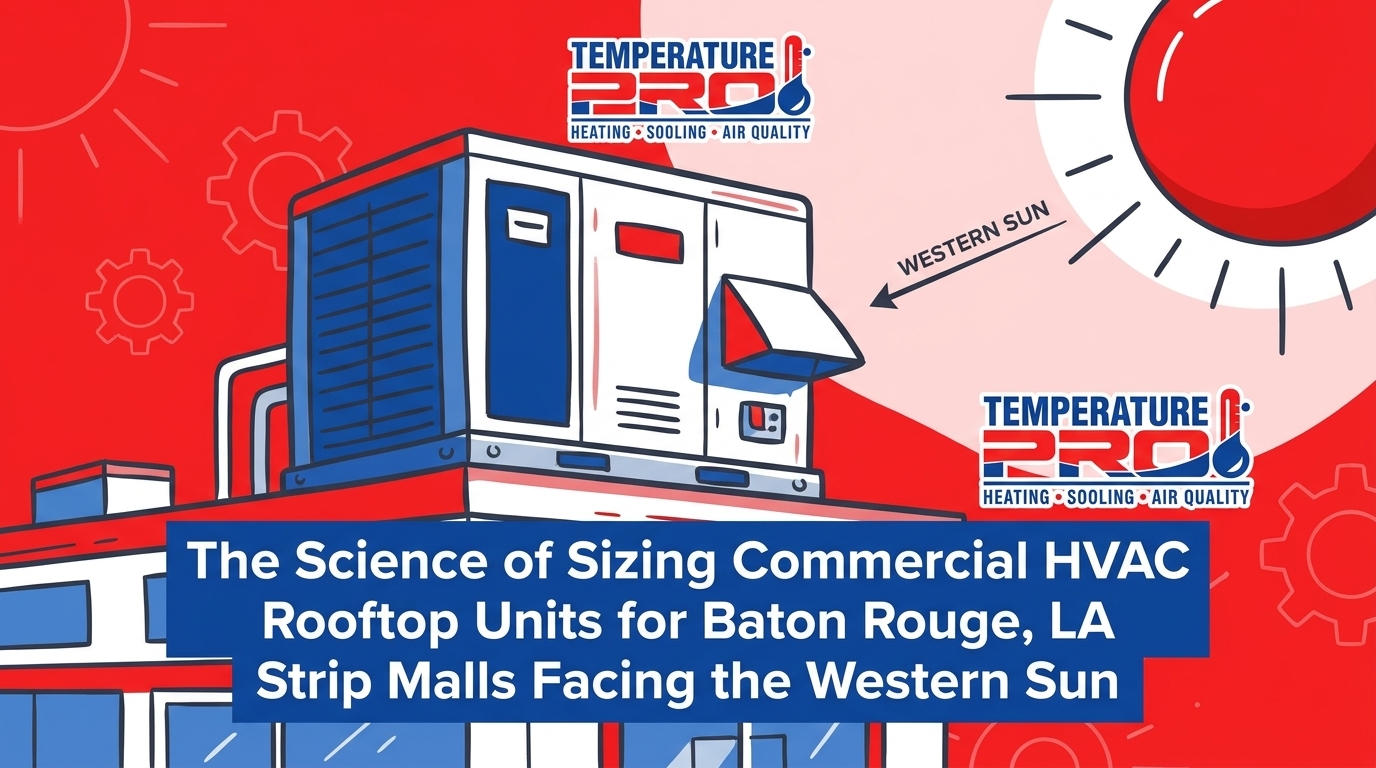
When the late-summer August sun turns your retail space into an oven, standard RTU calculations fail. Find out how solar heat gain impacts commercial cooling loads.
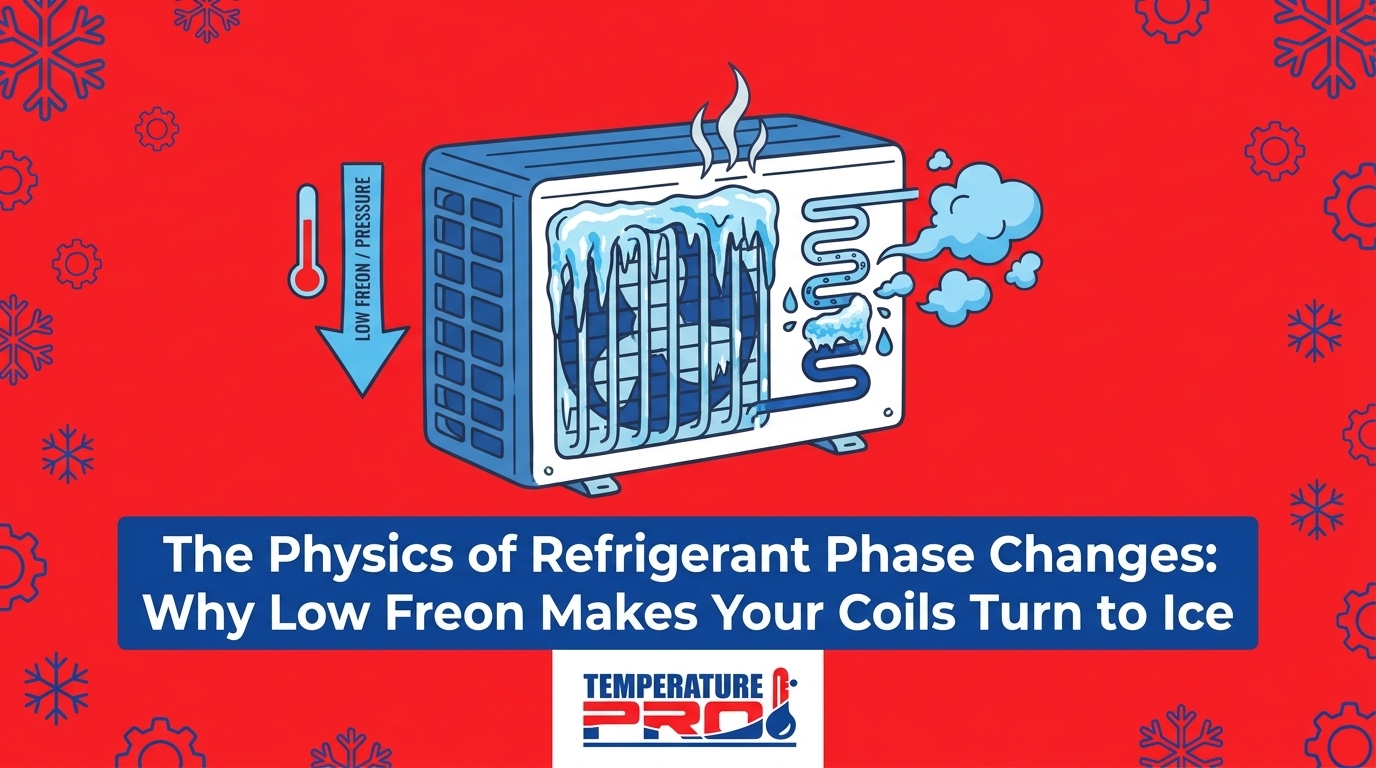
Finding a solid block of ice inside your AC during an August heat wave defies logic. We break down the counterintuitive pressure drops that cause freezing and why leak repair is the only solution.
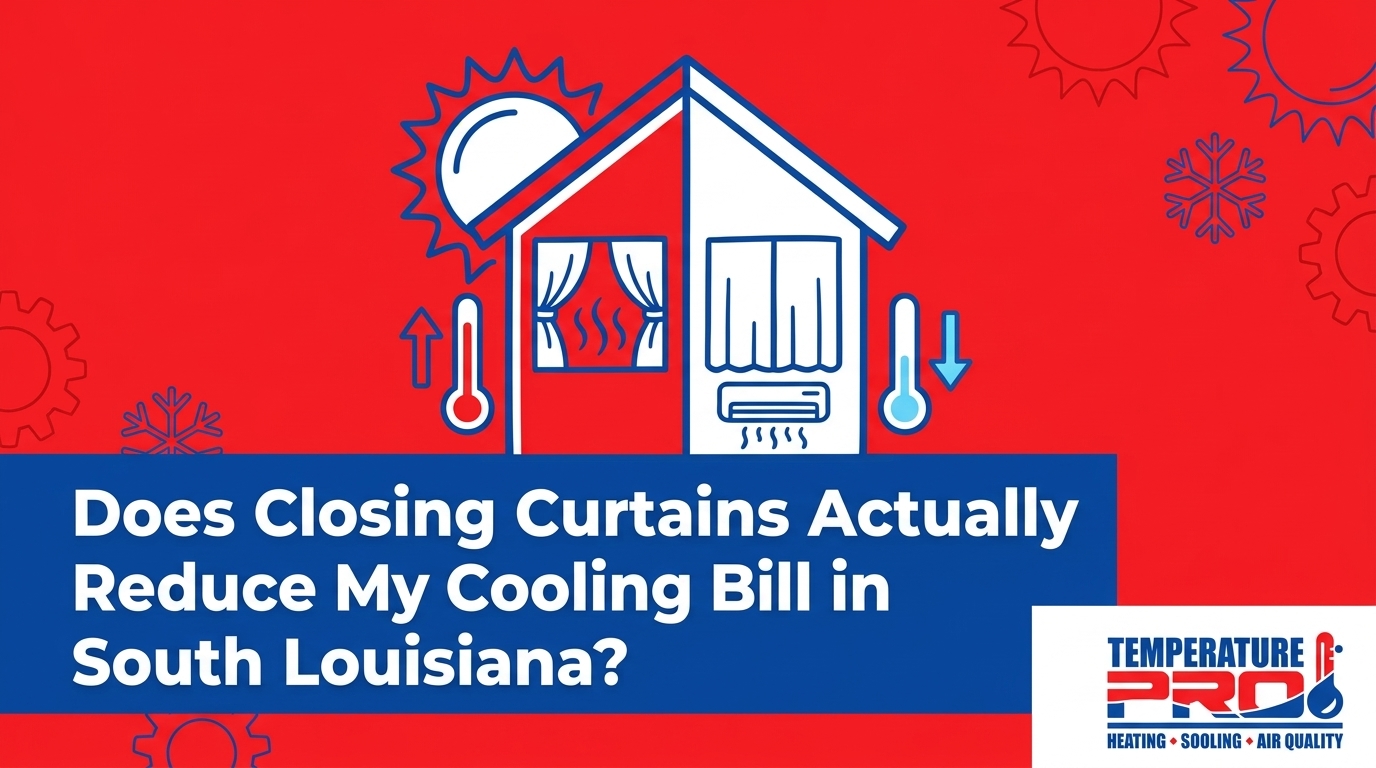
When late-summer heat hits, your AC works overtime to keep up. We break down the science of solar heat gain so you can decide if blackout curtains are worth it.