Preparing Your Mini-Split System for Optimal Heating Performance Before the October Chill
Preparing Your Mini-Split System for Optimal Heating Performance Before the October Chill
Transitioning your ductless system from summer cooling to fall heating takes more than flipping a switch. Adjusting your louvers and cleaning filters ensures warm air actually reaches the floor.
Facing the First Fall Cold Front: Transitioning Your Ductless System
Before the first true cold front sweeps through Louisiana, preparing your mini-split system for optimal heating performance before the October chill is the most important step you can take for your home's comfort. At TemperaturePro Baton Rouge, our technicians know that late summer often lulls us into a false sense of security with lingering heat, but that sudden drop in temperature is always right around the corner. When that first chilly morning arrives, you want your system to blow warm, comforting air immediately, rather than struggling to keep up with the sudden weather shift. Taking the time to properly transition your equipment now prevents unexpected breakdowns and keeps your energy bills predictable as the seasons change.
Many homeowners make the common mistake of simply grabbing their remote, switching the mode from "cool" to "heat," and expecting perfect results. However, as we frequently explain to our customers, ductless systems require a bit more manual preparation than traditional central air conditioning. Because each indoor air handler operates independently, a simple push of a button is not enough to guarantee efficient heating after months of heavy use. The physical settings of your unit, particularly the airflow direction and internal cleanliness, must be adjusted to match the new season.
The transition from the September heat to the October chill is a critical window. Throughout the summer, your mini-split has been working overtime, pulling heat and humidity out of your living space. This intense workload leaves behind hidden wear and tear. If you ignore the physical transition process, you force your system to push warm air through layers of summer dust and moisture buildup. This not only reduces your immediate comfort but also puts unnecessary strain on the equipment's internal components.
The hidden cost of skipping seasonal prep:
• Higher energy consumption: The blower motor has to work twice as hard to push air through neglected filters.
• Uneven heating: Incorrect airflow settings leave your floors cold and your ceilings uncomfortably hot.
• Premature wear: Forcing a dirty system to switch modes rapidly can damage the reversing valve and internal sensors.
Preparing ductless HVAC systems requires specific, deliberate steps. While standard central air systems often just need a single filter change at the main return vent, your mini-split system requires individual attention at every indoor head unit. Recognizing this difference is the key to maintaining a comfortable, efficient home throughout the fall and winter months.
The Heavy Toll of Summer Cooling on Reusable Filters
To understand why transitioning to heating mode requires immediate attention, we have to look at what your system just went through. In our years of servicing local homes, the team at TemperaturePro Baton Rouge has seen firsthand how our area's prolonged high humidity from May to September forces local mini-splits to work incredibly hard. During these months, your system isn't just cooling the air; it acts as a massive dehumidifier, extracting gallons of moisture from your indoor environment. This nonstop moisture removal leaves the indoor coils and reusable filters heavily soiled and damp.
When you combine that constant moisture with everyday household dust, pet dander, and airborne particles, a thick, paste-like sludge forms on the fine mesh of your reusable filters. In drier climates, dust might just sit loosely on the filter screen. In Baton Rouge area homes, that dust gets wet, sticks to the mesh, and creates a dense barrier that severely restricts airflow.
The chain reaction of restricted airflow:
• Reduced heat pump efficiency: The system cannot draw in enough ambient air to heat the room properly.
• Blower motor strain: The fan has to spin faster and work harder just to push a normal volume of air out into the room.
• Increased operating costs: The longer the system runs to hit your target temperature, the more energy it consumes.
If you switch to heating mode without addressing this buildup, that damp paste dries out and hardens into a solid crust. Pushing warm air through a clogged, crusted filter is incredibly inefficient. It forces the system to run longer cycles, driving up your utility bills right as the weather gets cold.
Why High Humidity Accelerates Filter Clogs
The physics of dehumidification explain why southern climates are so tough on filters. As warm, humid indoor air passes over the freezing cold evaporator coils inside your mini-split, condensation forms. This condensation drips down into a drain pan, but the surrounding air, filters, and plastic housing remain damp.
Every time the system cycles off, that dampness acts like a magnet for floating dust particles. Over a five-month cooling season, this creates layer upon layer of grime. When you finally transition to heating mode, the indoor coil gets extremely hot instead of cold. If you haven't cleaned the filters, that sudden heat bakes the accumulated summer sludge right onto the mesh, making it significantly harder to clean later and severely choking the system's airflow.
Mastering Airflow Physics: Adjusting Louvers for Heating Mode
One of the most frequent complaints our technicians hear during the first cold snap is that a homeowner's ductless unit is running, but the room still feels chilly. Almost every time, we find the culprit is incorrect louver positioning. High-wall ductless units rely heavily on the physical direction of airflow to maintain comfort, and the rules change completely between summer and winter.
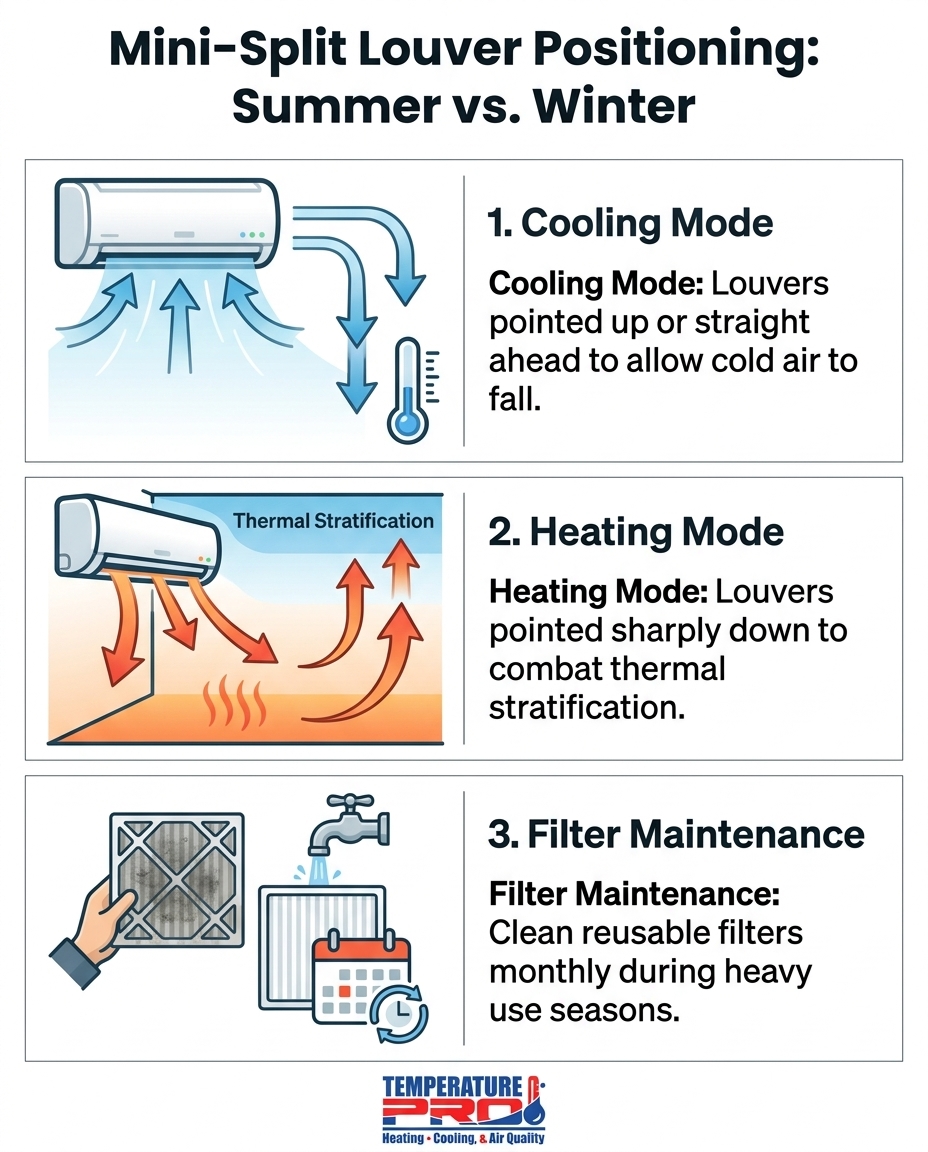
This comes down to a basic law of physics known as thermal stratification: warm air naturally rises to the ceiling, while cold air sinks to the floor. During the summer, you want your mini-split louvers pointed up or straight ahead. This allows the heavy, cold air to fall naturally, cooling the room evenly from top to bottom. If you leave your louvers in this upward position during the winter, the system will pump warm air straight up to the ceiling, where it stays trapped. Your feet will be freezing, even while the unit runs at full capacity.
To combat thermal stratification during the September transition to October chill, you must manually adjust your remote settings so the louvers point sharply downward. By forcing the hot air down toward the floor, it will naturally rise back up through the living space, warming you before it reaches the ceiling. This simple adjustment makes a massive difference in how comfortable the room feels and how efficiently the system operates.
• Summer Cooling — Ideal Louver Position: Pointed UP or STRAIGHT — Airflow Physics Principle: Cold air is dense and naturally sinks — End Result in the Room: Even cooling as air falls from ceiling to floor
• Winter Heating — Ideal Louver Position: Pointed DOWN — Airflow Physics Principle: Warm air is light and naturally rises — End Result in the Room: Even heating as air is forced to the floor and rises
If you find that your system still isn't distributing heat properly even after adjusting the airflow direction, it may be time to evaluate the internal blower fan. For comprehensive diagnostics and support, our professional heating services can ensure your equipment is operating at peak efficiency.
Mini-Split Louver Positioning: Summer vs. Winter
Essential Homeowner Preparation Steps for Ductless Systems
Getting your system ready for the cold doesn't have to be complicated, but it does require a deliberate approach. By following a safe, actionable checklist, homeowners can significantly improve their system's performance and indoor air quality before the heavy heating season begins. These steps are safe for any homeowner to perform and, based on our field experience, are essential for maintaining comfort in Baton Rouge area homes.
1. Wash and thoroughly dry reusable indoor air filters: Open the front panel of your indoor air handler, gently remove the mesh filters, and wash them in the sink. This removes the accumulated summer dust and restores proper airflow to the blower motor.
2. Check and replace remote control batteries: Mini-split remotes often double as the thermostat sensor for that specific room. If the batteries are weak, the remote may send incorrect temperature readings to the wall unit, causing it to short-cycle or fail to heat the room properly. Put fresh batteries in every remote before winter starts.
3. Clear late-summer debris from the outdoor condenser: Walk outside and inspect the main compressor unit. Fall weather often blows leaves, twigs, and dirt into the fins. Gently brush away any debris from the exterior casing and ensure there is at least two feet of clear space around the unit for proper air intake.
4. Run a brief test of the heating mode: Don't wait for a freezing morning to find out your heater won't turn on. Pick a mild afternoon in late September or early October, switch the system to heat, and let it run for 15 minutes. Verify that hot air is flowing steadily from the indoor unit.
Safe Cleaning Practices
When handling the internal components of your mini-split, a gentle touch is required. Use only mild dish soap and lukewarm water to clean your reusable filters. Harsh chemicals, bleach, or stiff-bristled brushes can tear the delicate mesh screen, forcing you to buy replacements.
Most importantly, ensure the filters are 100% dry before reinstalling them. Shaking them off and putting them back while damp is a recipe for disaster. If you trap moisture inside a dark, warm air handler, mold and mildew will begin growing on the coils almost immediately, ruining your indoor air quality.
Navigating the Mechanical Stress of Autumn Temperature Swings
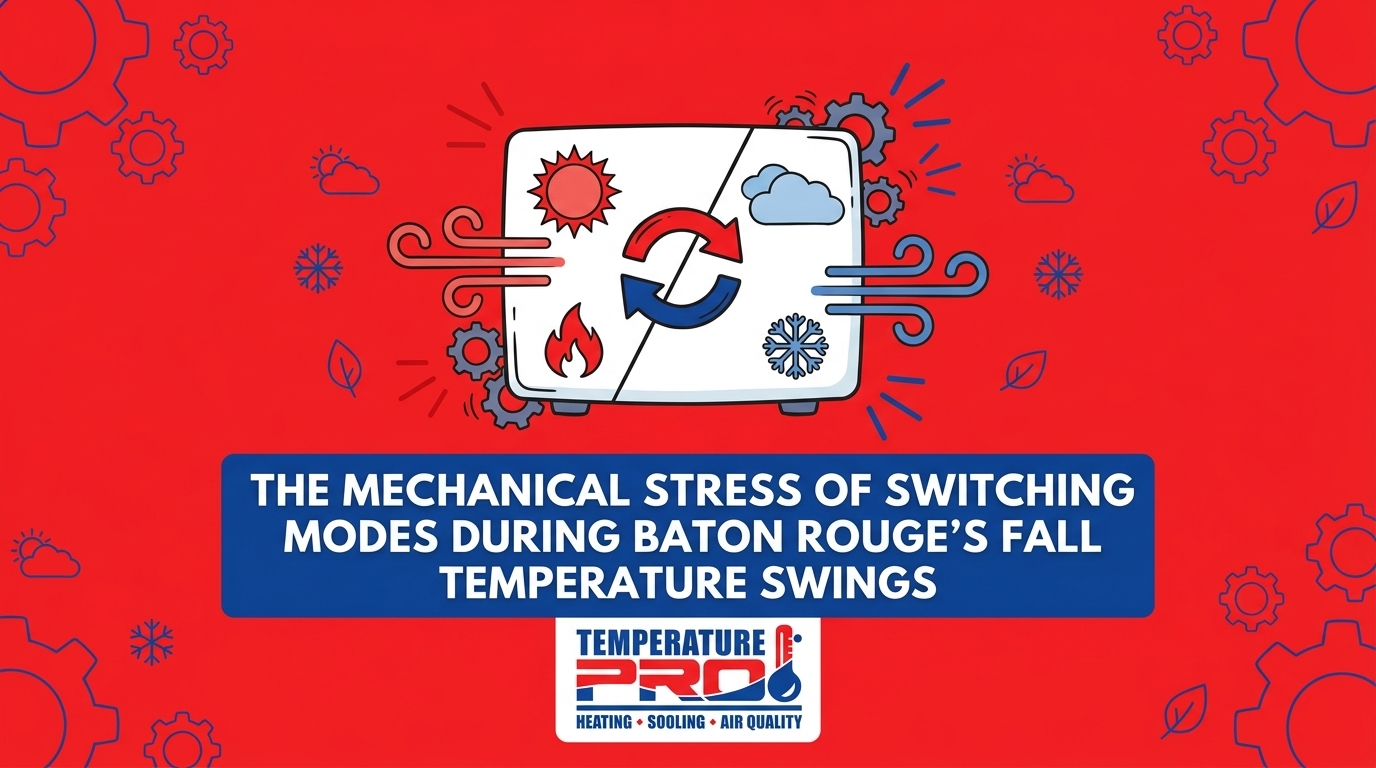
As local HVAC professionals, we know October is notorious for its unpredictable nature in Louisiana. You might wake up to freezing temperatures that require heavy heating, only to find the afternoon sun pushing the thermostat back into the high 80s. This rapid fluctuation forces homeowners to switch their units back and forth between heating and cooling modes, which introduces significant mechanical stress to the system.
The component responsible for this magic trick is the reversing valve. This internal valve physically shifts to reverse the flow of refrigerant, changing the system from an air conditioner into a heater. While heat pumps are designed to do this, asking the reversing valve to shift rapidly and repeatedly every single day takes a toll. The constant expansion and contraction of refrigerant lines during these rapid mode changes can lead to premature wear if the system isn't well-maintained.
The smart approach to fall temperature swings:
• Set a stable temperature: Instead of aggressively toggling between "Heat" and "Cool" modes every few hours, try using the "Auto" mode with a moderate setpoint, or simply turn the system off and open windows during mild afternoons.
• Give the system a rest: If you must switch from cooling to heating on the same day, turn the unit completely off for at least five to ten minutes. This allows the refrigerant pressures to equalize before the reversing valve shifts.
• Acknowledge the stress: Recognize that the mechanical stress of switching between heating and cooling is highest during the September transition to October chill. A system that hasn't been serviced since spring is far more likely to get stuck in one mode during these drastic temperature swings.
Recognizing When Professional Attention is Required
While washing filters and adjusting louvers are excellent tasks for a weekend afternoon, there is a hard line between safe DIY maintenance and work that requires a licensed technician. Modern ductless systems are complex pieces of machinery relying on precise refrigerant pressures, sensitive electrical boards, and delicate sensors. Knowing when to step back and call a professional is the key to preserving your system's long-term reliability.
Warning signs that demand professional attention:
• Unusual noises: Grinding, squealing, or loud clicking sounds coming from the indoor or outdoor unit indicate a failing motor or a stuck reversing valve.
• Failure to blow hot air: If the unit is running but only blowing lukewarm or cold air after 15 minutes in heating mode, you likely have a refrigerant leak or a compressor issue.
• Blinking indicator lights: The lights on your indoor unit are diagnostic codes. If they are flashing in a specific pattern, the system's computer has detected an internal fault that needs professional diagnosis.
Deep coil cleaning is another task best left to the experts. Over time, the blower wheel inside the wall unit can become caked with mold and dust that simple filter washing won't fix. A professional technician has the specialized tools to safely dismantle the housing, clean the delicate blower wheel without throwing it off balance, and verify that the refrigerant levels are exact.
Sometimes, hidden electrical issues can mimic basic performance problems. For instance, our TemperaturePro Baton Rouge team recently responded to a local homeowner whose heater had completely stopped working during a fall cold snap. During the repair, our technician not only fixed the heating element but also identified and corrected a hidden wiring error affecting the AC fan. Fixing that underlying electrical fault restored the heat and dramatically improved the system's overall airflow performance for the future.
Because TemperaturePro Baton Rouge is a veteran-owned company, you get meticulous attention to detail from our crew. We treat seasonal prep not just as a quick checkup, but as a disciplined procedure for operational readiness. Securing a routine HVAC maintenance plan ensures that a licensed professional examines your system twice a year, catching these hidden electrical and mechanical faults in Baton Rouge area homes long before they leave you freezing on a Sunday morning.
Frequently Asked Questions
Should I point my mini split up or down for heat?
You should always point your mini-split louvers downward when in heating mode. Because warm air naturally rises (a process called thermal stratification), pointing the louvers down forces the hot air to the floor first. As that air naturally floats back up toward the ceiling, it warms the entire living space evenly, keeping you much more comfortable.
How do I set my mini split for winter?
To set your mini-split for winter, start by changing the mode on your remote from "Cool" to "Heat" (often indicated by a sun icon). Next, adjust the fan louvers so they point downward toward the floor. Finally, set a consistent, moderate temperature and allow the system to run steadily, rather than turning it on and off constantly throughout the day.
How often should you clean mini split filters?
You should clean your reusable mini-split filters at least once a month during heavy use seasons like peak summer or mid-winter. If you have indoor pets, suffer from allergies, or live in an area with high dust, you may need to check and wash them every two weeks to maintain optimal airflow and efficiency.
Why is my mini split not blowing hot air?
If your mini-split isn't blowing hot air, it may simply be in "defrost mode," which temporarily stops the indoor fan while the outdoor unit melts accumulated frost. If the air stays cold after 15 minutes, the issue could be severely clogged air filters, a malfunctioning reversing valve, or a low refrigerant charge that requires professional diagnosis.
Can I switch my mini-split from AC to heat on the same day?
Yes, you can switch from AC to heat on the same day, but you should do so carefully. Turn the system completely off for about five to ten minutes before changing the mode. This brief pause allows the internal refrigerant pressures to equalize, reducing mechanical stress on the reversing valve as it shifts directions.
Stay Warm and Ready for the Fall
Taking the time to prep your ductless system now guarantees a smooth, comfortable transition into the colder months. By cleaning your filters, adjusting your louvers downward, and scheduling a professional tune-up before the severe weather hits, you ensure your home stays perfectly warm. Don't wait for the first freezing morning—take action today for reliable, efficient heating all winter long.
Thank you! Your submission has been received!
Oops! Something went wrong while submitting the form.
As September temperatures drop, field mice seek warmth inside outdoor HVAC electrical panels. Discover how professional wire armoring prevents sudden heating failures in rural Louisiana.
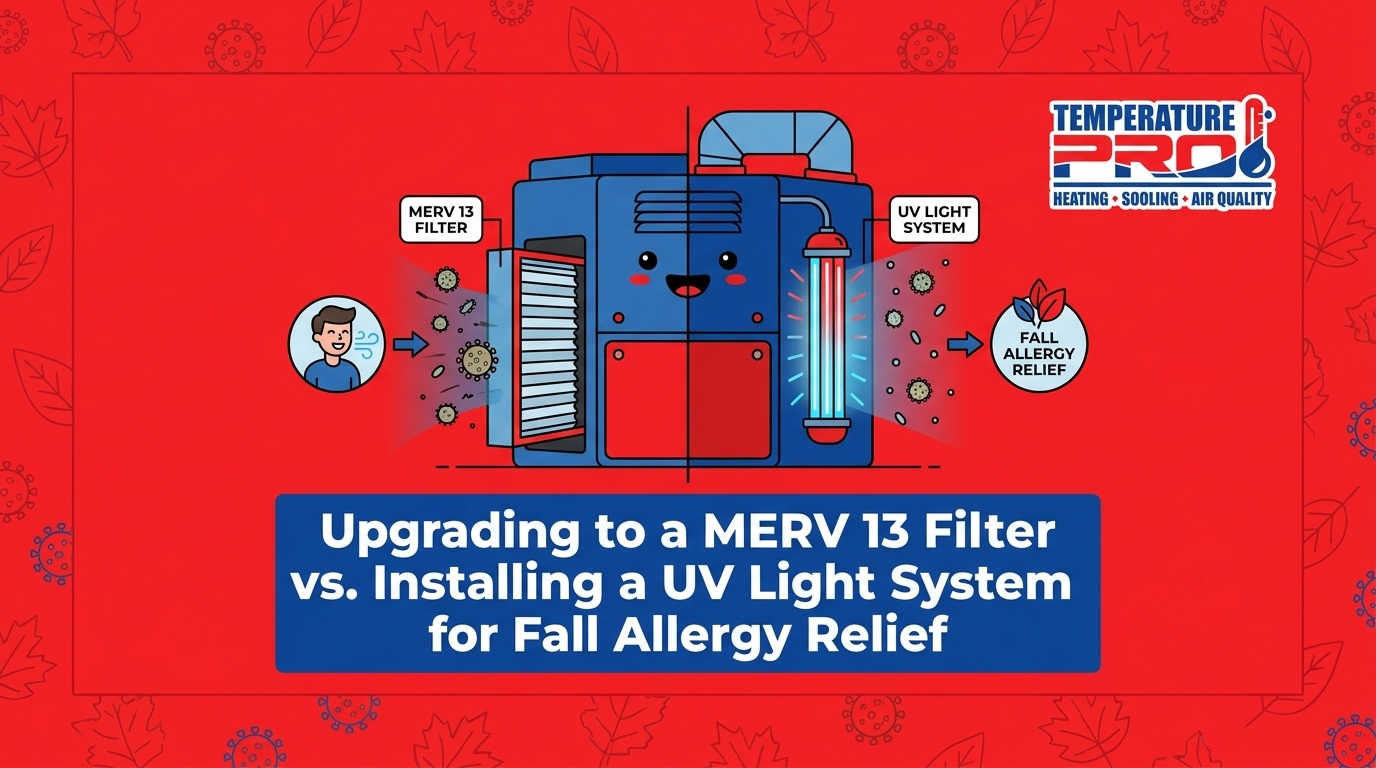
Fighting fall ragweed? Blindly adding a highly restrictive filter could freeze your AC coils. Compare particulate filtration versus biological control to safely improve your indoor air quality.
Flipping straight from morning heat to afternoon AC strains your system's valves. Waiting just five minutes between modes protects your equipment during fall temperature swings.