Traditional Gas Furnaces vs. Electric Air Handlers for Multi-Family Units in Plaquemine
Traditional Gas Furnaces vs. Electric Air Handlers for Multi-Family Units in Plaquemine
Property managers prepping multi-family duplexes for the fall heating season face a crucial choice. Evaluate the safety of electric systems against the fast recovery of gas.
Are Your Rental Properties Ready for the Fall Heating Season?
Are you currently weighing the operational benefits of traditional gas furnaces vs. electric air handlers for multi-family units in Plaquemine before the cold weather arrives? Managing rental properties effectively requires balancing immediate tenant comfort with long-term operational efficiency. As property managers finalize their September pre-heating season prep, our team at TemperaturePro Baton Rouge frequently helps clients navigate this pivotal decision, which impacts everything from monthly utility efficiency to localized maintenance logistics.
Upgrading your building's heating systems and securing reliable commercial HVAC services are foundational steps for maintaining high tenant retention. The core decision point usually comes down to weighing the inherent safety and low maintenance overhead of modern electric air handlers against the robust, fast heating recovery provided by gas furnaces. Both systems offer distinct advantages depending on the architectural layout of your property and your overarching management strategy.
Here's the thing: A reactive approach to commercial HVAC replacement often leads to rushed decisions during the first major cold snap. By evaluating your options proactively, you can select a system that aligns perfectly with your property portfolio's needs. In this deep dive, we will explore the mechanical differences, safety profiles, and long-term maintenance requirements of both heating options to help you make an informed, scalable choice for your rental units.
Evaluating Heating Needs for Plaquemine Multi-Family Duplexes
Selecting the right heating equipment requires a thorough understanding of the local environment and the physical structure of the building. What works perfectly for a standalone single-family home in a northern climate may be entirely over-engineered—or simply the wrong fit—for Plaquemine multi-family duplexes.
Assessing Local Climate Demands
With Plaquemine and the greater Baton Rouge area experiencing generally mild winters, our technicians typically observe that the absolute heating demand is significantly lower than in regions facing sustained sub-freezing temperatures. However, this mild baseline is frequently interrupted by sudden, sharp cold snaps that require reliable, immediate performance from your HVAC equipment. Because extreme, prolonged cold-weather performance drops are less of a concern locally, property managers have more flexibility in choosing their heat source.
The regional advantage: Systems do not need to fight against zero-degree outdoor temperatures for months on end. This climate reality means that high-efficiency electric systems, which sometimes struggle in deep freezes, operate beautifully within the local temperature bands, while gas furnaces provide immense heating power that handles those sudden temperature plummets with ease.
The Unique Setup of Shared-Wall Housing
Multi-family housing presents distinct thermodynamic characteristics. Shared walls provide natural insulation, meaning that a duplex unit loses less heat to the outdoor environment compared to a fully detached home of the same square footage. Consequently, the total thermal load on the heating unit is reduced.
In our experience servicing local multiplexes, we often see that oversizing a heating system in a shared-wall environment can lead to short-cycling, where the unit turns on and off too quickly, causing premature wear and uneven temperatures. Furthermore, space constraints in duplex utility closets or attics often dictate the physical footprint of the equipment you can install. Gas furnaces require specific clearances for safety and ventilation, whereas electric air handlers often offer more flexible installation configurations within tight multi-family layouts.
Tenant Safety and Liability: The Case for Electric Air Handlers
When managing multiple occupied units, liability reduction is just as critical as thermal performance. Transitioning to all-electric systems offers profound advantages for property managers looking to minimize risk and streamline safety compliance.
Eliminating Onsite Combustion Risks
The mechanics of combustion heating inherently involve burning fuel, creating an open flame, and producing exhaust gases inside the unit's heat exchanger. While modern gas furnaces are built with numerous safety switches, the fundamental presence of combustible gas introduces a layer of risk. Electric resistance heating or electric heat transfer, by contrast, relies entirely on electricity passing through coils to generate warmth.
As a veteran-owned company, our team at TemperaturePro Baton Rouge brings the same level of discipline, safety, and accountability to our work that military service demands. We often recommend electric air handlers for Plaquemine multi-family duplexes because they align perfectly with a safety-first ethos, providing unparalleled peace of mind by completely removing open flames, gas lines, and pilot lights from the tenant's living space.
Reducing Carbon Monoxide Liability
Carbon monoxide exposure is a major liability factor in multi-family housing. A cracked heat exchanger or a blocked flue pipe in a gas furnace can allow this odorless, invisible gas to leak into the living area.
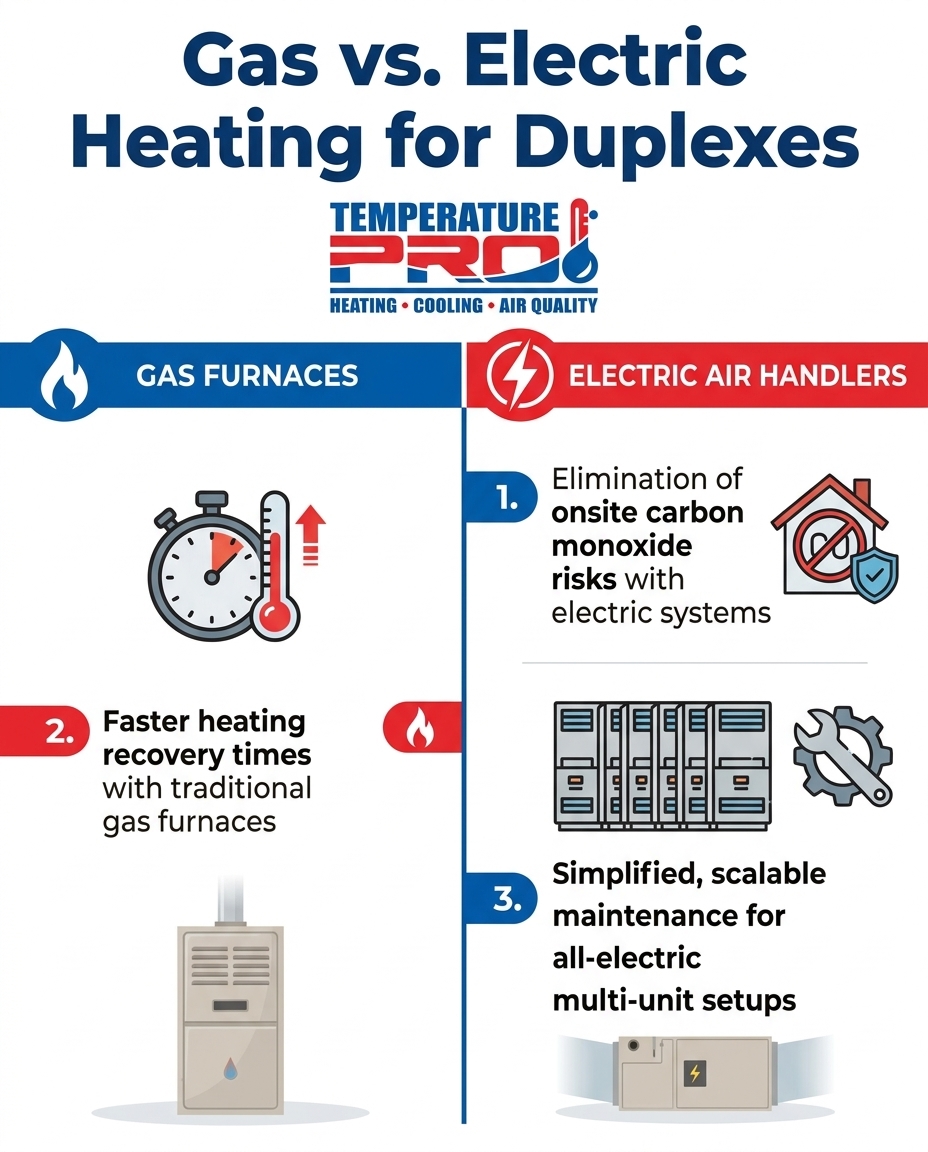
All-electric setups simplify safety compliance for landlords. By removing the combustion process entirely, electric air handlers eliminate the onsite generation of carbon monoxide. This fundamentally changes the liability profile of the property, reducing the reliance on tenant-maintained carbon monoxide detectors and mitigating the risk of catastrophic equipment failure.
• Combustion Risk — Traditional Gas Furnaces: Relies on controlled open flame and natural gas supply. — Electric Air Handlers: Zero onsite combustion; relies entirely on electrical current.
• Carbon Monoxide — Traditional Gas Furnaces: Requires strict venting and functional CO detectors in the unit. — Electric Air Handlers: Produces no carbon monoxide, eliminating this specific liability.
• Venting Requirements — Traditional Gas Furnaces: Mandates clear, unobstructed flue pipes to the exterior. — Electric Air Handlers: No exhaust venting required, simplifying building exterior.
• Tenant Tampering Risk — Traditional Gas Furnaces: Higher risk if tenants block vents or alter gas connections. — Electric Air Handlers: Lower risk profile due to sealed electrical components.
Heating Recovery Speed: When Traditional Gas Furnaces Excel
While electric systems offer compelling safety benefits, gas heating remains the industry standard for sheer thermal output. To make a balanced decision during your September pre-heating season prep, it is important to acknowledge where traditional gas setups outperform their electric counterparts.
Handling Sudden Temperature Drops
Heating recovery time refers to how quickly a system can raise the indoor temperature from a cold state to the thermostat's setpoint. Gas burners generate heat at significantly higher temperatures than standard electric resistance coils. When a tenant returns to a cold apartment after a weekend away and turns the thermostat up by ten degrees, a gas furnace will bridge that temperature gap rapidly.
The comfort factor: Tenant comfort expectations are heavily tied to how fast they feel warm air blowing from the registers. Gas furnaces deliver hot air almost immediately after ignition, making them incredibly effective at combating the sudden, biting cold snaps that occasionally hit the region.
Evaluating Heat Pump Alternatives
If you prefer the safety of an all-electric setup but want better efficiency than traditional electric resistance heat, modern alternatives offer a highly efficient middle ground. Exploring professional heat pump installations can bridge the gap between electric safety and effective heating recovery. Heat pumps move ambient heat rather than generating it from scratch, providing a steady, consistent warmth that handles mild local winters exceptionally well, though their raw recovery speed from a deep temperature setback may still trail slightly behind a high-capacity gas burner.
Streamlining Maintenance Across Multiple Units
Managing the logistical overhead of HVAC upkeep across a portfolio of properties is a complex undertaking. The fuel source you choose directly impacts the frequency, complexity, and scalable nature of your seasonal maintenance.
Managing Gas Line and Flue Inspections
Maintaining gas equipment requires a rigorous, multi-point inspection process to ensure safety and efficiency. Scaling this across numerous occupied units requires careful coordination.
1. Heat Exchanger Verification: Technicians must carefully inspect the metal heat exchanger for microscopic cracks that could leak exhaust gases.
2. Flue and Venting Checks: The exhaust system must be cleared of any obstructions, such as bird nests or debris, to ensure proper drafting.
3. Gas Pressure and Valve Calibration: The manifold gas pressure must be tested and adjusted to ensure safe, efficient combustion.
4. Burner Cleaning: Burner assemblies require cleaning to remove soot and ensure a clean, blue flame.
Coordinating these thorough, time-intensive inspections across multiple Plaquemine multi-family duplexes can strain a property manager's schedule, especially when trying to gain entry to occupied units.
Simplifying Electrical Upkeep
Electric air handlers present a more straightforward maintenance profile. Because there is no combustion process, the seasonal tune-up focuses entirely on airflow, electrical connections, and moving parts.
1. Blower Motor Assessment: Checking amperage draw and ensuring the motor is free of dust buildup.
2. Electrical Component Testing: Tightening connections and testing sequencers, relays, and heating elements.
3. Filter and Coil Management: Ensuring the air filter is clean and the indoor coil is free of restrictions.
Fewer moving parts translate to easier, faster multi-unit tune-ups. A proactive HVAC maintenance plan keeps both system types running efficiently, but the time required per unit is generally lower for electric systems. One recent service pattern we encounter often highlights this perfectly: during a comprehensive early fall tune-up for a local duplex owner, our technician thoroughly cleaned the system, explained its exact condition, and mapped out specific areas to monitor. That level of proactive transparency is exactly what property managers need, and scaling that thoroughness is much easier when the equipment itself requires fewer complex safety checks.
Gas vs. Electric Heating for Duplexes
Balancing Long-Term Efficiency and Tenant Comfort
Addressing the total cost of ownership is the final piece of the puzzle for property managers. While the upfront installation logistics matter, the operational efficiency over the next ten to fifteen years will dictate the true return on investment.
Modern gas furnaces offer high Annual Fuel Utilization Efficiency (AFUE) ratings, converting the vast majority of their fuel into usable heat. However, electric air handlers matched with high-efficiency heat pumps can provide exceptional long-term energy savings in mild climates. Proper system selection aids significantly in reducing cooling costs without sacrificing comfort during the transitional seasons, as a well-matched air handler optimizes airflow for both the heating and cooling cycles.
Financial incentives: It is also worth noting that generic energy rebates or federal tax credits may apply to certain high-efficiency electric upgrades. Because these incentive programs evolve frequently, property managers should verify current local programs and utility rebates during their September pre-heating season prep to maximize their capital expenditure budgets.
Frequently Asked Questions About Multi-Family Heating Systems
Are electric air handlers safer for rental properties than gas furnaces?
Yes, electric air handlers are generally considered safer for rental properties because they eliminate onsite combustion. By removing the open flame and natural gas supply, property managers completely bypass the risk of carbon monoxide leaks and gas-related fire hazards. This simplifies safety compliance and provides significant peace of mind across Plaquemine multi-family duplexes.
Do gas furnaces heat faster than electric systems in mild climates?
Gas furnaces typically provide much faster heating recovery times than standard electric systems, regardless of the climate. Because gas burners generate heat at extremely high temperatures immediately upon ignition, they can quickly raise the indoor temperature of a cold unit. This makes them highly effective at restoring comfort rapidly when tenants return home or during a sudden cold snap.
What are the maintenance differences between gas and electric heating in duplexes?
Maintaining gas systems requires complex safety inspections, including checking the heat exchanger for cracks, verifying proper flue drafting, and testing gas pressure. Electric heating maintenance is significantly more streamlined, focusing primarily on blower motors, electrical relays, and airflow optimization. For multi-unit properties, the simpler maintenance profile of electric systems is much easier to scale.
What is the best heating system for a multi-family duplex?
The best system depends entirely on your specific management priorities and building infrastructure. If liability reduction and simplified, scalable maintenance are your top concerns, an all-electric system or heat pump is ideal. If your priority is rapid heating recovery and your building already has robust gas infrastructure in place, a high-efficiency traditional gas furnace remains a powerful choice.
How does Louisiana's climate impact the choice between gas and electric heating?
The local climate features mild overall winters punctuated by brief, sharp temperature drops. Because there is no sustained deep freeze, electric heat pumps and air handlers operate very efficiently without the severe performance drop-offs seen in northern states. This allows property managers to confidently choose electric options for safety, without sacrificing the ability to keep tenants warm.
Secure Your Multi-Family Heating Upgrades Today
Choosing between traditional gas furnaces vs. electric air handlers for multi-family units in Plaquemine is a decision that shapes your property's operational future. The right choice depends entirely on balancing your safety priorities with the specific heating recovery needs of your tenants.
As you finalize your September pre-heating season prep, do not wait for aging equipment to fail during the first freeze. Finalize your capital improvement decisions before the cold weather sets in. Reach out to our team at TemperaturePro Baton Rouge today for an objective, comprehensive assessment and secure the reliable commercial HVAC replacement that will keep your tenants comfortable and your maintenance schedule manageable for years to come.
Thank you! Your submission has been received!
Oops! Something went wrong while submitting the form.
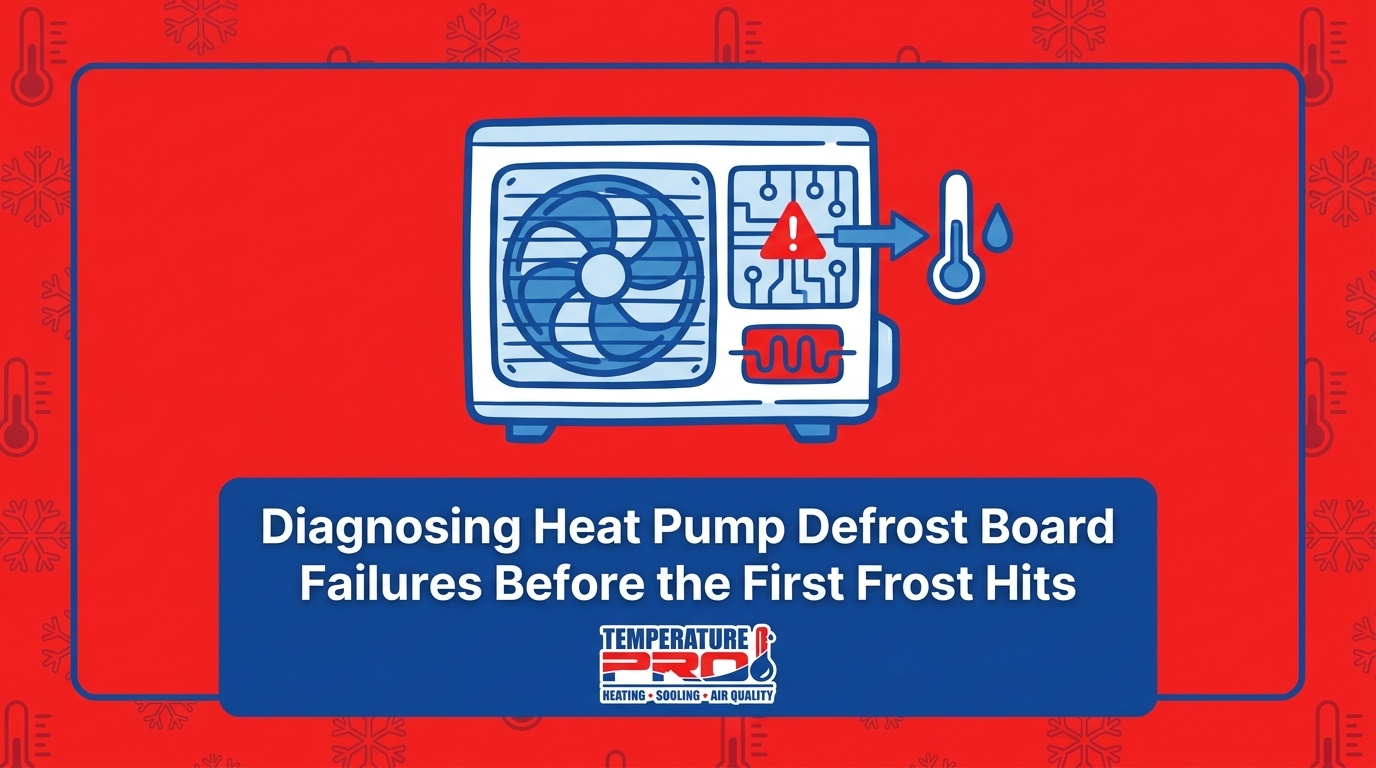
A failing defrost control board won't show symptoms in mild autumn weather, but it can turn your outdoor coil into an ice block this winter. See how our technicians catch silent failures early.
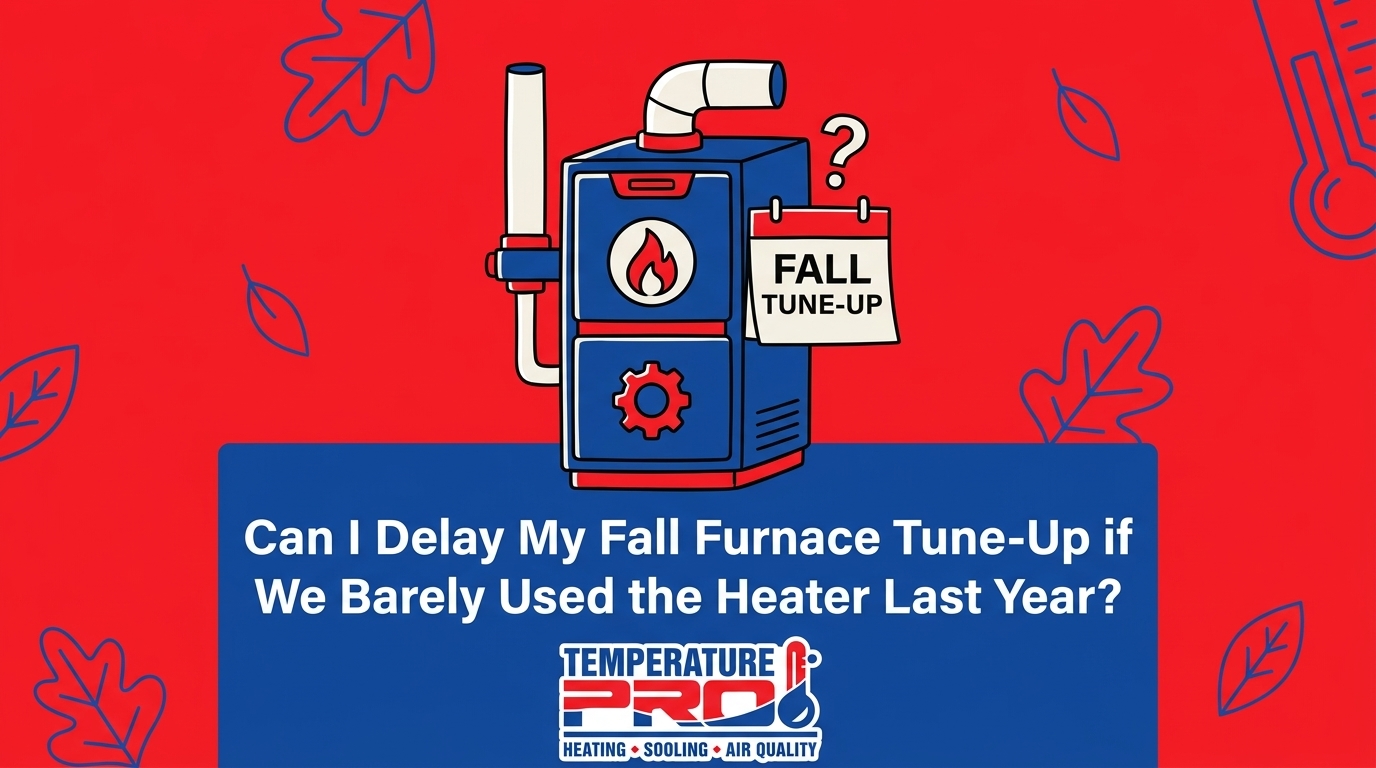
It seems logical to skip pre-season heating maintenance if you barely ran your system during a mild winter. However, long dormant periods in high humidity can damage internal components.
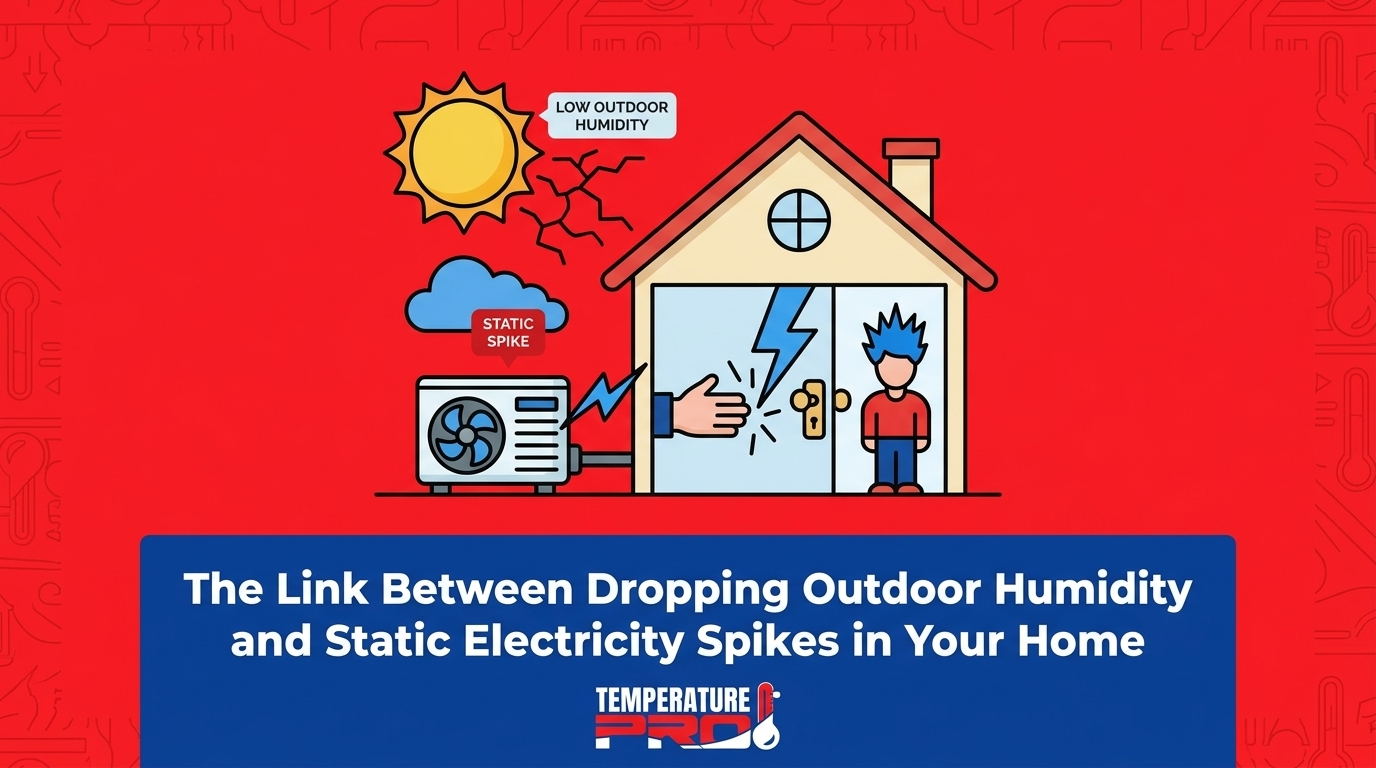
Sudden static shocks are a clear diagnostic sign that your indoor air is too dry. Understand the physics behind this fall shift and why whole-home humidification is the ultimate fix.