The Link Between Dropping Outdoor Humidity and Static Electricity Spikes in Your Home
The Link Between Dropping Outdoor Humidity and Static Electricity Spikes in Your Home
Sudden static shocks are a clear diagnostic sign that your indoor air is too dry. Understand the physics behind this fall shift and why whole-home humidification is the ultimate fix.
When Fall Arrives, Why Does Your Home Suddenly Feel Electrified?
Before the first major cold front pushes through the region, there is one invisible change every homeowner will likely feel firsthand. The link between dropping outdoor humidity and static electricity spikes in your home becomes undeniable the moment you walk across the living room rug, reach for a metal doorknob, and receive a sudden, sharp shock. This jarring experience is more than just a seasonal annoyance; it is a clear, physical diagnostic indicator that your indoor air quality is shifting rapidly. At TemperaturePro Baton Rouge, we frequently hear from customers who are caught off guard by this shift. As the September early fall transition begins to alter the atmosphere outside, your home's interior envelope reacts, stripping moisture from the air and turning your living space into a static electricity generator.
Many homeowners assume these sudden shocks are simply a normal part of the changing seasons, choosing to endure the discomfort or rely on small, temporary fixes. However, recognizing this phenomenon for what it is—a symptom of severely dry air—presents an important decision point. You can either spend the coming months constantly refilling temporary room humidifiers, or you can permanently fix the issue with an integrated system that treats the entire house. Understanding how your indoor climate interacts with your broader HVAC services is the first step toward lasting comfort. By addressing the root cause of these static shocks, you can explore whole-home humidification and indoor air quality solutions that maintain a perfectly balanced environment year-round.
The Physics of Static Electricity: What Happens When the Air Dries Out
To understand why your home suddenly feels like a science experiment, it helps to look at the basic physics of atmospheric moisture and electrostatic buildup. Moisture in the air acts as a natural conductor. In a well-humidified environment, a thin, invisible layer of water molecules coats almost every surface in your home. When friction occurs—such as your shoes rubbing against a carpet or layers of clothing shifting—static electrical charges are generated. However, because water is an excellent conductor of electricity, that ambient moisture allows those charges to dissipate harmlessly and instantly into the atmosphere.
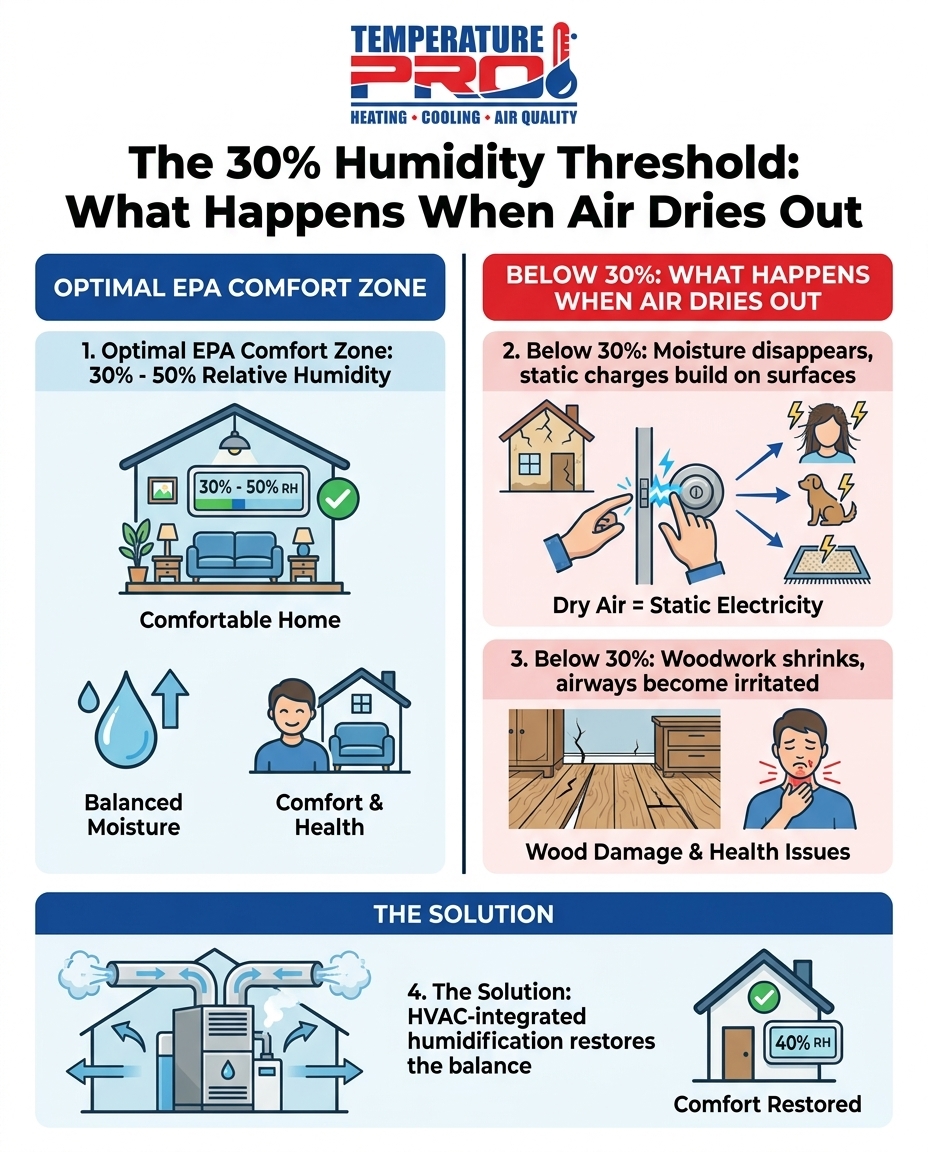
When that moisture is removed from the air, the natural grounding system disappears. Without water vapor to carry the charges away, static electricity builds up on surfaces, clothing, and your own body. The charge remains trapped, accumulating more energy with every movement, until it finally finds a conductive path to ground out—which is exactly what happens when your hand touches a metal light switch or another person. The Environmental Protection Agency (EPA) recommends maintaining indoor relative humidity between 30% and 50% for optimal health and comfort, primarily because this range provides enough moisture to facilitate this natural dissipation process.
The Role of Airborne Moisture as a Conductor
The invisible dissipation process: In a balanced indoor climate, the dissipation of static charges happens constantly and invisibly. Every time you move, you generate a tiny electrical charge, but the microscopic water droplets suspended in the air absorb and neutralize it before you ever feel a shock. This continuous grounding effect is entirely dependent on the volume of water vapor present in your home's atmosphere. When the air dries out, the resistance of the air increases, turning your body into a highly efficient capacitor that stores electrical energy.
Crossing the 30% Threshold
The tipping point for static: The specific measurement of 30% relative humidity serves as an invisible boundary between a comfortable home and a highly charged environment. Once you experience your indoor relative humidity dropping below 30%, you cross a critical threshold. At this level, there is simply not enough water vapor left in the air to coat surfaces or conduct electricity. Noticeable static shocks are a direct, mathematical indicator that your home's humidity has fallen out of the optimal zone. It is a measurable physics problem that requires a mechanical solution to restore the balance.
The 30% Humidity Threshold: What Happens When Air Dries Out
Why the Early Fall Transition Triggers Sudden Shocks
The onset of static electricity is rarely a slow, gradual process in the Gulf South. In our experience serving this community, our team knows firsthand that Baton Rouge experiences drastic shifts from highly humid subtropical summers—where outdoor humidity frequently exceeds 90%—to much drier fall weather patterns. During the summer months, your air conditioning system works tirelessly to remove excess moisture from the air, but the sheer volume of ambient humidity keeps the indoor environment from ever drying out completely. The house remains naturally grounded against static buildup.
However, the September early fall transition brings the sudden onset of dry fronts. As cooler, drier air pushes into the region, the outdoor humidity plummets rapidly. Your home's envelope, which has been saturated with moisture for months, suddenly begins to surrender that moisture to the drier air outside through natural equalization. This drastic weather shift changes the indoor environment almost overnight. Unlike northern climates, where the transition to dry winter air happens slowly over several months, the sudden drop in ambient moisture in Louisiana makes the onset of static deeply jarring for homeowners.
The immediate effects of the transition:
• Rapid moisture loss: Dry outdoor air infiltrates the home, absorbing and carrying away indoor humidity.
• Sudden surface drying: Carpets, upholstery, and clothing lose their invisible moisture layer in a matter of days.
• Increased charge accumulation: With the natural grounding system gone, daily movements immediately begin generating stored static charges.
The Furnace Factor: How Central Heating Compounds Indoor Dryness
While the changing outdoor weather initiates the drop in humidity, your residential HVAC system actively worsens the problem as the season progresses. The mechanical reality of turning on a heating system for the first time in the fall is that it fundamentally alters the physics of your indoor air. Understanding the difference between absolute humidity (the actual amount of water in the air) and relative humidity (how much water the air can hold at a given temperature) is key to understanding this phenomenon.
As cold air is drawn into your home, it already contains very little actual moisture. When your furnace or heat pump heats that air, the air expands, significantly increasing its capacity to hold water. Because no new water is being added to the system, the relative humidity plummets even further. The heating process effectively bakes the remaining moisture out of your living space. The furnace itself isn't creating the static electricity, but it is manufacturing the ultra-dry environment that allows static to thrive.
During our pre-heating-season tune-ups, we consistently remind homeowners that this mechanical process is why you might notice the static shocks become much more severe immediately after the heating system kicks on. The continuous cycling of warm, dry air accelerates the evaporation of moisture from every surface in the house, virtually guaranteeing your indoor relative humidity dropping below 30% during extended heating cycles. Connecting the operation of your heating system directly to this sudden drop in moisture levels highlights why a heating-only approach to fall and winter comfort is incomplete.
Beyond the Zap: Static as an Early Warning System
It is tempting to view a static shock as nothing more than a minor, fleeting annoyance. However, these tiny jolts of electricity should be treated as the most obvious symptom of a much larger, invisible problem. Static electricity is an early warning system indicating that your home's indoor air quality (IAQ) is degrading. When the air is dry enough to turn your doorknobs into shock hazards, it is also dry enough to cause a host of secondary issues that affect both your family's health and the structural integrity of your home.
By the time you feel a static shock, the air has already been stripped of the moisture necessary to support a healthy respiratory system and protect porous materials. Recognizing these secondary symptoms is crucial for maintaining a healthy home environment. Implementing comprehensive humidity control tips for Gulf Coast homes is about much more than just stopping the sparks; it is about stabilizing the entire indoor ecosystem before the peak heating season arrives.
Impacts on Health and Comfort
Respiratory and physical health: When indoor relative humidity dropping below 30% becomes the norm, the human body reacts immediately. The mucous membranes in your nose and throat require moisture to function as a natural defense against airborne irritants, dust, and viruses. Ultra-dry air dehydrates these tissues, leading to irritated airways, chronic coughing, and worsened allergy symptoms. Additionally, dry air pulls moisture directly from your skin, resulting in persistent itchiness, chapped lips, and flaking that lotion alone cannot fully resolve.
Protecting Your Home's Interior
Structural and aesthetic damage: Extended periods of severely low humidity can cause significant physical damage to the porous materials that make up your home's interior. Wood is highly responsive to ambient moisture. When the air dries out, woodwork begins to shrink. This can lead to cracking paint, separating crown molding, gaps in expensive hardwood floors, and even damage to wooden musical instruments and antique furniture. Stabilizing your humidity levels protects these long-term investments from the cyclical stress of expanding and contracting.
Evaluating Your Options: Portable vs. HVAC-Integrated Solutions
When the static shocks begin during the September early fall transition, many homeowners instinctively reach for single-room portable humidifiers. While these units can provide localized relief, they come with significant limitations that make them a poor long-term solution for whole-home comfort. Portable humidifiers require daily refilling, frequent cleaning to prevent mold growth, and they only treat the specific room where they are placed. Moving from a humidified bedroom into a dry hallway means you are still subjected to static shocks and dry air discomfort throughout most of the house.
In contrast, a whole-home humidifier is integrated directly into your existing HVAC ductwork. This system works in tandem with your central air and heating, automatically adding precise amounts of water vapor to the conditioned air before it is distributed throughout the house. An integrated system treats the entire home evenly, permanently solving the static issue across all rooms without the heavy daily maintenance burden of portable units.
• Coverage Area — Portable Humidifiers: Limited to a single room or small area. — HVAC-Integrated Systems: Treats the entire home evenly through ductwork.
• Maintenance Burden — Portable Humidifiers: Requires daily refilling and weekly deep cleaning. — HVAC-Integrated Systems: Low maintenance; annual pad replacement during HVAC tune-ups.
• Aesthetic Impact — Portable Humidifiers: Takes up floor space and requires visible electrical cords. — HVAC-Integrated Systems: Completely hidden out of sight near the indoor air handler.
Precision Calibration: Why Professional Integration Matters
While the benefits of an integrated system are clear, achieving perfectly balanced indoor air requires exact mechanical precision. Installing a whole-home humidification system is not a simple weekend project; it requires tapping directly into the home's plumbing supply lines and integrating with the complex electrical control board of the HVAC system. If a system is not perfectly calibrated, you risk the danger of over-humidification. Adding too much moisture during transitional climates can lead to condensation inside the ductwork, which creates a breeding ground for mold and mildew.
Proper integration ensures that moisture is added efficiently and safely, maintaining the delicate balance required to stop static electricity without causing structural moisture issues. This is where veteran-owned local expertise becomes invaluable. At TemperaturePro Baton Rouge, our technicians understand the unique, volatile weather transitions of Louisiana and can ensure your whole-home system is properly integrated and calibrated for the specific demands of the Gulf Coast climate. To keep this system running efficiently year-round and to prevent the indoor relative humidity dropping below 30% during the coldest months, ongoing professional oversight is essential. Incorporating this system into a routine HVAC maintenance plan guarantees that the water panel is replaced, the sensors are calibrated, and the plumbing connections remain secure before every heating season.
Take Control of Your Home's Comfort Before Winter Arrives
Static electricity is a highly solvable diagnostic symptom, not something you have to live with as the weather changes. If the September early fall transition has already turned your home into a static minefield, it is time to look beyond temporary fixes and address the root cause of your dry air. You deserve a living space that supports your health, protects your home's interior, and allows you to walk across the carpet without fear of a shock.
The link between dropping outdoor humidity and static electricity spikes in your home is a clear signal that your indoor climate needs professional attention. Explore permanent solutions that satisfy the need for a low-maintenance, comfortable home, and consider reaching out to indoor air quality experts to evaluate your whole-home humidification options before the peak winter heating season begins.
Frequently Asked Questions
What humidity level stops static electricity? Maintaining an indoor relative humidity level between 30% and 50% is generally required to stop static electricity. At these levels, there is enough water vapor in the air to act as a natural conductor, allowing static charges to dissipate harmlessly before they can build up on surfaces. Once the humidity drops below 30%, the air becomes too dry to carry the charges away, resulting in noticeable shocks.
Why is my house suddenly so static in the fall? Your house becomes static in the fall because cooler outdoor air holds significantly less moisture than warm summer air, causing your home's indoor humidity to drop rapidly. As dry autumn fronts push into the region, they strip the ambient moisture from your home's envelope. Without that moisture to ground electrical charges, everyday friction from walking or moving generates static buildup that has nowhere to go until it shocks you.
Does a humidifier actually help with static shocks? Yes, a humidifier directly eliminates the root cause of static shocks by reintroducing necessary moisture into the air. By elevating the indoor relative humidity back into the optimal 30% to 50% range, the added water vapor coats surfaces microscopically, providing a conductive path for static charges to neutralize naturally. For the best results, a whole-home humidifier ensures this protection extends to every room.
How do you get rid of static electricity in a dry house? The most effective way to permanently get rid of static electricity in a dry house is to install an HVAC-integrated whole-home humidifier. While temporary measures like portable room humidifiers, anti-static sprays, or wearing natural fibers can offer minor, localized relief, they do not solve the underlying physics problem. Only by mechanically raising the overall indoor humidity can you stop the charges from accumulating.
Can turning on the heater cause static electricity? Turning on the heater does not create static electricity directly, but it does create the ultra-dry environment that allows static to thrive. When central heating systems draw in cool air and warm it up, the air expands, which drastically lowers its relative humidity. This process bakes the remaining moisture out of your living space, making static shocks much more frequent and severe during heating cycles.
Are portable humidifiers enough to stop static in a large home? Portable humidifiers are rarely enough to stop static across a large home because they only output moisture into the immediate area where they are located. If you have a portable unit in the bedroom, you will likely still experience severe static shocks in the living room, hallways, and kitchen. To effectively neutralize static throughout a large floor plan, an integrated system connected to the central ductwork is required.
Thank you! Your submission has been received!
Oops! Something went wrong while submitting the form.
Flipped homes look great but often hide starved HVAC returns behind new drywall. Discover how objective static pressure testing reveals these hidden bottlenecks before winter heating season begins.
Tired of massive energy spikes during sudden winter freezes? See how modern inverter-driven heat pumps maintain efficiency without relying on energy-hogging resistive strips.
Lower autumn sun angles can directly hit your thermostat, causing false high readings that force your AC to run non-stop. See whether relocating the device or adding remote sensors is the best fix.