Hard Start Kits vs. Soft Starters: Extending the Life of Your Aging AC Compressor
Hard Start Kits vs. Soft Starters: Extending the Life of Your Aging AC Compressor
When your older AC struggles against the late-summer heat, an electrical assist can prevent a total breakdown. Find out which device your compressor actually needs to survive.
When Your Compressor Struggles Against the Late-Summer Heat
You hear that loud, struggling buzz from the side of your house, and for a split second, the living room lights flicker. If you are researching hard start kits vs. soft starters: extending the life of your aging AC compressor usually becomes a priority the moment these warning signs appear. Your air conditioner has been running constantly since May, and by the time the August late-summer cooling season arrives, the mechanical and electrical fatigue on the outdoor unit is massive.
For homeowners needing professional HVAC services, getting the right diagnosis is the first step toward restoring reliable comfort.
Baton Rouge's relentless high humidity and intense heat force your cooling equipment into continuous operation. Every time the thermostat calls for cooling, the compressor motor has to overcome incredibly high internal pressures to start spinning. Over the years, this daily grind wears down the internal bearings and electrical windings. Eventually, the motor needs extra help to get moving. This is where an electrical assist comes into play.
However, choosing the right assist is not a guessing game. The decision depends entirely on the exact age, condition, and mechanical health of your system. Applying the wrong device can cause more harm than good, accelerating the exact breakdown you are trying to prevent.
The Hidden Cost of Constant Cycling
Your air conditioner does not run at a single, steady speed all day. It cycles on and off to maintain the temperature you set on the thermostat. During a typical Baton Rouge summer, a system might cycle on dozens of times a day. Each of these startup events requires a massive surge of electricity.
When a compressor is brand new, it handles this surge easily. The internal parts are well-lubricated, the electrical components are fresh, and the motor spins up instantly. But as the system ages into its second decade, that same startup sequence becomes a violent, stressful event. Understanding how to manage that stress is the key to keeping your home comfortable without destroying your equipment.
The Heavy Toll of Inrush Current on Aging Equipment
To understand why your lights dim when the AC kicks on, you have to understand starting current. When an electric motor rests, it takes a tremendous amount of energy to break inertia and start turning. For a brief fraction of a second, your compressor demands five to seven times its normal running power.
This massive power draw causes a locked rotor amps (LRA) spike. The system pulls so much electricity from your electrical panel that other appliances temporarily lose voltage—hence the flickering lights.
One local homeowner called us four days after Hurricane Ida when their older unit finally gave out under the strain of continuous operation. A technician arrived just three hours after the call, diagnosed a massive electrical failure caused by severe startup stress, and replaced the necessary components to get the house cooling again. Situations like this highlight how quickly startup fatigue can cripple air conditioning systems if left unaddressed.
The Anatomy of a Startup Surge
Every time your aging compressor tries to start, a specific sequence of stressful events occurs:
1. The initial demand: The thermostat sends a low-voltage signal to the outdoor unit, closing the electrical contactor.
2. The power gulp: The compressor motor attempts to turn, pulling the massive LRA spike from your home's electrical grid.
3. The mechanical struggle: Worn bearings and high refrigerant pressures resist the motor's movement, prolonging the electrical surge.
4. The heat generation: Because the motor struggles to turn, the electrical windings rapidly heat up, degrading their protective insulation over time.
This daily mechanical stress is the primary reason homeowners seek out start assist devices. The goal is to modify this startup sequence before the excess heat and friction cause a total system failure.
What is a Hard Start Kit? The Aggressive Jolt
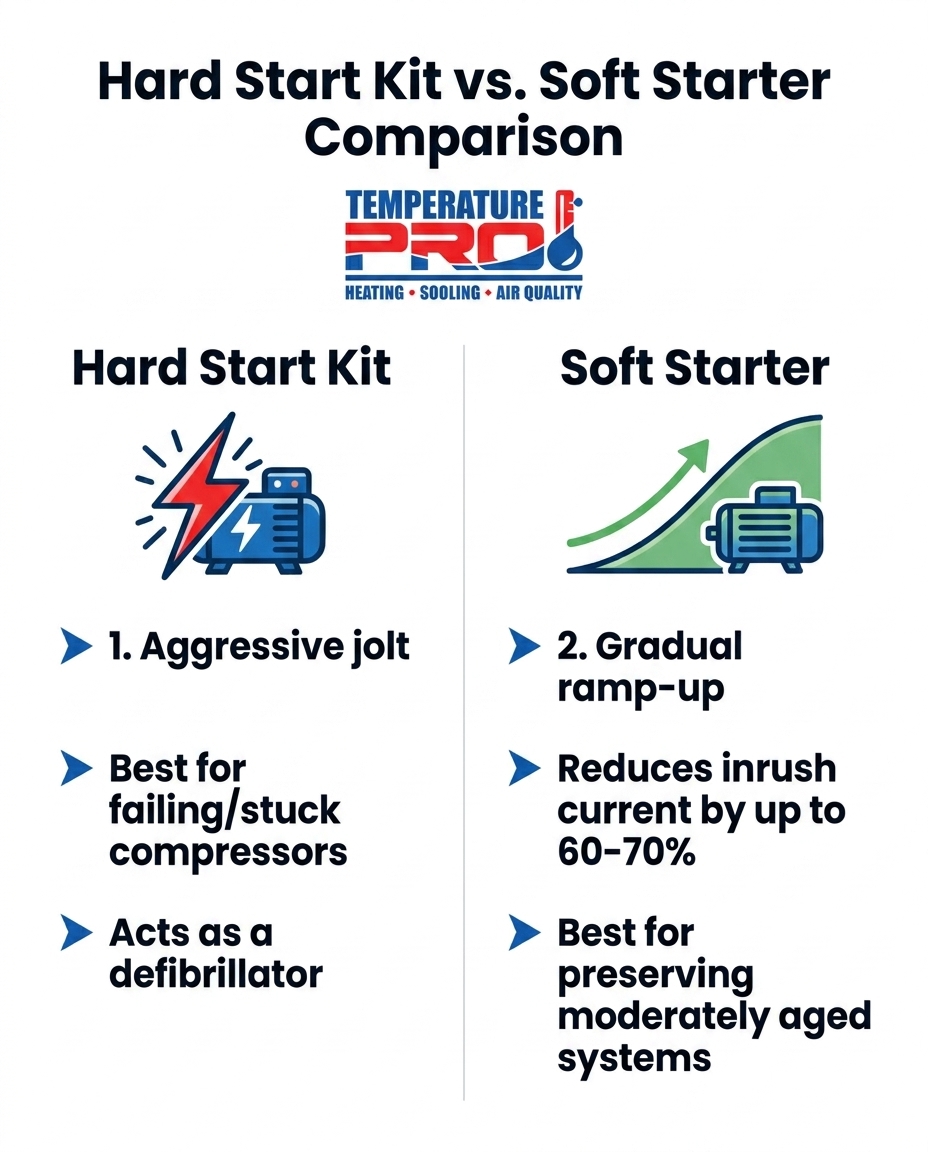
A hard start kit acts like a defibrillator for a dying or mechanically stuck compressor. It is a combination of a start capacitor and a potential relay, designed to store a concentrated charge of electricity and release it all at once.
When the compressor tries to start, the hard start kit delivers a fast, aggressive jolt of power. This massive kick forces the motor to turn, overcoming tight bearings or unequal refrigerant pressures.
Signs your system might require a hard start kit:
• The motor is completely locked: The compressor hums loudly but refuses to spin at all.
• Extreme age: The system is well past its expected lifespan and simply lacks the torque to start normally.
• Frequent breaker trips: The motor struggles for so long during startup that it trips the electrical panel's safety breaker.
The Dangers of Misapplication
While a hard start kit can force a dying unit to run for another season, it is strictly a last-resort measure. You are essentially shocking an old motor with maximum voltage.
If you apply this aggressive jolt to a system that does not actually need it, the results are damaging. The sudden, violent torque can snap internal components, overheat the motor windings, and accelerate the compressor's death. It is a heavy-handed tool meant only for specific, severe mechanical failures.
What is a Soft Starter? The Gradual Ramp-Up
If a hard start kit is a defibrillator, a soft starter is a physical therapy program. A soft starter is designed to protect and preserve moderately aged systems rather than shock them into submission.
Instead of delivering a single, violent jolt of electricity, a soft starter uses intelligent circuitry to manage the power draw. It reduces the inrush current by up to 60 to 70 percent, ramping up the power gradually over a fraction of a second. This smooth acceleration allows the motor to start gently, eliminating the violent mechanical torque and the massive electrical spike.
The Preservation Approach
Using a gradual ramp-up provides several distinct advantages for systems that are aging but not yet failing:
• Eliminates light dimming: By lowering the LRA spike, the device stops the AC from draining voltage from the rest of the house.
• Reduces mechanical wear: The motor bearings and internal scrolls experience significantly less friction and physical stress during startup.
• Lowers operating temperatures: A smoother start generates less heat in the electrical windings, preserving the motor's internal insulation.
The Backup Generator Advantage
Soft starters offer a massive secondary benefit for homeowners who rely on backup power during storm season. Portable and standby generators often struggle to handle the massive inrush current of a standard AC startup. Because a soft starter reduces that initial power demand by up to 70 percent, it allows a moderately sized generator to successfully start and run your central air conditioner without overloading the generator's alternator.
Side-by-Side Comparison: Which Assist Does Your System Need?
Understanding the fundamental differences between these two devices is the best way to make an informed decision about your equipment. They are not interchangeable solutions. Using the wrong one will either fail to solve your problem or actively damage your unit.
• Primary Mechanism — Hard Start Kit: Aggressive electrical jolt (Defibrillator) — Soft Starter: Gradual power ramp-up (Smooth acceleration)
• Best Suited For — Hard Start Kit: Failing, stuck, or very old compressors — Soft Starter: Moderately aged systems needing preservation
• Impact on Inrush Current — Hard Start Kit: Slightly reduces duration, but maintains a massive power spike — Soft Starter: Reduces peak power draw by 60% to 70%
• Impact on Mechanical Stress — Hard Start Kit: Increases immediate physical torque on the motor — Soft Starter: Significantly lowers physical torque and wear
• Generator Compatibility — Hard Start Kit: Poor (Still requires massive starting watts) — Soft Starter: Excellent (Allows smaller generators to start the AC)
Hard Start Kit vs. Soft Starter Comparison
Reading the Warning Signs Correctly
Homeowners often misinterpret the symptoms of a struggling AC. A loud buzz followed by a tripped breaker might seem like a job for a hard start kit, but it could actually be a failing dual-run capacitor. Throwing an aggressive electrical assist at a simple capacitor problem wastes money and adds unnecessary stress to the motor. Proper identification of the symptom is the only way to choose the correct solution.
Why Accurate Diagnosis Matters More Than a Quick Fix
The internet is full of generic DIY advice suggesting that you can simply wire a cheap start assist into your unit to solve all your cooling problems. Treating these complex electrical components as simple band-aids is incredibly risky.
Working with a veteran-owned company means you're getting the same level of discipline and accountability that military service demands. We focus on honest, no-nonsense diagnostics rather than trying to upsell a quick fix that will not actually solve the root problem. A thorough professional diagnostic determines if a start assist will actually extend the unit's life, or if the compressor is already too damaged to save.
Another customer reached out during a stretch of unseasonably warm weather because their unit was running constantly but not cooling properly. Instead of just slapping a hard start kit on the side of the machine, we serviced the AC unit promptly, found the actual root cause of the poor performance, and restored the cooling efficiently. Honest recommendations protect your long-term investment.
When Replacement Makes More Sense
There comes a point where repeatedly shocking a failing compressor is simply throwing good money after bad. If your system requires an aggressive jolt just to turn on, and it still struggles to keep the house comfortable, you are likely facing an impending failure.
A professional diagnostic will evaluate:
• Motor winding resistance: Checking if the internal electrical insulation is already burnt out.
• Refrigerant pressures: Ensuring the compressor is actually pumping refrigerant, not just spinning uselessly.
• Overall system efficiency: Determining if the cost of running the old unit is higher than financing a new one.
If the diagnostic reveals severe internal damage, you will be much better off researching your options for choosing an AC for Louisiana heat and humidity rather than forcing a dying motor to run for one more month.
Protecting Your Compressor Through the End of the Season
As the late summer drags on, proactive maintenance becomes your best defense against unexpected breakdowns. You do not want to wait until the compressor completely locks up in mid-August to find out you have an electrical issue.
Routine electrical inspections can identify the need for a soft starter long before mechanical fatigue sets in permanently. By having a technician evaluate the system while it is still functioning normally, you can implement preservation strategies that add years to the equipment's lifespan.
End of Season Checks
Before the cooling season wraps up, a comprehensive inspection should include several targeted checks:
• Testing capacitors: Ensuring the existing run capacitors are delivering the correct microfarad readings to support the motor.
• Inspecting contactors: Checking for pitted or burnt electrical contacts that can restrict voltage flow.
• Measuring amp draw: Recording the exact locked rotor amps during startup to establish a baseline for motor health.
• Verifying refrigerant levels: Ensuring the system is not overcharged, which creates excessive head pressure that the compressor has to fight against.
Securing your comfort in Baton Rouge means staying ahead of the wear and tear. Enrolling in an AC maintenance plan ensures that these critical electrical components are tested regularly, keeping your compressor running smoothly through the hottest days of the year.
Frequently Asked Questions
What is the difference between a hard start kit and a soft starter? A hard start kit delivers a sudden, aggressive jolt of electricity to force a stuck motor to turn, acting like a defibrillator. A soft starter gradually ramps up the power to the motor, reducing the initial electrical surge and minimizing mechanical stress. Hard starts are for failing systems, while soft starters are for preserving healthy, aging systems.
Do I need a hard start kit for my older AC? You only need a hard start kit if your compressor is mechanically stuck or struggling significantly to overcome internal pressures during startup. If your system is old but still starts reliably, applying a hard start kit can actually cause unnecessary damage. A professional electrical diagnostic is required to determine if your specific motor needs this aggressive intervention.
Will a soft starter extend the life of my AC? Yes, a soft starter can significantly extend the life of a moderately aged air conditioner. By reducing the inrush current by up to 70 percent, it drastically lowers the daily mechanical friction and electrical heat generated during startup. This preservation approach keeps the motor bearings and windings in better condition over time.
Can you use a hard start kit and a soft starter together? No, you should never install both devices on the same air conditioning compressor. Their mechanisms of action directly conflict with one another; one tries to dump maximum voltage instantly, while the other tries to restrict and smooth the voltage. Using both will confuse the electrical controls and likely damage the compressor motor.
Why do my lights dim when the AC turns on? Your lights dim because the AC compressor requires a massive surge of electricity—often five to seven times its normal running power—just to break inertia and start spinning. This surge temporarily pulls voltage away from the rest of your home's electrical panel. Installing a soft starter is the most effective way to eliminate this irritating symptom.
Can a hard start kit damage my air conditioning compressor? Yes, if applied incorrectly, a hard start kit can absolutely damage your compressor. Delivering a violent torque and maximum voltage spike to a motor that doesn't require it can overheat the internal electrical windings and snap mechanical components. It should only be used as a targeted solution for a failing unit, never as a preventative measure.
Ready to protect your system? If your outdoor unit is buzzing loudly or dimming the lights, do not wait for a total breakdown. Schedule a professional diagnostic today to find out exactly what your compressor needs to survive the rest of the season efficiently.
Thank you! Your submission has been received!
Oops! Something went wrong while submitting the form.
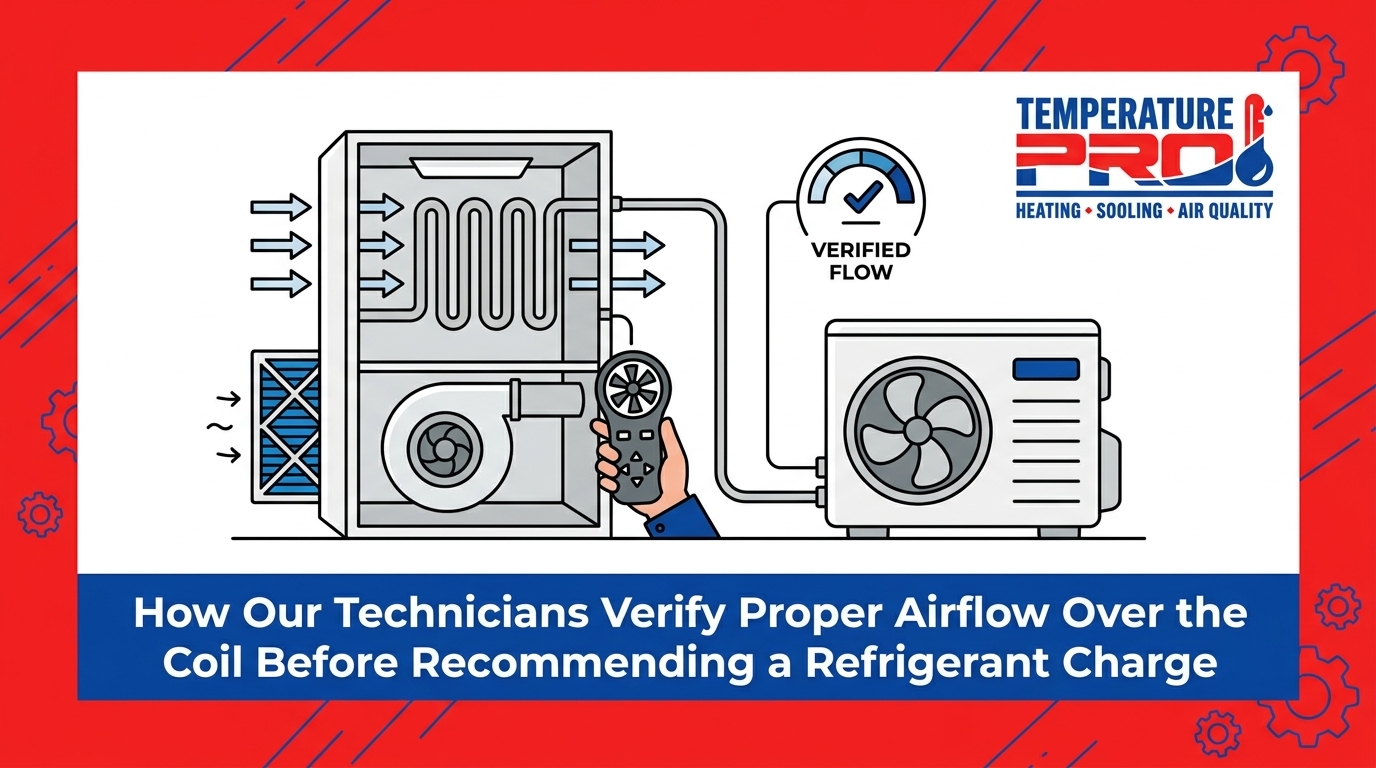
Before assuming your warm AC needs a refrigerant recharge, our technicians investigate the blower motor and ductwork. Measuring CFM airflow prevents costly misdiagnoses.
When your AC struggles in the late-summer heat, spraying it with a garden hose seems like a logical quick fix. Find out why this actually bakes mud and minerals onto your coils.
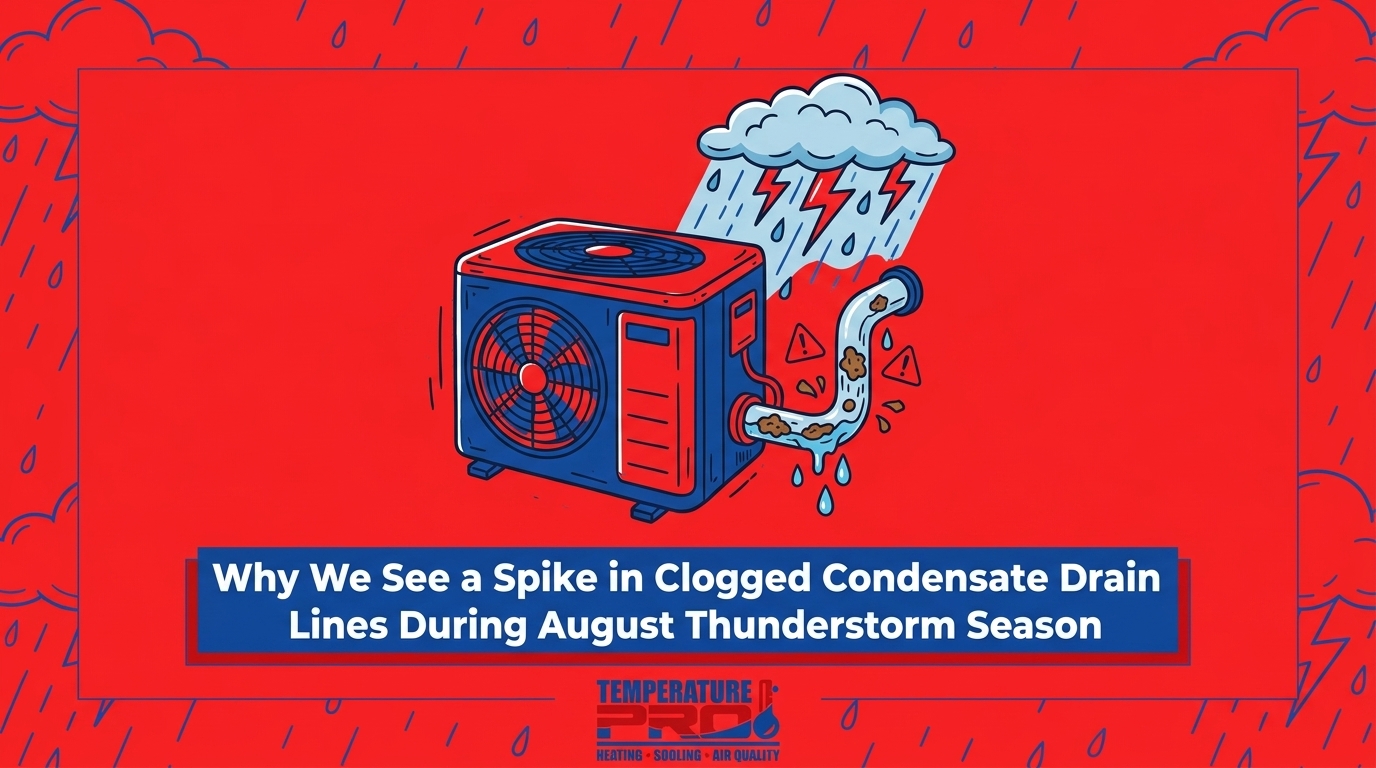
Peak late-summer humidity forces your AC to work overtime, triggering rapid algae blooms in the drip pan. Recognizing a sluggish condensate line early prevents unexpected overflows that ruin your ceiling.