Does Closing Curtains Actually Reduce My Cooling Bill in South Louisiana?
Does Closing Curtains Actually Reduce My Cooling Bill in South Louisiana?
When late-summer heat hits, your AC works overtime to keep up. We break down the science of solar heat gain so you can decide if blackout curtains are worth it.
Can Window Treatments Really Combat South Louisiana's Brutal Summer Temperatures?
Is your air conditioner running nonstop, yet your living room still feels like an oven by late afternoon? You are not alone. When the brutal August late-summer heat settles over the region, homeowners desperately look for ways to cool their spaces and lower their utility bills. A common question we hear is: Does closing curtains actually reduce my cooling bill in South Louisiana? Many people wonder if pulling the drapes merely darkens the room or if it legitimately blocks heat from entering the home.
The short answer is a definitive yes. Proper window treatments do much more than just block glaring light; they act as a vital shield against solar radiation. When you stop the sun's rays from baking your floors and furniture, you significantly reduce the strain on your cooling equipment. The combination of high ambient temperatures and intense, direct sunlight creates a unique cooling challenge in our climate. By managing how much of that solar energy enters your home, you give your HVAC system a fighting chance during peak season heat.
If you need help keeping your home comfortable, we install and service top-tier air conditioning systems designed for our climate, and we offer a comprehensive routine AC maintenance plan to keep them running efficiently.
Understanding the Science: What Is Solar Heat Gain Coefficient (SHGC)?
To understand why closing your curtains works, we have to look past generic advice and dive into the physics of how heat actually enters your home. Heat transfers in three main ways: conduction (through solid materials), convection (through the air), and radiation (through electromagnetic waves). When we talk about sunlight beaming through glass, we are dealing primarily with radiant heat. This is measured by a metric called the solar heat gain coefficient (SHGC).
The solar heat gain coefficient (SHGC) is a number that indicates the fraction of solar radiation admitted through a window, door, or skylight. This radiation is either transmitted directly into your home or absorbed by the glass and then reradiated inward. Here is exactly how that process unfolds:
1. Solar radiation strikes the glass: Sunlight hits your window carrying massive amounts of thermal energy.
2. Direct transmission occurs: A large percentage of that energy passes straight through clear glass, instantly heating whatever it touches inside—like your sofa, rugs, or hardwood floors.
3. Absorption and reradiation follow: The window glass itself absorbs some of the heat. As the glass gets hot, it acts like a radiator, pushing that warmth directly into your indoor air.
4. The greenhouse effect traps the heat: Once that radiant heat enters your home, it changes wavelength. Your windows, which easily let the short-wave solar radiation in, block the long-wave heat from escaping. Your home effectively becomes a greenhouse.
How Thermal Load Impacts Your AC
Thermal load is the total amount of heat your air conditioner must remove from your home to maintain the temperature set on your thermostat. Your house is a thermal envelope, and windows are notoriously one of the weakest points in that envelope. Even high-quality, double-paned windows allow far more heat transfer than an insulated wall.
When you lower the solar heat gain coefficient (SHGC) by deploying the right window treatments, you directly lower the thermal load. By stopping the heat before it fully penetrates the room, your air conditioner has less total heat to remove. This means shorter cooling cycles, less mechanical wear and tear, and ultimately, a lower energy footprint.
The Afternoon Threat: Why West-Facing Windows Demand Blackout Curtains
Not all windows are created equal when it comes to solar heat gain. While east-facing windows catch the morning sun when outside temperatures are still relatively mild, west-facing windows take a direct hit during the absolute hottest part of the day. In South Louisiana, the intense afternoon sun creates a massive thermal burden on your home.
During the late afternoon, the sun drops lower in the western sky. Because of this shallow angle, roof overhangs and porch awnings can no longer block the rays. The sunlight blasts directly through the glass, driving up indoor temperatures rapidly. This localized heat spike forces your thermostat to register a sudden temperature increase, commanding your AC to kick into high gear right when the outside condenser is already struggling against peak outdoor heat.
One Baton Rouge homeowner called us on a scorching Friday afternoon when their upstairs AC simply could not keep up with the intense solar heat load. They had guests arriving for the weekend, and the second floor felt like a sauna. By the time our technicians arrived for the emergency repair, the afternoon sun was blazing through their uncovered west-facing windows. We provided prompt emergency service and got the upstairs cooled in time for their arriving guests, but the experience highlighted how rapidly late-day sun can overwhelm even a functioning system. Blackout curtains specifically target and neutralize this afternoon vulnerability by reflecting that localized, intense heat back out before it can bake the room.
Blackout Curtains vs. Blinds vs. Sheer Drapes: What Actually Works?
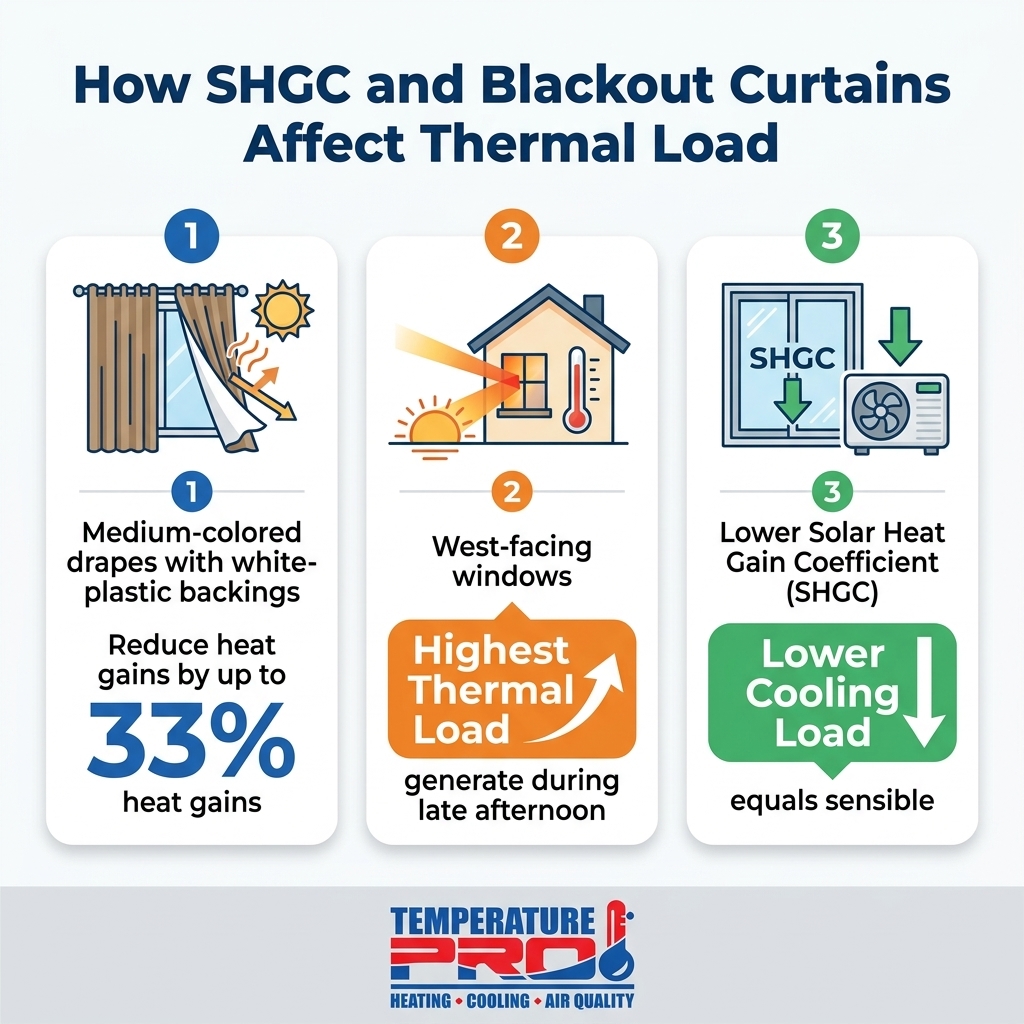
Knowing that you need to cover your windows is only half the battle. The type of window covering you choose drastically affects your home's solar heat gain coefficient (SHGC). Many homeowners mistakenly believe that any barrier will do the job, but the data tells a different story. According to the Department of Energy, medium-colored drapes with white-plastic backings can reduce heat gains by up to 33%.
Sheer drapes, for instance, diffuse light to reduce glare, but they do almost nothing to stop radiant heat. Traditional slatted blinds are slightly better, but they still allow significant heat to seep through the gaps between the slats and around the edges. Furthermore, if the blinds are made of dark materials, they simply absorb the heat and radiate it into the room.
The most effective indoor solution is a heavy, tightly woven blackout curtain with a white or reflective backing. The reflective backing is crucial—it bounces the solar radiation back through the glass before it can be absorbed by the room's interior.
• Plastic-Backed Blackout Curtains — Heat Reduction Effectiveness: High (Up to 33% reduction) — How It Performs Under Direct Sun: Reflective backing bounces solar radiation outward; heavy fabric stops heat transfer.
• Traditional Slatted Blinds — Heat Reduction Effectiveness: Moderate — How It Performs Under Direct Sun: Blocks direct light, but radiant heat easily seeps through gaps and warms the surrounding air.
• Cellular Shades (Honeycomb) — Heat Reduction Effectiveness: High — How It Performs Under Direct Sun: Traps air in distinct pockets, creating a strong insulating barrier against hot glass.
• Sheer Drapes / Light Curtains — Heat Reduction Effectiveness: Low — How It Performs Under Direct Sun: Reduces visual glare but allows almost all solar radiation to pass through and heat the room.
When you pair medium-colored, plastic-backed curtains with a snug fit against the window frame (often using a cornice or valance at the top to stop hot air from rising behind the fabric), you create an incredibly effective barrier against the summer heat.
How SHGC and Blackout Curtains Affect Thermal Load
How Blocking the Sun Helps Your AC Focus on Dehumidification
An air conditioner actually performs two distinct jobs to keep you comfortable: it lowers the air temperature (sensible cooling), and it removes moisture from the air (latent cooling). In the extreme subtropical humidity of South Louisiana, dehumidification is just as critical to your comfort as temperature control. If your home is 72 degrees but holds 65% humidity, it will feel clammy, sticky, and uncomfortable.
When excessive solar heat pours through your windows, it forces your AC to constantly battle rapid temperature spikes. The system turns on, blasts cold air to combat the sun, and then shuts off as soon as the thermostat is satisfied. This results in short, erratic cooling cycles. The problem with short cycles is that the evaporator coil never gets cold enough, for long enough, to extract thick humidity out of the indoor air.
By reducing solar heat gain with proper curtains, the temperature inside your home remains much more stable. This stability allows your air conditioner to run in longer, more balanced cycles. These steady cycles are exactly what the system needs to properly wring moisture out of the air. When your AC doesn't have to panic-cool a sun-baked living room, it can efficiently manage both temperature and humidity. If you still struggle with sticky indoor air even after managing your window treatments, exploring dedicated indoor air quality solutions is the next best step for total home comfort.
When Curtains Aren't Enough: Identifying Real AC Strain
While closing your blackout curtains is a fantastic strategy to reduce thermal load, it is important to recognize the limits of window treatments. Curtains cannot fix a failing cooling system. By the time the August late-summer heat arrives, your air conditioner has been running hard for months. End-of-season fatigue is a very real phenomenon, and parts that were slightly worn in May can completely fail by late August.
A customer in the area reached out to us on their move-in day during the absolute peak of summer. The house was sitting at a sweltering 90 degrees because the AC had completely stopped working under the intense thermal load. We provided service within an hour of their warranty company's referral, repairing the system quickly and ending a miserable two-day stretch of a 90-degree indoor temperature. No amount of window shading could have fixed that mechanical failure.
You need to know when it is time to look past the windows and at the equipment itself. Watch for these clear signs that your system is struggling beyond what curtains can mitigate:
• Short cycling: The AC turns on and off rapidly without ever fully cooling the house.
• Warm air at the vents: The blower is running, but the air coming out feels lukewarm or totally unconditioned.
• Strange noises: Grinding, squealing, or rattling sounds indicate mechanical wear, failing motors, or loose components.
• Unresponsive thermostat: The system runs constantly but never actually reaches the target temperature you set.
• High indoor humidity: The air feels heavy and damp, indicating the evaporator coil isn't getting cold enough to pull moisture out.
If you notice any of these symptoms, do not just close the blinds and hope for the best. It is time to professionally troubleshoot common HVAC issues before a minor strain turns into a major breakdown.
Straight-Shooting Advice on Lowering Your Cooling Costs
As a veteran-owned business, we believe in giving our community straight-shooting, honest advice. We want to help you save money with practical facts rather than pushing unnecessary sales. The truth is, managing your home's solar heat gain coefficient (SHGC) by simply closing the right curtains at the right time is a free, highly effective first step toward energy efficiency.
To maximize your savings, combine smart window treatments with proper thermostat management. Raise your thermostat a few degrees when you are away from the house, and ensure your ceiling fans are turning counterclockwise to create a wind-chill effect. Small, practical steps make a massive difference in your monthly energy consumption.
However, the most efficient system is always a well-maintained one. Even the best blackout curtains in the world cannot compensate for a dirty evaporator coil, a clogged air filter, or low refrigerant levels. If you are looking for more ways to optimize your home's efficiency, check out our guide on reducing cooling costs without sacrificing comfort. Honest, proactive care is always cheaper than reactive emergency repairs.
Frequently Asked Questions About AC Efficiency and Window Coverings
Do blackout curtains actually keep heat out?
Yes, blackout curtains are highly effective at keeping radiant heat out of your home. Curtains with a white or reflective plastic backing bounce solar radiation back through the window before it can heat up your room. By physically blocking the sunlight, they prevent your floors and furniture from absorbing heat and reradiating it into your living space.
How much do curtains reduce cooling costs?
Properly installed window treatments can reduce your home's solar heat gain by up to 33%, which translates directly to lower energy consumption. Because your air conditioner doesn't have to work as hard to remove that excess heat, it runs shorter cycles and draws less electricity. While exact savings vary based on your home's insulation and AC efficiency, the reduction in daily thermal load makes a noticeable impact on your utility bills.
Should I close my curtains during the day in summer?
Yes, closing your curtains during the day is one of the easiest ways to keep your home cool. You should definitely close them before you leave for work, especially on windows that receive direct sunlight. Keeping the house dark during the hottest hours prevents the greenhouse effect from trapping solar radiation inside your home.
Which windows should I cover in the summer to keep the house cool?
You should prioritize covering your west-facing and south-facing windows during the summer months. South-facing windows receive consistent sunlight throughout the middle of the day, while west-facing windows take the brutal, direct hit of the late afternoon sun. Covering these specific windows provides the highest return on investment for reducing indoor temperatures.
Does closing curtains help with South Louisiana humidity?
Closing curtains indirectly helps your air conditioner manage South Louisiana humidity much better. By blocking the intense solar heat, your AC doesn't have to constantly battle rapid temperature spikes. This allows the system to run longer, steadier cycles, which gives the evaporator coil enough time to effectively pull thick moisture out of your indoor air.
Ensure Your System is Ready for the Final Heat Wave
Blackout curtains are a scientifically proven way to reduce the thermal load on your home, combat the August late-summer heat, and lower your energy bills. By blocking direct solar radiation, you give your cooling equipment a much-needed break during the toughest part of the year.
However, even with the best window treatments pulling their weight, your air conditioner still needs to be in top mechanical shape to handle the deep South heat. If your home still feels warm, humid, or uncomfortable despite keeping the curtains drawn, it is time to seek professional support. Don't wait for a total breakdown—ensure your equipment is protected by enrolling in a routine AC maintenance plan today.
Thank you! Your submission has been received!
Oops! Something went wrong while submitting the form.
Prevent sudden heating breakdowns with these home maintenance tips and troubleshooting insights. Get clear answers on why pre-winter HVAC inspections matter.
Most homeowners think a late-week appointment is the most convenient choice for an HVAC tune-up. Discover why our dispatchers highly recommend booking on a Tuesday morning instead.
A furnace shutting down repeatedly during early fall tests is frustrating, but jumping the safety switch is a dangerous mistake. Understand the severe fire hazards of this DIY workaround.