The Impact of Late Summer Grass Clippings on Your Outdoor Condenser Fins
The Impact of Late Summer Grass Clippings on Your Outdoor Condenser Fins
By late August, weekly lawn mowing often leaves outdoor AC units caked in dead grass. This seasonal buildup severely restricts airflow and forces your compressor to overheat.
When Seasonal Yard Work Meets End-of-Summer Heat
As the late August and back-to-school transition shifts into high gear, weekly lawn mowing reaches its peak—but most homeowners overlook the impact of late summer grass clippings on your outdoor condenser fins until their house feels like an oven. In our experience serving Baton Rouge neighborhoods, we see firsthand how incredibly common it is for the lower half of an outdoor unit to become completely caked in dead grass, dirt, and yard debris by the time the hottest weeks of the year arrive. If you want to ensure your home stays cool, having a professional inspect your air conditioning systems can prevent a minor airflow restriction from escalating into a complete mechanical failure.
Many property owners assume that a layer of grass on the outside of the unit is merely a cosmetic landscaping issue. However, recognizing when seasonal grass buildup has crossed from a harmless visual annoyance to a severe mechanical restriction is a critical decision point for any homeowner. The outdoor condenser unit relies entirely on drawing massive volumes of air through its delicate aluminum fins to disperse the heat collected from inside your home.
When those fins are blocked by a thick blanket of organic matter, the system cannot breathe. Ignoring this buildup forces the internal compressor to overheat and pull excess electricity exactly when it needs to perform at its absolute best. By understanding the mechanical reality of this airflow restriction, you can take proactive steps to protect your equipment from unnecessary strain and unexpected end-of-season cooling failures.
The Thermodynamics of Your Outdoor Condenser Unit
The Problem: To understand why yard debris is so destructive, it is necessary to look at how the outdoor unit actually functions. The primary job of the condenser is not to create cold air, but rather to disperse the heat that the indoor evaporator coil has absorbed from your living spaces. It does this by pumping hot, high-pressure refrigerant gas into the outdoor coil.
The Cause: The outdoor coil is wrapped in hundreds of paper-thin aluminum condenser fins. These fins exist to maximize the surface area of the coil, allowing the outdoor fan to pull ambient air across them and strip the heat away from the refrigerant. When grass clippings, dirt, and leaves get sucked against these fins, they do not just block the wind—they act as a literal layer of insulation. Even a thin coating of organic matter traps heat inside the system, preventing the refrigerant from condensing back into a liquid state efficiently.
The Solution: Maintaining an unobstructed path for airflow is the only way to facilitate proper heat transfer. When the fins are clean, the system operates within its designed parameters. When they are insulated by debris, the immediate result is increased electrical draw and elevated compressor operating temperatures, which can quickly degrade the mechanical components of the system over time.
How Heat Transfer Works in Peak Conditions
The relationship between refrigerant pressure and outdoor air temperature is a delicate balancing act. When the outdoor temperature is already pushing 95 degrees or higher, the system has to work incredibly hard to reject heat into an already-hot environment. The refrigerant inside the coil must be hotter than the outside air for heat transfer to occur. If grass clippings block the airflow, the heat cannot escape, causing the internal pressure and temperature of the refrigerant to spike dangerously high. Unobstructed airflow is absolutely non-negotiable for the thermodynamic cycle to complete itself safely.
How Baton Rouge Humidity Turns Grass Clippings Into Insulation
In dry, arid climates, grass clippings that blow against an air conditioning unit will often dry out quickly and fall away on their own when the system cycles off. However, the extreme heat and high humidity of the Baton Rouge late-summer climate create a completely different and much more hazardous environment for outdoor HVAC equipment. Here, grass clippings are rarely dry when they hit the unit.
Our technicians at TemperaturePro Baton Rouge constantly battle this issue because the late August / back-to-school transition usually coincides with peak humidity levels, meaning the organic matter from weekly lawn mowing is incredibly moist. When a lawnmower discharges these wet clippings toward an active, pulling condenser fan, the grass gets sucked tightly against the aluminum fins. The intense heat rejected by the condenser coil then bakes this wet organic matter directly onto the metal.
This creates a stubborn "papier-mache" effect. The clippings do not simply brush off; they adhere aggressively, forming a solid, crusty barrier that severely restricts airflow. As the summer progresses, layer upon layer of this baked-on debris accumulates. By late August, just as the system is experiencing maximum seasonal wear from running continuously, this insulating blanket reaches its thickest point, creating the perfect storm for a sudden and catastrophic system breakdown.
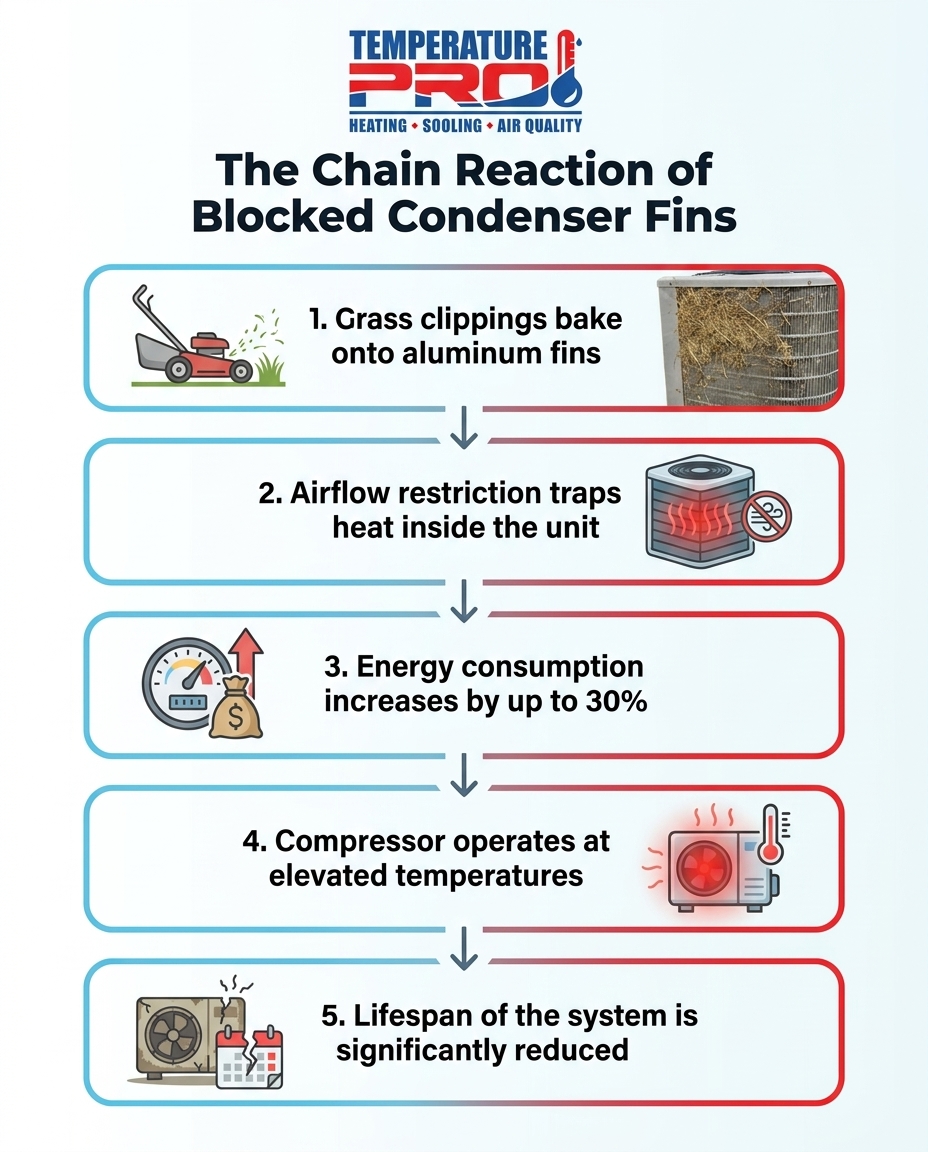
The Chain Reaction: Airflow Restriction and Compressor Strain
When the aluminum fins are choked by baked-on grass clippings, the system does not simply stop working immediately. Instead, it enters a destructive chain reaction of mechanical strain that can silently damage the equipment over several weeks.
1. Restricted Heat Dispersion: The trapped heat prevents the refrigerant from cooling down, meaning the refrigerant returning to the indoor coil is too warm to absorb enough heat from your home.
2. Extended Run Times: Because the air coming from your vents is not as cold as it should be, the thermostat never reaches its target temperature. The compressor is forced to run hotter and longer to achieve the same cooling output.
3. Increased Electrical Consumption: As the compressor struggles against the high internal pressures caused by the trapped heat, it requires significantly more amperage to keep the motor turning, leading to a direct correlation between blocked fins and increased electrical draw.
4. Thermal Overload: Eventually, the compressor exceeds its maximum safe operating temperature and shuts down completely to prevent an electrical fire, leaving the home without any cooling.
Our team at TemperaturePro Baton Rouge recently helped a local homeowner who experienced the reality of this thermal limit during a sweltering August move-in. The house had been sitting at a stifling 90 degrees for two days after the AC suddenly stopped working. After other companies failed to respond to the emergency, one of our technicians arrived within an hour to address a secondary, larger issue that had caused the system to lock out. The system was repaired quickly, resolving the two-day heat wave in the home. This kind of rapid, unexpected failure is exactly what we see when a system is pushed past its limits by sustained airflow restriction. If you notice your system struggling to keep up, it is wise to troubleshoot HVAC performance issues before a total shutdown occurs.
Warning Signs of Elevated Operating Temperatures
Long before the system fails completely, it will usually exhibit symptoms of an overworking compressor. You may notice short cycling, where the unit turns on and off rapidly without cooling the house. You might also hear unusual, loud, or grinding noises from the outdoor unit as the compressor struggles against high head pressure. In severe cases, the excessive electrical draw will cause the system to repeatedly trip your home's circuit breakers.
The Chain Reaction of Blocked Condenser Fins
Safe Exterior Maintenance vs. Professional Internal Cleaning
When homeowners notice a thick layer of grass on their outdoor unit, the immediate instinct is to clean it off. However, there is a strict boundary between what a property owner can safely do to mitigate the problem and when a licensed professional is required to intervene. Aluminum condenser fins are incredibly fragile and can easily be crushed flat if handled incorrectly, which restricts airflow just as badly as the dirt itself.
• Debris Removal — Safe Exterior Maintenance (Homeowner): Lightly brushing away loose, dry grass from the exterior with a soft-bristle brush. — Professional Internal Cleaning (Licensed Tech): Using specialized chemical foaming agents to dissolve baked-on organic matter from deep within the coil.
• Water Usage — Safe Exterior Maintenance (Homeowner): Using a standard garden hose on a gentle shower setting, pointed straight down the side of the unit. — Professional Internal Cleaning (Licensed Tech): Washing from the inside out to push debris away from the fins, requiring safe disassembly of the fan motor.
• System Access — Safe Exterior Maintenance (Homeowner): Keeping a 2-foot clearance zone around the perimeter of the unit. — Professional Internal Cleaning (Licensed Tech): Safely removing the top grate, fan assembly, and side panels to access internal components.
• What to Avoid — Safe Exterior Maintenance (Homeowner): Never use a pressure washer, high-pressure nozzle, or stiff broom on the fins. — Professional Internal Cleaning (Licensed Tech): Professionals avoid using acidic coil cleaners that can degrade the aluminum over time.
Disassembling the unit to clean the internal coils is strictly for licensed professionals, as it involves high-voltage electrical components and delicate fan motor wiring. A professional cleaning goes far beyond cosmetic appearances. For instance, during routine late-summer tune-ups for a multi-unit property here in Baton Rouge, our technicians found several coils that required extra attention due to heavy, baked-on buildup. By thoroughly cleaning the systems and explaining potential future issues to the property manager, we ensured the equipment was prepped for the heavy August workload. This proactive approach prevents the increased electrical draw and elevated compressor operating temperatures that lead to unexpected breakdowns. For more comprehensive tips on keeping your system healthy, reviewing an AC maintenance guide for Louisiana homes can provide valuable seasonal insights.
Protecting Larger Systems and Commercial Properties from Debris
While residential homeowners deal with weekend mowing, commercial properties face an entirely different scale of landscaping debris. Properties that utilize weekly professional landscaping services experience accelerated debris buildup simply due to the sheer volume of grass being cut and the heavy-duty commercial mowers being used. These mowers can throw wet grass clippings significantly farther and with much more force, directly impacting any ground-level HVAC units in the vicinity.
High-capacity commercial HVAC equipment has unique airflow requirements. Because these systems are responsible for cooling larger square footages and managing higher occupant heat loads, their condensers must move massive amounts of air to function correctly. When commercial condenser fins become clogged during the late August / back-to-school transition, the resulting mechanical strain can threaten the comfort of an entire office building, retail space, or restaurant.
To minimize equipment strain, property managers should actively coordinate landscaping schedules with routine HVAC maintenance. Landscapers should be instructed to always point the mower discharge chute away from the cooling units and to avoid using string trimmers aggressively near the delicate aluminum fins. Furthermore, maintaining clear, two-foot perimeter zones around all ground-level units ensures that ambient air can circulate freely. If you manage a larger facility, ensuring your commercial HVAC equipment is regularly cleared of heavy landscaping debris is essential for protecting your bottom line and preventing costly disruptions.
Frequently Asked Questions About Condenser Airflow and Yard Debris
Can grass clippings ruin an air conditioner?
Yes, heavy accumulations of grass clippings can severely damage an air conditioner over time. When wet grass bakes onto the aluminum condenser fins, it acts as an insulator that prevents the system from releasing heat. This forces the compressor to run hotter and longer than it was designed to, which can eventually lead to premature compressor failure if the debris is not cleared away.
What happens when AC condenser fins are blocked?
When AC condenser fins are blocked by dirt, leaves, or grass, the system loses its ability to transfer heat into the outdoor air. The immediate result is increased electrical draw and elevated compressor operating temperatures. You will likely notice your energy bills rising, the air coming from your vents feeling less cold, and the system running almost continuously to try and cool the home.
How do I safely clear debris from my outside AC unit?
To safely clear debris from the exterior of your AC unit, first turn off the power at the thermostat and the outdoor disconnect switch. You can use a soft-bristle brush to gently sweep away loose, dry grass from the outside of the fins, brushing strictly in an up-and-down motion to avoid bending the metal. For a deeper clean that pushes dirt out from the inside, you must hire a licensed professional.
Why is my AC compressor overheating in late summer?
Compressors typically overheat in late summer due to a combination of extreme ambient temperatures and restricted airflow. By August, months of accumulated yard debris, pollen, and dust have often coated the condenser coil. This insulation traps the heat inside the system, pushing the compressor past its thermal limit and causing it to shut down to prevent permanent damage.
Does a dirty condenser coil impact my electrical bill?
Absolutely. A dirty condenser coil forces the entire air conditioning system to work much harder to achieve the same amount of cooling. Because the system has to run for longer cycles and the compressor draws more amperage while struggling against high internal pressures, a heavily soiled coil can increase your system's energy consumption by up to 30 percent.
Can I use a pressure washer to clean my AC fins?
No, you should never use a pressure washer or a high-pressure hose nozzle on your AC condenser fins. The aluminum fins are paper-thin and highly malleable; the force of a pressure washer will instantly crush and flatten them. Flattened fins permanently block airflow, which causes the exact same mechanical strain as heavy dirt buildup, often requiring expensive professional repairs to comb them back open.
Prevent Premature Compressor Failure Before the Season Ends
Recognizing the severe impact of grass clippings and yard debris on your outdoor unit is the first step in preventing unexpected late-summer breakdowns. What looks like a simple cosmetic issue on the outside is actually a direct catalyst for restricted airflow, increased electrical draw, and elevated compressor operating temperatures on the inside. As the late August / back-to-school transition brings some of the most intense heat and humidity of the year to the Baton Rouge area, your system needs every bit of its cooling capacity to keep your home comfortable.
Rather than waiting for a compressor burnout to push a full system replacement—a common industry practice—the team at TemperaturePro Baton Rouge leans on our veteran-owned and family-operated ethos, focusing on honest, thorough maintenance that actually extends the life of your equipment. A professional cleaning safely removes baked-on organic matter from deep within the coil, restoring optimal heat transfer and allowing your system to breathe easily again. If your outdoor unit is wearing a coat of summer yard debris, do not wait for the system to overheat. Protect your equipment's lifespan and efficiency by scheduling a routine AC maintenance plan today.
Thank you! Your submission has been received!
Oops! Something went wrong while submitting the form.
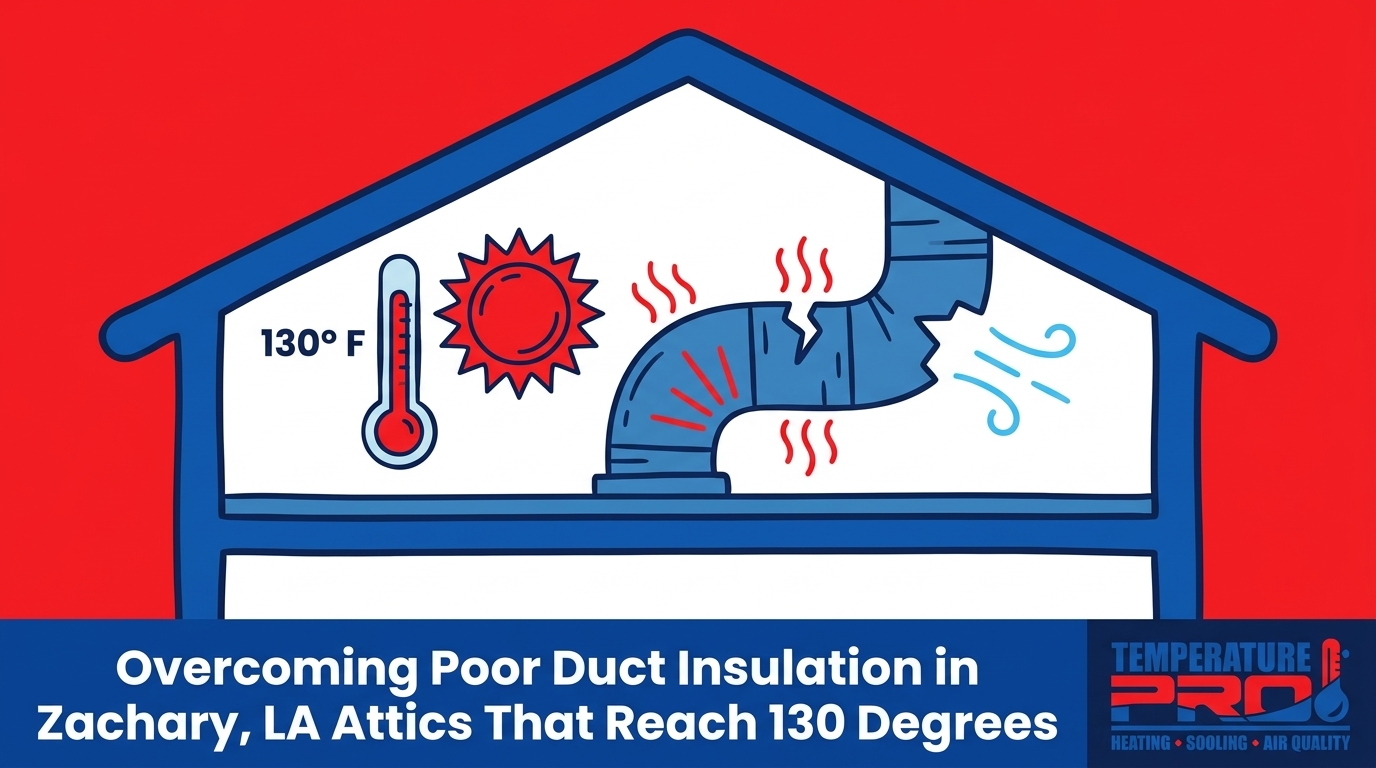
If your AC struggles to cool your Zachary home in late August, degraded duct insulation in a 130-degree attic is likely the culprit. Upgrading this thermal barrier restores your comfort.
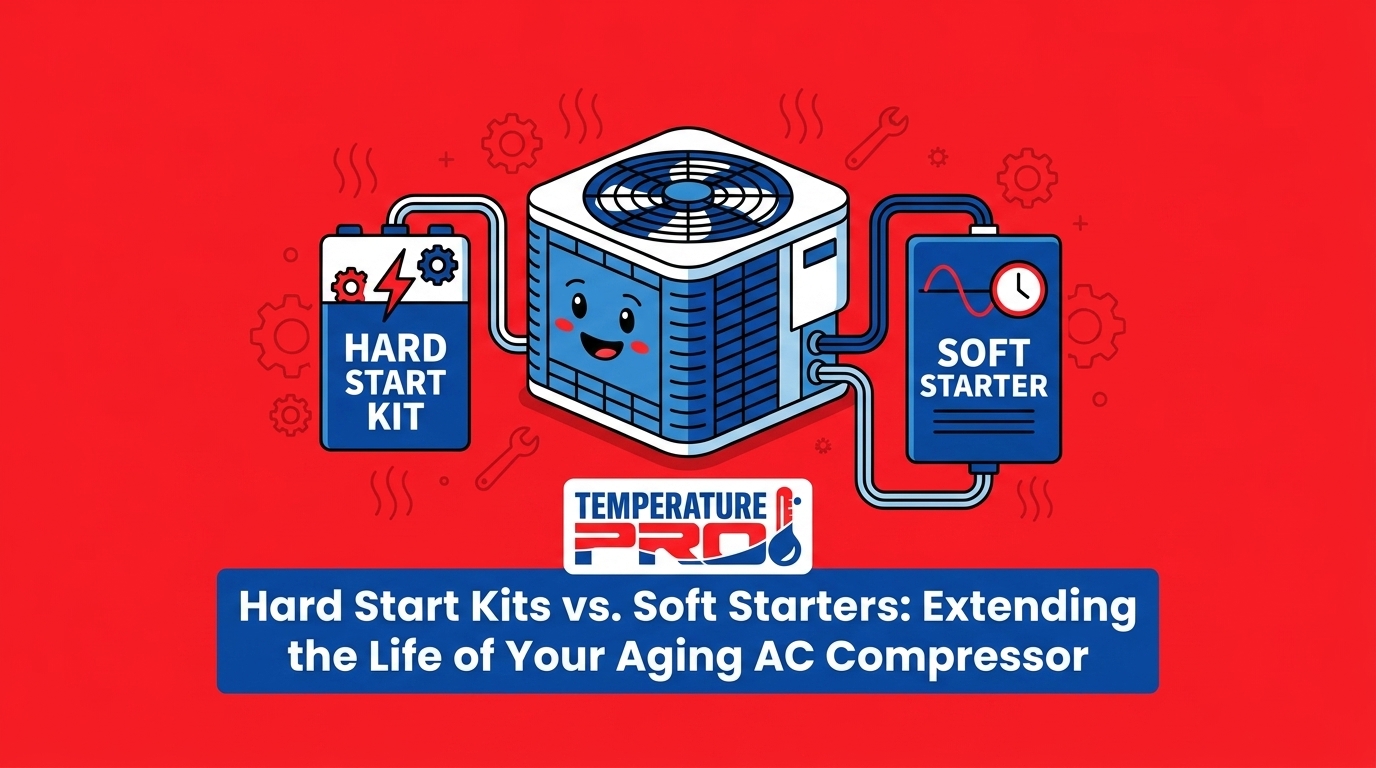
When your older AC struggles against the late-summer heat, an electrical assist can prevent a total breakdown. Find out which device your compressor actually needs to survive.
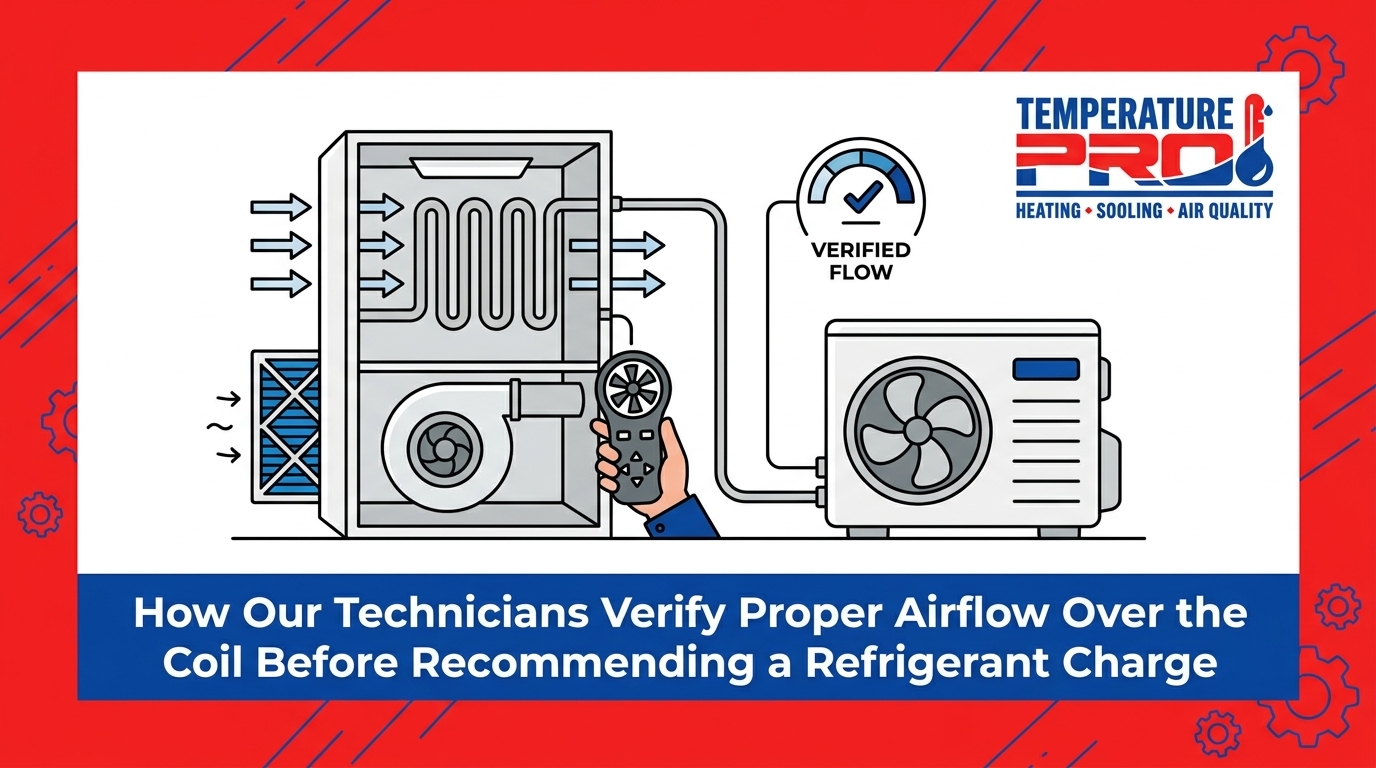
Before assuming your warm AC needs a refrigerant recharge, our technicians investigate the blower motor and ductwork. Measuring CFM airflow prevents costly misdiagnoses.