Troubleshooting the Fall Transition: When to Call for 24/7 Emergency AC Service in Baton Rouge, LA
Troubleshooting the Fall Transition: When to Call for 24/7 Emergency AC Service in Baton Rouge, LA
Prevent sudden heating breakdowns with these home maintenance tips and troubleshooting insights. Get clear answers on why pre-winter HVAC inspections matter.
The Reality of the Autumn Climate Shift in Southern Louisiana
October in Baton Rouge means the oppressive summer weather is finally breaking, but it also signals a demanding transition for your home's climate control system. When searching for reliable home maintenance tips and troubleshooting, homeowners often overlook the fact that the shift from cooling to heating is the most vulnerable time for any HVAC unit. At TemperaturePro Baton Rouge, our team typically sees a spike in service calls during this exact window. After months of battling heavy Gulf Coast humidity, your system has likely been running near continuously. This relentless operational cycle forces air conditioners and heat pumps to work overtime just to remove moisture from the indoor air, accelerating mechanical wear and tear on moving parts.
The challenge is that this heavy mechanical wear often remains entirely hidden as long as the system stays in cooling mode. It is not until the first overnight temperature drop below 50 degrees—when you finally switch the thermostat over to heat—that these underlying issues reveal themselves. Rather than waiting for a complete system failure on a freezing night, understanding the mechanics of this seasonal switch can help you stay ahead of breakdowns. If you are experiencing unexpected behavior during this transition, securing professional HVAC services is the safest way to protect your equipment and ensure uninterrupted comfort.
Understanding the Mechanics of an October Heating-Startup
To understand why systems struggle during the fall transition, it helps to look at exactly what happens inside the cabinet when you change your thermostat settings. For homes equipped with a heat pump, an October heating-startup initiates a mechanical shift via the reversing valve. This component physically reverses the flow of refrigerant, absorbing ambient heat from the outside air and transferring it indoors. If the valve has been locked in the cooling position for eight months, it can occasionally stick or fail to shift completely, resulting in lukewarm air or a tripped breaker.
For homes utilizing gas furnaces alongside their central air, the startup sequence is entirely different but equally demanding. The thermostat sends a signal to the control board, which activates the draft inducer motor to clear residual gases. Next, the igniter glows, the gas valve opens, and the burners ignite. Because these heating components have sat dormant all summer, the initial startup requires a sudden surge of energy and puts immediate stress on electrical relays and mechanical switches that have not moved since the previous winter. If a component fails during this sequence, the system will lock itself out as a safety precaution. In these scenarios, prompt emergency air conditioning repair and heating diagnostics are necessary to restore function safely.
• Heat Pump — Primary Heating Mechanism: Reversing valve redirects refrigerant flow — Common Fall Startup Challenge: Stuck reversing valve or defrost control board failure
• Gas Furnace — Primary Heating Mechanism: Burners heat a metal heat exchanger — Common Fall Startup Challenge: Ignition sequence failure or dirty flame sensor
• Electric Strip Heat — Primary Heating Mechanism: High-voltage resistance coils heat the air — Common Fall Startup Challenge: Heavy dust burn-off and high electrical draw
Why Your Heater Smells Like Burning Dust
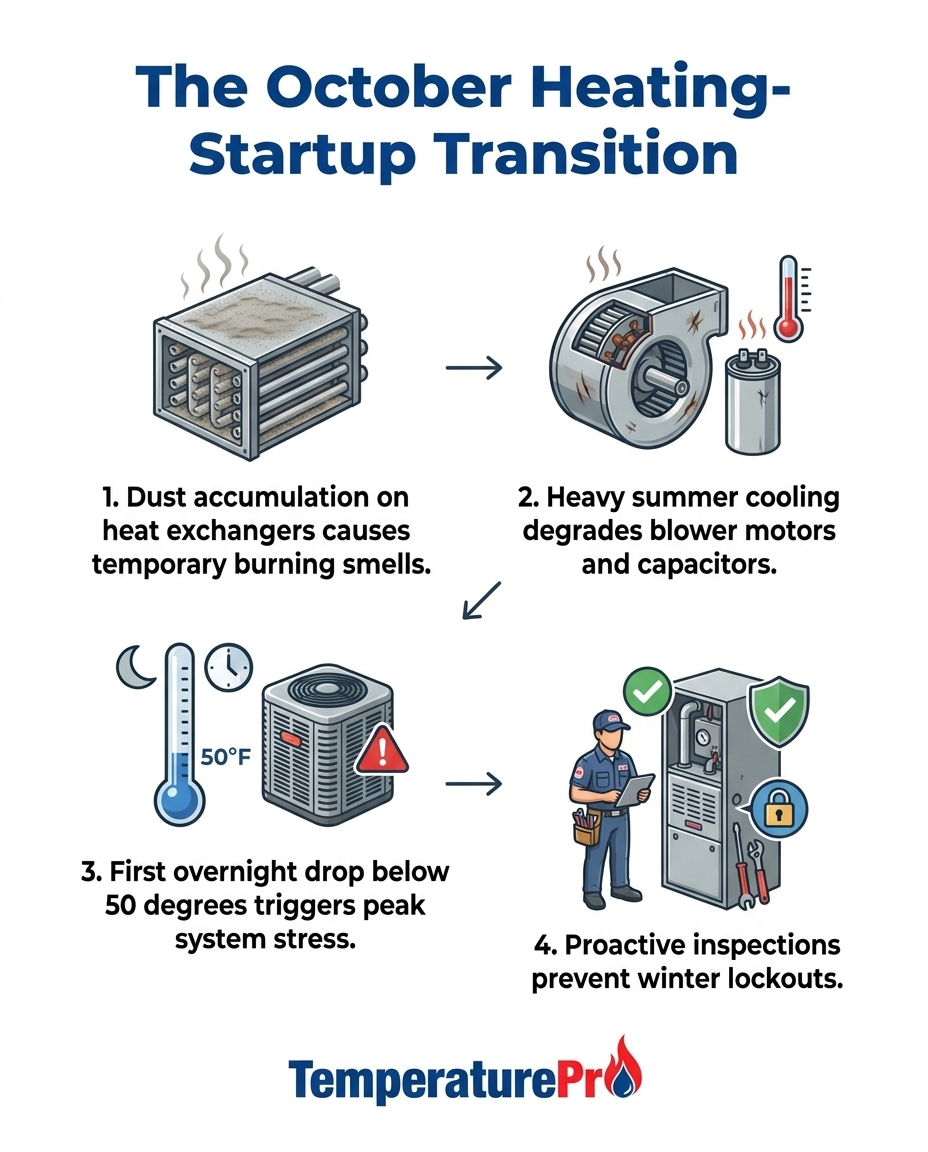
One of the most common causes of alarm during the first cold snap is a distinct burning odor coming from the vents. Throughout the long summer, microscopic dust particles, pet dander, and airborne debris bypass the air filter and settle directly onto the heat exchanger or electric heating coils. Because these components remain cold during air conditioning season, the dust simply accumulates undisturbed.
When the heater is activated for the first time, those components rapidly heat up to several hundred degrees, immediately incinerating the settled debris. This produces a noticeable burning dust smell that typically dissipates within 15 to 30 minutes of continuous operation. However, it is vital to differentiate between the temporary smell of burning dust and the acrid, sharp odor of melting plastic or burning electrical wiring. If the smell is accompanied by smoke, sparking, or if it persists for more than an hour, shut the system down immediately at the thermostat and the breaker panel.
The October Heating-Startup Transition
Hidden Summer Wear: Blower Motors and Capacitors
The Problem: The blower motor is the workhorse of your HVAC system, responsible for pushing conditioned air through the ductwork regardless of whether the system is heating or cooling. By the time autumn arrives in Baton Rouge, that motor has likely logged thousands of hours of operation. This continuous heavy demand slowly degrades the motor's internal bearings and weakens the run capacitor—a small electrical component that stores energy to jump-start the motor during each cycle.
The Cause: A weakened blower motor or a degrading capacitor may manage to limp along during the final weeks of summer. However, heating modes often require different static pressure demands and airflow speeds than cooling modes. When the system attempts to push warm air—which is naturally less dense—against the static pressure of the home's ductwork, the compromised motor can overheat. If the capacitor has lost its ability to hold a proper microfarad charge, the motor will stall entirely, leading to a complete system lockout just when you need warmth the most. Knowing what to do when your AC stops working in summer often translates directly to preventing these fall heating failures.
The Solution: The most critical rule of troubleshooting a locked-out system is to never repeatedly reset the circuit breaker. A tripped breaker is a safety mechanism indicating an overcurrent event. Forcing the system to restart against an electrical short or a seized motor can cause catastrophic damage to the control board. In one real-world instance our technicians at TemperaturePro Baton Rouge handled, a homeowner seeking a second opinion on a costly estimate discovered their system lockout was actually caused by a manipulated circuit board and a disengaged fuse. Because they called for a professional evaluation rather than forcing the system to run, our field technicians were able to diagnose the electrical fault and resolve the issue within 30 minutes, safely restoring airflow before the first overnight temperature drop below 50 degrees.
Identifying a True HVAC Emergency During the Fall Transition
Not every startup quirk requires an immediate 24/7 dispatch, but knowing how to identify a legitimate mechanical emergency can save your equipment from irreversible damage. When an October heating-startup goes wrong, the symptoms are usually immediate and highly disruptive. If your system exhibits minor short-cycling (turning on and off rapidly) without any strange noises, a pattern we see often is that it may simply be a dirty flame sensor or a clogged air filter. However, other signs indicate a severe safety hazard.
To help you determine whether to shut down the unit and call for immediate assistance, look for the following red flags:
• Persistent electrical smells: While burning dust is normal for a few minutes, the smell of ozone, melting plastic, or burning rubber indicates overheating electrical insulation or a failing blower motor.
• Sparking or popping sounds: Any visible electrical arcing near the indoor air handler or outdoor condenser requires an immediate shutdown at the main breaker panel.
• Complete system unresponsiveness: If the thermostat is calling for heat but the system remains entirely silent, you likely have a blown low-voltage fuse, a failed transformer, or a severe control board lockout.
• Carbon monoxide detector alerts: For gas furnaces, a cracked heat exchanger can allow deadly carbon monoxide to enter the airstream. If your CO detectors sound, evacuate the home and call emergency services immediately.
• Loud grinding or screeching: Metal-on-metal noises usually point to failed motor bearings or a misaligned blower wheel that will tear itself apart if left running.
During severe weather events or sudden cold fronts, a rapid response is essential. For example, in the aftermath of Hurricane Ida, our team responded to a local system that required major repairs four days after the storm passed. Our technicians arrived within three hours of the dispatch call, diagnosed the electrical failure, secured the necessary replacement part, and restored function the same day. Complex electrical and refrigerant issues require this level of licensed professional intervention. Attempting DIY repairs on high-voltage components or gas lines is not only dangerous, but it also violates local safety codes. If you are unsure about your system's status, utilize an HVAC troubleshooter guide to narrow down the symptoms before the technician arrives.
Proactive Prevention vs. Reactive Emergency Repairs
The most effective way to handle the autumn climate shift is to avoid the emergency entirely. Positioned against the stress of a midnight breakdown, a professional pre-winter inspection is the sensible, authoritative alternative. A comprehensive tune-up involves far more than simply changing the air filter. Licensed technicians perform a deep-dive diagnostic to assess the toll the summer heat has taken on the equipment.
What a professional inspection entails: Technicians will visually inspect the heat exchanger for hairline cracks that could leak carbon monoxide. They will use a multimeter to test the microfarad readings on all capacitors, ensuring they have the strength to start the motors during the first overnight temperature drop below 50 degrees. They will also verify the blower motor's amp draw; if the motor is pulling more electricity than it is rated for, it is a clear indicator that the bearings are failing and the component needs replacement before it seizes.
As a veteran-owned company, our philosophy at TemperaturePro Baton Rouge is simple: we prioritize operational readiness and integrity. We verify system integrity before it is urgently needed, advocating for a scheduled pre-winter inspection rather than waiting to capitalize on a desperate emergency breakdown. Identifying a compromised part in October prevents a catastrophic failure on a freezing night in January. Scheduled maintenance is significantly less stressful, more cost-effective, and guarantees that your home remains a safe haven regardless of the weather outside.
Local Standards for HVAC Safety and Compliance
In Baton Rouge, HVAC systems must adhere to strict municipal and national safety codes, particularly when transitioning to heating modes that involve combustible gas or high-voltage electric strips. The National Electrical Code (NEC) and local mechanical amendments dictate specific requirements for equipment clearances, proper ventilation, and dedicated circuit sizing. These regulations exist to prevent electrical fires and ensure that harmful exhaust gases are safely vented away from the living space.
When an October heating-startup triggers an emergency dispatch, our responding technicians are not just looking to apply a quick fix; they are required to ensure the entire system complies with these safety standards. A rigorous diagnostic process includes checking the flue pipe for proper drafting, verifying that the gas pressure meets the manufacturer's specifications, and ensuring that all electrical disconnects are functioning properly. A reputable local team understands the specific environmental demands of the region and ensures that every repair protects the household. Homeowners across the Baton Rouge service areas rely on this adherence to code to keep their properties safe during the unpredictable winter months.
Ensuring Your Home's Comfort and Safety This Season
The transition from relentless summer cooling to winter heating places unique mechanical stress on your HVAC system. Addressing the hidden wear and tear on blower motors, capacitors, and heat exchangers before the first overnight temperature drop below 50 degrees is the smartest move a homeowner can make. Whether you need a proactive seasonal tune-up to ensure operational readiness or a rapid emergency response to a sudden system lockout, professional help is always available.
Do not wait for the first freezing night to find out if your heater is up to the task. If your system is exhibiting warning signs—such as persistent burning smells, strange noises, or unresponsiveness—reach out to a licensed professional immediately. A clear, technically accurate evaluation will provide the peace of mind you need to stay comfortable and safe all season long.
Frequently Asked Questions
Why does my heater smell like burning dust when I turn it on?
This odor is caused by the incineration of microscopic debris that settled on the heating elements during the summer. Because the heat exchanger and electric coils sit dormant and cold for months, dust naturally accumulates on their surfaces. When the system is activated for the first time in autumn, these components rapidly heat up, burning off the dust. The smell is perfectly normal and should dissipate within 15 to 30 minutes of continuous operation.
How do you troubleshoot an HVAC system before winter?
Start by checking the simple operational components before the cold weather sets in. Replace your air filter, ensure all supply and return vents are fully open and unobstructed, and verify that your thermostat is set correctly to heating mode. You can run the system for a brief test cycle on a mild day to listen for unusual noises or persistent odors. For electrical and mechanical diagnostics, a licensed professional must perform a full inspection.
What happens if you don't service your furnace or heat pump?
Skipping maintenance allows minor wear and tear to compound into major mechanical failures. A dirty system forces the blower motor to work harder, leading to overheating, increased energy consumption, and eventual motor burnout. Furthermore, uninspected gas furnaces carry the risk of undetected heat exchanger cracks, which can leak dangerous carbon monoxide into the home.
What HVAC maintenance should be done on a house yearly?
Yearly maintenance should include two professional visits: one in the spring for the AC and one in the fall for the heating system. The fall inspection should encompass cleaning the burners, testing the ignition sequence, verifying capacitor strength, checking the blower motor's amp draw, and inspecting the heat exchanger for safety. Homeowners should also replace air filters every 30 to 90 days depending on usage.
When should I call for 24/7 emergency AC service during the fall transition?
You should call for immediate emergency service if you detect the smell of burning plastic or electrical wiring, hear loud grinding or popping noises, or if the system completely locks out and refuses to turn on. Additionally, if your carbon monoxide detectors sound while the gas furnace is running, evacuate the home and contact emergency services immediately, followed by a licensed HVAC technician.
Thank you! Your submission has been received!
Oops! Something went wrong while submitting the form.
Most homeowners think a late-week appointment is the most convenient choice for an HVAC tune-up. Discover why our dispatchers highly recommend booking on a Tuesday morning instead.
A furnace shutting down repeatedly during early fall tests is frustrating, but jumping the safety switch is a dangerous mistake. Understand the severe fire hazards of this DIY workaround.
As summer ends, you might notice your outdoor AC unit humming at a lower pitch. Discover why cooler September evenings naturally change your system's acoustic profile.