5 min read
Fall HVAC Troubleshooting: Why Your Heater Smells Like Burning Dust on Startup
Is that burning dust smell normal? Read our home maintenance tips and troubleshooting to see why heating startup odors happen and when to call a professional.


Why HVAC Preparation Before Hurricane Season in Louisiana Is Something Every Homeowner Should Take SeriouslyHVAC preparation before hurricane season in Louisiana is one of the most important things you can do to protect your home's comfort
HVAC preparation before hurricane season in Louisiana is one of the most important things you can do to protect your home's comfort system — and your wallet — before June arrives.
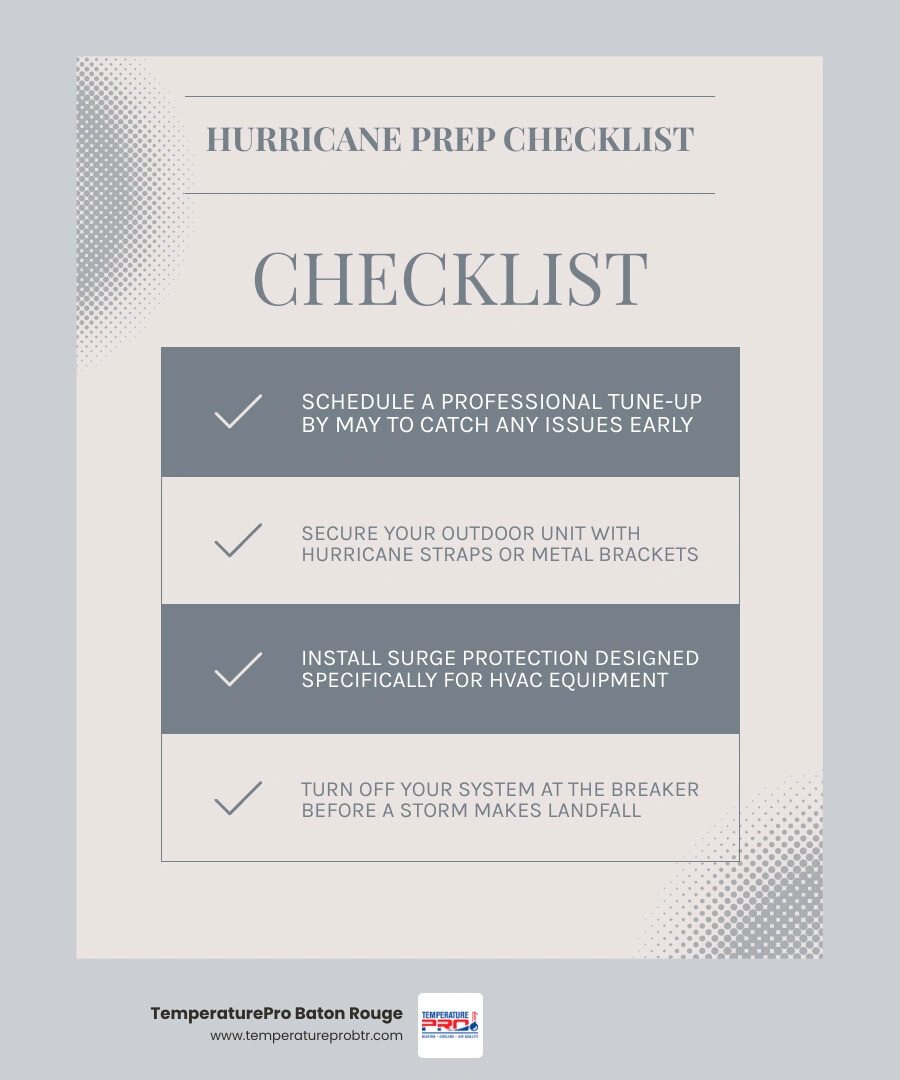
Here's a quick summary of what to do before hurricane season hits:
1. Schedule a professional tune-up by May to catch any issues early
2. Secure your outdoor unit with hurricane straps or metal brackets
3. Clear debris and trim trees within a few feet of the condenser
4. Install surge protection designed specifically for HVAC equipment
5. Elevate your outdoor unit if your property is in a flood-prone area
6. Document your system with photos, serial numbers, and model info for insurance
7. Turn off your system at the breaker before a storm makes landfall
8. Wait for a professional inspection before restarting after the storm passes
Louisiana's hurricane season runs from June 1 through November 30, and the threats it brings — high winds, heavy flooding, power surges, and even saltwater corrosion — are not kind to HVAC systems. On average, Louisiana sees about 2.5 hurricanes per decade make landfall, and each one puts outdoor condensers, heat pumps, control boards, and ductwork at serious risk. Up to 40% of HVAC damage during hurricanes is linked directly to unsecured outdoor units struck by flying debris or knocked over by wind. Power surges alone can burn out compressors and control boards in an instant. And in coastal and low-lying areas, flooding can turn a perfectly functional system into a complete write-off.
For homeowners in Baton Rouge and the surrounding communities, the good news is that preparation makes a real difference. Homeowners who schedule professional HVAC maintenance before hurricane season are significantly less likely to face system failure after a storm. A little time and attention now can mean the difference between staying comfortable after a storm and waiting weeks for an emergency repair.
Hurricane prep is not just about plywood, flashlights, and grocery-store bread disappearing overnight. Your HVAC system deserves a spot on the checklist too.
In South Louisiana, systems already work hard because of long cooling seasons, high humidity, and heavy rain. If you add hurricane-force wind, wind-driven debris, flooded yards, and unstable power, your AC or heat pump can go from "working fine yesterday" to "not turning on at all" very quickly.
That is especially true in Baton Rouge, Prairieville, Gonzales, Denham Springs, Walker, Central, Zachary, St. Gabriel, and French Settlement, where inland flooding, long outages, and humid recovery conditions can all affect comfort and equipment life. For more on how our region stresses HVAC equipment year-round, see How Louisiana Climate Affects Your HVAC System and How Louisiana Heat and Humidity Affect AC Lifespan.
Louisiana homes deal with a rough mix of hazards at the same time:
• High winds that can shift or topple condensers
• Flying debris that can crush fan guards or bend condenser fins
• Flash flooding and standing water around outdoor units
• Long power outages followed by damaging surges when power returns
• Extreme humidity with closed windows, which makes post-storm comfort harder
• Salt contamination and corrosive moisture after major storms
Even if your home is not near the coast, inland rain events can still flood pads, crawlspaces, and low areas around equipment. That means hurricane prep is not just for beachfront homes. It is for any Louisiana homeowner who would rather not discover hidden electrical damage in August.
The biggest trouble spots are usually the outdoor unit and electrical components. Common hurricane-related HVAC damage includes:
• Condensers pushed off level pads
• Fan blades and coils damaged by debris
• Water intrusion into motors and electrical compartments
• Burned control boards and compressors from surges
• Refrigerant leaks from impact or shifted lines
• Corroded contacts and terminals after storm exposure
• Wet insulation or damaged ductwork in flooded areas
Heat pumps can be especially vulnerable because they operate in both heating and cooling modes and often have exposed outdoor components that do not appreciate sitting in storm water.
Preparation lowers risk in a few important ways:
• Maintenance catches weak components before storm stress hits
• Anchoring reduces the chance of the unit moving or tipping
• Debris clearing helps protect coils and fan assemblies
• Surge protection helps shield expensive electrical parts
• Elevation lowers flood exposure
• Safe shutdown reduces electrical damage during the storm
• Professional inspection after the storm prevents unsafe restarts
Research shows homeowners who schedule professional maintenance before hurricane season reduce the risk of post-storm system failure by about 60%. That is a strong reason to prepare early instead of hoping your system can "just tough it out."
A good pre-storm plan starts before the first watch is issued. Ideally, you want your system checked and your property cleaned up in April or May, not while everyone else is panic-buying batteries.
Here is a practical checklist:
• Schedule a professional spring tune-up
• Replace or clean your air filter
• Keep extra filters on hand
• Check refrigerant levels and system performance
• Inspect electrical connections and controls
• Test the thermostat
• Clean the condensate drain
• Check exposed duct seals and insulation
• Clear debris around the outdoor unit
• Trim nearby limbs and vegetation
• Move loose outdoor items that could become projectiles
• Photograph the system and record model and serial numbers
• Review flood risk around indoor and outdoor equipment
• Confirm HVAC surge protection is in place
For broader maintenance basics, visit AC Maintenance Guide Denham Springs LA and Benefits of Regular AC Maintenance.
A pre-hurricane HVAC inspection should include more than a quick glance and a thumbs-up. We recommend a full maintenance visit before June whenever possible.
During that visit, a technician can:
• Tighten electrical connections
• Inspect contactors, capacitors, and controls
• Check refrigerant charge
• Test thermostat operation
• Clean coils if needed
• Verify condensate drainage
• Look for rust, corrosion, or loose panels
• Confirm the unit is stable on its pad
• Inspect safety controls and startup performance
This matters because small issues become big issues during a storm. A weak capacitor, loose wire, or clogged drain line may not fail on a mild spring day, but storm conditions can push it over the edge.
There is a lot homeowners can do safely without opening electrical panels or taking equipment apart.
Start with these basics:
• Change the air filter monthly during heavy use season
• Keep one or two spare filters ready for after the storm
• Maintain about 3 feet of clearance around the outdoor unit
• Trim shrubs and overhanging branches nearby
• Remove lawn furniture, planters, toys, and loose yard items
• Make sure access panels look secure
• Take photos of the indoor and outdoor equipment
• Write down the model and serial numbers
That photo documentation may feel boring now, but it becomes very exciting when insurance paperwork starts asking questions.
If your property tends to collect water, flood protection deserves extra attention.
Helpful steps include:
• Evaluate whether the outdoor unit sits in a low spot
• Consider raising the condenser on an approved elevated pad or platform
• Check whether the air handler, furnace, or ductwork is exposed to water risk
• Inspect crawlspaces, utility closets, and low return ducts for moisture issues
• Make sure drainage paths around the home direct water away from equipment
Research suggests elevating outdoor HVAC units above potential flood levels can prevent up to 70% of flood-related replacements in coastal Louisiana areas, and the same principle helps inland flood-prone homes as well.
The outdoor condenser is the part most likely to take a direct hit from wind and debris. Securing it properly can make a major difference.
The best method depends on your setup, but common protection measures include:
• Anchor bolts that secure the unit to its pad
• Metal brackets or hurricane straps rated for outdoor equipment
• A stable, level concrete pad
• Reinforced elevated platforms in flood-prone areas
• Protective barriers or screens that block debris without restricting airflow
• Trimming trees and removing loose objects nearby
If the unit is already rocking, leaning, or sitting on a cracked pad, fix that before storm season. A unit that starts unstable does not get more stable in 80 mph winds.
Here is a quick comparison:
• Anchoring/straps — Helps with wind: Yes — Helps with debris: Limited — Helps with flooding: No
• Protective screen — Helps with wind: Limited — Helps with debris: Yes — Helps with flooding: No
• Elevation/platform — Helps with wind: Limited — Helps with debris: No — Helps with flooding: Yes
• Debris clearing — Helps with wind: Limited — Helps with debris: Yes — Helps with flooding: Limited
This one gets confusing because homeowners hear mixed advice.
A temporary protective cover or debris shield can help during the storm, but it should be breathable and used correctly. We do not recommend tightly wrapping the unit in plastic tarp for long periods because trapped moisture can lead to corrosion, mildew, and other problems.
Best practices:
• Shut the system off before covering
• Use a breathable cover or storm-rated debris shield if appropriate
• Never seal moisture inside the unit
• Remove the cover as soon as conditions are safe after the storm
Leaving a damp cover on for days in Louisiana humidity is basically rolling out the welcome mat for rust.
Flooding is often more destructive than wind because water can damage motors, wiring, insulation, and controls even when the unit looks normal from outside.
To reduce flood risk:
• Elevate outdoor equipment where practical
• Improve drainage around the condenser pad
• Keep gutters and downspouts moving water away from the foundation
• Inspect indoor air handlers in garages, closets, or low spaces
• Check nearby ductwork for exposure to water intrusion
• Turn off power at the breaker if water approaches the equipment
If any part of the system has been submerged, do not restart it. Water and electricity are not a duo we want improvising together.
Timing matters. There is a right way to use your system before a storm and a safer way to shut it down when conditions worsen.
Yes, when a hurricane or severe storm with major wind and flood risk is approaching, you should turn off the system before the worst conditions arrive.
A smart approach is:
1. Pre-cool the home for a couple of hours if power outages are likely
2. Turn the thermostat off when the storm is near or before evacuating
3. Shut off power to the HVAC system at the breaker when it is safe to do so
Why? Because running equipment during high winds or power instability can expose it to:
• Lightning and surge damage
• Debris entering the fan or coil area
• Short cycling during unstable power conditions
• Electrical failure when service is restored
You do not need to shut the system off for every ordinary summer rainstorm. This guidance is for hurricane conditions, evacuation situations, or severe wind and flood threats.
Not all systems have the same vulnerabilities.
Heat pumps:
• Need the same surge and flood protection as straight AC systems
• Can be especially vulnerable to water intrusion and damaged controls
• Should not be restarted after flooding without inspection
Dual-fuel systems:
• Need both the outdoor equipment and heating components checked after a storm
Ductless mini-splits:
• Outdoor condensers still need anchoring and debris protection
• Indoor wall units should be inspected if the home took on water
Rooftop or elevated units:
• Need secure mounting and post-storm inspection for wind damage and shifted connections
If you are not sure what system type you have, that is a good thing to confirm during preseason maintenance.
Once conditions are safe, do a visual inspection only. Do not open electrical compartments or try to force-start the system.
Look for:
• Standing water around the outdoor unit
• Mud or silt lines on the cabinet
• Bent coil fins or crushed guard panels
• Debris inside or around the unit
• Disconnected refrigerant lines or exposed wiring
• Loose access panels
• Indoor water damage near the air handler or ducts
• Damp insulation or unusual odors indoors
If anything looks off, keep the system off.
Even if the equipment looks fine, hidden damage is common after hurricanes. Water can get into controls, contactors can corrode, insulation can stay wet, and refrigerant lines can loosen without being obvious at first glance.
A professional post-storm inspection can check for:
• Electrical shorts and unsafe wiring
• Water intrusion
• Corrosion from storm exposure
• Refrigerant leaks
• Blower or fan motor problems
• Duct contamination or moisture issues
• Safe startup operation
If you need urgent help after a storm, our Emergency AC Repair Baton Rouge LA service is available when fast support matters most.
Storm recovery goes much smoother when you can show what equipment you had, where it was located, and what changed after the event.
Before hurricane season, gather:
• Photos of the outdoor condenser from multiple angles
• Photos of indoor equipment and surrounding area
• Model and serial numbers from equipment data plates
• Installation paperwork if you have it
• Maintenance records and recent service reports
• Date-stamped photos or videos showing pre-storm condition
After a storm, document damage before cleanup if it is safe to do so. Take wide shots and close-ups. That creates a clear record for insurance and helps support repair or replacement decisions.
Hurricane prep is strongest when it is built on regular maintenance, not last-minute scrambling.
We recommend:
• Spring tune-ups before peak cooling season
• Fall maintenance for year-round system health
• Monthly filter checks
• Coil and drain inspections
• Prompt repair of minor issues before they worsen
• Cleaning storm residue and checking for corrosion after major weather events
Routine care helps systems last longer and lowers the chance of an emergency breakdown after a storm. You can learn more in How to Extend the Life of Your AC in Louisiana, Average Lifespan of an AC System in the South, and When to Repair vs Replace Your HVAC System.
For most homeowners, the best timing is:
• Preseason inspection: April or May
• If missed: as early in June as possible
• Post-storm inspection: after any hurricane, tropical storm flooding, or major wind event
• End-of-season review: fall, especially if the system was exposed to repeated storms
Scheduling before the season starts is ideal because appointment availability gets tighter once watches and warnings begin.
Maybe, but only if the generator and system are specifically compatible. Many portable generators are not sized to handle central AC startup loads. Running HVAC equipment on the wrong generator setup can damage the system or create safety hazards.
Follow manufacturer guidance and have any generator connection planned professionally. And always operate generators outdoors with proper clearance.
No. If floodwater reached the unit, do not turn it on just because it looks okay. Submerged components can have hidden corrosion, contaminated controls, or electrical damage that is not visible from outside. A professional inspection is the safe next step.
Early spring is best, ideally April or May. If you wait until the first named storm is already on the radar, you are competing with everyone else for appointments. Earlier service gives you time to make repairs, improve anchoring, and handle documentation without rushing.
Preparing your HVAC system for hurricane season is one of the smartest things Louisiana homeowners can do before summer storms ramp up. A little prevention now can help protect your equipment from wind, debris, flooding, and power surges later.
At TemperaturePro Baton Rouge, we are proud to serve homeowners across Baton Rouge, Prairieville, Gonzales, Denham Springs, Walker, Central, Zachary, St. Gabriel, and French Settlement with reliable, family-focused HVAC care. As a family-owned and veteran-owned company, we believe in helping our neighbors stay safe, comfortable, and ready for whatever the season brings.
If you want help with preseason maintenance, post-storm inspections, or ongoing HVAC protection, visit More info about HVAC services.
Go With Experience