Diagnosing Heat Pump Defrost Board Failures Before the First Frost Hits
Diagnosing Heat Pump Defrost Board Failures Before the First Frost Hits
A failing defrost control board won't show symptoms in mild autumn weather, but it can turn your outdoor coil into an ice block this winter. See how our technicians catch silent failures early.
The Silent Threat Hiding in Your Heat Pump Before Winter Arrives
The September pre-heating season is officially here, and Diagnosing Heat Pump Defrost Board Failures Before the First Frost Hits should be a top priority while your HVAC unit prepares to shift gears. Most homeowners are focused on changing filters and clearing away summer debris, but there is a silent threat hiding inside your outdoor unit: a failing defrost control board. This critical component can break down without showing a single symptom during mild autumn weather. You won't know anything is wrong until the first real winter frost hits, at which point your outdoor coil turns into a solid block of ice, leaving your family shivering indoors.
You face a clear choice as the seasons change. You can wait for an emergency freeze-up in the dead of winter, or you can have a professional proactively verify that your system's defrost sequence is fully operational right now. When it comes to maintaining heat pump systems, catching electrical failures early is the smartest way to avoid the sudden need for professional heating repair when temperatures plummet.
The high cost of waiting: When a defrost board fails, the heat pump continues trying to pull heat from the outside air. Because the ice acts as a thick layer of insulation, the system cannot absorb heat. The compressor runs continuously, overheating and straining under the immense load. This single failed circuit board can quickly destroy the most expensive component in your entire system if left unchecked.
Understanding how this hidden component protects your home—and why it fails—is the first step in securing reliable, efficient heat for the winter ahead.
Why High Humidity Accelerates Heat Pump Coil Icing
Many homeowners are surprised to see frost forming on their outdoor unit when the weather outside is still above freezing. If the thermometer reads 40°F, how can ice exist? The answer lies in the relationship between ambient air temperature, refrigerant temperature, and atmospheric moisture.
The core problem: To extract heat from 40°F air, the liquid refrigerant inside your outdoor coils must be significantly colder than the surrounding air—often dropping well below 32°F. As the outdoor fan pulls air across these freezing coils, any moisture in the air immediately condenses and freezes on the metal fins.
The environmental cause: In Baton Rouge, our average relative humidity often exceeds 70% in the fall and winter. In our years of servicing local heat pumps, the team at TemperaturePro Baton Rouge has seen firsthand how this heavy moisture content creates prime conditions for rapid, severe coil icing. The air is so saturated with water vapor that the outdoor unit acts like a giant dehumidifier, instantly freezing that moisture on contact.
The necessary solution: This rapid icing chokes off airflow entirely. Without a working defrost board to clear the ice, the heating process stops. The system needs a way to periodically melt this accumulation so it can breathe again.
• Frost Accumulation Rate — Dry Winter Climates: Slow and gradual — Humid Winter Climates (Baton Rouge): Rapid and heavy
• Temperature for Icing — Dry Winter Climates: Typically below 32°F — Humid Winter Climates (Baton Rouge): Often occurs between 35°F and 45°F
• Defrost Board Importance — Dry Winter Climates: Important for peak winter — Humid Winter Climates (Baton Rouge): Absolutely critical all season long
• Airflow Restriction — Dry Winter Climates: Takes days to block coils — Humid Winter Climates (Baton Rouge): Can block coils in a matter of hours
Because our local climate provides an endless supply of moisture, your heat pump will ice up faster and more frequently than units in drier regions. This makes the defrost control board not just a convenience, but a vital survival mechanism for your HVAC system.
The Anatomy of a Heat Pump Defrost Cycle
To understand why a failure is so catastrophic, you have to know what happens when things are working correctly. The defrost cycle is a brilliant piece of engineering that temporarily reverses the system's operation to melt accumulated ice. Instead of pulling heat from outside to warm your house, the system briefly pulls heat from your house to warm the outdoor unit.
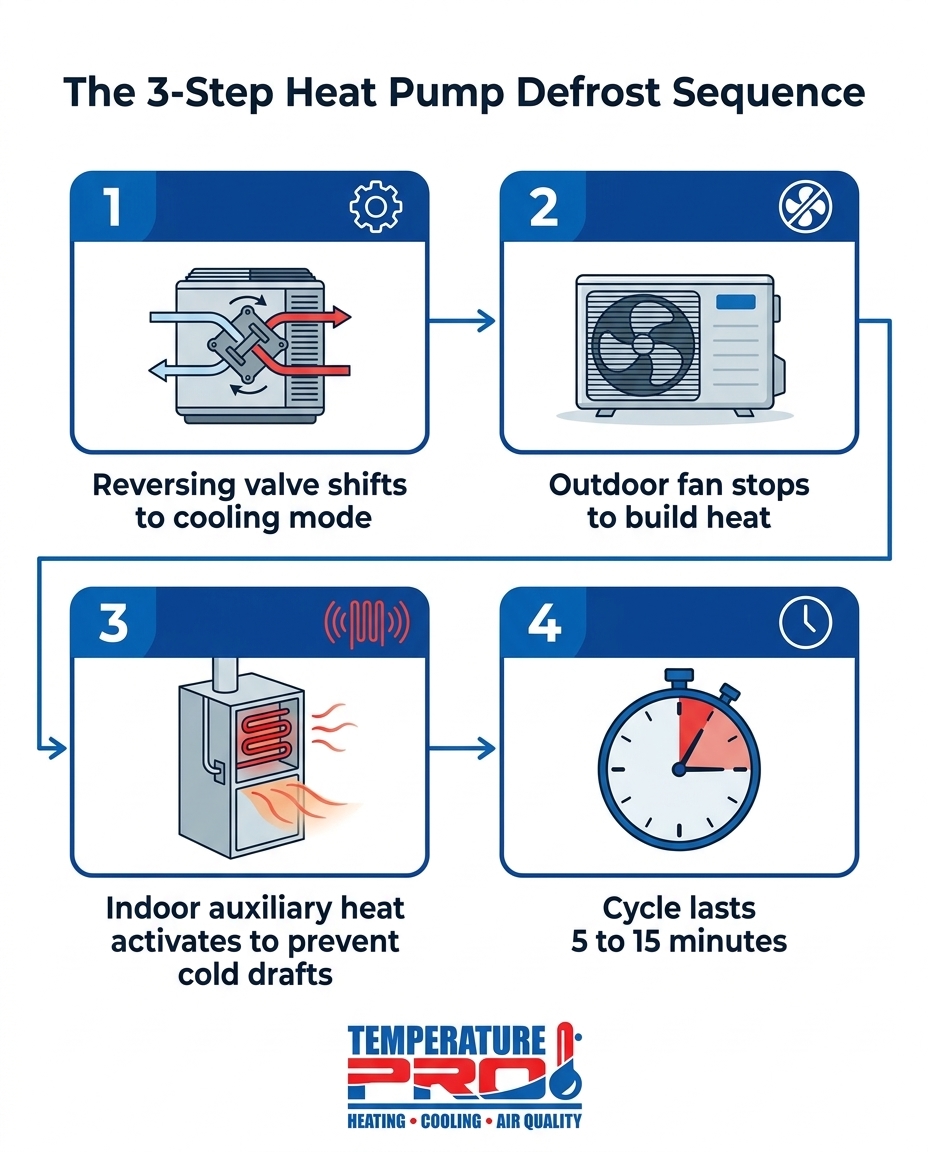
A typical, healthy defrost cycle lasts between 5 and 15 minutes. Once the sensors detect that the ice has melted, the board automatically returns the system to normal heating mode.
The 3-Step Defrost Sequence
When the defrost thermostat detects freezing temperatures on the coil and enough time has passed since the last cycle, the control board initiates a very specific chain of events:
1. Shift the reversing valve: You will usually hear a loud "whoosh" sound from outside. The system switches its internal valve to send hot, high-pressure refrigerant gas directly into the outdoor coils.
2. Stop the outdoor fan: The large fan on top of the outdoor unit halts completely. This prevents cold winter air from blowing across the coils, allowing the hot refrigerant to build up heat rapidly and melt the ice.
3. Activate the auxiliary heat: Because the system is technically in "cooling" mode (sending heat outside), it would normally blow cold air into your living room. To prevent this cold draft, the indoor air handler turns on its electric heat strips to keep your home warm during the cycle.
If any single step in this sequence fails, the entire process breaks down. The ice remains on the coil, the compressor continues to struggle, and your home slowly loses heat.
The 3-Step Heat Pump Defrost Sequence
Why Defrost Control Boards Fail Without Warning
The most frustrating aspect of a defrost board failure is its silent nature. Because this component only activates under very specific freezing conditions, a malfunction can go completely unnoticed for months. Your air conditioning works perfectly all summer, and your heat works fine on mild autumn nights.
A visual inspection of the outdoor unit in mild weather will not reveal a bad defrost board. The circuit board might look perfectly clean and intact, yet fail to send the necessary voltage when the temperature drops. If you want to keep your system running without overspending on emergency visits, reading an affordable heat pump repair guide can help you understand the value of diagnosing these hidden electrical issues early.
Common causes of defrost board failure include:
• Degraded thermal sensors: The defrost thermostat (sensor) attached to the outdoor coil can corrode or lose its calibration, failing to alert the board when ice is forming.
• Stuck reversing valve relays: The tiny electrical relay on the board that tells the reversing valve to shift can fuse shut or burn out from thousands of cycles of use.
• Electrical wear and tear: Power surges, voltage spikes, and general component degradation can cause the microprocessor on the board to fail.
• Pest damage: Ants, mice, and lizards frequently seek shelter inside the warm electrical cabinet of the outdoor unit, shorting out the delicate circuitry on the board.
• Corrosion: Constant exposure to high humidity and outdoor elements can degrade the soldered connections on the back of the circuit board.
Because the board is the "brain" of the defrost operation, even a minor electrical fault renders the entire ice-melting sequence useless.
Our Methodology: Testing the Defrost Board in Mild Weather
Most homeowners assume fall maintenance is just a quick filter change and a visual once-over. But our expert technicians at TemperaturePro Baton Rouge know that a visual check isn't enough to protect your home. We have to actively prove that the system can defend itself against the cold.
Here is how our technicians test your system's readiness. We perform a forced defrost cycle sequence simulation, even in 70-degree September weather. By safely manipulating the diagnostic terminals on the control board, we trick the "brain" into thinking the coil is frozen solid.
What we verify during this simulation:
• The reversing valve shift: We listen for the physical engagement of the valve and use temperature probes to verify that hot gas is immediately routing to the outdoor coil.
• The fan relay cutoff: We ensure the board successfully cuts power to the outdoor fan motor, a critical step for building heat.
• The auxiliary heat draw: We use an electrical multimeter on your indoor air handler to measure the amperage draw, confirming that the backup heat strips engage to protect your indoor comfort.
• The termination sequence: We verify that the board successfully ends the cycle and returns to normal heating mode within the proper time frame.
A critical safety warning: Because this involves manipulating live, high-voltage control terminals alongside complex low-voltage circuitry, this simulation is strictly a professional diagnostic procedure. Do not attempt to bridge these connections or force a cycle yourself. One wrong touch can send 240 volts through a 24-volt circuit, instantly destroying the board, the thermostat, and potentially causing severe electrical shock.
By forcing the system to prove it can execute every step flawlessly, we eliminate the guesswork. If a relay is sticking or a sensor is drifting out of range, we find it on a sunny afternoon in September, not during a freezing rainstorm in January.
Securing Your System with Comprehensive Fall Diagnostics
Early detection of a failing defrost component does more than just keep you warm; it saves your compressor from severe winter strain. When a heat pump is forced to run with a blocked, frozen coil, the compressor works twice as hard for half the result. Catching these electrical faults early extends the lifespan of your entire system.
Thorough tune-ups involve checking all interconnected components. A failing defrost board is often just one part of the puzzle. We check refrigerant levels, because low refrigerant can also cause rapid freezing. We check electrical contactors, run capacitors, and blower motor amperages to ensure the system is truly ready for the cold.
Real-world experience proves the value of this deep-dive approach, and a pattern we see often is how minor symptoms can mask major electrical issues. One local homeowner recently had us out for an assessment when they noticed a minor system issue. During our comprehensive diagnostic check, we identified a failing component that would have caused major problems down the line. We discovered the part was fully covered under the manufacturer's warranty, ordered it, and returned promptly to install it. The problem was resolved completely with a warranty part before it could trigger a massive, out-of-pocket breakdown.
The best way to ensure these advanced diagnostics happen every year without having to remember them is by enrolling in a routine HVAC maintenance plan. A structured plan guarantees that a licensed professional is actively testing your system's defenses before the weather turns hostile, giving you total confidence in your home's comfort.
Frequently Asked Questions
What happens during a heat pump defrost cycle? During a defrost cycle, the heat pump temporarily reverses operation to act like an air conditioner, sending hot refrigerant to the outdoor coils to melt accumulated ice. The outdoor fan stops blowing to allow heat to build up, and your indoor unit activates its auxiliary heat strips to keep cold air from blowing into your home. Once the ice melts, it switches back to heating mode.
Can a heat pump freeze in the fall? Yes, a heat pump can easily freeze in the fall, even when outdoor temperatures are above freezing (around 35°F to 40°F). Because the refrigerant inside the coils drops below freezing to extract heat, any moisture in the humid autumn air will instantly condense and freeze on the metal fins.
How do professionals test a defrost board? Professionals test the board by performing a forced defrost cycle sequence simulation using the diagnostic pins on the circuit board. This safely tricks the system into initiating a defrost cycle, allowing the technician to verify that the reversing valve shifts, the fan stops, and the auxiliary heat engages properly.
What are the symptoms of a bad defrost thermostat? The most obvious symptom of a bad defrost thermostat is an outdoor heat pump coil completely encased in a thick block of solid ice during the winter. You may also notice your heat pump running constantly without actually warming the house, or hear loud, straining noises coming from the compressor as it struggles against the ice.
Why does my heat pump switch to AC mode in the winter? Your heat pump switches to AC mode in the winter specifically to melt frost off the outdoor coils. By temporarily reversing the flow of refrigerant, it moves heat from inside your house to the outside unit, effectively thawing the ice so the system can breathe and operate efficiently again.
Ready to Prepare Your Heat Pump for Winter?
Don't wait for the first freezing night to find out your heat pump's defrost board has failed. Proactive testing ensures your system is ready to handle whatever the season brings. Schedule your pre-heating tune-up today for a clear, non-jargon explanation of your system's health and the reassurance that your home will stay warm all winter long.
Thank you! Your submission has been received!
Oops! Something went wrong while submitting the form.
It seems logical to skip pre-season heating maintenance if you barely ran your system during a mild winter. However, long dormant periods in high humidity can damage internal components.
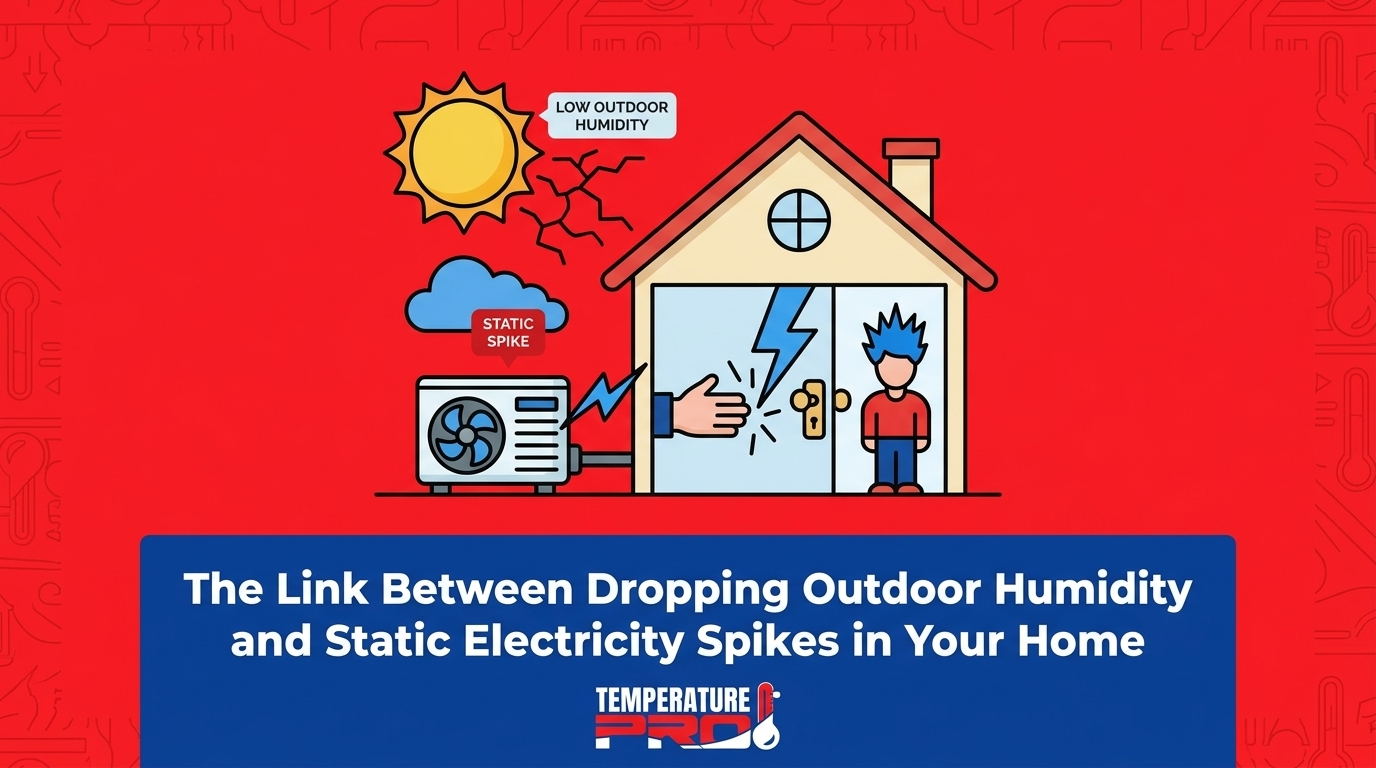
Sudden static shocks are a clear diagnostic sign that your indoor air is too dry. Understand the physics behind this fall shift and why whole-home humidification is the ultimate fix.
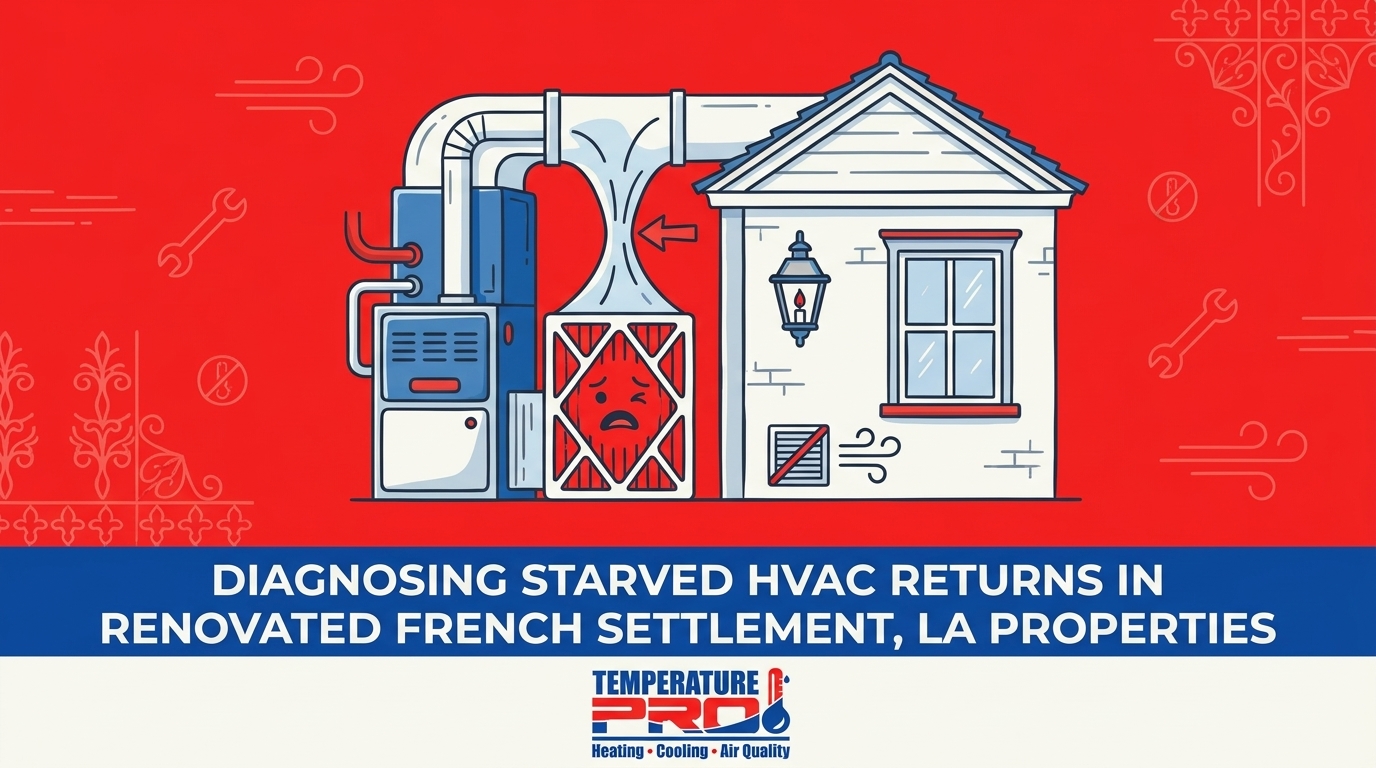
Flipped homes look great but often hide starved HVAC returns behind new drywall. Discover how objective static pressure testing reveals these hidden bottlenecks before winter heating season begins.